Growth- and health-promoting bacteria can boost crop productivity in a sustainable way. Pseudomonas simiae WCS417 is such a bacterium that efficiently colonizes roots, modifies the architecture of the root system to increase its size, and induces systemic resistance to make plants more resistant to pests and pathogens. Our previous work suggested that WCS417-induced phenotypes are controlled by root cell-type-specific mechanisms. However, it remains unclear how WCS417 affects these mechanisms. In this study, we transcriptionally profiled five Arabidopsis thaliana root cell types following WCS417 colonization. We found that the cortex and endodermis have the most differentially expressed genes, even though they are not in direct contact with this epiphytic bacterium. Many of these genes are associated with reduced cell wall biogenesis, and mutant analysis suggests that this downregulation facilitates WCS417-driven root architectural changes. Furthermore, we observed elevated expression of suberin biosynthesis genes and increased deposition of suberin in the endodermis of WCS417-colonized roots. Using an endodermal barrier mutant, we showed the importance of endodermal barrier integrity for optimal plant-beneficial bacterium association. Comparison of the transcriptome profiles in the two epidermal cell types that are in direct contact with WCS417-trichoblasts that form root hairs and atrichoblasts that do not-implies a difference in potential for defense gene activation. While both cell types respond to WCS417, trichoblasts displayed both higher basal and WCS417-dependent activation of defense-related genes compared with atrichoblasts. This suggests that root hairs may activate root immunity, a hypothesis that is supported by differential immune responses in root hair mutants. Taken together, these results highlight the strength of cell-type-specific transcriptional profiling to uncover "masked" biological mechanisms underlying beneficial plant-microbe associations.
New York City (NYC) is representative of many vulnerable coastal urban populations, infrastructures, and economies threatened by global sea level rise. The steady loss of marshes in NYC's Jamaica Bay is typical of many urban estuaries worldwide. Essential to the restoration and preservation of these key wetlands is an understanding of their sedimentation. Here we present a reconstruction of the history of mineral and organic sediment fluxes in Jamaica Bay marshes over three centuries, using a combination of density measurements and a detailed accretion model. Accretion rate is calculated using historical land use and pollution markers, through a wide variety of sediment core analyses including geochemical, isotopic, and paleobotanical analyses. We find that, since 1800 CE, urban development dramatically reduced the input of marsh-stabilizing mineral sediment. However, as mineral flux decreased, organic matter flux increased. While this organic accumulation increase allowed vertical accumulation to outpace sea level, reduced mineral content causes structural weakness and edge failure. Marsh integrity now requires mineral sediment addition to both marshes and subsurface channels and borrow pits, a solution applicable to drowning estuaries worldwide. Integration of marsh mineral/organic accretion history with modeling provides parameters for marsh preservation at specific locales with sea level rise.
Plants have incredible developmental plasticity, enabling them to respond to a wide range of environmental conditions. Among these conditions is the presence of plant growth-promoting rhizobacteria (PGPR) in the soil. Recent studies show that PGPR affect Arabidopsis thaliana root growth and development by modulating cell division and differentiation in the primary root and influencing lateral root development. These effects lead to dramatic changes in root system architecture that significantly impact aboveground plant growth. Thus, PGPR may promote shoot growth via their effect on root developmental programs. This review focuses on contextualizing root developmental changes elicited by PGPR in light of our understanding of plant-microbe interactions and root developmental biology.
Root branching in plants relies on the de novo formation of lateral roots. These are initiated from founder cells, triggering new formative divisions that generate lateral root primordia (LRP). The LRP size and shape depends on the balance between positive and negative signals that control cell proliferation. The mechanisms controlling proliferation potential of LRP cells remains poorly understood. We found that Arabidopsis thaliana MYB36, which have been previously shown to regulate genes required for Casparian strip formation and the transition from proliferation to differentiation in the primary root, plays a new role in controlling LRP development at later stages. We found that MYB36 is a novel component of LR development at later stages. MYB36 was expressed in the cells surrounding LRP where it controls a set of peroxidase genes, which maintain reactive oxygen species (ROS) balance. This was required to define the transition between proliferating and arrested cells inside the LRP, coinciding with the change from flat to dome-shaped primordia. Reducing the levels of hydrogen peroxide (H2 O2 ) in myb36-5 significantly rescues the mutant phenotype. Our results uncover a role for MYB36 outside the endodermis during LRP development through a mechanism analogous to regulating the proliferation/differentiation transition in the root meristem.
Endophytic fungi are found within the roots of healthy plants, but their function is poorly understood. In this issue, Hiruma et al. demonstrate that, under phosphate-limiting conditions, the endophytic fungus, Colletotrichum tofieldiae, provides growth-promoting and fitness benefits to Arabidopsis, but the plant must restrict fungal growth or risk pathogenesis.
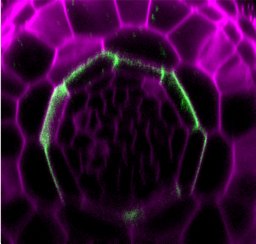
Stem cells are defined by their ability to self-renew and produce daughter cells that proliferate and mature. These maturing cells transition from a proliferative state to a terminal state through the process of differentiation. In the Arabidopsis thaliana root the transcription factors SCARECROW and SHORTROOT regulate specification of the bipotent stem cell that gives rise to cortical and endodermal progenitors. Subsequent progenitor proliferation and differentiation generate mature endodermis, marked by the Casparian strip, a cell-wall modification that prevents ion diffusion into and out of the vasculature. We identified a transcription factor, MYB DOMAIN PROTEIN 36 (MYB36), that regulates the transition from proliferation to differentiation in the endodermis. We show that SCARECROW directly activates MYB36 expression, and that MYB36 likely acts in a feed-forward loop to regulate essential Casparian strip formation genes. We show that myb36 mutants have delayed and defective barrier formation as well as extra divisions in the meristem. Our results demonstrate that MYB36 is a critical positive regulator of differentiation and negative regulator of cell proliferation.
Pairs of RNA molecules transcribed from partially or entirely complementary loci are called cis-natural antisense transcripts (cis-NATs), and they play key roles in the regulation of gene expression in many organisms. A promising experimental tool for profiling sense and antisense transcription is strand-specific RNA sequencing (ssRNA-seq). To identify cis-NATs using ssRNA-seq, we developed a new computational method based on a model comparison framework that incorporates the inherent variable efficiency of generating perfectly strand-specific libraries. Applying the method to new ssRNA-seq data from whole-root and cell-type–specific Arabidopsis libraries confirmed most of the known cis-NAT pairs and identified 918 additional cis-NAT pairs. Newly identified cis-NAT pairs are supported by polyadenylation data, alternative splicing patterns, and RT-PCR validation. We found 209 cis-NAT pairs that have opposite expression levels in neighboring cell types, implying cell-type–specific roles for cis-NATs. By integrating a genome-wide epigenetic profile of Arabidopsis, we identified a unique chromatin signature of cis-NATs, suggesting a connection between cis-NAT transcription and chromatin modification in plants. An analysis of small-RNA sequencing data showed that ∼4% of cis-NAT pairs produce putative cis-NAT–induced siRNAs. Taken together, our data and analyses illustrate the potential for multifaceted regulatory roles of plant cis-NATs.
Establishing polarized surfaces enables cells to carry out specialized tasks. In this issue, Lee et al. present a mechanism for cell polarization in which localized peroxidases are used to position the Casparian strip, a diffusion barrier deposited between endodermal cells in plant roots.
Genome-scale studies hold great promise for revealing novel plant biology. Because of the complexity of these techniques, numerous considerations need to be made before embarking on a study. Here we focus on the Arabidopsis model system because of the wealth of available genome-scale data. Many approaches are available that provide genome-scale information regarding the state of a given organism (e.g. genomics, epigenomics, transcriptomics, proteomics, metabolomics interactomics, ionomics, phenomics, etc.). Integration of all of these types of data will be necessary for a comprehensive description of Arabidopsis. In this review we propose that 'triangulation' among transcriptomics, proteomics and metabolomics is a meaningful approach for beginning this integrative analysis and uncovering a systems level perspective of Arabidopsis biology.
The NF-κB-related transcription factor, Dorsal, forms a nuclear concentration gradient in the early Drosophila embryo, patterning the dorsal-ventral (DV) axis to specify mesoderm, neurogenic ectoderm, and dorsal ectoderm cell fates. The concentration of nuclear Dorsal is thought to determine these patterning events; however, the levels of nuclear Dorsal have not been quantified previously. Furthermore, existing models of Dorsal-dependent germ layer specification and patterning consider steady-state levels of Dorsal relative to target gene expression patterns, yet both Dorsal gradient formation and gene expression are dynamic. We devised a quantitative imaging method to measure the Dorsal nuclear gradient while simultaneously examining Dorsal target gene expression along the DV axis. Unlike observations from other insects such as Tribolium, we find the Dorsal gradient maintains a constant bell-shaped distribution during embryogenesis. We also find that some classical Dorsal target genes are located outside the region of graded Dorsal nuclear localization, raising the question of whether these genes are direct Dorsal targets. Additionally, we show that Dorsal levels change in time during embryogenesis such that a steady state is not reached. These results suggest that the multiple gene expression outputs observed along the DV axis do not simply reflect a steady-state Dorsal nuclear gradient. Instead, we propose that the Dorsal gradient supplies positional information throughout nuclear cycles 10-14, providing additional evidence for the idea that compensatory combinatorial interactions between Dorsal and other factors effect differential gene expression along the DV axis.
In early Drosophila embryos, the transcription factor Dorsal regulates patterns of gene expression and cell fate specification along the dorsal-ventral axis. How gene expression is produced within the broad lateral domain of the presumptive neurogenic ectoderm is not understood. To investigate transcriptional control during neurogenic ectoderm specification, we examined divergence and function of an embryonic cis-regulatory element controlling the gene short gastrulation (sog). While transcription factor binding sites are not completely conserved, we demonstrate that these sequences are bona fide regulatory elements, despite variable regulatory architecture. Mutation of conserved sequences revealed that putative transcription factor binding sites for Dorsal and Zelda, a ubiquitous maternal transcription factor, are required for proper sog expression. When Zelda and Dorsal sites are paired in a synthetic regulatory element, broad lateral expression results. However, synthetic regulatory elements that contain Dorsal and an additional activator also drive expression throughout the neurogenic ectoderm. Our results suggest that interaction between Dorsal and Zelda drives expression within the presumptive neurogenic ectoderm, but they also demonstrate that regulatory architecture directing expression in this domain is flexible. We propose a model for neurogenic ectoderm specification in which gene regulation occurs at the intersection of temporal and spatial transcription factor inputs.
Time-lapse imaging is used to follow the activity of several promoters that regulate competence genes in Bacillus subtilis, and the data used to develop a mathematical model of the gene circuitry — revealing that excitable dynamics underlies the positive and negative feedback loops that regulate entry into, and exit from, competence in an individual cell. Certain types of cellular differentiation are probabilistic and transient1,2,3. In such systems individual cells can switch to an alternative state and, after some time, switch back again. In Bacillus subtilis, competence is an example of such a transiently differentiated state associated with the capability for DNA uptake from the environment. Individual genes and proteins underlying differentiation into the competent state have been identified4,5, but it has been unclear how these genes interact dynamically in individual cells to control both spontaneous entry into competence and return to vegetative growth. Here we show that this behaviour can be understood in terms of excitability in the underlying genetic circuit. Using quantitative fluorescence time-lapse microscopy, we directly observed the activities of multiple circuit components simultaneously in individual cells, and analysed the resulting data in terms of a mathematical model. We find that an excitable core module containing positive and negative feedback loops can explain both entry into, and exit from, the competent state. We further tested this model by analysing initiation in sister cells, and by re-engineering the gene circuit to specifically block exit. Excitable dynamics driven by noise naturally generate stochastic and transient responses6, thereby providing an ideal mechanism for competence regulation.
A 13.77 meter sediment core from Piermont Marsh, NY (40 00 N, 73 55W) records the local and regional vegetational and foraminiferal history of the Hudson Estuary. The sediments were sampled every 4 cm, which represents a decadal to centuryscale resolution. Basal sediment dating is in progress, and the 11-m depth represents about 4000 years. Changes in plant macrofossils and charcoal appear to indicate differences in salinIty and drought, suggesting changes in climate. Scirpus, Salicornia, and high levels of charcoal seem to indicate drier/more saline conditions, while lack of these macrofossils and increases in Chara/Nitella, aquatic leaves, and very little charcoal suggests wetter conditions. Other macrofossils include Carex, Juncus, Polygonum, Zanichellia, Ruppia. High resolution AMS dating of plant macrofossils is in progress, and will be compared with changes in Hudson River sediment cores offshore. Foraminiferal assemblages from key intervals of the core will be presented. Human impact in the upper sediments is visible from the influx of grass seeds, primarily Phragmites, and the ragweed pollen rise.
Sediment cores from JoCo Marsh, located in Jamaica Bay, NY were analyzed for plant macrofossil and foraminifera records. These records reflect changes in vegetation, sea level, climate and human intervention. Better understanding of past environmental changes provides information for future preservation and protection of the estuary. A 2.81 m core was retrieved from JoCo, a high marsh area located on the eastern side of Jamaica Bay. The lithology of the core differs from high levels of sand, with small amounts of clay, in the bottom 0.8 meters, to salt marsh peat in the upper 2 meters of the core. Basal wood in the sand was dated to about 2060 yr BP. Elphidium foraminifera dominate the basal sands, along with Scirpus seeds, wood, and charcoal. These sands include fish scales which are tentatively identified as killifish, suggesting shallow pools. The transition to marsh peat is dominated by sedge seeds, and declines in charcoal. The peat appears to be dominated by salt marsh grasses. At 2 m the foraminifera change to include mainly Trochammina species and other undifferentiated agglutinates. The upper portion of the core is dominated by Salicornia seeds along with Trochammina and Miliammina or Quinqueloculia. The history of this marsh will be integrated with other records of marsh environmental change along the US eastern seaboard.
 Philip N. Benfey合作论文数School of Medicine, Duke University9
 Dorothy M Peteet合作论文数Goddard Institute for Space Studies, NASA;Paleoecology Division, New Core Lab, Lamont Doherty Earth Observatory of Columbia;Department of Earth and Environmental Sciences, Columbia University6
 Verbon Eline Hendrike合作论文数University College Utrecht3
 Angelike Stathopoulos合作论文数Division of Biology and Biological Engineering, California Institute of Technology2Hansen James E合作论文数2
 Jaimie M. Van Norman合作论文数Department of Biology, University of Utah2Clara Chang合作论文数1Jiayu Zhou合作论文数1Stephen Kovari合作论文数1james p browne合作论文数Dept Conservat & Waterways, Pt Lookout, NY 11569 USA1Gurol Suel合作论文数1Jie Yin合作论文数1
 Ioannis Stringlis合作论文数Laboratory of Plant Pathology, Agricultural University of Athens, 75 Iera Odos Str., 11855 Athens, Greece1
 Benedicte Desvoyes合作论文数Centro de Biología Molecular Severo Ochoa, CSIC-UAM1
 de Jonge Ronnie合作论文数Phytopathol Lab, Wageningen Univ1Petricka Jalean J合作论文数1
 Neelanjan Mukherjee合作论文数Max Delbruck Ctr Mol Med Helmholtz Assoc, Berlin Inst Med Syst Biol1
 Uwe Ohler合作论文数Department of Biostatistics & Bioinformatics, School of Medicine, Duke University;Department of Biology, Max Delbruck Center for Molecular Medicine Berlin-Buch;Department of Computer Science, Humboldt University Berlin1
 Sozzani Rosangela合作论文数Dept Plant & Microbial Biol, North Carolina State Univ1
 Erin E Sparks合作论文数1
 Maria Fernandez合作论文数1
 Li Song合作论文数1
 Gregory T. Reeves合作论文数Department of Chemical Engineering, Princeton University1
 Miguel A Moreno-Risueno合作论文数Department of Biology and Center for Systems Biology, Duke University1Timothy C. Kenna合作论文数Lamont-Doherty Earth Observatory, Columbia University1Dorothy Kurdyla合作论文数1
 Jonathan E. Nichols合作论文数Department of Geological Sciences, Brown University1
 Concepción Manzano合作论文数Centro de Biotecnología y Genómica de Plantas (UPM-INIA) Campus de Montegancedo s/n. Boadilla del Monte 28660 Madrid Spain1Jordi Garcia-Ojalvo合作论文数Departament de Física i Enginyeria Nuclear, Universitat Politècnica de Catalunya1
 Juan Carlos Del pozo合作论文数Centro de Biología Molecular Severo Ochoa;Consejo Superior de Investigaciones Científicas;Universidad Autónoma de Madrid;Centro de Biología Molecular Severo Ochoa, Universidad Autónoma de Madrid1
 Michael B. Elowitz合作论文数Division of Biology and Biological Engineering, California Institute of Technology;Department of Applied Physics, California Institute of Technology;Howard Hughes Medical Institute1
 Crisanto Gutierrez合作论文数Centro de Biologia Molecular Severo Ochoa1




