This paper introduces AMPLIA, an intelligent learning environment employed as a resource in medical students' training. The development of AMPLIA raised several research topics, due to the convergence of Artificial Intelligence (AI) and Learning Environments. The core topics are: probabilistic diagnostic learning in the medical area, application of teaching strategies based on Pedagogical Negotiation (PN), construction of cognitive student models with probabilistic beliefs, and application of interoperability methods for pedagogical agents, and tutoring systems integration. An important aspect of AMPLIA is the utilization of PN as the main form of interaction. The impact of this approach on the system dynamics and on the student's learning is presented in detail. Considering the importance of cooperative work during the learning process, we describe how AMPLIA is used to enable cooperation. The description is based on experiments carried out with AMPLIA and its users. The main results of these experiments are reported as well.
It is difficult to work in classroom with the introductory content of algorithms and programming, and it poses many problems that make the students give up. The reasons for this include the lack of motivation of the students and their difficulty in developing the necessary logical reasoning for the construction of algorithms. This paper proposes the use of pedagogical strategies, such as computational games, to mitigate these problems, suggesting that the use of computational resources in the area of computer education might be interesting.
This paper introduces a new formal model, which generalizes current agent communication theories (basically the FIPA version of these theories) to handle probabilistic knowledge communication. Several questions about communication of probabilistic knowledge are discussed in the light of current theories of agent communication and it is argued that exists a semantic gap between these theories and research areas related to probabilistic knowledge representation and communication. This gap creates serious theoretical problems if agents that reason probabilistically try to use communication framework provided by these theories. To diminish this gap it is proposed a modal probabilistic logic and a new communication framework composed of communication principles and acts for probabilistic knowledge communication.
This paper presents a model of pedagogical negotiation developed for the AMPLIA, an Intelligent Probabilistic Multi-agent Learning Environment. Three intelligent software agents: Domain Agent, Learner Agent and Mediator Agent were developed using Bayesian Networks and Influence Diagrams. The goal of the negotiation model is to increase, as much as possible: (a) the performance of the model the students build; (b) the confidence that teachers and tutors have in the students' ability to diagnose cases; and the students' confidence on their own ability to diagnose cases; and (c) the students' confidence on their own ability to diagnose diseases.
The architecture of a multi-agent learning environment (AMPLIA) is detailed. The design of each agent is divided into Decision, Operational and Interaction levels. Decisions are modeled by means of a probabilistic inference process. At the operational level, each agent has a different set of modules or software components and a single ontology is used in the communication, sharing knowledge and information. The learning process of a student at an experimental course is presented.
AMPLIA supports training of diagnostic reasoning and modelling of domains with complex and uncertain knowledge. It focuses on the medical area, and it helps a learner to create a Bayesian network for a certain problem. A pedagogic negotiation process (managed by an intelligent Mediator Agent) aids handle the differences of topology and probability distribution between the model the learner built and the one built-in in the system. The negotiation process occurs between the agents that represent the expert knowledge domain and the agent that represents the learner knowledge. As a consequence, the learner visualises the organisation of his/her ideas, creates and tests hypothesis, and discuss them with the system .
AMPLIA is an Intelligent Learning Multi-Agent Environment. It is designed to support training of diagnostic reasoning and modeling of domains with complex and uncertain knowledge. AMPLIA focuses on the medical area, where learner’s modeling tasks will consist of creating a Bayesian network for a problem the system will present. A pedagogic negotiation process (managed by an intelligent Mediator Agent) will treat the differences of topology and probability distribution between the model the learner built and the one built-in in the system. That negotiation process occurs between the agents that represent the expert knowledge domain and the agent that represents the learner knowledge. The possibility of using Bayesian networks to create knowledge representation allows the learner to visualize his/her ideas organization, create and test hypothesis.
Resumo. Este trabalho aborda a questao da modelagem dos agentes inteligentes no AMPLIA, um ambiente de aprendizagem que utiliza redes bayesianas para a representacao do conhecimento. Sao discutidas as caracteristicas dos alunos e dos agentes do ponto de vista da teoria construtivista levando em conta diferentes parâmetros que sao considerados para uma negociacao pedagogica. Atencao especial e dada a modelagem do Agente Mediador, ao processo de selecao das estrategias e taticas utilizadas e a discussao sobre os niveis de confianca declarado pelo aluno e inferido pelo sistema. Palavras-chave: ambiente inteligente de aprendizagem, agente mediador, negociacao pedagogica, estrategias pedagogicas, sistemas multiagentes
Escrita colaborativa. Ferramentas de Escrita Colaborativa. EquiText.
Resumo: Este trabalho discute a aplicacaodeestrategias pedagogicas para a construcaodo conhecimento, em um ambiente probabilistico de aprendizagem para o dominio medico. O ambiente AMPLIA e constituido por um sistema multiagentes e utiliza redes Bayesianas paraarepresentacao do conhecimento. O modelo de rede construido pelo aprendiz e comparado ao modelo do especialista e as diferencas sao tratadas de acordo com estrategias pedagogicas baseadas na interacao e na negociacao. O objetivo e possibilitar que o aprendiz visualize a organizacaodesuasideias, elabore e teste hipoteses e as reavalie constantemente. Abstract: Este trabalho discute a aplicacaodeestrategias pedagogicas para a construcaodo conhecimento, em um ambiente probabilistico de aprendizagem para o dominio medico. O ambiente AMPLIA e constituido por um sistema multiagentes e utiliza redes Bayesianas paraarepresentacao do conhecimento. O modelo de rede construido pelo aprendiz e comparado ao modelo do especialista e as diferencas sao tratadas de acordo com estrategias pedagogicas baseadas na interacao e na negociacao. O objetivo e possibilitar que o aprendiz visualize a organizacaodesuasideias, elabore e teste hipoteses e as reavalie constantemente.
 Cecilia Flores合作论文数UFRGS, Porto Alegre, RS, Brazil8
 Joao Carlos Gluz合作论文数Pos-Graduacao em Computacao Aplicada (PIPCA),, Universidade do Vale do Rio dos Sinos (UNISINOS),7Rosa M. Vicari合作论文数Universidade Federal do Rio Grande do Sul;Instituto de Informatica6
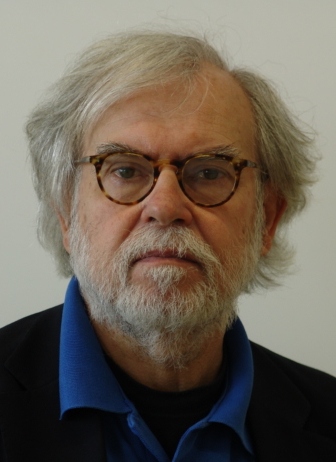 Hélder Coelho合作论文数Faculty of Sciences, University of Lisbon3
 Claudia Brandelero Rizzi合作论文数Colegiado de Informática;Universidade Estadual do Oeste do Paraná;Colegiado de Informática, Universidade Estadual do Oeste do Paraná2miriam klemann合作论文数1janete costa合作论文数1
 Liane Margarida Rockenbach Tarouco合作论文数Federal University of Rio Grande do Sul1Diego Patrício合作论文数1Clevi Elena Rapkiewicz合作论文数Laboratório de Engenharia de Produção, Universidade Estadual do Norte Fluminense;Fundação de Apoio à Escola Técnica;Av . Clarimundo de Melo1Gilse Falkembach合作论文数1
 Rosa Vicari合作论文数Universidade Federal do Rio Grande do Sul;Instituto de Informatica1
 Felipe Giacomel合作论文数1Rosa Maria Viccari合作论文数Universidade Federal do Rio Grande do Sul
Instituto de Informatica1Leandro Gonçalves合作论文数1
Felipe Giacomel合作论文数1Rosa Maria Viccari合作论文数Universidade Federal do Rio Grande do Sul
Instituto de Informatica1Leandro Gonçalves合作论文数1




