Split Federated Learning (SFL) has emerged as an efficient alternative to traditional Federated Learning (FL) by reducing client-side computation through model partitioning. However, exchanging of intermediate activations and model updates introduces significant privacy risks, especially from data reconstruction attacks that recover original inputs from intermediate representations. Existing defenses using noise injection often degrade model performance. To overcome these challenges, we present PM-SFL, a scalable and privacy-preserving SFL framework that incorporates Probabilistic Mask training to add structured randomness without relying on explicit noise. This mitigates data reconstruction risks while maintaining model utility. To address data heterogeneity, PM-SFL employs personalized mask learning that tailors submodel structures to each client's local data. For system heterogeneity, we introduce a layer-wise knowledge compensation mechanism, enabling clients with varying resources to participate effectively under adaptive model splitting. Theoretical analysis confirms its privacy protection, and experiments on image and wireless sensing tasks demonstrate that PM-SFL consistently improves accuracy, communication efficiency, and robustness to privacy attacks, with particularly strong performance under data and system heterogeneity.
Integrated sensing and communication (ISAC) has emerged as a pivotal technology for next-generation wireless communication and radar systems, enabling high-resolution sensing and high-throughput communication with shared spectrum and hardware. However, achieving a fine radar resolution often requires high-rate analog-to-digital converters (ADCs) and substantial storage, making it both expensive and impractical for many commercial applications. To address these challenges, this paper proposes an orthogonal time frequency space (OTFS)-based ISAC architecture that operates at reduced ADC sampling rates, yet preserves accurate radar estimation and supports simultaneous communication. The proposed architecture introduces pilot symbols directly in the delay-Doppler (DD) domain to leverage the transformation mapping between the DD and time-frequency (TF) domains to keep selected subcarriers active while others are inactive, allowing the radar receiver to exploit under-sampling aliasing and recover the original DD signal at much lower sampling rates. To further enhance the radar accuracy, we develop an iterative interference estimation and cancellation algorithm that mitigates data symbol interference. We propose a code-based spreading technique that distributes data across the DD domain to preserve the maximum unambiguous radar sensing range. For communication, we implement a complete transceiver pipeline optimized for reduced sampling rate system, including synchronization, channel estimation, and iterative data detection. Experimental results from a software-defined radio (SDR)-based testbed confirm that our method substantially lowers the required sampling rate without sacrificing radar sensing performance and ensures reliable communication.
Integrated sensing and communication (ISAC) promises high spectral and power efficiencies by sharing waveforms, spectrum, and hardware across sensing and data links. Yet commercial cellular networks struggle to deliver fine angular, range, and Doppler resolution due to limited aperture, bandwidth, and coherent observation time. In this paper, we propose a space-time-frequency synthetic ISAC architecture that fuses observations from distributed transmitters and receivers across time intervals and frequency bands. We develop a unified signal model for multistatic and monostatic configurations, derive Cram & eacute;r-Rao lower bounds (CRLBs) for the estimations of position and velocity. The analysis shows how spatial diversity, multiband operation, and observation scheduling impact the Fisher information. We also compare the estimation performance between a concentrated maximum likelihood estimator (MLE) and a two stage information fusion (TSIF) method that first estimates per-path delay and radial speed and then fuses them by solving a weighted nonlinear least-squares problem via the Gauss-Newton algorithm. Numerical results show that MLE approaches the CRLB in the high signal-to-noise ratio (SNR) regime, while the two stage method remains competitive at moderate to high SNR but degrades at low SNR. A central finding is that fully synthesized network processing is essential, as estimations by individual base stations (BSs) followed by fusion are consistently inferior and unstable at low SNR. This framework offers a practical guidance for upgrading existing communication infrastructure into dense sensing networks.
Large language models (LLMs) have achieved promising results in tabular data generation. However, inherent historical biases in tabular datasets often cause LLMs to exacerbate fairness issues, particularly when multiple advantaged and protected features are involved. In this work, we introduce a universal debiasing framework that minimizes group-level dependencies by simultaneously reducing the mutual information between advantaged and protected attributes. By leveraging the autoregressive structure and analytic sampling distributions of LLM-based tabular data generators, our approach efficiently computes mutual information, reducing the need for cumbersome numerical estimations. Building on this foundation, we propose two complementary methods: a direct preference optimization (DPO)-based strategy, namely UDF-DPO, that integrates seamlessly with existing models, and a targeted debiasing technique, namely UDF-MIX, that achieves debiasing without tuning the parameters of LLMs. Extensive experiments demonstrate that our framework effectively balances fairness and utility, offering a scalable and practical solution for debiasing in high-stakes applications.
Reinforcement learning with human feedback (RLHF) fine-tunes a pretrained large language model (LLM) using user preference data, enabling it to generate content aligned with human preferences. However, due to privacy concerns, users may be reluctant to share sensitive preference data. To address this, we propose utilizing Federated Learning (FL) techniques, allowing large-scale preference collection from diverse real-world users without requiring them to transmit data to a central server. Our federated RLHF methods (i.e., FedBis and FedBiscuit) encode each client's preferences into binary selectors and aggregate them to capture common preferences. In particular, FedBiscuit overcomes key challenges, such as preference heterogeneity and reward hacking, through innovative solutions like grouping clients with similar preferences to reduce heterogeneity and using multiple binary selectors to enhance LLM output quality. To evaluate the performance of the proposed methods, we establish the first federated RLHF benchmark with a heterogeneous human preference dataset. Experimental results show that by integrating the LLM with aggregated client preferences, FedBis and FedBiscuit significantly enhance the professionalism and readability of the generated content.
Model-heterogeneity federated learning (FL) is a flexible setting where a client trains a model subject to its local computation capacity. Towards the scenario, partial averaging extracts the clients' models from a global model so that the aggregation of each model parameter is identified. While existing models can only generate submodels with predefined settings established during training, our approach utilizes a trainable probabilistic masking strategy named FedMAP, enabling the dynamic creation of customized model sizes aligned with the client's budget. In detail, the clients find the best model architectures based on their local datasets and computation resources, and the FL server merges these local optimal architectures into a probabilistic mask. In the end, we attain a stable probabilistic mask, with which we can generate arbitrary models for evaluation or update the counterpart of the model parameters while training with the clients' data. Our experiments validate the effectiveness of the proposed FedMAP from two aspects: (i) It can improve the state-of-the-art approaches to heterogeneous model updates, especially for those small-size models; and (ii) We can extract the submodels whose sizes never appear in training with exceptional performance.
Multi-sensor fusion has been widely used by autonomous vehicles (AVs) to integrate the perception results from different sensing modalities including LiDAR, camera and radar. Despite the rapid development of multi-sensor fusion systems in autonomous driving, their vulnerability to malicious attacks have not been well studied. Although some prior works have studied the attacks against the perception systems of AVs, they only consider a single sensing modality or a camera-LiDAR fusion system, which can not attack the sensor fusion system based on LiDAR, camera, and radar. To fill this research gap, in this paper, we present the first study on the vulnerability of multi-sensor fusion systems that employ LiDAR, camera, and radar. Specifically, we propose a novel attack method that can simultaneously attack all three types of sensing modalities using a single type of adversarial object. The adversarial object can be easily fabricated at low cost, and the proposed attack can be easily performed with high stealthiness and flexibility in practice. Extensive experiments based on a real-world AV testbed show that the proposed attack can continuously hide a target vehicle from the perception system of a victim AV using only two small adversarial objects.
Ride-hailing platforms (e.g., Uber and Didi Chuxing) have become increasingly popular in recent years. Efficiency has always been an important metric for such platforms. However, only focusing on efficiency inevitably ignores the fairness of driver incomes, which could impair the sustainability of ride-hailing systems. To optimize such two essential objectives, order dispatching and driver repositioning play an important role, as they impact not only the immediate, but also the future order-serving outcomes of drivers. In practice, the platform offers monetary incentives to drivers for completing the repositioning and has a budget for the repositioning cost. Therefore, in this paper, we aim to exploit joint order dispatching and driver repositioning to optimize both long-term efficiency and fairness in ride-hailing under the budget constraint. To this end, we propose JDRCL, a novel multi-agent reinforcement learning framework, which integrates a group-based action representation that copes with the variable action space, and a primal-dual iterative training algorithm to learn a constraint-satisfying policy that maximizes both the worst and the overall incomes of drivers. Furthermore, we prove the asymptotic convergence rate of our training algorithm. Extensive experiments based on three real-world ride-hailing order datasets show that JDRCL outperforms state-of-the-art baselines on both efficiency and fairness.
Fair machine learning seeks to mitigate model prediction bias against certain demographic subgroups such as elder and female. Recently, fair representation learning (FRL) trained by deep neural networks has demonstrated superior performance, whereby representations containing no demographic information are inferred from the data and then used as the input to classification or other downstream tasks. Despite the development of FRL methods, their vulnerability under data poisoning attack, a popular protocol to benchmark model robustness under adversarial scenarios, is under-explored. Data poisoning attacks have been developed for classical fair machine learning methods which incorporate fairness constraints into shallow-model classifiers. Nonetheless, these attacks fall short in FRL due to notably different fairness goals and model architectures. This work proposes the first data poisoning framework attacking FRL. We induce the model to output unfair representations that contain as much demographic information as possible by injecting carefully crafted poisoning samples into the training data. This attack entails a prohibitive bilevel optimization, wherefore an effective approximated solution is proposed. A theoretical analysis on the needed number of poisoning samples is derived and sheds light on defending against the attack. Experiments on benchmark fairness datasets and state-of-the-art fair representation learning models demonstrate the superiority of our attack.
In federated learning (FL), accommodating clients' varied computational capacities poses a challenge, often limiting the participation of those with constrained resources in global model training. To address this issue, the concept of model heterogeneity through submodel extraction has emerged, offering a tailored solution that aligns the model's complexity with each client's computational capacity. In this work, we propose Federated Importance-Aware Submodel Extraction (FIARSE), a novel approach that dynamically adjusts submodels based on the importance of model parameters, thereby overcoming the limitations of previous static and dynamic submodel extraction methods. Compared to existing works, the proposed method offers a theoretical foundation for the submodel extraction and eliminates the need for additional information beyond the model parameters themselves to determine parameter importance, significantly reducing the overhead on clients. Extensive experiments are conducted on various datasets to showcase the superior performance of the proposed FIARSE.
Federated learning (FL) shines through in the internet of things (IoT) with its ability to realize collaborative learning and improve learning efficiency by sharing client model parameters trained on local data. Although FL has been successfully applied to various domains, including driver monitoring applications (DMAs) on the internet of vehicles (IoV), its usages still face some open issues, such as data and system heterogeneity, large-scale parallelism communication resources, malicious attacks, and data poisoning. This paper proposes a federated transfer-ordered-personalized learning (FedTOP) framework to address the above problems and test on two real-world datasets with and without system heterogeneity. The performance of the three extensions, transfer, ordered, and personalized, is compared by an ablation study and achieves 92.32% and 95.96% accuracy on the test clients of two datasets, respectively. Compared to the baseline, there is a 462% improvement in accuracy and a 37.46% reduction in communication resource consumption. The results demonstrate that the proposed FedTOP can be used as a highly accurate, streamlined, privacy-preserving, cybersecurity-oriented, and personalized framework for DMA.
Recent years have witnessed the increasing popularity of electric buses (e-buses) around the globe due to their environment friendly nature. However, various factors, such as the prohibitive purchasing costs and the scarcity of large-scale charging facilities, hinder the wider adoption of e-buses. Thus, to effectively cut the cost of building and maintaining urban e-bus systems, we optimize the dispatching strategy for urban e-bus systems to satisfy public transportation demands with the minimum e-bus fleet. Specifically, we propose to systematically exploit at city-scale cross-line dispatching, a smart dispatching strategy allowing one bus to serve multiple bus lines when necessary. Technically, we construct a novel and generalizable graph-theoretic model for urban e-bus systems integrating e-buses non-negligible charging time, the spatio-temporal constraints of bus trips, and various other real-world factors. We prove that it is NP-hard, and has no $(2-\epsilon)$(2-ε)-approximation algorithm. Next, we propose a polynomial-time algorithm solving the problem with a guaranteed approximation ratio. Furthermore, we conduct extensive experiments on a large-scale real-world bus dataset from Shenzhen, China, which validate the effectiveness of our algorithms. As shown by our experimental results, to serve 300 bus lines, our dispatching strategy needs 38.2% less e-buses than the one currently used in practice.
The unprecedented advance of wireless human sensing is enabled by the proliferation of the deep learning techniques, which, however, rely heavily on the completeness and representativeness of the data patterns contained in the training set. Thus, deep learning based wireless human perception models usually fail when the human subject is conducting activities that are unseen during the model training. To address this problem, we propose a novel wireless signal augmentation framework, named mmGPE, for Generalized mmWave-based Pose Estimation. In mmGPE, we adopt a physical simulator to generate mmWave FMCW signals. However, due to the imperfect simulation of the physical world, there is a big gap between the signals generated by the physical simulator and the real-world signals collected by the mmWave radar. To tackle this challenge, we propose to integrate the physical signal simulation with deep learning techniques. Specifically, we develop a deep learning-based signal refiner in mmGPE that is capable of bridging the gap and generating realistic signal data. Through extensive evaluations on a COTS mmWave testbed, our mmGPE system demonstrates high accuracy in generating human meshes for unseen activities.
For-hire vehicle-enabled crowd sensing (FVCS) has become a promising paradigm to conduct urban sensing tasks in recent years. FVCS platforms aim to jointly optimize both the order-serving revenue as well as sensing coverage and quality. However, such two objectives are often conflicting and need to be balanced according to the platforms’ preferences on both objectives. To address this problem, we propose a novel cooperative multi-objective multi-agent reinforcement learning framework, referred to as MOVDN, to serve as the first preference-configurable order dispatch mechanism for FVCS platforms. Specifically, MOVDN adopts a decomposed network structure, which enables agents to make distributed order selection decisions, and meanwhile aligns each agent’s local decision with the global objectives of the FVCS platform. Then, we propose a novel algorithm to train a single universal MOVDN that is optimized over the space of all preferences. This allows our trained model to produce the optimal policy for any preference. Furthermore, we provide the theoretical convergence guarantee and sample efficiency analysis of our algorithm. Extensive experiments on three real-world ride-hailing order datasets demonstrate that MOVDN outperforms strong baselines and can support the platform in decision-making effectively.
Naturalistic driving action recognition (NDAR) has proven to be an effective method for detecting driver distraction and reducing the risk of traffic accidents. However, the intrusive design of in-cabin cameras raises concerns about driver privacy. To address this issue, we propose a novel peer-to-peer (P2P) federated learning (FL) framework with continual learning, namely FedPC, which ensures privacy and enhances learning efficiency while reducing communication, computational, and storage overheads. Our framework focuses on addressing the clients' objectives within a serverless FL framework, with the goal of delivering personalized and accurate NDAR models. We demonstrate and evaluate the performance of FedPC on two real-world NDAR datasets, including the State Farm Distracted Driver Detection and Track 3 NDAR dataset in the 2023 AICity Challenge. The results of our experiments highlight the strong competitiveness of FedPC compared to the conventional client-to-server (C2S) FLs in terms of performance, knowledge dissemination rate, and compatibility with new clients.
In autonomous driving, millimeter wave (mmWave) radar has been widely adopted for object detection because of its robustness and reliability under various weather and lighting conditions. For radar object detection, deep neural networks (DNNs) are becoming increasingly important because they are more robust and accurate, and can provide rich semantic information about the detected objects, which is critical for autonomous vehicles (AVs) to make decisions. However, recent studies have shown that DNNs are vulnerable to adversarial attacks. Despite the rapid development of DNN-based radar object detection models, there have been no studies on their vulnerability to adversarial attacks. Although some spoofing attack methods are proposed to attack the radar sensor by actively transmitting specific signals using some special devices, these attacks require sub-nanosecond-level synchronization between the devices and the radar and are very costly, which limits their practicability in real world. In addition, these attack methods can not effectively attack DNN-based radar object detection. To address the above problems, in this paper, we investigate the possibility of using a few adversarial objects to attack the DNN-based radar object detection models through passive reflection. These objects can be easily fabricated using 3D printing and metal foils at low cost. By placing these adversarial objects at some specific locations on a target vehicle, we can easily fool the victim AV's radar object detection model. The experimental results demonstrate that the attacker can achieve the attack goal by using only two adversarial objects and conceal them as car signs, which have good stealthiness and flexibility. To the best of our knowledge, this is the first study on the passive-reflection-based attacks against the DNN-based radar object detection models using low-cost, readily-available and easily concealable geometric shaped objects.
Recent years have witnessed the emergence of mobile crowdsourcing (MCS) systems, which leverage the public crowd equipped with various mobile devices for large-scale sensing tasks. In this chapter, we study a critical problem in MCS systems, namely, incentivizing user participation. Different from the existing work, we design two quality-aware incentive mechanisms, and we incorporate a crucial metric, called users’ quality of information (QoI), in the first quality-aware incentive mechanism and consider the preservation of users’ bid privacy in the second quality-aware incentive mechanism for MCS system. Due to various factors (e.g., sensor quality, noise, etc.), the quality of the sensory data contributed by individual users varies significantly. Obtaining high-quality data with little expense is always the goal of a quality-aware incentive mechanism for MCS system. Besides, the data from users usually contains the private information that should not be disclosed. A quality-aware incentive mechanism should consider the preservation of users’ bid privacy. Technically, we design the first quality-aware incentive mechanism based on reverse combinatorial auctions. We investigate both the single-minded and multi-minded combinatorial auction models and design two computationally efficient mechanisms that the one for single-minded models can approximately maximize social welfare and the one for multi-minded models can achieve close-to-optimal social welfare. We design the second quality-aware incentive mechanism based on the single-minded reverse combinatorial auction that preserves the privacy of each workers bid against the other honest-but-curious users. Specifically, we design a private, individual rational, and efficient mechanism that approximately minimizes the platforms’ total payment and satisfies the desirable economic properties of approximate truthfulness and individual rationality.
Recent years have witnessed increasing concerns towards unfair decisions made by machine learning algorithms. To improve fairness in model decisions, various fairness notions have been proposed and many fairness-aware methods are developed. However, most of existing definitions and methods focus only on single-label classification. Fairness for multi-label classification, where each instance is associated with more than one labels, is still yet to establish. To fill this gap, we study fairness-aware multi-label classification in this paper. We start by extending Demographic Parity (DP) and Equalized Opportunity (EOp), two popular fairness notions, to multi-label classification scenarios. Through a systematic study, we show that on multi-label data, because of unevenly distributed labels, EOp usually fails to construct a reliable estimate on labels with few instances. We then propose a new framework named Similarity s-induced Fairness (sγ -SimFair). This new framework utilizes data that have similar labels when estimating fairness on a particular label group for better stability, and can unify DP and EOp. Theoretical analysis and experimental results on real-world datasets together demonstrate the advantage of sγ -SimFair over existing methods on multi-label classification tasks.
 Tarek Abdelzaher合作论文数Department of Computer Science, University of Illinois at Urbana Champaign45
 Jing Gao合作论文数Elmore Family School of Electrical and Computer Engineering, College of Engineering, Purdue University42
 Shaohan Hu合作论文数JPMorganChase Global Technology Applied Research34
 Chenglin Miao合作论文数Department of Computer Science, Iowa State University24
 Shuochao Yao合作论文数Department of Computer Science, School of Computing, George Mason University20
 Yaliang Li合作论文数Tongyi Lab, Alibaba Group20
 Haiming Jin (金海明)合作论文数Department of Computer Science and Engineering, School of Computer Science, Shanghai Jiao Tong University20
 Hengchang Liu (刘恒昌)合作论文数School of Computer Science and Engineering, University of Electronic Science and Technology of China19
 Chunming Qiao (乔春明)合作论文数Department of Computer Science and Engineering, School of Engineering and Applied Sciences, University at Buffalo, The State University of New York;Lab for Advanced Network Design, Evaluation and Research, University at Buffalo, The State University of New York18
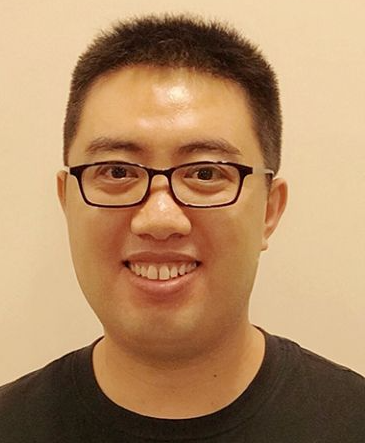 Fenglong Ma合作论文数College of Information Sciences and Technology, The Pennsylvania State University;Institute for Computational and Data Sciences, The Pennsylvania State University18
 Qi Li合作论文数Department of Computer Science, Iowa State University17
 Aidong Zhang合作论文数Department of Biomedical Engineering, School of Engineering and Applied Science, University of Virginia;School of Data Science, University of Virginia;Department of Computer Science and Engineering, School of Engineering and Applied Sciences, University at Buffalo;The State University of New York16
 Shen Li (李珅)合作论文数Meta MRS15
 Yiran Zhao合作论文数Reddit, Inc.15
 Shiguang Wang (王式洸)合作论文数School of Earth and Space Sciences, Peking University14
 Jiawei Han (韩家炜)合作论文数Siebel School of Computing and Data Science, The Grainger College of Engineering, University of Illinois Urbana-Champaign14
 Houping Xiao (肖厚平)合作论文数J. Mack Robinson College of Business, Georgia State University;Institute for Insight, Georgia State University13Wenjun Jiang (蒋文俊)合作论文数13
 Hongfei Xue (薛鸿飞)合作论文数Department of Computer Science, College of Computing and Informatics, University of North Carolina at Charlotte11
 Kui Ren (任奎)合作论文数School of Cyber Science and Technology, Zhejiang University;College of Computer Science and Technology, Zhejiang University11
 Klara Nahrstedt合作论文数Siebel School of Computing and Data Science, The Grainger College of Engineering, University of Illinois Urbana-Champaign11
 Lance Kaplan合作论文数Networked Sensing and Fusion Branch, U.S Army Research Laboratory10
 Jay Shao合作论文数University of Illinois at Urbana-Champaign;William & Mary9
 Yaqing Wang合作论文数Google Deepmind9
 Weida Zhong合作论文数Google9
 Tanvir Amin合作论文数Google LLC8
 Abhishek Gupta合作论文数SUNY Buffalo, Dept Comp Sci & Engn, Buffalo, NY USA7
 Dongxin Liu (刘东鑫)合作论文数Department of Computer Science, University of Illinois at Urbana Champaign7
 Chuishi Meng合作论文数JDT7
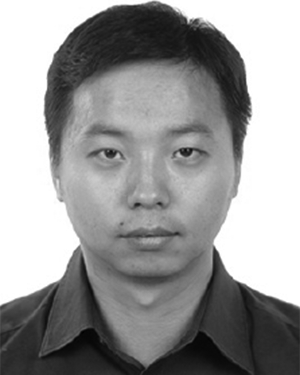 Yan Gao合作论文数University of Illinois at Urbana-Champaign7
 Shengzhong Liu (刘生钟)合作论文数School of Computer Science, Shanghai Jiao Tong University7
 Hengtong Zhang (张恒通)合作论文数School of Computer Science and Technology, Faculty of Computing, Harbin Institute of Technology6
 Qiuling Suo合作论文数Meta Platforms6Haochen Hu合作论文数University at Buffalo6Xinbing Wang (王新兵)合作论文数6Chenji Pan合作论文数6
 Wenyao Xu合作论文数Department of Computer Science and Engineering, School of Engineering and Applied Sciences, University at Buffalo, The State University of New York;Center for Unified Biometrics and Sensors, University at Buffalo, The State University of New York;Auspex Medix6
 Ye Yuan合作论文数JD Digits6
 Yunfei Hou合作论文数6Hongyan Wang合作论文数6
 Feijie (Harli) Wu合作论文数Elmore Family School of Electrical and Computer Engineering, Purdue University5
 Tianci Liu合作论文数Elmore Family School of Electrical and Computer Engineering, Purdue University5
 Haoyu Wang合作论文数University at Albany5Yi Zhu合作论文数5
 Yong Yang (杨勇)合作论文数Google5
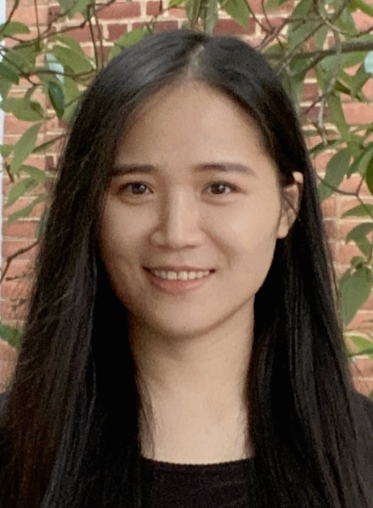 Mengdi Huai合作论文数Department of Computer Science, College of Liberal Arts and Sciences, Iowa State University5
 Zhi Sun (孙智)合作论文数Department of Electronic Engineering, Tsinghua University5
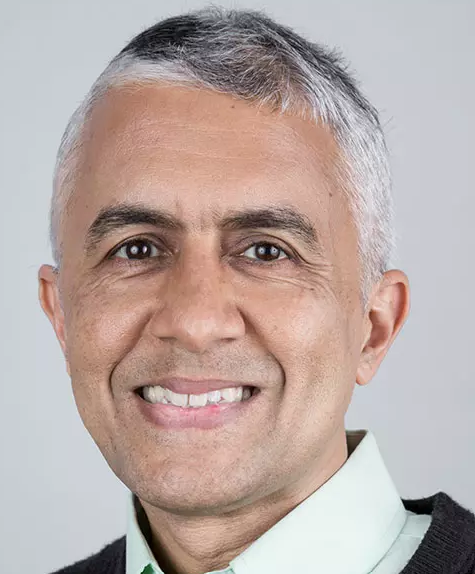 Ramesh Govindan合作论文数Thomas Lord Department of Computer Science, Viterbi School of Engineering, University of Southern California;Ming Hsieh Department of Electrical and Computer Engineering, Viterbi School of Engineering, University of Southern California5
 Bo Zhao合作论文数Pinterest5