While humans readily generalize abstract concepts to more complex or larger tasks, building Reinforcement Learning (RL) systems with this ability remains elusive. Here, we present the first theoretical model of how such Out-of-Distribution (OOD) generalization can be achieved in RL agents. Our approach considers Partially Observable Markov Decision Processes (POMDPs) and assumes that an intelligent agent uses an abstraction function to determine which experiences can be treated as equivalent and which must be distinguished. First, we extend the existing state abstraction framework and proof techniques to POMDPs. Then, we define a successor-weighted model reduction, a model reduction variant that enables compression into smaller abstract spaces than prior definitions allow. We derive a bound on the agent's OOD test performance, thereby defining the conditions under which OOD generalization is achievable. This bound decomposes an agent's performance loss into approximation and estimation errors, revealing how reducing an agent's abstract state space size improves test performance and OOD generalization. Our analysis suggests that constraining an agent to operate over a small, finite set of abstract states is necessary for achieving generalization to more complex tasks. Our results motivate further research into learning RL architectures that scale across tasks of varying complexity levels.
Model-based reinforcement learning (RL) has shown great promise due to its sample efficiency, but still struggles with long-horizon sparse-reward tasks, especially in offline settings where the agent learns from a fixed dataset. We hypothesize that model-based RL agents struggle in these environments due to a lack of long-term planning capabilities, and that planning in a temporally abstract model of the environment can alleviate this issue. In this paper, we make two key contributions: 1) we introduce an offline model-based RL algorithm, IQL-TD-MPC, that extends the state-of-the-art Temporal Difference Learning for Model Predictive Control (TD-MPC) with Implicit Q-Learning (IQL); and 2) we propose to use IQL-TD-MPC as a Manager in a hierarchical setting with any off-the-shelf offline RL algorithm as a Worker. More specifically, we pre-train a temporally abstract IQL-TD-MPC Manager to predict "intent embeddings", which roughly correspond to subgoals, via planning. We show that augmenting state representations with intent embeddings generated by an IQL-TD-MPC manager significantly improves off-the-shelf offline RL agents' performance on some of the most challenging D4RL benchmark tasks. For instance, the offline RL algorithms AWAC, TD3-BC, DT, and CQL all get zero or near-zero normalized evaluation scores on the medium and large antmaze tasks, while our modification gives an average score over 40.
While Transformers have enabled tremendous progress in various application settings, such architectures still struggle with solving planning and sequential decision-making tasks. In this work, we demonstrate how to train Transformers to solve complex planning tasks. This is accomplished by first designing a synthetic language that captures the computation performed by the $A^*$ search algorithm when solving a planning task. Then, an encoder-decoder Transformer model is trained to predict this language, resulting in a language model that can correctly solve novel planning tasks by generating $A^*$'s search dynamics. We fine tune this model to obtain a Searchformer, a Transformer model that optimally solves previously unseen Sokoban puzzles 93.7\% of the time, while using up to 26.8\% fewer search steps than our $A^*$ reference implementation. Searchformer significantly outperforms baselines that predict the optimal plan directly with a 5-10$\times$ smaller model size and a 10$\times$ smaller training dataset. Lastly, we demonstrate how Searchformer scales to larger and more complex decision making tasks with improved percentage of solved tasks and shortened search dynamics.
Animals have a developed ability to explore that aids them in important tasks such as locating food, exploring for shelter, and finding misplaced items. These exploration skills necessarily track where they have been so that they can plan for finding items with relative efficiency. Contemporary exploration algorithms often learn a less efficient exploration strategy because they either condition only on the current state or simply rely on making random open-loop exploratory moves. In this work, we propose $\eta\psi$-Learning, a method to learn efficient exploratory policies by conditioning on past episodic experience to make the next exploratory move. Specifically, $\eta\psi$-Learning learns an exploration policy that maximizes the entropy of the state visitation distribution of a single trajectory. Furthermore, we demonstrate how variants of the predecessor representation and successor representations can be combined to predict the state visitation entropy. Our experiments demonstrate the efficacy of $\eta\psi$-Learning to strategically explore the environment and maximize the state coverage with limited samples.
Recent advances in reinforcement-learning research have demonstrated impressive results in building algorithms that can out-perform humans in complex tasks. Nevertheless, creating reinforcement-learning systems that can build abstractions of their experience to accelerate learning in new contexts still remains an active area of research. Previous work showed that reward-predictive state abstractions fulfill this goal, but have only be applied to tabular settings. Here, we provide a clustering algorithm that enables the application of such state abstractions to deep learning settings, providing compressed representations of an agent's inputs that preserve the ability to predict sequences of reward. A convergence theorem and simulations show that the resulting reward-predictive deep network maximally compresses the agent's inputs, significantly speeding up learning in high dimensional visual control tasks. Furthermore, we present different generalization experiments and analyze under which conditions a pre-trained reward-predictive representation network can be re-used without re-training to accelerate learning – a form of systematic out-of-distribution transfer.
In computer science, reinforcement learning is a powerful framework with which artificial agents can learn to maximize their performance for any given Markov decision process (MDP). Advances over the last decade, in combination with deep neural networks, have enjoyed performance advantages over humans in many difficult task settings. However, such frameworks perform far less favorably when evaluated in their ability to generalize or transfer representations across different tasks. Existing algorithms that facilitate transfer typically are limited to cases in which the transition function or the optimal policy is portable to new contexts, but achieving "deep transfer" characteristic of human behavior has been elusive. Such transfer typically requires discovery of abstractions that permit analogical reuse of previously learned representations to superficially distinct tasks. Here, we demonstrate that abstractions that minimize error in predictions of reward outcomes generalize across tasks with different transition and reward functions. Such reward-predictive representations compress the state space of a task into a lower dimensional representation by combining states that are equivalent in terms of both the transition and reward functions. Because only state equivalences are considered, the resulting state representation is not tied to the transition and reward functions themselves and thus generalizes across tasks with different reward and transition functions. These results contrast with those using abstractions that myopically maximize reward in any given MDP and motivate further experiments in humans and animals to investigate if neural and cognitive systems involved in state representation perform abstractions that facilitate such equivalence relations.
A key question in reinforcement learning is how an intelligent agent can generalize knowledge across different inputs. By generalizing across different inputs, information learned for one input can be immediately reused for improving predictions for another input. Reusing information allows an agent to compute an optimal decision-making strategy using less data. State representation is a key element of the generalization process, compressing a high-dimensional input space into a low-dimensional latent state space. This article analyzes properties of different latent state spaces, leading to new connections between model-based and model-free reinforcement learning. Successor features, which predict frequencies of future observations, form a link between model-based and model-free learning: Learning to predict future expected reward outcomes, a key characteristic of model-based agents, is equivalent to learning successor features. Learning successor features is a form of temporal difference learning and is equivalent to learning to predict a single policy's utility, which is a characteristic of model-free agents. Drawing on the connection between model-based reinforcement learning and successor features, we demonstrate that representations that are predictive of future reward outcomes generalize across variations in both transitions and rewards. This result extends previous work on successor features, which is constrained to fixed transitions and assumes re-learning of the transferred state representation.
One question central to reinforcement learning is which representations – including aspects of the state space, transition function and reward function – can be generalized or re-used across different tasks. Humans are adept at such flexible transfer but existing RL algorithms are much more limited. This paper presents model features, a latent representation that compresses the state space of a control problem by exploiting which states are equivalent in terms of both transition and reward functions. Because model features only extract these equivalences from the transition and reward functions, but are not tied to the functions themselves, this latent state representation generalizes across tasks that change in both their transition and reward functions. While transferring successor features between different tasks has been shown to improve learning speed, this representation is overly specific and hence needs to be re-learned when the optimal policy or transition function change. Model features link successor features to model reductions, facilitating the design of gradient-based optimization algorithms to approximate model reductions directly from transition data. Learning model features is akin to model-based RL, because from the learned model a linear action model can be extracted to predict future reward outcomes. This paper summarizes theoretical results from our extended paper and presents empirical simulation results showing that model features which minimize prediction errors on future reward outcomes serve as useful state abstractions that afford generalization across tasks that differ in both transition and reward functions. Because model features construct a latent state representation that supports predictions of future reward outcomes, the presented results motivate further experiments to investigate if humans or animals learn such a representation, and whether neural systems involved in state representation reflect the equivalence abstraction.
An agent with an inaccurate model of its environment faces a difficult choice: it can ignore the errors in its model and act in the real world in whatever way it determines is optimal with respect to its model. Alternatively, it can take a more conservative stance and eschew its model in favor of optimizing its behavior solely via real-world interaction. This latter approach can be exceedingly slow to learn from experience, while the former can lead to "planner overfitting" - aspects of the agent's behavior are optimized to exploit errors in its model. This paper explores an intermediate position in which the planner seeks to avoid overfitting through a kind of regularization of the plans it considers. We present three different approaches that demonstrably mitigate planner overfitting in reinforcement-learning environments.
In lifelong reinforcement learning, agents must effectively transfer knowledge across tasks while simultaneously addressing exploration, credit assignment, and generalization. State abstraction can help overcome these hurdles by compressing the representation used by an agent, thereby reducing the computational and statistical burdens of learning. To this end, we here develop theory to compute and use state abstractions in lifelong reinforcement learning. We introduce two new classes of abstractions: (1) transitive state abstractions, whose optimal form can be computed efficiently, and (2) PAC state abstractions, which are guaranteed to hold with respect to a distribution of tasks. We show that the joint family of transitive PAC abstractions can be acquired efficiently, preserve near optimal-behavior, and experimentally reduce sample complexity in simple domains, thereby yielding a family of desirable abstractions for use in lifelong reinforcement learning. Along with these positive results, we show that there are pathological cases where state abstractions can negatively impact performance.
In Reinforcement Learning, an intelligent agent has to make a sequence of decisions to accomplish a goal. If this sequence is long, then the agent has to plan over a long horizon. While learning the optimal policy and its value function is a well studied problem in Reinforcement Learning, this paper focuses on the structure of the optimal value function and how hard it is to represent the optimal value function. We show that the generalized Rademacher complexity of the hypothesis space of all optimal value functions is dependent on the planning horizon and independent of the state and action space size. Further, we present bounds on the action-gaps of action value functions and show that they can collapse if a long planning horizon is used. The theoretical results are verified empirically on randomly generated MDPs and on a grid-world fruit collection task using deep value function approximation. Our theoretical results highlight a connection between value function approximation and the Options framework and suggest that value functions should be decomposed along bottlenecks of the MDP's transition dynamics.
A key question in Reinforcement Learning is which representation an agent can learn to efficiently reuse knowledge between different tasks. Recently the Successor Representation was shown to have empirical benefits for transferring knowledge between tasks with shared transition dynamics. This paper presents Model Features: a feature representation that clusters behaviourally equivalent states and that is equivalent to a Model-Reduction. Further, we present a Successor Feature model which shows that learning Successor Features is equivalent to learning a Model-Reduction. A novel optimization objective is developed and we provide bounds showing that minimizing this objective results in an increasingly improved approximation of a Model-Reduction. Further, we provide transfer experiments on randomly generated MDPs which vary in their transition and reward functions but approximately preserve behavioural equivalence between states. These results demonstrate that Model Features are suitable for transfer between tasks with varying transition and reward functions.
Lifelong Reinforcement Learning presents a diversity of challenges. Agents must effectively transfer knowledge across tasks while simultaneously addressing exploration, credit assignment, and generalization. Abstraction can help overcome these hurdles by compressing the state space or empowering the action space of a learning agent, thereby reducing the computational and statistical burdens of learning. In this work, we offer several new results on the effect of lifelong learning with abstractions. First, we introduce a new class of value-preserving state abstractions whose optimal form can be computed efficiently, improving over existing NP-Hardness results. Second, we provide a generic sample bound for computing high confidence state abstractions of these kinds in the lifelong setting. Third, we show experimentally that only in the simplest of settings do state abstractions offer improvements to lifelong learning. In light of these limitations, we introduce a complementary action-abstraction algorithm that, when paired with a state abstraction, enables efficient learning across tasks. Further, the joint stateaction abstraction defines a closed operator on MDPs, thereby yielding a simple recipe for constructing and analyzing hierarchies for reinforcement learning.
One question central to Reinforcement Learning is how to learn a feature representation that supports algorithm scaling and re-use of learned information from different tasks. Successor Features approach this problem by learning a feature representation that satisfies a temporal constraint. We present an implementation of an approach that decouples the feature representation from the reward function, making it suitable for transferring knowledge between domains. We then assess the advantages and limitations of using Successor Features for transfer.
Reinforcement learning, as a part of machine learning, is the study of how to compute intelligent behaviour strategies that maximize a particular objective. Typically one considers an intelligent agent that interacts with its world and receives feedback in the form of a scalar value, called the reward. The goal is to find a behaviour strategy, called a policy, which maximizes an accumulative function of all rewards received during the agent’s lifetime. Off-policy learning refers to the problem of learning a particular policy while using a different one to interact with the world. Gradient-based off-policy algorithms such as TDC [Sutton et al., 2009a] and GQ(λ) [Maei and Sutton, 2010] are incremental algorithms that are proven to converge even when used with linear function approximation. They have been developed for predicting the performance of a given fixed policy. However, in control problems one needs to search for a good policy by starting with a random policy and improving it over time. For the algorithm to incrementally improve a particular policy it needs to be able to adapt the policy during learning. This thesis presents the first off-policy gradient-based learning algorithm that adapts the behaviour policy and accounts for how this effects the data the algorithm will see in the future. The algorithm, similar to the GQ(0) algorithm, is derived while leveraging ideas from policy gradient methods. Further, empirical evidence showing improved performance over existing approaches is presented.
Off-policy learning refers to the problem of learning the value function of a behaviour, or policy, while selecting actions with a different policy. Gradient-based off-policy learning algorithms, such as GTD (Sutton et al., 2009b) and TDC/GQ (Sutton et al., 2009a), converge when selecting actions with a fixed policy even when using function approximation and incremental updates. In control problems, the behaviour policy is adapted over time. One key challenge in off-policy control is that adapting the policy results in changing the distribution of subsequent transitions the algorithm will see. We present the first off-policy gradient-based learning algorithm that accounts for how an adjustment of the policy at the current time step effects the distribution of future transition samples. We derive the algorithm in the style of policy gradients and show that our method performs favourably to existing approaches when used for off-policy control with linear function approximation.
We combine recent work on modeling cardiac mechanics using a finite volume method with the insight that heart wall myofiber orientations exhibit a particular volumetric geometry. In our finite volume mechanical simulation we use Maurer-Cartan one-forms to add a geometrical consistency term to control the rate at which myofiber orientation changes in the direction perpendicular to the heart wall. This allows us to estimate material properties related to both the passive and active parameters in our model. We have obtained preliminary results on the 4 canine datasets of the 2014 mechanics challenge using the FEBio software suite. In ongoing work we are validating and improving the model using rat heart (ex-vivo DTI and in-vivo tagging) MRI datasets, from which we have estimated strain tensors.
Off-policy learning refers to the problem of learning the value function of a way of behaving, or policy, while following a different policy. Gradient-based off-policy learning algorithms, such as GTD and TDC/GQ, converge even when using function approximation and incremental updates. However, they have been developed for the case of a fixed behavior policy. In control problems, one would like to adapt the behavior policy over time to become more greedy with respect to the existing value function. In this paper, we present the first gradient-based learning algorithms for this problem, which rely on the framework of policy gradient in order to modify the behavior policy. We present derivations of the algorithms, a convergence theorem, and empirical evidence showing that they compare favorably to existing approaches.
Curiosity towards exploring new objects in one’s environment is a key driver of intelligent agents. We explore the problem of mapping in environments which are non-stationary, and where areas may exhibit different change patterns. This is an important challenge for potential “domestic” robots, which would have to perform tasks in houses. We propose a computational approach to building a curious agent which constructs a map of its environment and estimates how often a specific location in this map is changing. Using these estimates, the agent will actively try to reach rapidly changing areas more often than static areas. As a result, the behavior becomes more focused towards learning about significant changes in the environment. We present experiments in a robotic navigation framework implemented using ROS. The results show the utility of this framework for map acquisition and maintenance.
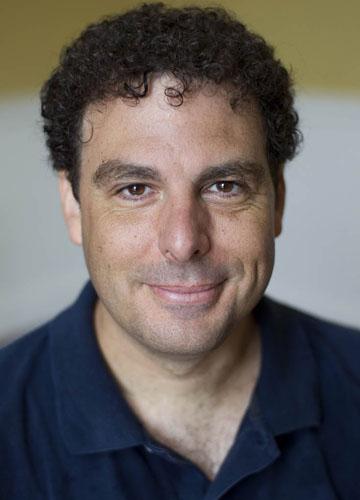 Michael L. Littman合作论文数Department of Computer Science, Brown University9
 Dilip Arumugam合作论文数Computer Science Department, Stanford University;Stanford Computation & Cognition Lab, Stanford University;Stanford Artificial Intelligence Lab, Stanford University3
 David Abel合作论文数Google DeepMind3
 Arthur Mensch合作论文数2
 Jon Sporring合作论文数Department of Computer Science, Faculty of Science, University of Copenhagen2
 Kaleem Siddiqi合作论文数Centre for Intelligent Machines, McGill University;School of Computer Science, McGill University;Department of Mathematics and Statistics, McGill University2
 Doina Precup合作论文数DeepMind;School of Computer Science, McGill University;Mila;Centre for Intelligent Machines, McGill University2
 Michael J. Frank合作论文数Department of Cognitive, Linguistic, and Psychological Sciences, Brown University;Carney Center for Computational Brain Science, Brown University2
 Emmanuel Piuze合作论文数School of Computer Science & Centre for Intelligent Machines, McGill University2
 Adrianus J. Bakermans合作论文数Department of Biomedical Engineering, Eindhoven University of Technology2Hashemi Bobak合作论文数1
 Rohan Chitnis合作论文数Meta1Paul McVay合作论文数1
 Kavosh Asadi合作论文数Amazon1
 Romain Laroche合作论文数Microsoft1Christopher Grimm合作论文数1
 Arnav Kumar Jain合作论文数Université de Montréal;Mila1Zheqing Zhu合作论文数Stanford University,Management Science & Engineering,CA,USA1
 Gustav Strijkers合作论文数Biomedical Engineering and Physics Department, Amsterdam University Medical Center1
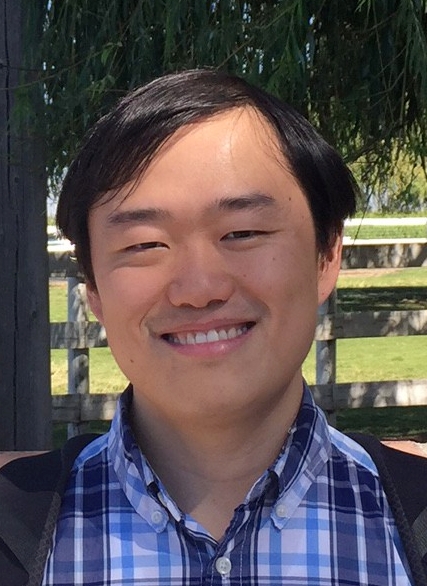 Yuandong Tian (田渊栋)合作论文数Recursive Superintelligence Inc.1
 Nakul Gopalan合作论文数Georgia Institute of Technology, Brown University1
 Irina Rish合作论文数Mila – Quebec Artificial Intelligence Institute;Department of Computer Science, Université de Montréal;Department of Operations Research, Université de Montréal1
 Yingchen Xu合作论文数Airbnb1
 Glen Berseth合作论文数Department of Computer Science and Operations Research, Faculty of Arts and Science, Universite de Montreal;Mila - Quebec Artificial Intelligence Institute1
 Stefanie Tellex合作论文数Department of Computer Science, Brown University1
 Harm Van Seijen合作论文数SonyAI1
 Jun Ki Lee合作论文数Department of Biomedical Engineering, Hanyang University1
 Michael Rabbat合作论文数AMI Labs1Ürün Dogan合作论文数Institut für Mathematik, Universität Potsdam1
 Olivier Delalleau合作论文数NVIDIA1
 Sainbayar Sukhbaatar合作论文数Meta AI1




