Humans judge perceptual similarity according to diverse visual attributes, including scene layout, subject location, and camera pose. Existing vision models understand a wide range of semantic abstractions but improperly weigh these attributes and thus make inferences misaligned with human perception. While vision representations have previously benefited from human preference alignment in contexts like image generation, the utility of perceptually aligned representations in more general-purpose settings remains unclear. Here, we investigate how aligning vision model representations to human perceptual judgments impacts their usability in standard computer vision tasks. We finetune state-of-the-art models on a dataset of human similarity judgments for synthetic image triplets and evaluate them across diverse computer vision tasks. We find that aligning models to perceptual judgments yields representations that improve upon the original backbones across many downstream tasks, including counting, semantic segmentation, depth estimation, instance retrieval, and retrieval-augmented generation. In addition, we find that performance is widely preserved on other tasks, including specialized out-of-distribution domains such as in medical imaging and 3D environment frames. Our results suggest that injecting an inductive bias about human perceptual knowledge into vision models can make them better representation learners.
Current perceptual similarity metrics operate at the level of pixels and patches. These metrics compare images in terms of their low-level colors and textures, but fail to capture mid-level similarities and differences in image layout, object pose, and semantic content. In this paper, we develop a perceptual metric that assesses images holistically. Our first step is to collect a new dataset of human similarity judgments over image pairs that are alike in diverse ways. Critical to this dataset is that judgments are nearly automatic and shared by all observers. To achieve this we use recent text-to-image models to create synthetic pairs that are perturbed along various dimensions. We observe that popular perceptual metrics fall short of explaining our new data, and we introduce a new metric, DreamSim, tuned to better align with human perception. We analyze how our metric is affected by different visual attributes, and find that it focuses heavily on foreground objects and semantic content while also being sensitive to color and layout. Notably, despite being trained on synthetic data, our metric generalizes to real images, giving strong results on retrieval and reconstruction tasks. Furthermore, our metric outperforms both prior learned metrics and recent large vision models on these tasks.
Despite increasingly realistic image quality, recent 3D image generative models often operate on 3D volumes of fixed extent with limited camera motions. We investigate the task of unconditionally synthesizing unbounded nature scenes, enabling arbitrarily large camera motion while maintaining a persistent 3D world model. Our scene representation consists of an extendable, planar scene layout grid, which can be rendered from arbitrary camera poses via a 3D decoder and volume rendering, and a panoramic skydome. Based on this representation, we learn a generative world model solely from single-view internet photos. Our method enables simulating long flights through 3D landscapes, while maintaining global scene consistency---for instance, returning to the starting point yields the same view of the scene. Our approach enables scene extrapolation beyond the fixed bounds of current 3D generative models, while also supporting a persistent, camera-independent world representation that stands in contrast to auto-regressive 3D prediction models. Our project page: https://chail.github.io/persistent-nature/.
Generative models operate at fixed resolution, even though natural images come in a variety of sizes. As high-resolution details are downsampled away and low-resolution images are discarded altogether, precious supervision is lost. We argue that every pixel matters and create datasets with variable-size images, collected at their native resolutions. To take advantage of varied-size data, we introduce continuous-scale training, a process that samples patches at random scales to train a new generator with variable output resolutions. First, conditioning the generator on a target scale allows us to generate higher resolution images than previously possible, without adding layers to the model. Second, by conditioning on continuous coordinates, we can sample patches that still obey a consistent global layout, which also allows for scalable training at higher resolutions. Controlled FFHQ experiments show that our method can take advantage of multi-resolution training data better than discrete multi-scale approaches, achieving better FID scores and cleaner high-frequency details. We also train on other natural image domains including churches, mountains, and birds, and demonstrate arbitrary scale synthesis with both coherent global layouts and realistic local details, going beyond 2K resolution in our experiments. Our project page is available at: https://chail.github.io/anyres-gan/ .
We introduce a new approach to image forensics: placing physical refractive objects, which we call totems, into a scene so as to protect any photograph taken of that scene. Totems bend and redirect light rays, thus providing multiple, albeit distorted, views of the scene within a single image. A defender can use these distorted totem pixels to detect if an image has been manipulated. Our approach unscrambles the light rays passing through the totems by estimating their positions in the scene and using their known geometric and material properties. To verify a totem-protected image, we detect inconsistencies between the scene reconstructed from totem viewpoints and the scene's appearance from the camera viewpoint. Such an approach makes the adversarial manipulation task more difficult, as the adversary must modify both the totem and image pixels in a geometrically consistent manner without knowing the physical properties of the totem. Unlike prior learning-based approaches, our method does not require training on datasets of specific manipulations, and instead uses physical properties of the scene and camera to solve the forensics problem.
Recent generative models can synthesize "views" of artificial images that mimic real-world variations, such as changes in color or pose, simply by learning from unlabeled image collections. Here, we investigate whether such views can be applied to real images to benefit downstream analysis tasks such as image classification. Using a pretrained generator, we first find the latent code corresponding to a given real input image. Applying perturbations to the code creates natural variations of the image, which can then be ensembled together at test-time. We use StyleGAN2 as the source of generative augmentations and investigate this setup on classification tasks involving facial attributes, cat faces, and cars. Critically, we find that several design decisions are required towards making this process work; the perturbation procedure, weighting between the augmentations and original image, and training the classifier on synthesized images can all impact the result. Currently, we find that while test-time ensembling with GAN-based augmentations can offer some small improvements, the remaining bottlenecks are the efficiency and accuracy of the GAN reconstructions, coupled with classifier sensitivities to artifacts in GAN-generated images.
In recent years, Generative Adversarial Networks have become ubiquitous in both research and public perception, but how GANs convert an unstructured latent code to a high quality output is still an open question. In this work, we investigate regression into the latent space as a probe to understand the compositional properties of GANs. We find that combining the regressor and a pretrained generator provides a strong image prior, allowing us to create composite images from a collage of random image parts at inference time while maintaining global consistency. To compare compositional properties across different generators, we measure the trade-offs between reconstruction of the unrealistic input and image quality of the regenerated samples. We find that the regression approach enables more localized editing of individual image parts compared to direct editing in the latent space, and we conduct experiments to quantify this independence effect. Our method is agnostic to the semantics of edits, and does not require labels or predefined concepts during training. Beyond image composition, our method extends to a number of related applications, such as image inpainting or example-based image editing, which we demonstrate on several GANs and datasets, and because it uses only a single forward pass, it can operate in real-time. Code is available on our project page: https://chail.github.io/latent-composition/.
In supplementary material, we provide additional details on dataset preparation and classifier training methods for each classification task. We show additional qualitative examples of the GAN reconstructions and the perturbation methods investigated in the main text, at both fine and coarse layers of the latent code. Finally, we provide additional results investigating different experiment settings and classifier training distributions under each type of latent perturbation method.
The quality of image generation and manipulation is reaching impressive levels, making it increasingly difficult for a human to distinguish between what is real and what is fake. However, deep networks can still pick up on the subtle artifacts in these doctored images. We seek to understand what properties of fake images make them detectable and identify what generalizes across different model architectures, datasets, and variations in training. We use a patch-based classifier with limited receptive fields to visualize which regions of fake images are more easily detectable. We further show a technique to exaggerate these detectable properties and demonstrate that, even when the image generator is adversarially finetuned against a fake image classifier, it is still imperfect and leaves detectable artifacts in certain image patches. Code is available at https://github.com/chail/patch-forensics .
Language is hierarchically organized: words are built into phrases, sentences, and paragraphs to represent complex ideas. Here we ask whether the organization of language in written text displays the fractal hierarchical architecture common in systems optimized for efficient information transmission. We test the hypothesis that the expositional structure of scientific research articles displays Rentian scaling, and that the exponent of the scaling law changes as the article's information transmission capacity changes. Using 32 scientific manuscripts - each containing between three and 26 iterations of revision - we construct semantic networks in which nodes represented unique words in each manuscript, and edges connect nodes if two words appeared within the same 5-word window. We show that these semantic networks display clear Rentian scaling, and that the Rent exponent varies over the publication life cycle, from the first draft to the final revision. Furthermore, we observe that manuscripts fell into three clusters in terms of how the scaling exponents changed across drafts: exponents rising over time, falling over time, and remaining relatively stable over time. This change in exponent reflects the evolution in semantic network structure over the manuscript revision process, highlighting a balance between network complexity, which increases the exponent, and network efficiency, which decreases the exponent. Lastly, the final value of the Rent exponent is negatively correlated with the number of authors. Taken together, our results suggest that semantic networks reflecting the structure of exposition in scientific research articles display striking hierarchical architecture that arbitrates tradeoffs between competing constraints on network organization, and that this arbitration is navigated differently depending on the social environment characteristic of the collaboration.
An open secret in contemporary machine learning is that many models work beautifully on standard benchmarks but fail to generalize outside the lab. This has been attributed to biased training data, which provide poor coverage over real world events. Generative models are no exception, but recent advances in generative adversarial networks (GANs) suggest otherwise -- these models can now synthesize strikingly realistic and diverse images. Is generative modeling of photos a solved problem? We show that although current GANs can fit standard datasets very well, they still fall short of being comprehensive models of the visual manifold. In particular, we study their ability to fit simple transformations such as camera movements and color changes. We find that the models reflect the biases of the datasets on which they are trained (e.g., centered objects), but that they also exhibit some capacity for generalization: by "steering" in latent space, we can shift the distribution while still creating realistic images. We hypothesize that the degree of distributional shift is related to the breadth of the training data distribution. Thus, we conduct experiments to quantify the limits of GAN transformations and introduce techniques to mitigate the problem. Code is released on our project page: https://ali-design.github.io/gan_steerability/
The fact that deep learning models are surprisingly fragile – yielding drastically different outputs upon small changes in input – has been well studied in the image recognition space, but this property is shared across other input modalities. In the audio domain, minor perturbations to a waveform impact speech-to-text translation and allow an attacker to arbitrarily change a recognized phrase while remaining barely noticeable to an outside listener. We demonstrate that that these perturbations can also be used for good – by applying simple learned perturbations to audio signals, we are able to prevent successful transcription in speech-to-text systems; our approach defends against malicious eavesdropping and mass transcription of private audio content while still maintaining human interpretability of the signal. Furthermore, our learned perturbations, including a fixed universal perturbation, do not require optimizing towards a specific audio sequence or having the full audio recording available in advance. These perturbations are simple to apply in real-time and provide a step towards ensuring greater privacy in largely unmonitored digital environments.
Bayesian neural networks, a hybrid of deep neural networks and probabilistic models, combine the flexibility of deep learning with estimates of uncertainty in predictions. However, like deep neural networks, they are often difficult to interpret – we do not know how correct predictions are made and what makes the prediction uncertain. Numerous approaches to interpreting neural network predictions have been studied, but there is limited work on interpreting uncertainty in model predictions. Here, we propose a method to visualise the contribution of individual features to predictive uncertainty, epistemic uncertainty (from the model weights), and aleatoric uncertainty (inherent in the input). Our approach measures the change in uncertainty when a given feature of the input is known, compared to when it is unknown. Applying our approach to the CIFAR10 and ISIC2018 skin lesion diagnosis datasets, we generate smooth visualisations highlighting pixels in the input image that most impact each type of uncertainty. On inputs that are difficult to classify, different areas of the image contribute to epistemic and aleatoric uncertainties. This suggests that some areas of the test image determine its classification (aleatoric uncertainty), other areas distinguish it from the training distribution (epistemic uncertainty), and both contribute to overall predictive uncertainty.
A next generation tomosynthesis (NGT) system has been proposed to obtain higher spatial resolution than traditional digital breast tomosynthesis (DBT) by achieving consistent sub-pixel resolution. Resolution and linear acquisition artifacts can be further improved by creating multi-axis, x-ray tube acquisition paths. This requires synchronization of the x-ray generator, x-ray detector, and motion controller for an x-ray tube motion path composed of arbitrarily spaced x-ray projection points. We have implemented a state machine run on an Arduino microcontroller that synchronizes the system processes through hardware interrupts. The desired x-ray projection points are converted into two-dimensional motion segments that are compiled to the motion controller’s memory. The state machine then signals the x-ray tube to move from one acquisition point to another, exposing x-rays at each point, until every acquisition is made. The effectiveness of this design was tested based on speed of procedure and image quality metrics. The results show that the average procedure time, over 15 test runs for three different paths, took under 20 seconds, which is far superior to previous acquisition methods on the NGT system. In conclusion, this study shows that a state machine implementation is viable for fast and accurate acquisitioning in NGT systems.
Cognitive function evolves significantly over development, enabling flexible control of human behavior. Yet, how these functions are instantiated in spatially distributed and dynamically interacting networks, or graphs, that change in structure from childhood to adolescence is far from understood. Here we applied a novel machine-learning method to track continuously overlapping and time-varying subgraphs in the brain at rest within a sample of 200 healthy youth (ages 8–11 and 19–22) drawn from the Philadelphia Neurodevelopmental Cohort. We uncovered a set of subgraphs that capture surprisingly integrated and dynamically changing interactions among known cognitive systems. We observed that subgraphs that were highly expressed were especially transient, flexibly switching between high and low expression over time. This transience was particularly salient in a subgraph predominantly linking frontoparietal regions of the executive system, which increases in both expression and flexibility from childhood to young adulthood. Collectively, these results suggest that healthy development is accompanied by an increasing precedence of executive networks and a greater switching of the regions and interactions subserving these networks.
During linguistic processing, a set of brain regions on the lateral surfaces of the left frontal, temporal, and parietal cortices exhibit robust responses. These areas display highly correlated activity while a subject rests or performs a naturalistic language comprehension task, suggesting that they form an integrated functional system. Evidence suggests that this system is spatially and functionally distinct from other systems that support high-level cognition in humans. Yet, how different regions within this system might be recruited dynamically during task performance is not well understood. Here we use network methods, applied to fMRI data collected from 22 human subjects performing a language comprehension task, to reveal the dynamic nature of the language system. We observe the presence of a stable core of brain regions, predominantly located in the left hemisphere, that consistently coactivate with one another. We also observe the presence of a more flexible periphery of brain regions, predominantly located in the right hemisphere, that coactivate with different regions at different times. However, the language functional ROIs in the angular gyrus and the anterior temporal lobe were notable exceptions to this trend. By highlighting the temporal dimension of language processing, these results suggest a trade-off between a region's specialization and its capacity for flexible network reconfiguration.
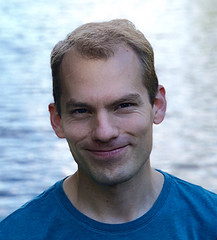 Phillip Isola合作论文数Electrical Engineering & Computer Science Department, Massachusetts Institute of Technology10
 Richard Zhang (章睿嘉)合作论文数Adobe Research4
 Dani S. Bassett合作论文数Department of Bioengineering, University of Pennsylvania;Departments of Physics & Astronomy, School of Arts & Sciences, University of Pennsylvania;Santa Fe Institute3
 Eli Shechtman合作论文数Imaging Lab, Adobe Research3
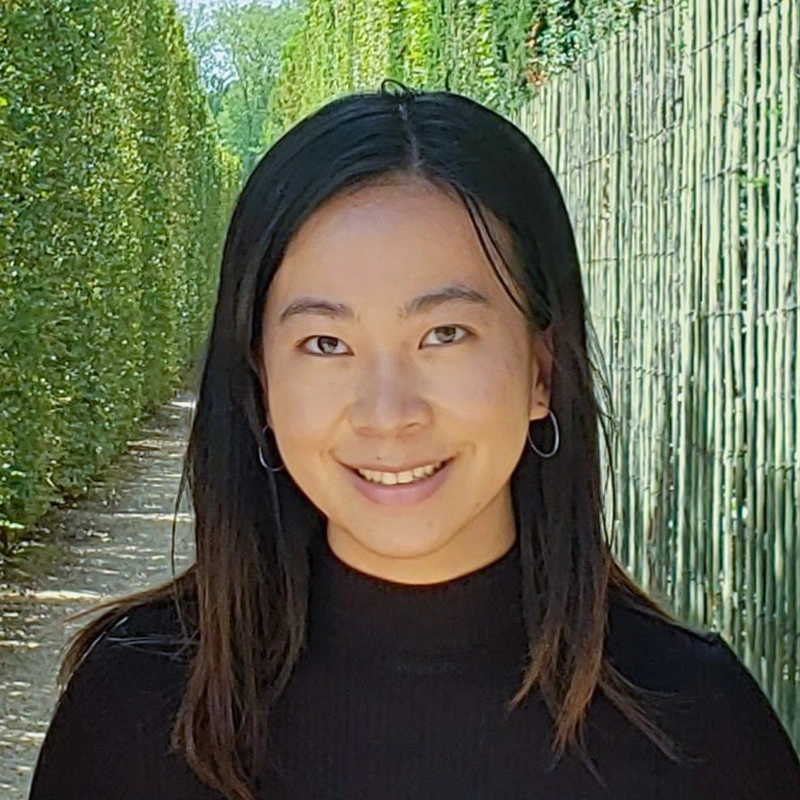 Stephanie Fu合作论文数Berkeley Artificial Intelligence Research Lab, University of California, Berkeley2
 Netanel Tamir合作论文数2
 Shobhita Sundaram合作论文数Computer Science and Artificial Intelligence Laboratory, Massachusetts Institute of Technology2
 Jun-Yan Zhu合作论文数Robotics Institute, School of Computer Science, Carnegie Mellon University2
 Ser-Nam Lim合作论文数Department of Computer Science, College of Engineering & Computer Science, University of Central Florida;Institute of Artificial Intelligence, University of Central Florida2
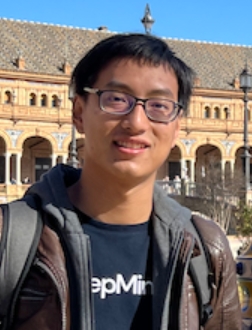 Zhongxia Yan合作论文数Laboratory for Information & Decision Systems, Massachusetts Institute of Technology;Department of Electrical Engineering and Computer Science, Massachusetts Institute of Technology1Margaret Nolan合作论文数1
 Simon Kornblith合作论文数Anthropic1
 Minyoung Huh (Jacob)合作论文数Computer Science and Artificial Intelligence Laboratory, Massachusetts Institute of Technology1
 Ankit Khambhati合作论文数1
 Zhengqi Li合作论文数Google DeepMind1
 Chloe J. Choi合作论文数Dept Radiol, Univ Penn1
 Lukas Muttenthaler合作论文数Department of Software Engineering and Theoretical Computer Science, Technische Universität Berlin;Berlin Institute for the Foundations of Learning and Data, TU Berlin;Max Planck Institute for Human Cognitive and Brain Sciences;Google DeepMind1Jingwei Ma合作论文数1
 Rastko Ciric合作论文数Univ Penn, Philadelphia, PA 19104 USA1
 Trevor L. Vent合作论文数Univ Penn, Dept Radiol, 3400 Spruce St, Philadelphia, PA 19104 USA1
 Dale Zhou合作论文数Perelman School of Medicine, University of Pennsylvania1Elizabeth A Kobe合作论文数1Idan Blank合作论文数Department of Linguistics, College of Humanities, University of California, Los Angeles1
 Ali Jahanian合作论文数Computer Science & Artificial Intelligence Laboratory, Massachusetts Institute of Technology1
 Andrew Douglas Arnold Maidment合作论文数Department of Radiology, Perelman School of Medicine, University of Pennsylvania1
 Tongzhou Wang (王童舟)合作论文数Computer Science and Artificial Intelligence Laboratory, Massachusetts Institute of Technology1
 Michaël Gharbi合作论文数Reve1
 Noah Snavely合作论文数Department of Computer Science, Cornell University;Google Research1
 Raquel Gur合作论文数Department of Psychiatry, Perelman School of Medicine, University of Pennsylvania1
 Richard Tucker合作论文数Google Research1
 Ruben C. Gur合作论文数Neuropsychology and the Brain Behavior Laboratory, Department of Psychiatry, Perelman School of Medicine, University of Pennsylvania1
 Trevor Darrell合作论文数Department of Electrical Engineering and Computer Science, University of California, Berkeley1
 Antonio Torralba合作论文数Computer Science and Artificial Intelligence Laboratory, Department of Electrical Engineering and Computer Science, School of Engineering, Massachusetts Institute of Technology1
 David Bau合作论文数Khoury College of Computer Sciences, Northeastern University1
 Tyler Moore合作论文数Cyber Security and Information Assurance
Tandy School of Computer Science, The University of Tulsa1
Tyler Moore合作论文数Cyber Security and Information Assurance
Tandy School of Computer Science, The University of Tulsa1 Marcelo Gomes Mattar合作论文数1
 Jonas Wulff合作论文数Xyla1Raymond J. Acciavatti合作论文数Department of Radiology, University of Pennsylvania1
 Tali Dekel合作论文数Google;Faculty of Mathematics and Computer Science, Weizmann Institute of Science1
 Theodore D. Satterthwaite合作论文数Neurodevelopment and Psychosis Section, Perelman School of Medicine, University of Pennsylvania;Center for Biomedical Computing and Image Analysis, Perelman School of Medicine, University of Pennsylvania;Institute for Translational Medicine and Therapeutics, Perelman School of Medicine, University of Pennsylvania1
 Evelina Fedorenko合作论文数MIT Department of Brain and Cognitive Sciences1




