A sample of pp collision data, corresponding to an integrated luminosity of 5.4 fb(-1) and collected by the LHCb experiment during LHC Run 2, is used to measure the ratio of the lifetime of the Xi(0)(b) baryon to that of the Lambda(0)(b) baryon, r(tau) equivalent to tau(Xi 0b)/tau(Lambda 0b). The value r(tau)(Run 2) = 1.004 +/- 0.009 +/- 0.006 is obtained, where the first uncertainty is statistical and the second systematic. This value is averaged with the corresponding value from Run 1 to obtain r(tau) = 1.004 +/- 0.008 +/- 0.005. Multiplying by the known value of the Lambda(0)(b) lifetime yields tau(Xi 0b) = 1.475 +/- 0.012 +/- 0.008 +/- 0.009 ps, where the last uncertainty is due to the limited knowledge of the Lambda(0)(b) lifetime. This measurement improves the precision of the current world average of the Xi(0)(b) lifetime by about a factor of two, and is in good agreement with the most recent theoretical predictions.
The determination of the direction of a stellar core collapse via its neutrino emission is crucial for the identification of the progenitor for a multimessenger follow-up. A highly effective method of reconstructing supernova directions within the Deep Underground Neutrino Experiment (DUNE) is introduced. The supernova neutrino pointing resolution is studied by simulating and reconstructing electron-neutrino charged-current absorption on Ar-40 and elastic scattering of neutrinos on electrons. Procedures to reconstruct individual interactions, including a newly developed technique called "brems flipping," as well as the burst direction from an ensemble of interactions are described. Performance of the burst direction reconstruction is evaluated for supernovae happening at a distance of 10 kpc for a specific supernova burst flux model. The pointing resolution is found to be 3.4 degrees at 68% coverage for a perfect interaction-channel classification and a fiducial mass of 40 kton, and 6.6 degrees for a 10 kton fiducial mass respectively. Assuming a 4% rate of charged-current interactions being misidentified as elastic scattering, DUNE's burst pointing resolution is found to be 4.3 degrees (8.7 degrees) at 68% coverage.
Abstract A time-dependent, flavour-tagged measurement of CP violation is performed with B 0 → D + D − and B s 0 $$ {B}_s^0 $$ → D s + D s − $$ {D}_s^{+}{D}_s^{-} $$ decays, using data collected by the LHCb detector in proton-proton collisions at a centre-of-mass energy of 13 TeV corresponding to an integrated luminosity of 6 fb −1. In B 0 → D + D − decays the CP-violation parameters are measured to be S D + D − = − 0.552 ± 0.100 stat ± 0.010 syst , C D + D − = 0.128 ± 0.103 stat ± 0.010 syst . $$ {\displaystyle \begin{array}{c}{S}_{D^{+}{D}^{-}}=-0.552\pm 0.100\left(\textrm{stat}\right)\pm 0.010\left(\textrm{syst}\right),\\ {}{C}_{D^{+}{D}^{-}}=0.128\pm 0.103\left(\textrm{stat}\right)\pm 0.010\left(\textrm{syst}\right).\end{array}} $$ In B s 0 $$ {B}_s^0 $$ → D s + D s − $$ {D}_s^{+}{D}_s^{-} $$ decays the CP-violating parameter formulation in terms of ϕ s and |λ| results in ϕ s = − 0.086 ± 0.106 stat ± 0.028 syst rad , ∣ λ D s + D s − ∣ = 1.145 ± 0.126 stat ± 0.031 syst . $$ {\displaystyle \begin{array}{c}{\phi}_s=-0.086\pm 0.106\left(\textrm{stat}\right)\pm 0.028\left(\textrm{syst}\right)\textrm{rad},\\ {}\mid {\lambda}_{D_s^{+}{D}_s^{-}}\mid =1.145\pm 0.126\left(\textrm{stat}\right)\pm 0.031\left(\textrm{syst}\right).\end{array}} $$ These results represent the most precise single measurement of the CP-violation parameters in their respective channels. For the first time in a single measurement, CP symmetry is observed to be violated in B 0 → D + D − decays with a significance exceeding six standard deviations.
Measurements are presented of the cross-section for the central exclusive production of J/psi -> mu(+) mu(-) and psi(2S) -> mu(+)mu(-) processes in proton-proton collisions at root s = 13 TeV with 2016-2018 data. They are performed by requiring both muons to be in the LHCb acceptance (with pseudorapidity 2 < eta(mu +/-) < 4.5) and mesons in the rapidity range 2.0 < y < 4.5. The integrated cross-section results are sigma(J/psi ->mu+ mu-) (2.0 < y(J/psi) < 4.5, 2.0 < eta(mu +/-) < 4.5) = 400 +/- 2 +/- 5 +/- 12 pb, sigma(psi(2S)->mu+mu-)(2.0 < y(psi(2S)) < 4.5, 2.0 < eta(mu +/-) < 4.5) = 9.40 +/- 0.15 +/- 0.13 +/- 0.27 pb, where the uncertainties are statistical, systematic and due to the luminosity determination. In addition, a measurement of the ratio of psi(2S) and J/psi cross-sections, at an average photon-proton centre-of-mass energy of 1 TeV, is performed, giving sigma(psi(2S))/sigma(J/psi) = 0.1763 +/- 0.0029 +/- 0.0008 +/- 0.0039, where the first uncertainty is statistical, the second systematic and the third due to the knowledge of the involved branching fractions. For the first time, the dependence of the J/psi and psi(2S) cross-sections on the total transverse momentum transfer is determined in pp collisions and is found consistent with the behaviour observed in electron-proton collisions.
A time-dependent, flavour-tagged measurement of CP violation is performed with B0 → D+D− and B_s^0 → D_s^+D_s^- decays, using data collected by the LHCb detector in proton-proton collisions at a centre-of-mass energy of 13 TeV corresponding to an integrated luminosity of 6 fb−1. In B0 → D+D− decays the CP-violation parameters are measured to be [ S_D^+D^-=-0.552± 0.100(stat)± 0.010(syst),; C_D^+D^-=0.128± 0.103(stat)± 0.010(syst). ] In B_s^0 → D_s^+D_s^- decays the CP-violating parameter formulation in terms of ϕs and |λ| results in [ ϕ_s=-0.086± 0.106(stat)± 0.028(syst)rad,; |λ_D_s^+D_s^-| =1.145± 0.126(stat)± 0.031(syst). ] These results represent the most precise single measurement of the CP-violation parameters in their respective channels. For the first time in a single measurement, CP symmetry is observed to be violated in B0 → D+D− decays with a significance exceeding six standard deviations.
A search for hidden-charm pentaquark states decaying to a range of ΣcD¯ and Λc+D¯ final states, as well as doubly charmed pentaquark states to ΣcD and Λc+D, is made using samples of proton-proton collision data corresponding to an integrated luminosity of 5.7 fb−1 recorded by the LHCb detector at s=13 TeV. Since no significant signals are found, upper limits are set on the pentaquark yields relative to that of the Λc+ baryon in the Λc+→pK−π+ decay mode. The known pentaquark states are also investigated, and their signal yields are found to be consistent with zero in all cases. © 2024 CERN, for the LHCb Collaboration 2024 CERN
The LHCb collaboration measures production of the exotic hadron χ_c1(3872) in proton-nucleus collisions for the first time. Comparison with the charmonium state ψ(2S) suggests that the exotic χ_c1(3872) experiences different dynamics in the nuclear medium than conventional hadrons, and comparison with data from proton-proton collisions indicates that the presence of the nucleus may modify χ_c1(3872) production rates. This is the first measurement of the nuclear modification factor of an exotic hadron.
The fraction of chi(c1) and chi(c2) decays in the prompt J=psi yield, F-chi c -> J=psi = sigma(chi c) -> J=psi/ sigma(J/ psi) , is measured by the LHCb detector in pPb collisions at root s(NN) = 8.16 TeV. The study covers the forward (1.5 < y* < 4.0) and sNN backward (-5.0 < y* < -2.5) rapidity regions, where y* is the J=psi rapidity in the nucleon -nucleon centerof -mass system. Forward and backward rapidity samples correspond to integrated luminosities of 13.6 +/- 0.3 and 20.8 +/- 0.5 nb(-1) , respectively. The result is presented as a function of the J=psi transverse momentum pT;J/ psi in the range 1 < pT -> J/ psi < 20 GeV=c. The F-chi c -> J=psi fraction at forward rapidity is compatible with the LHCb measurement performed in pp collisions at root s= 7 TeV, whereas the result at s backward rapidity is 2.4 sigma larger than in the forward region for 1 < pT,(J/ psi) < 3 GeV/ c. The increase of F-chi c -> J/ psi at low pT;J/ psi at backward rapidity is compatible with the suppression of the psi(2S) contribution to the prompt J/ psi yield. The lack of in -medium dissociation of chi(c) states observed in this study sets an upper limit of 180 MeV on the free energy available in these pPb collisions to dissociate or inhibit charmonium state formation.
For accurate determination of particle masses accurate knowledge of the momentum scale of the detectors is crucial. The procedure used to calibrate the momentum scale of the LHCb spectrometer is described and illustrated using the performance obtained with an integrated luminosity of $1.6~ fb^{-1}$ collected during 2016 in $pp$ running. The procedure uses large samples of $J/\psi \rightarrow \mu^+ \mu^-$ and $B^+ \rightarrow J/\psi K^+$ decays and leads to a relative accuracy of $3 \times 10^{-4}$ on the momentum scale.
A study of resonant structures in B^{+}→D^{*+}D^{-}K^{+} and B^{+}→D^{*-}D^{+}K^{+} decays is performed, using proton-proton collision data at center-of-mass energies of sqrt[s]=7, 8, and 13 TeV recorded by the LHCb experiment, corresponding to an integrated luminosity of 9 fb^{-1}. A simultaneous amplitude fit is performed to the two channels with contributions from resonances decaying to D^{*-}D^{+} and D^{*+}D^{-} states linked by C parity. This procedure allows the C parities of resonances in the D^{*±}D^{∓} mass spectra to be determined. Four charmonium or charmoniumlike states are observed decaying into D^{*±}D^{∓}: η_{c}(3945), h_{c}(4000), χ_{c1}(4010), and h_{c}(4300), with quantum numbers J^{PC} equal to 0^{-+}, 1^{+-}, 1^{++}, and 1^{+-}, respectively. At least three of these states have not been observed previously. In addition, the existence of the T_{c[over ¯]s[over ¯]0}^{*}(2870)^{0} and T_{c[over ¯]s[over ¯]1}^{*}(2900)^{0} resonances in the D^{-}K^{+} mass spectrum, already observed in the B^{+}→D^{+}D^{-}K^{+} decay, is confirmed in a different production channel.
Abstract Measurements of the branching fraction ratio $$ \mathcal{B}\left(\phi \to {\mu}^{+}{\mu}^{-}\right)/\mathcal{B}\left(\phi \to {e}^{+}{e}^{-}\right) $$ B ϕ → μ + μ − / B ϕ → e + e − with $$ {D}_s^{+}\to {\pi}^{+}\phi $$ D s + → π + ϕ and D+→ π+ϕ decays, denoted $$ {R}_{\phi \pi}^s $$ R ϕπ s and $$ {R}_{\phi \pi}^d $$ R ϕπ d , are presented. The analysis is performed using a dataset corresponding to an integrated luminosity of 5.4 fb−1 of pp collision data collected with the LHCb experiment. The branching fractions are normalised with respect to the B+ → K+J/ψ(→ e+e−) and B+ → K+J/ψ(→ μ+μ−) decay modes. The combination of the results yields$$ {R}_{\phi \pi}=1.022\pm 0.012\left(\textrm{stat}\right)\pm 0.048\left(\textrm{syst}\right). $$ R ϕπ = 1.022 ± 0.012 stat ± 0.048 syst . The result is compatible with previous measurements of the ϕ → ℓ+ℓ− branching fractions and predictions based on the Standard Model.
Abstract The Λ b 0 $$ {\Lambda}_b^0 $$ → D + D − Λ decay is observed for the first time using proton-proton collision data collected by the LHCb experiment at a center-of-mass energy of 13 TeV, corresponding to an integrated luminosity of 5.3 fb −1. Using the B 0 → D + D − K S 0 $$ {D}^{+}{D}^{-}{K}_S^0 $$ decay as a reference channel, the product of the relative production cross-section and decay branching fractions is measured to be R = σ Λ b 0 σ B 0 = B Λ b 0 → D + D − Λ B B 0 → D + D − K S 0 = 0.179 ± 0.022 ± 0.014 , $$ \mathcal{R}=\frac{\sigma_{\Lambda_b^0}}{\sigma_{B^0}}=\frac{\mathcal{B}\left({\Lambda}_b^0\to {D}^{+}{D}^{-}\Lambda \right)}{\mathcal{B}\left({B}^0\to {D}^{+}{D}^{-}{K}_{\textrm{S}}^0\right)}=0.179\pm 0.022\pm 0.014, $$ where the first uncertainty is statistical and the second is systematic. The known branching fraction of the reference channel, B B 0 → D + D − K S 0 $$ \mathcal{B}\left({B}^0\to {D}^{+}{D}^{-}{K}_{\textrm{S}}^0\right) $$ , and the cross-section ratio, σ Λ b 0 / σ B 0 $$ {\sigma}_{\Lambda_b^0}/{\sigma}_{B^0} $$ , previously measured by LHCb are used to derive the branching fraction of the Λ b 0 $$ {\Lambda}_b^0 $$ → D + D − Λ decay B Λ b 0 → D + D − Λ = 1.24 ± 0.15 ± 0.10 ± 0.28 ± 0.11 × 10 − 4 , $$ \mathcal{B}\left({\Lambda}_b^0\to {D}^{+}{D}^{-}\Lambda \right)=\left(1.24\pm 0.15\pm 0.10\pm 0.28\pm 0.11\right)\times {10}^{-4}, $$ where the third and fourth contributions are due to uncertainties of B B 0 → D + D − K S 0 $$ \mathcal{B}\left({B}^0\to {D}^{+}{D}^{-}{K}_{\textrm{S}}^0\right) $$ and σ Λ b 0 / σ B 0 $$ {\sigma}_{\Lambda_b^0}/{\sigma}_{B^0} $$ , respectively. Inspection of the D +Λ and D + D − invariant-mass distributions suggests a rich presence of intermediate resonances in the decay. The Λ b 0 $$ {\Lambda}_b^0 $$ → D *+ D − Λ decay is also observed for the first time as a partially reconstructed component in the D + D − Λ invariant mass spectrum.
Abstract A measurement of CP-violating observables associated with the interference of B0→ D0K⋆(892)0 and $$ {B}^0\to {\overline{D}}^0{K}^{\star }{(892)}^0 $$ B 0 → D ¯ 0 K ⋆ 892 0 decay amplitudes is performed in the D0→ K∓π±(π+π−), D0→ π+π−(π+π−), and D0→ K+K− final states using data collected by the LHCb experiment corresponding to an integrated luminosity of 9 fb−1. CP-violating observables related to the interference of $$ {B}_s^0\to {D}^0{\overline{K}}^{\star }{(892)}^0 $$ B s 0 → D 0 K ¯ ⋆ 892 0 and $$ {B}_s^0\to {\overline{D}}^0{\overline{K}}^{\star }{(892)}^0 $$ B s 0 → D ¯ 0 K ¯ ⋆ 892 0 are also measured, but no evidence for interference is found. The B0 observables are used to constrain the parameter space of the CKM angle γ and the hadronic parameters $$ {r}_{B^0}^{DK\star } $$ r B 0 DK ⋆ and $$ {\delta}_{B^0}^{DK\star } $$ δ B 0 DK ⋆ with inputs from other measurements. In a combined analysis, these measurements allow for four solutions in the parameter space, only one of which is consistent with the world average.
The longitudinal polarization fraction of the D* meson is measured in B-0 -> D*(-) tau(+)nu(t) decays, where the tau lepton decays to three charged pions and a neutrino, using proton-proton collision data collected by the LHCb experiment at center-of-mass energies of 7, 8 and 13 TeV and corresponding to an integrated luminosity of 5 fb(-1). The D* polarization fraction F-L(D)* is measured in two q(2) regions, below and above 7 GeV2/c(4), where q(2) is defined as the squared invariant mass of the tau nu(tau) system. The F-L(D)*L values are measured to be 0.52 +/- 0.07 +/- 0.04 and 0.34 +/- 0.08 +/- 0.02 for the lower and higher q(2) regions, respectively. The first uncertainties are statistical and the second systematic. The average value over the whole q(2) range is F-L(D)* = 0.41 +/- 0.06 +/- 0.03. These results are compatible with the Standard Model predictions.
A bstract Using a dataset corresponding to 9 fb − 1 of integrated luminosity collected with the LHCb detector between 2011 and 2018 in proton-proton collisions, the decay-time distributions of the decay modes $$ {B}_s^0\to J/{\psi \eta}^{\prime } $$ B s 0 → J / ψη ′ and $$ {B}_s^0\to J/\psi {\pi}^{+}{\pi}^{-} $$ B s 0 → J / ψ π + π − are studied. The decay-width difference between the light and heavy mass eigenstates of the $$ {B}_s^0 $$ B s 0 meson is measured to be ∆Γ s = 0 . 087 ± 0 . 012 ± 0 . 009 ps − 1 , where the first uncertainty is statistical and the second systematic.
ProtoDUNE Single-Phase (ProtoDUNE-SP) is a 770-ton liquid argon time projection chamber that operated in a hadron test beam at the CERN Neutrino Platform in 2018. We present a measurement of the total inelastic cross section of charged kaons on argon as a function of kaon energy using 6 and 7 GeV/$c$ beam momentum settings. The flux-weighted average of the extracted inelastic cross section at each beam momentum setting was measured to be 380$\pm$26 mbarns for the 6 GeV/$c$ setting and 379$\pm$35 mbarns for the 7 GeV/$c$ setting.
AbstractA method is presented to reconstruct charged particles with lifetimes between $$10\,\text {ps} $$ 10 ps and $$10\,\text {ns},$$ 10 ns , which considers a combination of their decay products and the partial tracks created by the initial charged particle. Using the $${\varXi } ^- $$ Ξ - baryon as a benchmark, the method is demonstrated with simulated events and proton-proton collision data at $$\sqrt{s} =13\,\text {TeV},$$ s = 13 TeV , corresponding to an integrated luminosity of 2.0$$\,\text {fb} ^{-1}$$ fb - 1 collected with the LHCb detector in 2018. Significant improvements in the angular resolution and the signal purity are obtained. The method is implemented as part of the LHCb Run 3 event trigger in a set of requirements to select detached hyperons. This is the first demonstration of the applicability of this approach at the LHC, and the first to show its scaling with instantaneous luminosity.
The first observation of the B-c(+) -> J/psi pi(+)pi(0) decay is reported with high significance using proton-proton collision data, corresponding to an integrated luminosity of 9 fb(-1), collected with the LHCb detector at centre-of-mass energies of 7, 8, and 13TeV. The ratio of its branching fraction relative to the B-c(+) -> J/psi pi(+) channel is measured to be BBc+ -> J/psi pi+pi 0/BBc+ -> J/psi pi+ = 2.80 +/- 0.15 +/- 0.11 +/- 0.16, where the first uncertainty is statistical, the second systematic and the third related to imprecise knowledge of the branching fractions for B+ -> J/psi K*(+) and B-c(+) -> J/psi pi(+) decays, which are used to determine the pi(0) detection efficiency. The pi(+) pi(0) mass spectrum is found to be consistent with the dominance of an intermediate rho(+) contribution in accordance with a model based on QCD factorisation.
AbstractThe first search for nonresonant $${{B} _{c} ^+} \!\rightarrow {{\pi } ^+} {\mu ^+\mu ^-} $$ B c + → π + μ + μ - decays is reported. The analysis uses proton–proton collision data collected with the LHCb detector between 2011 and 2018, corresponding to an integrated luminosity of 9$$\,\text {fb} ^{-1}$$ fb - 1 . No evidence for an excess of signal events over background is observed and an upper limit is set on the branching fraction ratio $${\mathcal {B}} ({{B} _{c} ^+} \!\rightarrow {{\pi } ^+} {\mu ^+\mu ^-} )/{\mathcal {B}} ({{B} _{c} ^+} \!\rightarrow {{J \hspace{-1.66656pt}/\hspace{-1.111pt}\psi }} {{\pi } ^+} ) < 2.1\times 10^{-4}$$ B ( B c + → π + μ + μ - ) / B ( B c + → J / ψ π + ) < 2.1 × 10 - 4 at $$90\%$$ 90 % confidence level. Additionally, an updated measurement of the ratio of the $${{B} _{c} ^+} \!\rightarrow {\psi {(2S)}} {{\pi } ^+} $$ B c + → ψ ( 2 S ) π + and $${{B} _{c} ^+} \!\rightarrow {{J \hspace{-1.66656pt}/\hspace{-1.111pt}\psi }} {{\pi } ^+} $$ B c + → J / ψ π + branching fractions is reported. The ratio $${\mathcal {B}} ({{B} _{c} ^+} \!\rightarrow {\psi {(2S)}} {{\pi } ^+} )/{\mathcal {B}} ({{B} _{c} ^+} \!\rightarrow {{J \hspace{-1.66656pt}/\hspace{-1.111pt}\psi }} {{\pi } ^+} )$$ B ( B c + → ψ ( 2 S ) π + ) / B ( B c + → J / ψ π + ) is measured to be $$0.254\pm 0.018 \pm 0.003 \pm 0.005$$ 0.254 ± 0.018 ± 0.003 ± 0.005 , where the first uncertainty is statistical, the second systematic, and the third is due to the uncertainties on the branching fractions of the leptonic $${J \hspace{-1.66656pt}/\hspace{-1.111pt}\psi }$$ J / ψ and $$\psi {(2S)}$$ ψ ( 2 S ) decays. This measurement is the most precise to date and is consistent with previous LHCb results.
The Deep Underground Neutrino Experiment (DUNE) is a next generation experiment aimed to study neutrino oscillation. Its long-baseline configuration will exploit a Near Detector (ND) and a Far Detector (FD) located at a distance of similar to 1300 km. The FD will consist of four Liquid Argon Time Projection Chamber (LAr TPC) modules. A Photon Detection System (PDS) will be used to detect the scintillation light produced inside the detector after neutrino interactions. The PDS will be based on light collectors coupled to Silicon Photomultipliers (SiPMs). Different photosensor technologies have been proposed and produced in order to identify the best samples to fullfill the experiment requirements. In this paper, we present the procedure and results of a validation campaign for the Hole Wire Bonding (HWB) MPPCs samples produced by Hamamatsu Photonics K.K. (HPK) for the DUNE experiment, referring to them as 'SiPMs'. The protocol for a characterization at cryogenic temperature (77 K) is reported. We present the down-selection criteria and the results obtained during the selection campaign undertaken, along with a study of the main sources of noise of the SiPMs including the investigation of a newly observed phenomenon in this field.
 Roger Barlow合作论文数School of Computing and Engineering, University of Huddersfield1158
 Concezio Bozzi合作论文数Istituto Nazionale di Fisica Nucleare Sezione di Ferrara1137
 Roberto Calabrese合作论文数Dipartimento Di Fisica E Scienze Della Terra, Università degli Studi di Ferrara;Istituto Nazionale di Fisica Nucleare1135
 George Lafferty合作论文数School of Physics and Astronomy, The University of Manchester1081
 Eleonora Luppi合作论文数Dipartimento di Fisica e Scienze della Terra, Università degli Studi di Ferrara1070
 Abolhassan Jawahery合作论文数Department of Physics, College of Computer, Mathematical, & Natural Sciences, University of Maryland1041G. Mancinelli合作论文数995
 Antimo Palano合作论文数University of Bari981
 Frédéric Blanc合作论文数Institute of Physics, School of Basic Sciences, Ecole Polytechnique Fédérale De Lausanne976L. Del Buono合作论文数LPNHE, Universités Paris VI and VII, IN2P3-CNRS, Paris, France968
 Marie-Hélène Schune合作论文数Laboratoire De L’accélérateur Linéaire, CNRS962
 Gabriele Simi合作论文数Dipartimento di Fisica e Astronomia, Università degli Studi di Padova960
 Michael Sokoloff合作论文数Department of Physics, University of Cincinnati956Gp Wormser合作论文数951
 David Hutchcroft合作论文数Department of Physics, School of Physical Sciences, Faculty of Science and Engineering, University of Liverpool943M. Rotondo合作论文数940
 Arantza Oyanguren合作论文数Institute of Corpuscular Physics, University of Valencia933
 Eugeni Graugés Pous合作论文数Department of Quantum Physics and Astrophysics, Facultat de Física, Universitat de Barcelona920M. Rama合作论文数918Bernhard Spaan合作论文数909M. Pappagallo合作论文数900
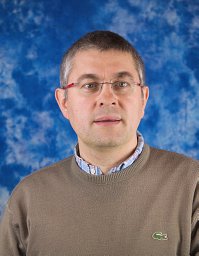 Vincent Tisserand合作论文数Laboratoire de Physique Corpusculaire de Clermont-Ferrand898
 Ulrich Uwer合作论文数Fakultät für Physik und Astronomie, Physikalisches Institut, Universität Heidelberg890
 Steve Playfer合作论文数School of Physics and Astronomy, University of Edinburgh;Institute for Particle and Nuclear Physics, University of Edinburgh881C. Patrignani合作论文数870
 Franz Muheim合作论文数Institute for Particle and Nuclear Physics, School of Physics and Astronomy, The University of Edinburgh860
 Glen Cowan合作论文数Centre for Particle Physics and Astronomy, Department of Physics, Royal Holloway, University of London858
 Fernando Martinez Vidal合作论文数Department of Atomic, Molecular and Nuclear Physics, University of Valencia;Instituto de Física Corpuscular849S. Ricciardi合作论文数831
 Ulrik Egede合作论文数Department of Physics, Faculty of Natural Sciences, Imperial College London;School of Physics & Astronomy, Faculty of Science, Monash University;Monash Data Futures Institute, Monash University831
 John Back合作论文数Department of Physics, University of Warwick826
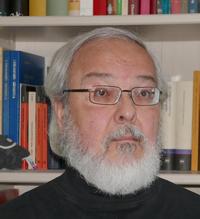 Roland Waldi合作论文数Institut für Physik, Universität Rostock826
 Alberto Lusiani合作论文数Science Department, Scuola Normale Superiore;INFN Sezione di Pisa802
 Fergus Wilson合作论文数Particle Physics Division A, Science and Technology Facilities Council795R. Cenci合作论文数788Francesco Polci合作论文数LPNHE, CNRS779Patrick Spradlin合作论文数School of Physics & Astronomy, University of Glasgow769
 Diego Alejandro Milanes Carreño合作论文数Departamento De Física, Facultad De Ciencias, Universidad Nacional De Colombia760M. Charles合作论文数757E. Ben Haim合作论文数739
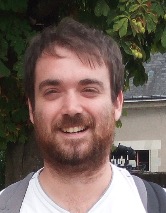 Lucio Anderlini合作论文数Istituto Nazionale di Fisica Nucleare, Sezione di Firenze734
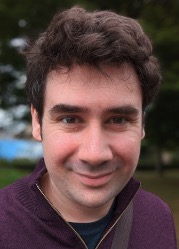 William Barter合作论文数Institute for Particle and Nuclear Physics, School of Physics and Astronomy, University of Edinburgh731
 Adlène Hicheur合作论文数731
 Bernardo Adeva Andany合作论文数Department of Particle Physics, Faculty of Physics, Universidade de Santiago de Compostela731
 Michael H. Kelsey合作论文数Department of Physics, Texas A&M University730
 Paula Alvarez Cartelle合作论文数The Cavendish Laboratory, Department of Physics, University of Cambridge730
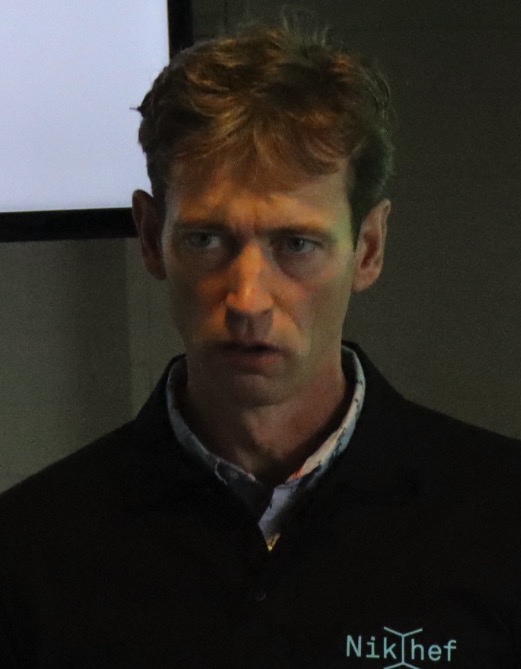 Wouter Hulsbergen合作论文数Nikhef718Martino Borsato合作论文数CNRS/IN2P3, Université Paris-Sud715
 Flavio Archilli合作论文数Università degli Studi di Roma Tor Vergata713




