Shows that palbociclib sensitive cell lines have low CDK2 activity post-mitosis, while palbociclib resistant cell lines have predominately high CDK2 activity
For each cell lines used in this study, we show a list of mutations that have been found specifically in known cancer genes.
Background: In early breast cancer (EBC) patients, we aimed to determine whether circulating tumor DNA (ctDNA) analysis following primary surgery, before systemic therapy, identified molecular residual disease and was associated with risk of relapse and relapse-free survival (RFS). Methods: Plasma was collected, retrospectively, before surgery, 1-14 weeks post-operatively, and before adjuvant therapy, and in a subset of patients after adjuvant therapy. A personalized, tumor-informed, multiplex PCR next generation sequencing assay (SignateraTM) was used for ctDNA detection and quantification. The primary objective was to compare RFS and distant recurrence-free survival (DRFS) in patients with detected versus non-detected ctDNA. Results: A total of 48 patients with EBC (median age 50.5 years) [34 hormone receptor-positive/human epidermal growth factor receptor 2-negative (HR+/HER2-), 5 HER2+, 9 triple-negative breast cancer) were included. ctDNA was detected in 64.5% (20/31) of patients before surgery, and 35.4% (17/48) after surgery. ctDNA detection before surgery was associated with tumor grade (P = 0.019), ctDNA detection after surgery was associated with receptor subtype (P = 0.01). Patients with ctDNA detected after surgery had worse DRFS [hazard ratio = 5.5, 95% confidence interval (CI) 1.1-28.5, P = 0.04]. RFS in patients with ctDNA detected after surgery was worse than in those with lack of ctDNA detection, although not statistically significant (hazard ratio = 3.7, 95% CI 0.9-15.7, P = 0.073). Patients with ctDNA detected preoperatively or post-operatively had a trend towards worse RFS (hazard ratio = 7.8, 95% CI 0.9-63.7, P = 0.05) and DRFS (hazard ratio = 6.8, 95% CI 0.8-57, P = 0.07) compared with those with ctDNA undetected at both timepoints. ctDNA detection anticipated clinical relapse with a median lead time of 16 months. Conclusions: In patients with treatment-naive EBC, ctDNA is detectable after surgery. The absence of ctDNA at a single post-surgical timepoint is associated with improved DRFS, supporting the development of future trials studying deescalation of systemic therapy.
Supplementary Figure 6. Progression free survival in monoclonal and polyclonal ESR1 mutations
Supplementary Figure 3. Time To Progression in EFECT by detection of ESR1 mutations in baseline serum
Supplementary Figure 4. Individual ESR1 mutation detection and polyclonality in SoFEA and in EFECT
Supplementary Figure 1. Impact of DNA input amount on ESR1 mutation detection in EFECT
Supplementary Figure 5. Progression free survival by ESR1 mutation detected in ctDNA
Background Detection of circulating tumour DNA (ctDNA) in patients (pts) who have completed treatment for early-stage triple negative breast cancer (TNBC) is associated with a very high risk of future relapse. Identifiying those at high risk of subsequent relapse may allow tailoring of further therapy to delay or prevent recurrence. The c-TRAK TN trial assessed the utility of prospective ctDNA surveillance in pts treated for TNBC and the activity of pembrolizumab (P) in pts with ctDNA detected.. Methods c-TRAK TN, a multi-centre phase II trial with integrated prospective screening component, enrolled pts with early-stage TNBC and either residual disease following neoadjuvant chemotherapy, or tumour size >20mm and/or axillary lymph node involvement if adjuvant chemotherapy was given. Tumour tissue was sequenced to identify somatic mutations suitable for tracking using personalised digital PCR ctDNA assays (BioRad QX200). Pts had “active” ctDNA surveillance via blood sample testing every 3 months to 12 months (potential up to 18 months if samples missed due to COVID) during which time if ctDNA was detected (ctDNA+) pts could be randomised 2:1 to P (200mg i.v. q 3 weeks for 1 year) or observation (Obs). Pts and clinicians were blinded to ctDNA+ results unless they were allocated P, when staging scans were done and those free of clinical recurrence started treatment. Following advice from the Independent Data Monitoring Committee, the Obs arm closed on 16/06/2020 with all subsequent ctDNA+ pts allocated P. Following the completion of active ctDNA surveillance, 3-monthly visits continued to 24 months to be analysed retrospectively. The aim was to recruit 150 pts to ctDNA surveillance, assuming 30% would be ctDNA+ within 12 months, allowing ctDNA+ rate to be estimated with a 2-sided 95%CI of +/- 7.3%. Co-primary endpoints are i) rates of ctDNA detection by 12 and 24 months from start of ctDNA surveillance; ii) rates of sustained ctDNA clearance on P defined as absence of detectable ctDNA, or disease recurrence 6 months after starting P.. Results 208 pts were registered between 30/01/18 and 06/12/19, 185 had tumour sequenced, 171 (92.4%) had trackable mutations, and 161 entered ctDNA surveillance. The rate of ctDNA detection by 12 months after start of surveillance was 27.3% (44/161, 95% CI 20.6-34.9). ctDNA+ rates from baseline, 3, 6, 9 and 12 month ctDNA samples were 23/161 (14.3%), 6/115 (5.2%), 6/99 (5.1%), 7/84 (8.3%), and 2/84 (2.4%) respectively. An additional 2 pts were ctDNA+ on COVID extended active surveillance at 15 (1/51, 2%) or 18 months (1/11, 9%). 7 pts relapsed without prior ctDNA detection. 45 pts entered the therapeutic component of the trial (initially 31 to P and 14 to Obs). 1 Obs pt was re-allocated to P. Of pts allocated to P, 72% (23/32) had metastatic disease at time of ctDNA detection on staging scans (75% (12/16) who were ctDNA+ at baseline and 69% (11/16) at other timepoints). 4 pts declined to start P, largely due to COVID concerns. Of the 5 pts who commenced P, at the time of analysis none achieved sustained ctDNA clearance and 4 had recurred. In pts allocated to Obs, median time to recurrence was 4.1 months (95% CI: 3.2-not-defined).. Conclusion The c-TRAK TN trial is to our knowledge the first study to assess the proof-of-principle of whether ctDNA assays have clinical utility in guiding further therapy in TNBC. Relatively few pts commenced P treatment precluding assessment of potential activity. At enrollment, patients had a relatively high of rate of undiagnosed metastatic disease when imaged. Our findings have implications for future trial design, emphasizing the importance of early start of ctDNA testing, and more sensitive and/or more frequent ctDNA testing regimes. Citation Format: Nicholas Turner, Claire Swift, Ben Jenkins, Lucy Kilburn, Maria Coakley, Matthew Beaney, Lisa Fox, Katie Goddard, Isaac Garcia-Murillas, Peter Hall, Catherine Harper-Wynne, Tamas Hickish, Sarah Kernaghan, Iain Macpherson, Alicia Okines, Carlo Palmieri, Sophie Perry, Katrina Randle, Claire Snowdon, Hilary Stobart, Andrew Wardley, Duncan Wheatley, Simon Waters, Matthew Winter, Judith Bliss. Primary results of the cTRAK TN trial: A clinical trial utilising ctDNA mutation tracking to detect minimal residual disease and trigger intervention in patients with moderate and high risk early stage triple negative breast cancer [abstract]. In: Proceedings of the 2021 San Antonio Breast Cancer Symposium; 2021 Dec 7-10; San Antonio, TX. Philadelphia (PA): AACR; Cancer Res 2022;82(4 Suppl):Abstract nr GS3-06.
Introduction: Identification of Molecular Residual Disease (MRD) by circulating tumour DNA (ctDNA) analysis has the potential to transform the clinical management of patients with early breast cancer. We present results from a proof-of-principle study to assess ctDNA analysis following primary surgery to identify MRD and anticipate which patients are at risk of relapse. Methods: Early breast cancer patients receiving primary surgery for breast cancer (48 total), enrolled in the PlasmaDNA/ITH sample collection studies were included in the analysis. Tumour DNA from FFPE samples was whole exome sequenced to identify patient specific mutations and design personalized Signatera ctDNA assays. Plasma samples were collected pre-surgery (n=31), 1-14 weeks post-surgery and prior to adjuvant therapy (n=48), and following adjuvant chemotherapy (n=36). Cell free DNA was extracted from a total of 144 plasma samples (median volume 3.6ml, range 1.8-4.7ml) and sequenced with Signatera ctDNA assays. Primary objective was to assess whether relapse free survival (RFS) and distant metastasis free survival (DMFS) are worse in patients with ctDNA detected at the post-surgery timepoint compared to those without ctDNA detected. Results: Median age was 50.5 years, 34 had hormone receptor positive HER2 negative (HR+HER2-), 5 HER2 positive and 9 triple negative breast cancer (TNBC), 32 were stage 1-2 and 16 were stage 3-4. At a median follow-up of 60 months post-surgery, 8 patients had relapsed. ctDNA was detected in the single post-surgery timepoint in 29% (14/48) of patients, and detected in 62.5% (5/8) of patients who relapsed. RFS in patients with ctDNA detected at a single post-surgery timepoint was worse than those with no detected ctDNA although it was not statistically significant (Hazard Ratio (HR): 3.7; 95% CI, 0.9-15.6; P=0.07), while ctDNA detection associated with worse DMFS (HR: 5.6; 95% CI, 1.1-29-3; P=0.04). DMFS at 4 years follow-up in those with MRD ctDNA detection was 0.78 (95% CI 0.47-0.92) and those without MRD detection was 0.97 (95% CI 0.80-0.99). In patients with a pre-surgical timepoint (n=31), 64.5% (20/31) had ctDNA detected. Detection of ctDNA at either pre-surgery or post-surgery was associated with worse outcomes compared to no ctDNA detection at both RFS (HR: 7.9; 95% CI, 0.9-64.7; P=0.05) and DMFS (HR: 6.7; 95% CI, 0.8-55.8; P=0.07). Conclusions: In this proof-of-principle study of early-stage breast cancer patients, ctDNA-detected MRD at a single post-surgical timepoint was associated with distant metastasis free survival. The majority of patients with ctDNA detected MRD did not relapse, during the period of follow-up, possibly suggesting activity of adjuvant therapy in these patients. Further assessment is warranted on the prognostic impact of ctDNA MRD detection, and its possible role in adjuvant chemotherapy selection. Citation Format: Isaac Garcia-Murillas, Rosalind J Cutts, Lara Ulrich, Matthew Beaney, Marie Robert, Maria Coakley, Catey Bunce, Giselle WalshCrestani, Sarah Hrebien, Ekaterina Kalashnikova, Hsin-Ta Wu, Scott Dashner, Himanshu Sethi, Alexey Aleshin, Alistair Ring, Alicia Okines, Ian E Smith, Mitch Dowsett, Peter Barry, Nicholas C Turner. Detection of ctDNA following surgery predicts relapse in breast cancer patients receiving primary surgery [abstract]. In: Proceedings of the 2021 San Antonio Breast Cancer Symposium; 2021 Dec 7-10; San Antonio, TX. Philadelphia (PA): AACR; Cancer Res 2022;82(4 Suppl):Abstract nr P2-01-10.
Tumour biopsy studies demonstrate that metastatic breast cancers often acquire alterations, such as ESR1 and MAP kinase (MAPK) pathway mutations, which may confer treatment resistance. Tumour biopsy series have found ESR1 and MAPK mutations to be mutually exclusive. Single-site tumour biopsies may not fully sample tumour heterogeneity. Circulating tumour DNA (ctDNA) analysis samples spatially distinct tumour sites and may identify polyclonal cancers. Here we leverage ctDNA analysis in the plasmaMATCH trial to assess the relationship between ctDNA-described polyclonal cancer and patient outcome. The plasmaMATCH trial enrolled patients with advanced breast cancer for ctDNA testing. Patients with selected mutations were enrolled into targeted treatment cohorts, including cohort A patients with ESR1 mutations for treatment with extended-dose fulvestrant. Baseline plasma was sequenced with the Guardant360 panel (Guardant Health, USA). Mutations in ESR1, MAPK, and PIK3CA defined patient groups. Survival data were analysed with log-rank test with hazard ratios calculated using Cox-regression. Of 1051 patients enrolled, 800 had ctDNA sequencing results. MAPK alterations were more frequent in patients with ESR1 mutations (77/265, 29.1% vs 100/535, 18.7%, p=0.001), and further enriched in patients with polyclonal versus single ESR1 mutations (50/127, 39.4% vs 27/138, 19.6%, p=0.0004). Patients with HR+HER2- disease (n=515) and concurrent MAPK and ESR1 alterations (n=32) had a shorter overall survival than patients wildtype for both (n=26) (p=0.0092). In PIK3CA-mutant HR+HER2- disease, 23% of patients had multiple PIK3CA mutations. Patients in cohort A with multiple PIK3CA mutations (n=7) had a shorter progression free survival on fulvestrant than patients with wildtype (n=49) or single mutation (n=22) (p=0.0036). ctDNA analysis within plasmaMATCH identifies polyclonal disease, with patients frequently harbouring multiple resistance mutations. ctDNA-based genomic profiling may reflect tumour heterogeneity not captured by single tumour biopsies. Patients with multiple mutations within ESR1 and MAPK, or PIK3CA, have a worse outcome than those who are wildtype or have single mutations.
The genomics of advanced breast cancer (ABC) has been described through tumour tissue biopsy sequencing, although these approaches are limited by geographical and temporal heterogeneity. Here we use plasma circulating tumour DNA sequencing to interrogate the genomic profile of ABC in 800 patients in the plasmaMATCH trial. We demonstrate diverse subclonal resistance mutations, including enrichment of HER2 mutations in HER2 positive disease, co-occurring ESR1 and MAP kinase pathway mutations in HR + HER2− disease that associate with poor overall survival ( p = 0.0092), and multiple PIK3CA mutations in HR + disease that associate with short progression free survival on fulvestrant ( p = 0.0036). The fraction of cancer with a mutation, the clonal dominance of a mutation, varied between genes, and within hotspot mutations of ESR1 and PIK3CA . In ER-positive breast cancer subclonal mutations were enriched in an APOBEC mutational signature, with second hit PIK3CA mutations acquired subclonally and at sites characteristic of APOBEC mutagenesis. This study utilises circulating tumour DNA analysis in a large clinical trial to demonstrate the subclonal diversification of pre-treated advanced breast cancer, identifying distinct mutational processes in advanced ER-positive breast cancer, and novel therapeutic opportunities.
Abstract Purpose: ESR1 mutations are acquired frequently in hormone receptor–positive metastatic breast cancer after prior aromatase inhibitors. We assessed the clinical utility of baseline ESR1 circulating tumor DNA (ctDNA) analysis in the two phase III randomized trials of fulvestrant versus exemestane. Experimental Design: The phase III EFECT and SoFEA trials randomized patients with hormone receptor–positive metastatic breast cancer who had progressed on prior nonsteroidal aromatase inhibitor therapy, between fulvestrant 250 mg and exemestane. Baseline serum samples from 227 patients in EFECT, and baseline plasma from 161 patients in SoFEA, were analyzed for ESR1 mutations by digital PCR. The primary objectives were to assess the impact of ESR1 mutation status on progression-free (PFS) and overall survival (OS) in a combined analysis of both studies. Results: ESR1 mutations were detected in 30% (151/383) baseline samples. In patients with ESR1 mutation detected, PFS was 2.4 months [95% confidence interval (CI), 2.0–2.6] on exemestane and 3.9 months (95% CI, 3.0–6.0) on fulvestrant [hazard ratio (HR), 0.59; 95% CI, 0.39–0.89; P = 0.01). In patients without ESR1 mutations detected, PFS was 4.8 months (95% CI, 3.7–6.2) on exemestane and 4.1 months (95% CI, 3.6–5.5) on fulvestrant (HR, 1.05; 95% CI, 0.81–1.37; P = 0.69). There was an interaction between ESR1 mutation and treatment (P = 0.02). Patients with ESR1 mutation detected had 1-year OS of 62% (95% CI, 45%–75%) on exemestane and 80% (95% CI, 68%–87%) on fulvestrant (P = 0.04; restricted mean survival analysis). Patients without ESR1 mutations detected had 1-year OS of 79% (95% CI, 71%–85%) on exemestane and 81% (95% CI, 74%–87%) on fulvestrant (P = 0.69). Conclusions: Detection of ESR1 mutations in baseline ctDNA is associated with inferior PFS and OS in patients treated with exemestane versus fulvestrant.
 Nick Turner合作论文数Royal Marsden Hospital;Breast Cancer Now Research Centre, The Institute of Cancer Research30
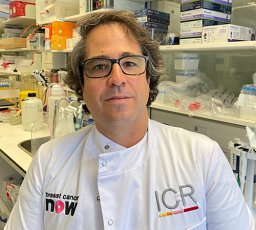 Garcia-Murillas Isaac合作论文数29
 Charlotte Fribbens合作论文数Inst Canc Res, Breast Canc Now Res Ctr, London, England15Lucy Kilburn合作论文数Institute of Cancer Research15C. Swift合作论文数Royal Marsden, Ralph Lauren Centre for Breast Cancer Research14
 Mitch Dowsett合作论文数Academic Department of Biochemistry, Royal Marsden Hospital;Centre for Molecular Pathology, Royal Marsden Hospital;Institute of Cancer Research;Breakthrough Breast Cancer Centre12
 Judith Bliss合作论文数Breast and Rare Cancers Trials Team, The Clinical Trials and Statistics Unit, Division of Clinical Studies, The Institute of Cancer Research12Sarah Hrebien合作论文数Royal Marsden Hospital, The Institute of Cancer Research, London, United Kingdom;11Alistair Ring合作论文数9Ros Cutts合作论文数Breast Cancer Now Toby Robins Research Centre, Institute of Cancer Research;Breast Cancer Now Toby Robins Research Centre, Institute of Cancer Research8O'Leary Ben合作论文数8
 Stephen K L Chia合作论文数Division of Medical Oncology, Department of Medicine, Faculty of Medicine, The University of British Columbia;British Columbia Cancer Agency7
 William J Gradishar合作论文数Division of Hematology and Oncology, Department of Medicine, Feinberg School of Medicine, Northwestern University;Robert H. Lurie Comprehensive Cancer Center, Northwestern University7
 Stephen Johnston合作论文数The Institute of Cancer Research;Department of Medicine, The Royal Marsden NHS Foundation Trust7S Hrebien合作论文数6
 Massimo Cristofanilli合作论文数Department of Medicine, Weill Cornell Medical College, Cornell University;Englander Institute of Precision Medicine, Weill Cornell Medicine, Cornell University;Meyer Cancer Center, Weill Cornell Medicine, Cornell University6Bartlett Cynthia H合作论文数6
 Ian E Smith合作论文数Royal Papworth Hospital5Maria Koehler合作论文数4Giselle Walsh-Crestani合作论文数4Wheatley Duncan合作论文数4
 Iain R Macpherson合作论文数Institute of Cancer Sciences, University of Glasgow4Peter Barry合作论文数4
 Sibylle Loibl合作论文数GBG Forschungs GmbH4
 Sherene Loi合作论文数Translational Breast Cancer Genomics and Therapeutics Lab, Peter MacCallum Cancer Centre4
 Alicia F C Okines合作论文数4Rosalind J. Cutts合作论文数4Maria Teresa Herrera-Abreu合作论文数3Scott Dashner合作论文数3N. Chopra合作论文数3
 Maria Coakley合作论文数3Himanshu Sethi合作论文数Natera Inc3Sarah Kernaghan合作论文数Inst Canc Res, Clin Trials & Stat Unit, London, England3John Jiang合作论文数3
 Yuan Liu合作论文数Pfizer Inc, La Jolla, CA;3Evans Abigail合作论文数3
 Inaki Comino-Mendez合作论文数3M. Dowsett合作论文数3
 Andrew M Wardley合作论文数Royal College of Physicians;Cancer Services;National Cancer Research Institute;Manchester Breast Centre3
 Chris Bakal合作论文数Department of Genetics and Howard Hughes Medical Institute, Harvard Medical School3Alexey Aleshin合作论文数Medicine Department, Stanford University3Gaia Schiavon合作论文数3James P Morden合作论文数3
 Fabrice André合作论文数Universite Paris Saclay;Gustave Roussy3Rebecca Roylance合作论文数3
 Alexis R. Barr合作论文数3
 Deepak Sampath合作论文数Department of Human Biological Chemistry and Genetics, University of Texas Medical Branch at Galveston3U. Asghar合作论文数2Lara Ulrich合作论文数2




