We report results of a new technique to measure the electric dipole moment of ^{129}Xe with ^{3}He comagnetometry. Both species are polarized using spin-exchange optical pumping, transferred to a measurement cell, and transported into a magnetically shielded room, where SQUID magnetometers detect free precession in applied electric and magnetic fields. The result from a one week measurement campaign in 2017 and a 2.5 week campaign in 2018, combined with detailed study of systematic effects, is d_{A}(^{129}Xe)=(1.4±6.6_{stat}±2.0_{syst})×10^{-28} e cm. This corresponds to an upper limit of |d_{A}(^{129}Xe)|<1.4×10^{-27} e cm (95% C.L.), a factor of 5 more sensitive than the limit set in 2001.
We report results of a new technique to measure the electric dipole moment of $^{129}\mathrm{Xe}$ with $^{3}\mathrm{He}$ comagnetometry. Both species are polarized using spin-exchange optical pumping, transferred to a measurement cell, and transported into a magnetically shielded room, where SQUID magnetometers detect free precession in applied electric and magnetic fields. The result from a one week measurement campaign in 2017 and a 2.5 week campaign in 2018, combined with detailed study of systematic effects, is ${d}_{A}(^{129}\mathrm{Xe})=(1.4\ifmmode\pm\else\textpm\fi{}6.{6}_{\mathrm{stat}}\ifmmode\pm\else\textpm\fi{}2.{0}_{\mathrm{syst}})\ifmmode\times\else\texttimes\fi{}{10}^{\ensuremath{-}28}\text{ }\text{ }e\text{ }\mathrm{cm}$. This corresponds to an upper limit of $|{d}_{A}(^{129}\mathrm{Xe})|<1.4\ifmmode\times\else\texttimes\fi{}{10}^{\ensuremath{-}27}\text{ }\text{ }e\text{ }\mathrm{cm}$ (95% C.L.), a factor of 5 more sensitive than the limit set in 2001.
Magnetic shielding made from permalloy is frequently used to provide a time-stable magnetic field environment. A low magnetic field and low field gradients inside the shield can be obtained by using demagnetization coils through the walls, encircling edges of the shield. We first introduce and test the computational models to calculate magnetic properties of large size shields with thin shielding walls. We then vary the size, location and shape of the openings for the demagnetization coils at the corners of a cubic shield. It turns out that the effect on the shielding factor and the expected influence on the residual magnetic field homogeneity in the vicinity of the center of the shield is negligible. Thus, a low-cost version for the openings can be chosen and their size could be enlarged to allow for additional cables and easier handling. A construction of a shield with beveled edges and open corners turned out to substantially improve the shielding factor.
We present the prototype module of our extendible and robust multichannel SQUID magnetometer system. A large multi-module arrangement can be implemented by using up to 7 modules. The system is intended for high-precision measurements of biomagnetism and spin precession. Further demanding applications are magnetorelaxometry and ultra-low-field nuclear magnetic resonance (ULF NMR), where pulsed magnetic fields of up to 100 mT are typically applied. The system is operated inside the Berlin magnetically shielded room (BMSR-2) and equipped with 18 magnetometers consisting of niobium (Nb) wire-wound pick-up coils. A total of 16 small pick-up coils with 17.1 mm diameter form a regular grid with individual channels arranged to ensure system sensitivity covers all three orthogonal spatial directions. Two large hexagonal pick-up coils with an equivalent diameter of 74.5 mm sensitive in z-direction surround the grid at two different heights and are suitable for the detection of deep sources. Each pick-up coil is connected to the input of a thin-film Nb SQUID current sensor via a detachable superconducting contact. The SQUIDs are equipped with integrated input current limiters. Feedback into the pick-up coils is employed to minimise crosstalk between channels. The current sensor chip package includes a superconducting shield of Nb. The field distortion of the prototype and a multi-module arrangement was analysed by numerical simulation. The measured noise of the small magnetometers was between 0.6 and 1.5 fTHz(-1/ 2), and well below 1 fTHz(-1/2) for the large ones. Using a software gradiometer, we achieved a minimum noise level of 0.54 fTHz(-1/2). We performed ULF NMR experiments, verifying the system's robustness against pulsed fields, and magnetoencephalographgy (MEG) on somatosensory evoked neuronal activity. The low noise performance of our 18-channel prototype enabled the detection of high-frequency components at around 1 kHz by MEG.
Human high-frequency EEG responses evoked by median nerve stimulation are non-invasive markers of cortical population spikes. For long, their reliable detection required averaging thousands of trials. Recently, low-noise EEG amplifiers combined with extensive electro-magnetic shielding allowed for a sensitive single-trial non-invasive detection of human high-frequency SEP. Here, using as few as 8 standard surface electrodes we demonstrate how specialized neurotechnology and offline analysis can achieve single-trial hf-SEP recordings without elaborate shielding. In 6 healthy male subjects, 8 sintered Ag/AgCl surface EEG electrodes (reference at nose) were distributed above the left somatosensory cortex with impedances at about 1 kOhm. EEG was recorded upon right median nerve stimulation using a custom-built CE-certified low-noise EEG amplifier, specifically engineered to insulate the EEG from electromagnetic interferences. The signal was filtered spectrally and spatially (canonical correlation analysis variant) and transformed to the time–frequency domain (S transform). Bursting activity at about 600 Hz (‘σ-burst’) in response to median nerve stimulation was detectable in all six subjects, both in the average SEP and in the average time–frequency-transform of single-trial responses. Moreover, this approach allowed to analyze the intrinsic single-trial variability of the hf-SEP. Using tailor-made neurotechnology, evoked human cortical population spikes can be measured non-invasively in single-trial EEG without elaborate shielding and using a small number of standard surface electrodes, thus enabling clinical applicability.
We report a new limit on a possible short range spin-dependent interaction from the precise measurement of the ratio of Larmor precession frequencies of stored ultracold neutrons and Hg-199 atoms confined in the same volume. The measurement was performed in a similar to 1 mu T vertical magnetic holding field with the apparatus searching for a permanent electric dipole moment of the neutron at the Paul Scherrer Institute. A possible coupling between freely precessing polarized neutron spins and unpolarized nucleons of the wall material can be investigated by searching for a tiny change of the precession frequencies of neutron and mercury spins. Such a frequency change can be interpreted as a consequence of a short range spin-dependent interaction that could possibly be mediated by axions or axion-like particles. The interaction strength is proportional to the CP violating product of scalar and pseudoscalar coupling constants g(S)g(P). Our result confirms limits from complementary experiments with spin-polarized nuclei in a model-independent way. Limits from other neutron experiments are improved by up to two orders of magnitude in the interaction range of 10(-6) < lambda < 10(-4) m. (C) 2015 The Authors. Published by Elsevier B.V.
Non-invasive EEG detection of very high frequency somatosensory evoked potentials featuring frequencies up to and above 1 kHz has been recently reported. Here, we establish the detectability of such components by combined low-noise EEG/MEG. We recorded SEP/SEF simultaneously using median nerve stimulation in five healthy human subjects inside an electromagnetically shielded room, combining a low-noise EEG custom-made amplifier (4.7 nV/root Hz) and a custom-made single-channel low-noise MEG (0.5 fT/root Hz @ 1 kHz). Both, low-noise EEG and MEG revealed three spectrally distinct and temporally overlapping evoked components: N20 (< 100 Hz), sigma-burst (450-750 Hz), and kappa-burst (850-1200 Hz). The two recording modalities showed similar relative scaling of signal amplitude in all three frequencies domains (EEG [10 nV] similar or equal to MEG [1.fT]). Pronounced waveform (peak-by-peak) overlap of EEG and MEG signals is observed in the sigma band, whereas in the kappa band overlap was only partial. A decreasing signal-to-noise ratio (SNR; calculated for n = 12.000 averages) from sigma to kappa components characterizes both, electric and magnetic field recordings: Sigma-band SNR was 12.9 +/- 5.5/19.8 +/- 12.6 for EEG/MEG, and kappa-band SNR at 3.77 +/- 0.8/4.5 +/- 2.9. High-frequency performance of a tailor-made MEG matches closely with simultaneously recorded low-noise EEG for the non-invasive detection of somatosensory evoked activity at and above 1 kHz. Thus, future multi-channel dual-mode low-noise technology could offer complementary views for source reconstruction of the neural generators underlying such high-frequency responses, and render neural high-frequency processes related to multi-unit spike discharges accessible in non-invasive recordings.
Several experiments in fundamental physics demand an environment of very low, homogeneous, and stable magnetic fields. For the magnetic characterization of such environments, we present a portable SQUID system that measures the absolute magnetic flux density vector and the gradient tensor. This vector-tensor system contains 13 integrated low-critical temperature (LTc) superconducting quantum interference devices (SQUIDs) inside a small cylindrical liquid helium Dewar with a height of 31 cm and 37 cm in diameter. The achievable resolution depends on the flux density of the field under investigation and its temporal drift. Inside a seven-layer mu-metal shield, an accuracy better than ±23 pT for the components of the static magnetic field vector and ±2 pT/cm for each of the nine components of the gradient tensor is reached by using the shifting method.
Permanent electric dipole moments (EDMs) arise due to the breaking of time-reversal or, equivalently, CP-symmetry. Although EDM searches have so far only set upper limits, which are many orders of magnitude larger than Standard Model (SM) predictions, the motivation for more sensitive searches is stronger than ever. A new effort at FRM-II incorporating 129 Xe and 3 He as a co-magnetometer can potentially improve the current limit. The noble gas mixture of 129 Xe and 3 He is simultanously polarized by spin-exchange optical pumping and then transferred into a high-performance magnetically shielded room. Inside, both species can freely precess in the presence of applied magnetic and electric fields. The precession signals are detected by LTc SQUID sensors. In EDM cells with silicon electrodes we observed spin lifetimes in excess of 2500 s without and with high-voltage applied. This meets one requirement to achieve our goal of improving the EDM limit on 129 Xe by several orders of magnitude.
The neutron gyromagnetic ratio has been measured relative to that of the 199Hg atom with an uncertainty of 0.8 ppm. We employed an apparatus where ultracold neutrons and mercury atoms are stored in the same volume and report the result γn/γHg=3.8424574(30).
A versatile and portable magnetically shielded room with a field of (700 ± 200) pT within a central volume of 1 m × 1 m × 1 m and a field gradient less than 300 pT/m, achieved without any external field stabilization or compensation, is described. This performance represents more than a hundredfold improvement of the state of the art for a two-layer magnetic shield and provides an environment suitable for a next generation of precision experiments in fundamental physics at low energies; in particular, searches for electric dipole moments of fundamental systems and tests of Lorentz-invariance based on spin-precession experiments. Studies of the residual fields and their sources enable improved design of future ultra-low gradient environments and experimental apparatus. This has implications for developments of magnetometry beyond the femto-Tesla scale in, for example, biomagnetism, geosciences, and security applications and in general low-field nuclear magnetic resonance (NMR) measurements.
Non-invasively recorded averaged event-related potentials (ERP) represent a convenient opportunity to investigate human brain perceptive and cognitive processes. Nevertheless, generative ERP mechanisms are still debated. Two previous approaches have been contested in the past: the added-energy model in which the response raises independently from the ongoing background activity, and the phase-reset model, based on stimulus-driven synchronization of oscillatory ongoing activity. Many criteria for the distinction of these two models have been proposed, but there is no definitive methodology to disentangle them, owing also to the limited information at the single trial level. Here, we propose a new approach combining low-noise EEG technology and multivariate decomposition techniques. We present theoretical analyses based on simulated data and identify in high-frequency somatosensory evoked responses an optimal target for the distinction between the two mechanisms.
We search for a spin-dependent P- and T-violating nucleon-nucleon interaction mediated by light pseudoscalar bosons such as axions or axionlike particles. We employ an ultrasensitive low-field magnetometer based on the detection of free precession of colocated 3He and 129Xe nuclear spins using SQUIDs as low-noise magnetic flux detectors. The precession frequency shift in the presence of an unpolarized mass was measured to determine the coupling of pseudoscalar particles to the spin of the bound neutron. For boson masses between 2 and 500 μeV (force ranges between 3×1(-4) m and 10(-1) m) we improved the laboratory upper bounds by up to 4 orders of magnitude.
Einleitung: Den niederfrequenten somatosensorisch evozierten Potentialen (SEP) sind um 20 ms post-stimulus hochfrequente Oszillationen (HFO; > 600 Hz) thalamocorticalen und corticalen Ursprungs übergelagert, denen synchronisierte corticale Aktionspotentiale zugrunde liegen. Bisher erforderte der Nachweis dieser niederamplitudigen Oszillationen aufgrund des geringen Signal-Rausch-Verhältnisses eine Mittelung über tausende Reizantworten. Neue Verstärkertechnologie sowie die Anwendung optimierter räumlicher Filter erlauben nun den nicht-invasiven Nachweis auch ohne Mittelung.
Polarization of 3He gas by means of optical pumping is well known since the early 1960s with first applications in fundamental physics. Some thirty years later it was discovered, that one can use hyperpolarized 3He as contrast agent for magnetic resonance imaging of the lung. The wide interest in this new method made it necessary to find ways of polarizing 3He in large quantities with high polarization degrees. A high performance polarizing facility has been developed at the University of Mainz, designed for centralized production of hyperpolarized 3He gas. We present the Mainz concept as well as some examples of numerous applications of spin polarized 3He in fundamental research and medical applications.
 Gabriel Curio合作论文数Bernstein Center for Computational Neuroscience, Berlin, Germany56
 Bruno-Marcel Mackert合作论文数40A. Schnabel合作论文数34
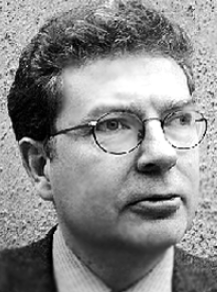 Lutz Trahms合作论文数Laboratory for Bioelectricity and Biomagnetism, Physikalisch-Technische Bundesanstalt26Wolfgang Kilian合作论文数16
 Werner Heil合作论文数Institut für Physik, Johannes Gutenberg-Universität16H J Scheer合作论文数15Frank Seifert合作论文数Department of Physics, College of Computer, Mathematical, and Natural Sciences, University of Maryland;National Institute of Standards and Technology14
 Yu. G. Sobolev合作论文数14Wolfgang Haberkorn合作论文数12S. Knappe-Grüneberg合作论文数11
 K. Tullney合作论文数11
 Sergei Karpuk合作论文数11
 Peter Fierlinger合作论文数Department of Physics, Technische Universität München10
 Tommaso Fedele合作论文数10
 Ulrich Schmidt合作论文数10
 Uwe Steinhoff合作论文数Physikalisch-Technische Bundesanstalt10G. Wübbeler合作论文数9S. Knappe-Grueneberg合作论文数8C. Gemmel合作论文数8F Kuchler合作论文数8
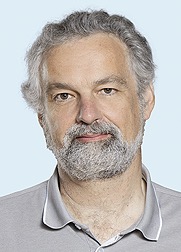 Tilmann Heinrich Sander合作论文数Department of Biosignals, The Physikalisch-Technische Bundesanstalt, National Metrology Institute of Germany8O. Naviliat-Cuncic合作论文数7
 Thomas Lefort合作论文数7F. Armbrust合作论文数7S. Stuiber合作论文数7S. Leistner合作论文数7P. Marx合作论文数7S. Roccia合作论文数LPSC-IN2P3, Université Grenoble Alpes7
 Earl Babcock合作论文数Jülich Centre for Neutron Scattering JCNS-4 at MLZ, Forschungszentrum Jülich GmbH7
 Timothy Chupp合作论文数Department of Physics, College of Literature, Science, and the Arts, University of Michigan7Jaideep Singh合作论文数7
 J. Voigt合作论文数7
 Antoine Weis合作论文数Physics Department;Universite de Fribourg;Physics Department, Universite de Fribourg7
 I. Fan合作论文数Department of Physics;University of Alberta;Institute for Advanced Research;Institute for Advanced Research, University of Alberta7Sonja Hartwig合作论文数7
 Zahir Salhi合作论文数Laboratoire d’Etudes et de Recherches sur les Matériaux, les Plasmas et les Surfaces (LERMPS),, Université de Technologie de Belfort-Montbéliard7Jacek Zejma合作论文数7
 Klaus Stefan Kirch合作论文数Department of Physics, ETH Zürich;Laboratory for Particle Physics, Division Neutrons and Muons, Paul Scherrer Institute7G. Ban合作论文数6G. Quéméner合作论文数6
 Jonas Meinel合作论文数Univ Stuttgart, Phys Inst, IQST, Stuttgart, Germany6
 Geza Zsigmond合作论文数6
 Florian Thiel合作论文数6
 Dietmar Drung合作论文数Physikalisch-Technische Bundesanstalt6Bernhard Lauss合作论文数6K. Lenz合作论文数6Kazimierz Bodek合作论文数6




