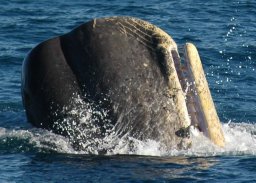
Antarctic minke whales (Balaenoptera bonaerensis, AMW) are an abundant, ice-dependent species susceptible to rapid climatic changes occurring in parts of the Antarctic. Here, we used remote biopsy samples and estimates of length derived from unoccupied aircraft system (UAS) to characterize for the first time the sex ratio, maturity, and pregnancy rates of AMWs around the Western Antarctic Peninsula (WAP). DNA profiling of 82 biopsy samples (2013–2020) identified 29 individual males and 40 individual females. Blubber progesterone levels indicated 59% of all sampled females were pregnant, irrespective of maturity. When corrected for sexual maturity, the median pregnancy rate was 92.3%, indicating that most mature females become pregnant each year. We measured 68 individuals by UAS (mean = 8.04 m) and estimated that 66.5% of females were mature. This study provides the first data on the demography of AMWs along the WAP and represents the first use of non-lethal approaches to studying this species. Furthermore, these results provide baselines against which future changes in population status can be assessed in this rapidly changing marine ecosystem.
We model the presence of rare Antarctic blue whales (Balaenoptera musculus intermedia) in relation to the swarm characteristics of their main prey species, Antarctic krill (Euphausia superba). A combination of visual observations and recent advances in passive acoustic technology were used to locate Antarctic blue whales, whilst simultaneously using active underwater acoustics to characterise the distribution, size, depth, composition and density of krill swarms. Krill swarm characteristics and blue whale presence were examined at a range of spatiotemporal scales to investigate sub meso-scale (i.e., <100 km) foraging behaviour. Results suggest that at all scales, Antarctic blue whales are more likely to be detected within the vicinity of krill swarms with a higher density of krill, those found shallower in the water column, and those of greater vertical height. These findings support hypotheses that as lunge-feeders of extreme size, Antarctic blue whales target shallow, dense krill swarms to maximise their energy intake. As both Antarctic krill and blue whales play a key role in the Southern Ocean ecosystem, the nature of their predator-prey dynamics is an important consideration, not only for the recovery of this endangered species in a changing environment, but for the future management of Antarctic krill fisheries.
Humpback whale (Megaptera novaeangliae) populations typically undertake seasonal migrations, spending winters in low latitude breeding grounds and summers foraging in high latitude feeding grounds. Until recently, a broad scale understanding of whale movement has been derived from whaling records, Discovery marks, photo identification and genetic analyses. However, with advances in satellite tagging technology and concurrent development of analytical methodologies we can now detail finer scale humpback whale movement, infer behavioural context and examine how these animals interact with their physical environment. Here we describe the temporal and spatial characteristics of migration along the east Australian seaboard and into the Southern Ocean by 30 humpback whales satellite tagged over three consecutive austral summers. We characterise the putative Antarctic feeding grounds and identify supplemental foraging within temperate, migratory corridors. We demonstrate that Antarctic foraging habitat is associated with the marginal ice zone, with key predictors of inferred foraging behaviour including distance from the ice edge, ice melt rate and variability in ice concentration two months prior to arrival. We discuss the highly variable ice season within the putative foraging habitat and the implications that this and other environmental factors may have on the continued strong recovery of this humpback whale population.
Seabirds are amongst the most globally-threatened of all groups of birds, and conservation issues specific to albatrosses (Diomedeidae) and large petrels (Procellaria spp. and giant petrels Macronectes spp.) led to drafting of the multi-lateral Agreement on the Conservation of Albatrosses and Petrels (ACAP). Here we review the taxonomy, breeding and foraging distributions, population status and trends, threats and priorities for the 29 species covered by ACAP. Nineteen (66%) are listed as threatened by IUCN, and 11 (38%) are declining. Most have extensive at-sea distributions, and the greatest threat is incidental mortality (bycatch) in industrial pelagic or demersal longline, trawl or artisanal fisheries, often in both national and international waters. Mitigation measures are available that reduce bycatch in most types of fisheries, but some management bodies are yet to make these mandatory, levels of implementation and monitoring of compliance are often inadequate, and there are insufficient observer programmes collecting robust data on bycatch rates. Intentional take, pollution (including plastic ingestion), and threats at colonies affect fewer species than bycatch; however, the impacts of disease (mainly avian cholera) and of predation by introduced species, including feral cats (Felis catus), rats (Rattus spp.) and house mice (Mus musculus), are severe for some breeding populations. Although major progress has been made in recent years in reducing bycatch rates and in controlling or eradicating pests at breeding sites, unless conservation efforts are intensified, the future prospects of many species of albatrosses and large petrels will remain bleak.
Generally in birds, the classic sex roles of male competition and female choice result in females providing most offspring care while males face uncertain parentage. In less than 5% of species, however, reversed courtship sex roles lead to predominantly male care and low extra-pair paternity. These role-reversed species usually have reversed sexual size dimorphism and polyandry, confirming that sexual selection acts most strongly on the sex with the smaller parental investment and accordingly higher potential reproductive rate. We used parentage analyses and observations from three field seasons to establish the social and genetic mating system of pheasant coucals, Centropus phasianinus, a tropical nesting cuckoo, where males are much smaller than females and provide most parental care. Pheasant coucals are socially monogamous and in this study males produced about 80% of calls in the dawn chorus, implying greater male sexual competition. Despite the substantial male investments, extra-pair paternity was unusually high for a socially monogamous, duetting species. Using two or more mismatches to determine extra-pair parentage, we found that 11 of 59 young (18.6%) in 10 of 21 broods (47.6%) were not sired by their putative father. Male incubation, starting early in the laying sequence, may give the female opportunity and reason to seek these extra-pair copulations. Monogamy, rather than the polyandry and sex-role reversal typical of its congener, C. grillii, may be the result of the large territory size, which could prevent females from monopolising multiple males. The pheasant coucal's exceptional combination of classic sex-roles and male-biased care for extra-pair young is hard to reconcile with current sexual selection theory, but may represent an intermediate stage in the evolution of polyandry or an evolutionary remnant of polyandry.
The humpback whale, Megaptera novaeangliae, migrates along coastal routes between high latitude summer feeding areas and low latitude winter breeding areas in both hemispheres. The coastal migrations and frequent surfacing behaviour make it easy to take biopsy samples from its skin and blubber and it is consequently the most intensely studied of the great whales. Microsatellite markers have been developed for population genetics and kinship studies of this species, but these show poor genotyping reproducibility among laboratories and scientists. We describe 45 TaqMan® single nucleotide polymorphism markers for a highly reproducable alternative genotyping system for M. novaeangliae.
Many fitness benefits of polyandry have been proposed. We addressed four hypotheses that are relevant to the agile antechinus, Antechinus agilis, a highly promiscuous marsupial: polyandry (1) involves females 'trading up' to obtain good genes for offspring; (2) promotes sperm competition/sperm choice to obtain good genes; (3) enables females to avoid genetically incompatible gene combinations (specifically inbreeding); or (4) enables females to avoid infertility. We tested the predictions of these hypotheses using female choice trials, manipulative mating experiments and microsatellite analysis of paternity. Because timing of mating affects fertility and prenatal abnormality rates in this species, we also tested whether it affects offspring growth rates. We found support for a genetic benefit of polyandry: offspring of polyandrous females grew faster than offspring of monandrous females, and this effect was more pronounced for females that mated close to ovulation. However, although larger males sire more offspring in the wild in this species, females did not initially choose large mates and did not 'trade up' based on male size. We found no evidence of genetic incompatibility effects. Monandrous females were not less likely to conceive than polyandrous females, although females in the wild are more likely to encounter infertile and subfertile males than in this study. Females that mated closer to ovulation had slower-growing litters. We conclude that female antechinuses benefit through increased offspring growth rates by mating with multiple males, and by mating several days before ovulation. (c) 2005 The Association for the Study of Animal Behaviour. Published by Elsevier Ltd. All rights reserved.
We investigated the mating system of shy albatrosses Thalassarche cauta by combining behavioural observations during the pre-laying period with genetic paternity analysis. Genetic data on the mating systems of several procellariiform seabirds have recently become available, but data on the reproductive behaviour of these species are rarely obtained. Our main aims were to describe the copulatory behaviour of this species and identify how males achieve within-pair and extra-pair paternity (EPP). Most copulations occurred on the nest, were unforced and were within-pair. Females controlled the success of copulations and were observed soliciting extra-pair matings. Within-pair and extra-pair copulations were behaviourally similar. A low frequency (7-10%, n=29 chicks) of EPP was detected despite male use of frequent copulation as a paternity guard. The pre-laying foraging exodus of female shy albatrosses differed from that in other albatrosses: it was relatively short in length, lasting c. 2 days, and within-pair copulations occurred after the female's return 2 days before laying. This may reflect the close proximity of feeding grounds to the breeding colony.
Dispersal influences evolution, demography, and social characteristics but is generally difficult to study. Here we combine long-term demographic data from an intensively studied population of superb fairy-wrens (Malurus cyaneus) and multivariate spatial autocorrelation analyses of microsatellite genotypes to describe dispersal behavior in this species. The demographic data revealed: (1) sex-biased dispersal: almost all individuals that dispersed into the study area over an eight-year period were female (93%; n = 153); (2) high rates of extragroup infidelity (66% of offspring), which also facilitated local gene dispersal; and (3) skewed lifetime reproductive success in both males and females. These data led to three expectations concerning the patterns of fine-scale genetic structure: (1) little or no spatial genetic autocorrelation among females, (2) positive spatial genetic autocorrelation among males, and (3) a heterogeneous genetic landscape. Global autocorrelation analysis of the genotypes present in the study population confirmed the first two expectations. A novel two-dimensional local autocorrelation analysis confirmed the third and provided new insight into the patterns of genetic structure across the two-dimensional landscape. We highlight the potential of autocorrelation analysis to infer evolutionary processes but also emphasize that genetic patterns in space cannot be fully understood without an appropriate and intensive sampling regime and detailed knowledge of the individuals genotyped.
Molecular ecologists, in search of suitable molecular markers, frequently PCR-amplify regions of mitochondrial DNA from total DNA extracts. This approach, although common, is prone to the co-amplification of nuclear copies of transposed DNA sequences (numts), which can then generate apparent mitochondrial sequence heteroplasmy. In this study we describe the discovery of apparent mitochondrial sequence heteroplasmy in Thalassarche albatrosses but eliminate the possibility of true sequence heteroplasmy and numts and instead reveal the source of the apparent heteroplasmy to be a duplicated control region. The two control regions align easily but are not identical in sequence or in length. Comparisons of functionally significant conserved sequence blocks do not provide evidence of degeneration in either duplicate. Phylogenetic analyses of domain I of both control region copies in five Thalassarche species indicate that they are largely evolving in concert; however, a short section within them is clearly evolving independently. To our knowledge this is the first time contrasting evolutionary patterns have been reported for duplicate control regions. Available evidence suggests that this duplication may be taxonomically widespread, so the results presented here should be considered in future evolutionary studies targeting the control region of all Procellariiformes and potentially other closely related avian groups.
In cooperatively breeding birds, adults often forego reproduction and help care for the offspring of others. A universal explanation for this mode of breeding has eluded evolutionary biologists, who have considered it to be a rare, and largely Australian, phenomenon. In a recent paper, Andrew Cockburn reports that the number of known cooperative breeders among oscine passerine birds has more than doubled since the last substantial review, published 16 years ago. Cooperative breeding is often the ancestral trait, and predominantly cooperative genera are species poor compared with their pair-breeding counterparts. Cockburn argues that speciation is less likely in cooperative clades, because the philopatric tendencies of individuals make them poor dispersers, colonizers and migrants. This new hypothesis helps explain the distribution and composition of migrant and island avifauna. However, a major challenge remains to reconcile the roles of phylogenetic history and current ecology in promoting cooperative behaviour.
Although albatrosses typically show strong natal philopatry, a small proportion of birds emigrate to distant colonies, occasionally establishing new breeding sites and potentially initiating speciation events. Patterns of albatross distribution and speciation may be determined largely by the behaviour of these few wayward individuals. In February 2003, a male White-capped Albatross, Thalassarche [cauta] steadi (identified from DNA), was observed in a colony of Black-browed Albatrosses, T. melanophrys, at Bird Island, South Georgia. It returned to the same colony the following austral spring. Although there have been previous records of shy-type albatrosses (T. [cauta] steadi or T. [cauta] cauta) in the south-western Atlantic Ocean, this is the first confirmed record of either taxon, and indicates the potential for colonisation, over 10000 km from its present breeding range.
IbisVolume 146, Issue 4 p. 687-690 Assortative mating by tail streamer length in Red-tailed Tropicbirds Phaethon rubricauda breeding in the Coral Sea C. R. J. Boland, Corresponding Author C. R. J. Boland Evolutionary Ecology Group, School of Botany and Zoology, Australian National University, Canberra, ACT 0200, Australia *Corresponding author. Email: [email protected]Search for more papers by this authorM. C. Double, M. C. Double Evolutionary Ecology Group, School of Botany and Zoology, Australian National University, Canberra, ACT 0200, AustraliaSearch for more papers by this authorG. B. Baker, G. B. Baker Biodiversity Group, Environment Australia, Canberra ACT 2601, Australia Present address: Australian Antarctic Division, Channel Highway, Kingston, Tasmania 7050, Australia.Search for more papers by this author C. R. J. Boland, Corresponding Author C. R. J. Boland Evolutionary Ecology Group, School of Botany and Zoology, Australian National University, Canberra, ACT 0200, Australia *Corresponding author. Email: [email protected]Search for more papers by this authorM. C. Double, M. C. Double Evolutionary Ecology Group, School of Botany and Zoology, Australian National University, Canberra, ACT 0200, AustraliaSearch for more papers by this authorG. B. Baker, G. B. Baker Biodiversity Group, Environment Australia, Canberra ACT 2601, Australia Present address: Australian Antarctic Division, Channel Highway, Kingston, Tasmania 7050, Australia.Search for more papers by this author First published: 28 July 2004 https://doi.org/10.1111/j.1474-919x.2004.00310.xCitations: 12 Read the full textAboutPDF ToolsRequest permissionExport citationAdd to favoritesTrack citation ShareShare Give accessShare full text accessShare full-text accessPlease review our Terms and Conditions of Use and check box below to share full-text version of article.I have read and accept the Wiley Online Library Terms and Conditions of UseShareable LinkUse the link below to share a full-text version of this article with your friends and colleagues. Learn more.Copy URL Share a linkShare onEmailFacebookTwitterLinkedInRedditWechat REFERENCES Andersson, M. 1982. Female choice selects for extreme tail lengths in a widowbird. Nature 299: 818–820. Andersson, M. 1994. Sexual Selection. Princeton, NJ: Princeton University Press. Balmford, A., Thomas, A.L.R. & Jones, I.L. 1993. Aerodynamics and the evolution of long tails in birds. Nature 361: 628–631. Brawner, W.R., Hill, G.E. & Sundermann, C.A. 2000. Effects of coccidial and mycoplasmal infections on carotenoid-based plumage pigmentation in male House Finches. Auk 117: 952–963. Burley, N. 1981. The evolution of sexual indistinguishability. In R.D. Alexander & D.W. Tinkle (eds) Natural Selection and Social Behavior: Recent Research and New Theory: 121–137. New York: Chiron Press. Cuervo, J.J. & Møller, A.P. 1999. Phenotypic variation and fluctuating asymmetry in sexually dimorphic feather ornaments in relation to sex and mating system. Biol. J. Linn. Soc. 68: 505–529. Diamond, A.W. 1975. The biology of tropicbirds at Aldabra Atoll, Indian Ocean. Auk 92: 16–39. Evans, M.R. & Hatchwell, B.J. 1992. An experimental study of male adornment in the Scarlet-tufted Malachite Sunbird. II. The role of the elongated tail in mate choice and experimental evidence for a handicap. Behav. Ecol. Sociobiol. 29: 421–427. Evans, M.R. & Thomas, A.L.R. 1997. Testing the functional significance of tail streamers. Proc. R. Soc. Lond. B 264: 211–217. Fitzpatrick, S. 1997. Patterns of morphometric variation in birds’ tails: length, shape and variability. Biol. J. Linn. Soc. 62: 145–162. Fleet, R.R. 1974. The Red-tailed Tropicbird on Kure Atoll. Ornithol. Monogr. 16: 1–64. Griffiths, R., Double, M.C., Orr, K. & Dawson, R.J.G. 1998. A DNA test to sex most birds. Mol. Ecol. 7: 1071–1075. Hill, G.E. 1992. Proximate basis of variation in carotenoid pigmentation in male House Finches. Auk 109: 1–12. Johnstone, R.A., Reynolds, J.D. & Deutsch, J. 1996. Mutual mate choice and sex differences in choosiness. Evolution 50: 1382–1391. Jones, I.L. & Hunter, F.M. 1999. Experimental evidence for mutual inter- and intrasexual selection favouring a Crested Auklet ornament. Anim. Behav. 57: 521–528. Lande, R. 1980. Sexual dimorphism, sexual selection and adaptation in polygenic characters. Evolution 34: 292–305. Linville, S.U. & Breitwisch, R. 1997. Carotenoid availability and plumage coloration in a wild population of Northern Cardinals. Auk 114: 796–800. Lormee, H., Jouventin, P., Lacroix, A., Lallemand, J. & Chastel, O. 2000. Reproductive endocrinology of tropical seabirds: sex-specific patterns in LH, steroids and prolactin secretion in relation to parental care. Gen. Comp. Endocrinol. 117: 413–426. Orta, J. 1992. Family Phaethontidae (Tropicbirds). In J. Del Hoyo, A. Elliot & J. Sargatal (eds) Handbook of the Birds of the World, Vol. 1: 280–289. Barcelona: Lynx Edicions. Taburton, M.K. 1977. Nesting of the Red-tailed Tropicbird at Sugarloaf Rock, WA. Emu 77: 122–126. Veit, A.C. & Jones, I.L. 2003. Function of tail streamers of Red-tailed Tropicbirds (Phaethon rubricauda) as inferred from patterns of variation. Auk 120: 1033–1043. Veit, A.C. & Jones, I.L. 2004. Timing and patterns of growth of Red-tailed Tropicbird Phaethon rubricauda tail streamer ornaments. Ibis 146: 355–359. Wingfield, J.C. 1994. Hormone–behavior interactions and mating systems in male and female birds. In R.V. Short & E. Balaban (eds) The Difference Between the Sexes: 303–330. Cambridge: Cambridge University Press. Zahavi, A. 1975. Mate selection – a selection for a handicap. J. Theor. Biol. 53: 205–214. Citing Literature Volume146, Issue4October 2004Pages 687-690 ReferencesRelatedInformation
Six variable microsatellite loci were used to examine genetic structuring in the closely related shy albatross (Thalassarche cauta) and white-capped albatross (T. steadi). First, levels of genetic differentiation between the species, and among three populations within each species, were analysed using AMOVA, F-ST and R-ST. We found high levels of genetic structuring and detected many unshared alleles between the species, which provide strong evidence against any contemporary gene flow between them. Within each species, shy albatross populations were found to be genetically distinct whereas white-capped albatross populations were undifferentiated, which implies that dispersal events are much rarer in the former than in the latter. These results formed the basis for the recommendation that the three white-capped albatross populations (as a whole) and each shy albatross population be treated as separate units for conservation. Second, levels of genetic diversity and allelic patterns in shy and white-capped albatrosses were assessed for whether they support earlier mtDNA results suggesting that shy albatrosses arose through range expansion of white-capped albatrosses. All measures indicated lower genetic diversity within shy albatrosses than within white-capped albatrosses and upheld the hypothesis that shy albatrosses were founded by white-capped albatrosses.
The evolutionary relationship between shy (Thalassarche cauta) and white-capped ( T. steadi) albatrosses was examined using mitochondrial control region sequences. Results were interpreted in the context of a recent and contentious taxonomic revision that recommended full species status for shy and white-capped albatrosses. Low sequence divergence between shy and white-capped albatrosses (1.8%) and between their close relatives, Salvin's and Chatham albatrosses (2.9%), was observed. Much higher sequence divergence was found between the shy/white-capped pair and the Salvin's/Chatham pair (7.0%). Phylogenetic analyses confirmed the separation of the shy/white-capped pair from the Salvin's/Chatham pair but did not provide species-level resolution. Phylogeographic analyses, including a nested clade analysis, F(ST) estimates and an analysis of molecular variance, indicated unambiguous genetic structuring between shy and white-capped albatrosses, thus confirming the demographic isolation of the species, but showed little to no structuring within each species. The geographical distribution of mtDNA haplotypes and other evidence suggest that shy albatrosses arose through range expansion by white-capped albatrosses.
1. Between 1988 and 2001, we studied social relationships in the superb fairy-wren Malurus cyaneus (Latham), a cooperative breeder with male helpers in which extra-group fertilizations are more common than within-pair fertilizations.2. Unlike other fairy-wren species, females never bred on their natal territory. First-year females dispersed either directly from their natal territory to a breeding vacancy or to a foreign 'staging-post' territory where they spent their first winter as a subordinate. Females dispersing to a foreign territory settled in larger groups. Females on foreign territories inherited the territory if the dominant female died, and were sometimes able to split the territory into two by pairing with a helper male. However, most dispersed again to obtain a vacancy.3. Females dispersing from a staging post usually gained a neighbouring vacancy, but females gaining a vacancy directly from their natal territory travelled further, perhaps to avoid pairing or mating with related males.4. Females frequently divorced their partner, although the majority of relationships were terminated by the death of one of the pair. If death did not intervene, one-third of pairings were terminated by female-initiated divorce within 1000 days.5. Three divorce syndromes were recognized. First, females that failed to obtain a preferred territory moved to territories with more helpers. Secondly, females that became paired to their sons when their partner died usually divorced away from them. Thirdly, females that have been in a long relationship divorce once a son has gained the senior helper position.6. Dispersal to avoid pairing with sons is consistent with incest avoidance. However, there may be two additional benefits. Mothers do not mate with their sons, so dispersal by the mother liberates her sons to compete for within-group matings. Further, divorcing once their son has become a breeder or a senior helper allows the female to start sons in a queue for dominance on another territory. Females that do not take this option face constraints on their ability to recruit more sons into the local neighbourhood.
Explanations of cooperative breeding have largely focused on the indirect benefits philopatric offspring gain from investing in kin. However, recent molecular studies have revealed that in many species subordinates provision unrelated offspring. This has led to the re–evaluation of the direct and indirect benefits of helping behaviour. In this study, we used microsatellite genotyping to assess the extra–group reproductive success of subordinate superb fairy–wrens (Malurus cyaneus), a species with extremely high rates of extra–group paternity. Extra–group subordinate males sired 10.2% (193 out of 1895) of all offspring sampled between 1993 and 2000 and 21.4% (193 out of 901) of all illegitimate offspring sired by known males. The extra–group success of subordinates was greatly influenced by the attractiveness of their dominant male. Subordinates of attractive dominants sired more extra–group young than did average dominants. Evidence suggests that mate choice in superb fairy–wrens is error–prone and subordinates can gain direct reproductive benefits through parasitizing the reproductive success of attractive dominants.
Genealogies generated through a long-term study of superb fairy-wrens (Malurus cyaneus) were used to investigate mutation within two hypervariable microsatellite loci. Of 3,230 meioses examined at the tetranucleotide locus (Mcy micro 8), 45 mutations were identified, giving a mutation rate of 1.4%. At the dinucleotide locus (Mcy micro 4) 30 mutations were recorded from 2,750 meioses giving a mutation rate of 1.1%. Mutations at both loci primarily (80%; 60/75) involved the loss or gain of a single repeat unit. Unlike previous studies, there was no significant bias toward additions over deletions. The mutation rate at Mcy micro 8 increased with allele size, and very long alleles (>70 repeats) mutated at a rate of almost 20%. The length of the mutating allele and allele span, however, were strongly correlated so it was not possible to isolate the causative factor. Allele size did not appear to affect mutation rate at Mcy micro 4, but the repeat number was considerably lower at this locus. The gender of the mutating parent was significant only at Mcy micro 8, where mutations occurred more frequently in maternal alleles. However, at both loci we found that alleles inherited from the mother were on average larger than those from the father, and this in part drove the higher mutation rate among maternally inherited alleles at Mcy micro 8.
Albatrosses are frequently killed by longline and trawl fishery operations but the relative impact of such activities at the species or population level are largely unknown. Such information requires the widespread presence of fishery observers and an ability to identify accurately the species and provenance of all albatrosses killed by fishing vessels. In this study we investigate the use of morphometric measurements to identify Shy ( Thalassarche cauta) from White-capped ( T. steadi) Albatrosses, two taxa recently suggested to be separate species. Measurements were taken from a collection of 103 Shy and White-capped Albatrosses killed by longline vessels within the Australian Fishing Zone between 1988 and 2000 and identified to species level using a recently developed DNA-based test. Within-sex comparisons of Shy and White-capped Albatrosses found that six of the 10 measurements were significantly different for both sexes. However, all measurements showed considerable overlap and no single measurement separated the two taxa. Discriminant classification functions based on wing chord, maximum head width and two bill measurements were able to simultaneously identify the species and sex of approximately 84% of bycatch specimens (n = 70). The discriminate classification functions for species identification alone correctly assigned approximately 89% of bycatch specimens. When this classification method was applied to measurements taken from live specimens a similar level of accuracy was achieved (82%, n = 17).
Most birds breed in pairs but at least 3% of passerine species are cooperative breeders, whereby more than two adults help to raise the young. The general rarity of cooperative breeding has led to the assumption that cooperative behaviour has evolved from the ancestral trait of pair breeding. However, it has been suggested that pair breeding may be the derived state in some taxa. The primary aim of this research was to test this suggestion using the genus Acanthiza, which contains examples of both cooperatively and pair breeding species. Mitochondrial DNA sequences were used to construct a phylogenetic hypothesis for the tribe containing Acanthiza, the Acanthizini. The breeding behaviour of the species sequenced was determined from records in the literature; where there were no such data the frequency of another social behaviour, flocking, was used as an indicator of breeding behaviour. The mapping of breeding systems onto the phylogeny led to the conclusion that cooperative breeding is the ancestral state in the Acanthizini, with pair breeding evolving twice in the genus Acanthiza. Models explaining the occurrence of cooperative breeding in terms of broad environmental factors or life history do not appear to be applicable to the genus Acanthiza. The pair breeding Acanthiza species cluster into two clades, suggesting some influence of phylogenetic history on the occurrence of the different breeding systems. Combining the results of this study with other data suggests the tendency to breed cooperatively could be ancestral in the superfamily Meliphagoidea.
 Andrew Cockburn合作论文数Division of Ecology and Evolution, Research School of Biology, College of Science, Australian National University9
 Cathryn L. Abbott合作论文数School of Botany and Zoology, The Australian National University5R. Gales合作论文数3
 Terry Burke合作论文数School of Biosciences, University of Sheffield;Faculty of Science, University of Sheffield2Andrea M Polanowski合作论文数Department of Climate Change, Energy, the Environment and Water, Australian Antarctic Division2
 Rob D Magrath合作论文数Division of Ecology and Evolution, College of Science, Research School of Biology, Australian National University2
 Richard Phillips合作论文数Department of Zoology, University of Cambridge;College of Life and Environmental Sciences, University of Exeter;British Antarctic Survey2Helen L. Osmond合作论文数2
 Nicholas Gales合作论文数Australian Antarctic Division2G. Barry Baker合作论文数2elanor miller合作论文数1Susannah Calderan合作论文数1N. Brothers合作论文数1Ross C. Nichols合作论文数1
 Holly Fearnbach合作论文数20031
 Oksana Savenko合作论文数National Antarctic Scientific Center of Ukraine Kyiv Ukraine1
 Anna Robinson合作论文数Sch Educ, Univ Strathclyde1
 Logan Pallin合作论文数Department of Ecology and Evolutionary Biology, University of California Santa Cruz1
 K C Bierlich合作论文数Marine Mammal Institute, Oregon State University1
 Andrew Read合作论文数Division of Marine Science and Conservation, Nicholas School of the Environment, Duke University1
 David Johnston合作论文数Marine Science & Conservation, Nicholas School of the Environment, Duke University1
 Diana Fisher合作论文数School of the Environment, Faculty of Science, The University of Queensland;Centre for Biodiversity and Conservation Science, Faculty of Science, The University of Queensland1
 Marcela M Uhart合作论文数1
 Peter Smouse合作论文数Department of Ecology, Evolution, and Natural Resources, School of Environmental and Biological Sciences, The State University of New Jersey1
 Brian S. Miller合作论文数Australian Antarctic Division, Australian Marine Mammal Centre1Olga Milenkaya合作论文数Department of Biological Sciences, Virginia Polytechnic Institute and State University;2Australian Wildlife Conservancy, Mornington Wildlife Sanctuary;and Research Institute for Environment and Livelihoods, Charles Darwin University;Virginia Polytechnic Institute and State University, Charles Darwin University1
 Virginia Andrews-Goff合作论文数Department of Climate Change, Energy, the Environment and Water, Australian Antarctic Division1Reid Tim合作论文数1
 Steel Debbie合作论文数Marine Mammal Inst, Oregon State Univ1
 David M. Green合作论文数Department of Biology, Faculty of Science, McGill University;Redpath Museum, McGill University1
 Rob Heinsohn合作论文数Fenner School of Environment & Society, Australian National University1
 Henri Weimerskirch合作论文数Centre of Biological Studies of Chizé, French National Centre for Scientific Research1E. Cairns合作论文数1D Dawson合作论文数1
 C Scott Baker合作论文数Hatfield Marine Science Center, Marine Mammal Institute, Oregon State University1
 Olivier Hanotte合作论文数International Livestock Research Institute;School of Life Sciences, Faculty of Medicine & Health Sciences, University of Nottingham1
 Benjamin David Moore合作论文数School of Botany;Australian National University;School of Botany, Australian National University1
 Raoul A. Mulder合作论文数Department of Zoology;University of Melbourne;Department of Zoology, University of Melbourne1
 John Durban合作论文数Anderson Cabot Center for Ocean Life, New England Aquarium1
 Sophie Bestley合作论文数1
 Marco Favero合作论文数1
 Jeremy Goldbogen合作论文数Hopkins Marine Station, Stanford University;Department of Biology, School of Humanities and Sciences, Stanford University1
 David Rowell合作论文数School of Botany and Zoology, Australian National University1
 Simon Neil Jarman合作论文数Australian Antarctic Division, Australian Marine Mammal Centre1
 Rod Peakall合作论文数College of Science, Australian National University1James A. Nicholls合作论文数1Richard O’Driscoll合作论文数1
 Douglas P. Nowacek合作论文数Department of Oceanography, Florida State University1
 Simon C. Barry合作论文数CSIRO Mathematical and Information Sciences1




