We use polarization data from SOFIA HAWC+ to investigate the interplay between magnetic fields and stellar feedback in altering gas dynamics within the high-mass star-forming region RCW 36, located in Vela C. This region is of particular interest as it has a bipolar H ii region powered by a massive star cluster, which may be impacting the surrounding magnetic field. To determine if this is the case, we apply the histogram of relative orientations (HRO) method to quantify the relative alignment between the inferred magnetic field and elongated structures observed in several data sets such as dust emission, column density, temperature, and spectral line intensity maps. The HRO results indicate a bimodal alignment trend, where structures observed with dense gas tracers show a statistically significant preference for perpendicular alignment relative to the magnetic field, while structures probed by the photodissociation region (PDR) tracers tend to align preferentially parallel relative to the magnetic field. Moreover, the dense gas and PDR associated structures are found to be kinematically distinct such that a bimodal alignment trend is also observed as a function of line-of-sight velocity. This suggests that the magnetic field may have been dynamically important and set a preferred direction of gas flow at the time that RCW 36 formed, resulting in a dense ridge developing perpendicular to the magnetic field. However, on filament scales near the PDR region, feedback may be energetically dominating the magnetic field, warping its geometry and the associated flux-frozen gas structures, causing the observed preference for parallel relative alignment.
ABSTRACT We present the full data release for the Southern Parkes Large-Area Survey in Hydroxyl (SPLASH), a sensitive, unbiased single-dish survey of the Southern Galactic Plane in all four ground-state transitions of the OH radical at 1612, 1665, 1667, and 1720 MHz. The survey covers the inner Galactic Plane, Central Molecular Zone, and Galactic Centre over the range |b| < 2°, 332$^{\circ }\, \lt l \lt $ 10°, with a small extension between 2$^{\circ }\, \lt b \lt $ 6°, 358$^{\circ }\, \lt l \lt $ 4°. SPLASH is the most sensitive large-scale survey of OH to-date, reaching a characteristic root-mean-square sensitivity of ∼15 mK for an effective velocity resolution of ∼0.9 km s−1. The spectral line datacubes are optimized for the analysis of extended, quasi-thermal OH, but also contain numerous maser sources, which have been confirmed interferometrically and published elsewhere. We also present radio continuum images at 1612, 1666, and 1720 MHz. Based on initial comparisons with 12CO(J = 1–0), we find that OH rarely extends outside CO cloud boundaries in our data, but suggest that large variations in CO-to-OH brightness temperature ratios may reflect differences in the total gas column density traced by each. Column density estimation in the complex, continuum-bright Inner Galaxy is a challenge, and we demonstrate how failure to appropriately model sub-beam structure and the line-of-sight source distribution can lead to order-of-magnitude errors. Anomalous excitation of the 1612 and 1720 MHz satellite lines is ubiquitous in the inner Galaxy, but is disabled by line overlap in and around the Central Molecular Zone.
Prestellar cores are self-gravitating dense and cold structures within molecular clouds where future stars are born. They are expected, at the stage of transitioning to the protostellar phase, to harbor centrally concentrated dense (sub)structures that will seed the formation of a new star or the binary/multiple stellar systems. Characterizing this critical stage of evolution is key to our understanding of star formation. In this work, we report the detection of high-density (sub)structures on the thousand-astronomical-unit (au) scale in a sample of dense prestellar cores. Through our recent ALMA observations toward the Orion Planck Galactic Cold Clumps, we have found five extremely dense prestellar cores, which have centrally concentrated regions of ∼2000 au in size, and several 10 7 cm −3 in average density. Masses of these centrally dense regions are in the range of 0.30 to 6.89 M ⊙ . For the first time, our higher resolution observations (0.8″ ∼ 320 au) further reveal that one of the cores shows clear signatures of fragmentation; such individual substructures/fragments have sizes of 800–1700 au, masses of 0.08 to 0.84 M ⊙ , densities of 2 − 8 × 10 7 cm −3 , and separations of ∼1200 au. The substructures are massive enough (≳0.1 M ⊙ ) to form young stellar objects and are likely examples of the earliest stage of stellar embryos that can lead to widely (∼1200 au) separated multiple systems.
ABSTRACT We used NH$\rm _3$(1,1) data from the H$\rm _2$O Southern Galactic Plane Survey (HOPS) between −60° < l < −2.7° and 3.9° < l < 30° and |b| < 0.5° to identify dense molecular regions/clumps of the Milky Way Galaxy that are likely to form high-mass stars. We identified ∼500 such clumps and in this paper we report on 14 of these clumps near the Central Molecular Zone that show broad emission spectral lines (with observed velocity widths between 19.8 and 47.6 km s−1 corresponding to intrinsic velocity widths between 7.1 and 25.2 km s−1). We find that these clumps are grouped into three clusters of dense molecular cores centred at l ≈ 5.4°, −5.4°, and −10°. We name them ‘Cluster-1’, ‘Cluster-2’ (also known as ‘Bania’s Clump 1’), and ‘Cluster-3’. We find that the same clumps exhibit broad emission spectra for other molecular lines – NH$\rm _3$(2,2), (3,3), and HC3N(3 − 2). The antisymmetry of Cluster-1 and Cluster-2 in the l − b plane, and the large velocity dispersion of each clump in these two clusters suggest that clusters 1 and 2 may be associated with the Galactic bar potential x−1 orbits. Our assessments show that the clumps of these three clusters host hot gases and their emission-line broadening are associated with shock heating. We find that Cluster-3 is likely to be undergoing high-mass star formation, as suggested by the presence of emission from H$\rm _2$O maser and radio recombination line (H69α) from HOPS.
ABSTRACT We have identified 453 compact dense cores in 3 mm continuum emission maps in the ALMA Three-millimetre Observations of Massive Star-forming regions survey, and compiled three catalogues of high-mass star-forming cores. One catalogue, referred to as hyper/ultra compact (H/UC)-H ii catalogue, includes 89 cores that enshroud H/UC H ii regions as characterized by associated compact H40α emission. A second catalogue, referred to as pure s-cHMC, includes 32 candidate hot molecular cores (HMCs) showing rich spectra (N ≥ 20 lines) of complex organic molecules (COMs) and not associated with H/UC-H ii regions. The third catalogue, referred to as pure w-cHMC, includes 58 candidate HMCs with relatively low levels of COM richness and not associated with H/UC-H ii regions. These three catalogues of dense cores provide an important foundation for future studies of the early stages of high-mass star formation across the Milky Way. We also find that nearly half of H/UC-H ii cores are candidate HMCs. From the number counts of COM-containing and H/UC-H ii cores, we suggest that the duration of high-mass protostellar cores showing chemically rich features is at least comparable to the lifetime of H/UC-H ii regions. For cores in the H/UC-H ii catalogue, the width of the H40α line increases as the core size decreases, suggesting that the non-thermal dynamical and/or pressure line-broadening mechanisms dominate on the smaller scales of the H/UC-H ii cores.
Astrophysical molecular spectroscopy is an important method of searching for new physics through probing the variation of the proton-to-electron mass ratio, μ, with existing constraints limiting variation to a fractional change of less than 10−17per year. To improve on this constraint and therefore provide better guidance to theories of new physics, new molecular probes will be useful. These probes must have spectral transitions that are observable astrophysically and have different sensitivities to variation in the proton-to-electron mass ratio. Here, we concisely detail how the set of potential molecular probes and promising sensitive transitions is constrained based on how the frequency and intensity of these transitions align with available telescopes. Our detailed investigation focuses on rovibronic transitions in astrophysical diatomic molecules, using the spectroscopic models of 11 diatomics to identify sensitive transitions and probe how they generally arise in real complex molecules with many electronic states and fine structure. While none of the 11 diatomics investigated have sensitive transitions likely to be astrophysically observable, we have found that at high temperatures (1000K) five of these diatomics have a significant number of low intensity sensitive transitions arising from an accidental near-degeneracy between vibrational levels in the ground and excited electronic states. This insight enables screening of all astrophysical diatomics as potential probes of proton-to-electron mass variation, with CN, CP, SiN and SiC being the most promising candidates for further investigation for sensitivity in rovibronic transitions.
ABSTRACT The ATOMS, standing for ALMA Three-millimeter Observations of Massive Star-forming regions, survey has observed 146 active star-forming regions with ALMA band 3, aiming to systematically investigate the spatial distribution of various dense gas tracers in a large sample of Galactic massive clumps, to study the roles of stellar feedback in star formation, and to characterize filamentary structures inside massive clumps. In this work, the observations, data analysis, and example science of the ATOMS survey are presented, using a case study for the G9.62+0.19 complex. Toward this source, some transitions, commonly assumed to trace dense gas, including CS J = 2−1, HCO+J = 1−0, and HCN J = 1−0, are found to show extended gas emission in low-density regions within the clump; less than 25 per cent of their emission is from dense cores. SO, CH3OH, H13CN, and HC3N show similar morphologies in their spatial distributions and reveal well the dense cores. Widespread narrow SiO emission is present (over ∼1 pc), which may be caused by slow shocks from large–scale colliding flows or H ii regions. Stellar feedback from an expanding H ii region has greatly reshaped the natal clump, significantly changed the spatial distribution of gas, and may also account for the sequential high-mass star formation in the G9.62+0.19 complex. The ATOMS survey data can be jointly analysed with other survey data, e.g. MALT90, Orion B, EMPIRE, ALMA_IMF, and ALMAGAL, to deepen our understandings of ‘dense gas’ star formation scaling relations and massive protocluster formation.
We report studies of the relationships between the total bolometric luminosity ($L_{\rm bol}$ or $L_{\rm TIR}$) and the molecular line luminosities of $J=1-0$ transitions of H$^{13}$CN, H$^{13}$CO$^+$, HCN, and HCO$^+$ with data obtained from ACA observations in the "ATOMS" survey of 146 active Galactic star forming regions. The correlations between $L_{\rm bol}$ and molecular line luminosities $L'_{\rm mol}$ of the four transitions all appear to be approximately linear. Line emission of isotopologues shows as large scatters in $L_{\rm bol}$-$L'_{\rm mol}$ relations as their main line emission. The log($L_{\rm bol}$/$L'_{\rm mol}$) for different molecular line tracers have similar distributions. The $L_{\rm bol}$-to-$L'_{\rm mol}$ ratios do not change with galactocentric distances ($R_{\rm GC}$) and clump masses ($M_{\rm clump}$). The molecular line luminosity ratios (HCN-to-HCO$^+$, H$^{13}$CN-to-H$^{13}$CO$^+$, HCN-to-H$^{13}$CN and HCO$^+$-to-H$^{13}$CO$^+$) all appear constant against $L_{\rm bol}$, dust temperature ($T_{\rm d}$), $M_{\rm clump}$ and $R_{\rm GC}$. Our studies suggest that both the main lines and isotopologue lines are good tracers of the total masses of dense gas in Galactic molecular clumps. The large optical depths of main lines do not affect the interpretation of the slopes in star formation relations. We find that the mean star formation efficiency (SFE) of massive Galactic clumps in the "ATOMS" survey is reasonably consistent with other measures of the SFE for dense gas, even those using very different tracers or examining very different spatial scales.
We present the first release of the data and compact-source ca talogue for the JCMT Large Program SCUBA-2 Continuum Observations of Pre-protostellar Evolu ti n (SCOPE). SCOPE consists of 850μm continuum observations of 1235 PlanckGalactic Cold Clumps (PGCCs) made with the Submillimetre Co mmonUser Bolometer Array 2 on the James Clerk Maxwell Telescope. Th se data are at an angular resolution of 14.4 arcsec, significantly improving upon the 353-GHz resol uti n of Planckat 5 arcmin, and allowing for a catalogue of 3528 compact sources in 558 PGCCs. We find that th e detected PGCCs have significant substructure, with 61 per cent of detected PGCCs having 3 or more compact sources, with filamentary structure also prevalent within the sample. A detection rate of 45 per c ent is found across the survey, which is 95 per cent complete toPlanckcolumn densities of NH2 >5×10 21cm−2. By positionally associating the SCOPE compact sources with YSOs, the star formation efficiency, as measured by the ratio of luminosity to mass, in nearby clouds is found to be similar to that in the more dist ant Galactic Plane, with the column density distributions also indistinguishable from each other.
Fission fragment angular distributions can provide an important constraint on fission theory, improving predictive fission codes, and are a prerequisite for a precise ratio cross section measurement. Available anisotropy data is sparse, especially at neutron energies above 5 MeV. For the first time, a three-dimensional tracking detector is employed to study fragment emission angles and provide a direct measurement of angular anisotropy. The Neutron Induced Fission Fragment Tracking Experiment (NIFFTE) collaboration has deployed the fission time projection chamber (fissionTPC) to measure nuclear data with unprecedented precision. The fission fragment anisotropy of $^{235}$U has been measured over a wide range of incident neutron energies from 180 keV to 200 MeV; a careful study of the systematic uncertainties complement the data.
G351.776-0.527 is among the most massive, closest, and youngest filaments in the inner Galactic plane and therefore it is an ideal laboratory to study the kinematics of dense gas and mass replenishment on a large scale. In this paper, we present far-infrared and submillimetre wavelength continuum observations combined with spectroscopic C 18 O (2–1) data of the entire region to study its temperature, mass distribution, and kinematics. The structure is composed of a main elongated region with an aspect ratio of ~23, which is associated with a network of filamentary structures. The main filament has a remarkably constant width of 0.2 pc. The total mass of the network (including the main filament) is ≥2600 M ⊙ , while we estimate a mass of ~2000 M ⊙ for the main structure. Therefore, the network harbours a large reservoir of gas and dust that could still be accreted onto the main structure. From the analysis of the gas kinematics, we detect two velocity components in the northern part of the main filament. The data also reveal velocity oscillations in C 18 O along the spine in the main filament and in at least one of the branches. Considering the region as a single structure, we find that it is globally close to virial equilibrium indicating that the entire structure is approximately in a stable state.
We compare the magnetic field orientation for the young giant molecular cloud Vela C inferred from 500 mu m polarization maps made with the BLASTPol balloon-borne polarimeter to the orientation of structures in the integrated line emission maps from Mopra observations. Averaging over the entire cloud we find that elongated structures in integrated line-intensity or zeroth-moment maps, for low-density tracers such as (CO)-C-12 and (CO)-C-13 J -> 1 - 0, are statistically more likely to align parallel to the magnetic field, while intermediate- or high-density tracers show (on average) a tendency for alignment perpendicular to the magnetic field. This observation agrees with previous studies of the change in relative orientation with column density in Vela C, and supports a model where the magnetic field is strong enough to have influenced the formation of dense gas structures within Vela C. The transition from parallel to no preferred/perpendicular orientation appears to occur between the densities traced by (CO)-C-13 and by (CO)-O-18 J -> 1 - 0. Using RADEX radiative transfer models to estimate the characteristic number density traced by each molecular line, we find that the transition occurs at a molecular hydrogen number density of approximately 10(3) cm(-3). We also see that the Centre Ridge (the highest column density and most active star-forming region within Vela C) appears to have a transition at a lower number density, suggesting that this may depend on the evolutionary state of the cloud.
The afterglow of a gamma ray burst (GRB) can give us valuable insight into the properties of its host galaxy. To correctly interpret the spectra of the afterglow we need to have a good understanding of the foreground interstellar medium (ISM) in our own Galaxy. The common practice to correct for the foreground is to use neutral hydrogen (HI) data from the Leiden/Argentina/Bonn (LAB) survey. However, the poor spatial resolution of the single dish data may have a significant effect on the derived column densities. To investigate this, we present new high-resolution HI observations with the Australia Telescope Compact Array (ATCA) towards 4 GRBs. We combine the interferometric ATCA data with single dish data from the Galactic All Sky Survey (GASS) and derive new Galactic HI column densities towards the GRBs. We use these new foreground column densities to fit the Swift XRT X-ray spectra and calculate new intrinsic hydrogen column density values for the GRB host galaxies. We find that the new ATCA data shows higher Galactic HI column densities compared to the previous single dish data, which results in lower intrinsic column densities for the hosts. We investigate the line of sight optical depth near the GRBs and find that it may not be negligible towards one of the GRBs, which indicates that the intrinsic hydrogen column density of its host galaxy may be even lower. In addition, we compare our results to column densities derived from far-infrared data and find a reasonable agreement with the HI data.
Probing magnetic fields in giant molecular clouds is often challenging. Fortunately, recent simulations show that analysis of velocity gradients (the velocity gradient technique; VGT) can be used to map out the magnetic field morphology of different physical layers within molecular clouds when applied to CO isotopologues with different optical depths. Here, we test the effectiveness of the VGT in reconstructing the magnetic field structure of the molecular cloud Vela C, employing seven chemical tracers that have different optical depths, i.e., 12CO, 13CO, C18O, CS, HNC, HCO+, and HCN. Our results show good correspondence between the magnetic field morphology inferred from velocity gradients using these different molecular tracers and the magnetic field morphology inferred from BLASTPol polarization observations. We also explore the possibility of using a combination of velocity gradients for multiple chemical tracers to explain the structure of the magnetic field in molecular clouds. We search for signatures of gravitational collapse in the alignment of the velocity gradients and magnetic field and conclude that collapsing regions constitute a small fraction of the cloud.
We present the first release of the data and compact-source catalogue for the JCMT Large Program SCUBA-2 Continuum Observations of Pre-protostellar Evolution (SCOPE). SCOPE consists of 850 mu m continuum observations of 1235 Planck Galactic Cold Clumps (PGCCs) made with the Submillimetre Common-User Bolometer Array 2 on the James Clerk Maxwell Telescope. These data are at an angular resolution of 14.4 arcsec, significantly improving upon the 353 GHz resolution of Planck at 5 arcmin, and allowing for a catalogue of 3528 compact sources in 558 PGCCs. We find that the detected PGCCs have significant sub-structure, with 61 per cent of detected PGCCs having three or more compact sources, with filamentary structure also prevalent within the sample. A detection rate of 45 per cent is found across the survey, which is 95 per cent complete to Planck column densities of N-H2 > 5 x10(21) cm(-2). By positionally associating the SCOPE compact sources with young stellar objects, the star formation efficiency, as measured by the ratio of luminosity to mass, in nearby clouds is found to be similar to that in the more distant Galactic Plane, with the column density distributions also indistinguishable from each other.
An abstract is not available for this content so a preview has been provided. As you have access to this content, a full PDF is available via the ‘Save PDF’ action button.
We have analysed the full suite of Australia Telescope Compact Array data for the Stingray planetary nebula. Data were taken in the 4- to 23-GHz range of radio frequencies between 1991 and 2016. The radio flux density of the nebula generally declined during that period, but between 2013 and 2016 it shows signs of halting that decline. We produced the first spatially resolved radio images of the Stingray nebula from data taken in 2005. A ring structure, which appears to be associated with the ring seen in HST images, was visible. In addition, we found a narrow extension to the radio emission towards the eastern and western edges of the nebula. We derived the emission measure of the nebula - this decreased between 1992 and 2011, suggesting that the nebula is undergoing recombination. The radio spectral index is broadly consistent with a free-free emission mechanism, however a single data point hints that a steeper spectral index has possibly emerged since 2013, which could indicate the presence of synchrotron emission. If a non-thermal component component has emerged, such as one associated with a region that is launching a jet or outflow, we predict that it would intensify in the years to come.
 Paul Andrew Jones合作论文数91
 Michael Burton合作论文数Armagh Observatory and Planetarium71
 Andrew Walsh合作论文数Sci-Eye;Geoscience Australia47
 Nadia Lo合作论文数43I. Bains合作论文数41Tracey Hill合作论文数35v lowe合作论文数Sch Phys, Univ New South Wales33Steven N. Longmore合作论文数School of Physics;University of New South Wales;School of Physics, University of New South Wales28
 Cormac R Purcell合作论文数School of Physics;University of New South Wales;School of Physics, University of New South Wales27N. Lo合作论文数21S. L. Breen合作论文数21
 Simon Ellingsen合作论文数International Centre for Radio Astronomy Research;The University of Western Australia19
 Leonardo Bronfman合作论文数Departamento de Astronom ´ ia;Universidad de Chile;Departamento de Astronom ´ ia, Universidad de Chile19
 James Urquhart合作论文数Centre for Astrophysics and Planetary Science, School of Physics and Astronomy, University of Kent19V. Minier合作论文数19Gary Fuller合作论文数Department of Physics and Astronomy, School of Natural Sciences, Faculty of Science and Engineering, The University of Manchester18
 Tony Wong合作论文数Department of Astronomy, College of Liberal Arts and Sciences, University of Illinois at Urbana-Champaign18
 Erik Muller合作论文数17Mark Thompson合作论文数16
 Tie Liu (刘铁)合作论文数Shanghai Astronomical Observatory, Chinese Academy of Sciences16
 Christian Henkel合作论文数Max-Planck-Institut fur Radioastronomie16J. A. Green合作论文数15Peter J. Barnes合作论文数15
 Maxim A. Voronkov合作论文数15
 L. V. Toth合作论文数Helsinki University Observatory15
 Paul Jones合作论文数Sch Phys, Univ New S Wales13
 Ke Wang (王科)合作论文数The Kavli Institute for Astronomy and Astrophysics, Peking University13Isabelle Ristorcelli合作论文数13
 Guido Garay合作论文数Department of Astronomy, Universidad de Chile13
 Yuefang Wu (吴月芳)合作论文数Department of Astronomy, School of Physics, Peking University13
 Mika Juvela合作论文数Fysiikan Osasto, Matemaattis-luonnontieteellinen Tiedekunta, Helsingin Yliopisto13L. Harvey-Smith合作论文数U Sydney CSIRO, ATNF13Kate J. Brooks合作论文数13Balthasar T. Indermuehle合作论文数Swinburne University13
 Di Li (李菂)合作论文数Department of Astronomy, Tsinghua University12
 Karl Menten合作论文数Millimeter and Submillimeter Astronomy Department, Max-Planck-Institut für Radioastronomie12
 Shengli Qin (秦胜利)合作论文数Department of Astronomy, Yunnan University12Jeong-Eun Lee合作论文数12
 Ken'ichi Tatematsu (立松健一)合作论文数National Astronomical Observatory of Japan12D. L. Duke合作论文数11L. Snyder合作论文数11
 j bundgaard合作论文数Colorado Sch Mines11Laura M. Fissel合作论文数11
 Christopher H. Jordan合作论文数ARC Ctr Excellence All Sky Astrophys 3 Dimens AST11
 Qizhou Zhang合作论文数Center for Astrophysics, Harvard & Smithsonian;Smithsonian Astrophysical Observatory11
 Paul Goldsmith合作论文数Jet Propulsion Laboratory, California Institute of Technology;University of Arizona;Cornell University11
 Jürgen Ott合作论文数National Radio Astronomy Observatory11
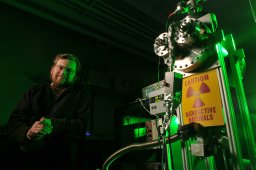 Uwe Greife合作论文数Colorado School of Mines, Golden, CO, USA11
 Jennifer Klay合作论文数Physics Department, Bailey College of Science & Mathematics, California Polytechnic State University, San Luis Obispo11




