The three redox reactions ferric/ferrous, ferricyanide/ferrocyanide and quinhydrone were studied by faradaic rectification measurements at solid platinum and gold electrodes in the range 100 kHz–1 MHz. The rate constants for all three systems were in the range −3 to −11 cm s−1. The different supporting electrolytes used did not alter the rate constant appreciably. In the case of the quinhydrone system, although the hydrogen ion concentration of the supporting electrolyte did not alter the rate constant of the reaction, the rectification ratio for each frequency increased with the increase in strength of the supporting electrolyte. The high values for rate constants obtained by the faradaic rectification method are compared with those obtained by other methods for these systems and other systems reported in the literature.
AbstractDie Doppelschichtkapazitäten von Pt‐, Au‐, Cu‐, Fe‐, Ni‐ und Ag‐Elektroden in KX (X: Cl, Br, J, NO3)‐ und Na2SO4‐Lösungen wurden gemessen.
Electrical double-layer capacitance measurements of six solid metal electrodes, platinum gold, copper, iron, nickel and silver, in aqueous solutions of potassium chloride, bromide, iodide, nitrate and sodium sulphate were carried out with an impedance bridge, under high purity conditions. The constant capacitance obtained with these metal/solution interfaces are interpreted on the basis of Devanathan's model of the electrical double laeyr as due to the solvent contribution only, uninfluenced by specific adsorption effects in the potential range investigated.
Chemischer InformationsdienstVolume 3, Issue 52 Preparative Inorganic Chemistry ChemInform Abstract: KINETIK VON MEHRELEKTRONEN-UEBERTRAGUNGSRK. 2. MITT. FARADAY-GLEICHRICHTUNG, -VERZERRUNG UND -IMPEDANZ M. A. V. DEVANATHAN, M. A. V. DEVANATHANSearch for more papers by this author M. A. V. DEVANATHAN, M. A. V. DEVANATHANSearch for more papers by this author First published: December 26, 1972 https://doi.org/10.1002/chin.197252031AboutPDF ToolsRequest permissionExport citationAdd to favoritesTrack citation ShareShare Give accessShare full text accessShare full-text accessPlease review our Terms and Conditions of Use and check box below to share full-text version of article.I have read and accept the Wiley Online Library Terms and Conditions of UseShareable LinkUse the link below to share a full-text version of this article with your friends and colleagues. Learn more.Copy URL Share a linkShare onFacebookTwitterLinked InRedditWechat No abstract is available for this article. Volume3, Issue52December 26, 1972 RelatedInformation
A theoretical approach to the evaluation of the transfer coefficients of multiple-electron-transfer reactions is developed. Methods of determination of α are critically examined and their limitations discussed. A distinction is drawn between the apparent transfer coefficient α′ and the true transfer coefficient α. The former is shown to include systematic errors due to the diffuse layer as treated by Frumkin and Gierst. The transfer coefficient for a one-electron-transfer reaction denoted by β, the symmetry factor, is shown to be 12 according to current theories of α. Statistical analysis of published experimental data for one-electron-transfer reactions show that α is 0·542 ± 0·119 (150 results); the departure from 12 of approximately 10% is attributed to the Frumkin-Gierst diffuse-layer effects.
The origin of rectification effects at an electrode has been attributed to the occurrence of 1–4 symmetrical even-power rectifying terms in the series expansion of the exponential terms exp (−αcz cos ωt) and exp (αaz cos ωt). Odd-power 1–3 symmetrical terms are non-rectifying. The derivation of the equation for rectification ratio shows that its range of validity is much more than the limit of z ⩽ 0·2 hitherto set by published treatments. The extent of error is neglecting the fourth power has been estimated.
Chemischer InformationsdienstVolume 3, Issue 6 Preparative Inorganic Chemistry ChemInform Abstract: EINFACHE TRANSFORMATORBRUECKE FUER DOPPELSCHICHTKAPAZITAETSMESSUNGEN M. A. V. DEVANATHAN, M. A. V. DEVANATHANSearch for more papers by this authorB. V. K. S. A. TILAK, B. V. K. S. A. TILAKSearch for more papers by this author M. A. V. DEVANATHAN, M. A. V. DEVANATHANSearch for more papers by this authorB. V. K. S. A. TILAK, B. V. K. S. A. TILAKSearch for more papers by this author First published: February 8, 1972 https://doi.org/10.1002/chin.197206029AboutPDF ToolsRequest permissionExport citationAdd to favoritesTrack citation ShareShare Give accessShare full text accessShare full-text accessPlease review our Terms and Conditions of Use and check box below to share full-text version of article.I have read and accept the Wiley Online Library Terms and Conditions of UseShareable LinkUse the link below to share a full-text version of this article with your friends and colleagues. Learn more.Copy URL Share a linkShare onFacebookTwitterLinked InRedditWechat No abstract is available for this article. Volume3, Issue6February 8, 1972 RelatedInformation
A brief description is given of a new, simple transformer bridge for differential capacitance measurements at a growing mercury surface to an accuracy of ± 0.2 per cent.
Current theories for the mechanism of metal deposition are briefly surveyed. It is shown that existing experimental evidence for surface-diffusion rate control at low η is unsatisfactory. The experimental method described in Part I permits the identification of the correct model and its quantitative verification. Results are presented for cathodic deposition of copper in the overpotential range 5–25 mV and at strain rates ranging from 4.7% to 91% per min.
A technique is described which permits a recording of mechano-electrochemical dissolution current at constant pre-determined strain rates for the Cu/aq. CuSO4 system under potentiostatic control. Studies have been carried out in the range 2.5–15 mV with strain rate ranging from 0.047 to 0.9105 strain/min. The increase in current is proportional to the square root of the corrected strain ε at constant overpotential η, the gradient being dependent on η. At high strains, a slight departure from linearity has been observed: this deviation is greater, the lower the strain rate.
The main experimental facts which should be explained by any ionic isotherm are described. A critical survey of the existing isotherms is made and it is shown that none can explain these facts quantitatively. On the basis of Devanathan’s model of the electrical double layer, an isotherm is derived which satisfactorily explains quantitatively all the facts cited. It is further shown that in this isotherm all the parameters except that involving the noncoulombic part of the free energy of adsorption can be predicted from theory. An evaluation of this non-coulombic energy is made for chloride, bromide and iodide ions from the thermodynamic data of Devanathan & Peries. It is shown that it is independent of the charge of the interface and that it increases linearly with the percentage covalent character of the mercuryhalide bond. With the aid of the isotherm, the broad features of the differential capacity curves are interpreted, in particular the nature of the hump is explained. Pronounced humps are attributed to the specific area of the molecule which may be due to its molecular structure or due to its hydration structure. The latter type of humps called 'hydration humps’ which are observed with ions like nitrate or perchlorate should be temperature sensitive, whereas the former ones should be independent of temperature. It is shown that the inner layer parameters used by Devanathan have been independently confirmed, with the isotherm providing confirmation of K1-2. The present status of the ionic double layer is summarized.
ADVERTISEMENT RETURN TO ISSUEPREVArticleNEXTThe Structure of the Electrical Double Layer at the Metal-Solution InterfaceM. A. V. Devanathan and B. V. K. S. R. A. TilakCite this: Chem. Rev. 1965, 65, 6, 635–684Publication Date (Print):December 1, 1965Publication History Published online1 May 2002Published inissue 1 December 1965https://pubs.acs.org/doi/10.1021/cr60238a002https://doi.org/10.1021/cr60238a002research-articleACS PublicationsRequest reuse permissionsArticle Views1971Altmetric-Citations165LEARN ABOUT THESE METRICSArticle Views are the COUNTER-compliant sum of full text article downloads since November 2008 (both PDF and HTML) across all institutions and individuals. These metrics are regularly updated to reflect usage leading up to the last few days.Citations are the number of other articles citing this article, calculated by Crossref and updated daily. Find more information about Crossref citation counts.The Altmetric Attention Score is a quantitative measure of the attention that a research article has received online. Clicking on the donut icon will load a page at altmetric.com with additional details about the score and the social media presence for the given article. Find more information on the Altmetric Attention Score and how the score is calculated. Share Add toView InAdd Full Text with ReferenceAdd Description ExportRISCitationCitation and abstractCitation and referencesMore Options Share onFacebookTwitterWechatLinked InRedditEmail Other access optionsGet e-Alertsclose Get e-Alerts
The permeation of electrolytic hydrogen in Armco iron membranes has been investigated by the electrochemical technique described elsewhere. In purified solutions it has been found that the permeation rate follows the equations previously derived. This rate is inversely proportional to the thickness and to the surface coverage with atomic hydrogen θ. The intercept of the plot of reciprocal of the permeation rate against the thickness varies inversely as the coverage as also predicted by the equation. Anomalies in the thickness dependence often reported in the literature have been traced to the adsorption of impurities and to redeposited iron, which then limit the over‐all permeation rate. The variation of permeation with cathodic overpotential has been determined. It is found that at moderate overpotentials indicating a slow discharge rate‐determining step followed by Tafel recombination. At higher overpotentials , indicating a constant coverage brought about by a transition to electrochemical desorption. In confirmation of this mechanism attempts have been made to determine the pseudocapacitance of the electrode system by galvanostatic cathodic transients. The results show the complete absence of pseudocapacity in acid solutions, thus proving that discharge of hydrogen ions is the rate‐determining step.
The anodic behavior of Pt electrodes in O2-saturated sulfuric acid solution is shown to be critically dependent on the treatment of the electrode. The open circuit potentials, 1.48, 1.13 and 0.98 V, observed in purified solution, are related to the thermodynamic platinum-oxide potentials. The erratic behavior of Pt electrodes in non-purified solutions is also explained.
The reversible oxygen electrode has been set up on anodized platinum in ultrapure sulfuric acid solutions. The essential conditions for establishing the reversible oxygen electrode are described. It is found that the variation of the electrode potential with partial pressure follows the theoretical expression. At other stable potentials exhibited by the platinum oxygen system the partial pressure effects give variations not consistent with any theoretical formula. Decay curves on open circuit have been measured and a dependence on the oxygen partial pressure has been observed. In ultrapure solutions the potential decays after several hours to a limiting value of 1.1v corresponding to the potential. When the solutions are impure the limit is lowered to about 0.84v which is the equilibrium potential of the hydrogen peroxide system. The gold‐oxygen system also exhibits a number of different oxide potentials, one of these is at 1.23v in normal acid solution. The apparent establishment of the reversible oxygen electrode potential on gold must be viewed with caution as the overpotential for the mixed reduction of gold oxide and oxygen can give rise to spurious Tafel lines. The oxygen partial pressure effect on gold electrodes does not follow the Nernst equation. It therefore appears that the reversible oxygen electrode is not set up on gold.
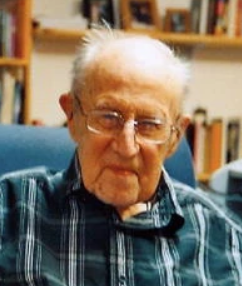 John Bockris合作论文数Texas A&M University5
 n ramaswamy合作论文数4M. J. Fernando合作论文数4Zbigniew Stachurski合作论文数3Quintus Fernando合作论文数niversity of Arizona2B. V. K. S. R. A. Tilak合作论文数2K. Ramakrishnaiah合作论文数2A. K. N. Reddy合作论文数2P. Peries合作论文数2J Om Bockris合作论文数1V. Aravamuthan合作论文数1W Mehl合作论文数1J.A. Calpin合作论文数1J.C. Rasiah合作论文数1
 Supramaniam Srinivasan合作论文数Center for Electrochemical Systems and Hydrogen Research, Texas A&M University System1Wolfgang Mehl合作论文数1Naoki Watanabe合作论文数1Mailoo Selvaratnam合作论文数1K. Nakulesparan合作论文数1Susima Abeyagunawardene合作论文数1W. Visscher合作论文数1




