The risk of a newly discovered non-native fish species in Florida (USA): Cichlasoma dimerus ([Heckel, 1840]; Family: Cichlidae) is assessed. Its tolerance to cold temperatures was experimentally evaluated and information on its biology and ecology was synthesized. In the cold-temperature tolerance experiment, temperature was lowered from 24 ??C by increments of 1 ??C per hour, mimicking a typical cold weather front. Fish lost equilibrium at a mean temperature of 7.8 ??C and died at 4.7 ??C. Those values are lower than most other non-native fishes from the state that have been experimentally evaluated, and it appears C. dimerus is the most cold-tolerant cichlid established in Florida. The combination of cold-temperature tolerance and other biological/ecological factors (e.g., adult size, reproduction and parental care, diet, habitat, and other behaviors) along with the geographic range and habitat diversity of specimens vouchered in museums, indicate C. dimerus may be able to invade many freshwater ecosystems in the state, including environmentally sensitive freshwater springs.
One of the primary ways in which climate change will impact coastal freshwater wetlands is through changes in the frequency, intensity, timing and distribution of extreme weather events. Disentangling the direct and indirect mechanisms of population- and community-level responses to extreme events is vital to predicting how species composition of coastal wetlands will change under future conditions. We extended static structural equation modelling approaches to incorporate system dynamics in a multi-year multispecies occupancy model to quantify the effects of extreme weather events on a coastal freshwater wetland system. We used data from an 8-year study (2009-2016) on St. Marks National Wildlife Refuge in Florida, USA, to quantify species-specific and community-level changes in amphibian and fish occupancy associated with two flooding events in 2012 and 2013. We examine how physical changes to the landscape, including potential changes in salinity and increased wetland connectivity, may have contributed to or exacerbated the effects of these extreme weather events on the biota of isolated coastal wetlands. We provide evidence that the primary effects of flooding on the amphibian community were through indirect mechanisms via changes in the composition of the sympatric fish community that may have had lethal (i.e. through direct predation) or non-lethal (i.e. through direct or indirect competitive interactions) effects. In addition, we have shown that amphibian species differed in their sensitivity to direct flooding effects and indirect changes in the fish community and wetland-specific conductance, which led to variable responses across the community. These effects led to the overall decline in amphibian species richness from 2009 to 2016, suggesting that wetland-breeding amphibian communities on St. Marks National Wildlife Refuge may not be resilient to predicted changes in coastal disturbance regimes because of climate change. Understanding both direct and indirect effects, as well as species interactions, is important for predicting the effects of a changing climate on individual species, communities and ecosystems.
The Black Acara, Cichlasoma bimaculatum (Linnaeus, 1758), was first reported as introduced to Florida in 1965. Native to Venezuela, Guyana, Suriname, western French Guiana, and northern Brazil, the species is now distributed throughout Florida’s southern peninsula. Examination of live and preserved acara from Central Florida, heretofore identified as Black Acara, reveal the presence of an additional acara species, the Chanchita, Cichlasoma dimerus (Heckel, 1840). The Chanchita is native to Bolivia, Paraguay, Uruguay, southern Brazil, and northeastern Argentina. Despite similarities, Black Acara and Chanchita can be distinguished by number of anal-fin spines, body and fin color, caudal-fin pattern, and head, nape, and upper-flank scale-rim pigment. The Chanchita is established in multiple Central Florida drainages with the earliest known record from July 27, 2000. The Chanchita has not been found to co-occur with the Black Acara. The presence of Chanchita in more than one Central Florida spring and the widespread distribution of this previously unreported introduced species may be of concern to natural resource managers.
Bullseye Snakehead Channa marulius (Hamilton 1822) was first detected in the southern Florida town of Tamarac in 2000 and has been expanding its geographic range since. Environmental DNA (eDNA) analysis is a newly-developed technique used to noninvasively detect cryptic or low-density species or those that are logistically difficult-to -study. Genetic material shed into the environment through tissue and body fluids is concentrated from water samples and analyzed for the presence of target species eDNA. To help delineate Bullseye Snakehead's geographic range, we developed and validated a species-specific eDNA assay for both quantitative and droplet digital PCR (ddPCR). We then used ddPCR to assess 16 locations in southeast Florida using 222 water samples collected from 2015 to 2018. Positive eDNA detections were obtained at all six locations that were within the known geographic range of Bullseye Snakehead. Furthermore, eDNA was detected in six of 10 locations that were previously thought to be outside the periphery of the range but hydrologically connected through the extensive canal system. Over the four years of sampling, estimated occurrence rates (psi) remained stable and relatively high (psi = 0.67 [95% credible interval (CI) 0.33-0.95]) near Tamarac, Florida, as compared to the most southern sampling locations (psi = 0.0-0.37). Bullseye Snakehead eDNA estimated occurrence rates in the middle region increased between 2016 (0.28 [95% CI 0.03-0.94]) and 2017 (0.66 [95% CI 0.24-0.98]), potentially reflecting eDNA detections related to a growing or expanding population. Bullseye Snakehead eDNA was detected at low concentrations on the northern and eastern borders of Everglades National Park, which is an important conservation area and UNESCO World Heritage Site. Despite extensive sampling via electrofishing, no Bullseye Snakehead were visually detected in several locations that yielded positive eDNA samples. It is unclear whether eDNA was transported through flowing water or another vector. To date, collection records for this species are confined to urban canals; however, Bullseye Snakehead may use the interconnected system of canals to disperse to natural conservation areas such as Everglades National Park, Big Cypress National Preserve, and Water Conservation Areas, where it may impact native species via predation and competition.
Disentangling the role that multiple interacting factors have on species responses to shifting climate poses a significant challenge. However, our ability to do so is of utmost importance to predict the effects of climate change on species distributions. We examined how populations of three species of wetland-breeding amphibians, which varied in life history requirements, responded to a six-year period of extremely variable precipitation. This interval was punctuated by both extensive drought and heavy precipitation and flooding, providing a natural experiment to measure community responses to environmental perturbations. We estimated occurrence dynamics using a discrete hidden Markov modeling approach that incorporated information regarding habitat state and predator-prey interactions. This approach allowed us to measure how metapopulation dynamics of each amphibian species was affected by interactions among weather, wetland hydroperiod, and co-occurrence with fish predators. The pig frog, a generalist, proved most resistant to perturbations, with both colonization and persistence being unaffected by seasonal variation in precipitation or co-occurrence with fishes. The ornate chorus frog, an ephemeral wetland specialist, responded positively to periods of drought owing to increased persistence and colonization rates during periods of low-rainfall. Low probabilities of occurrence of the ornate chorus frog in long-duration wetlands were driven by interactions with predators due to low colonization rates when fishes were present. The mole salamander was most sensitive to shifts in water availability. In our study area, this species never occurred in short-duration wetlands and persistence probabilities decreased during periods of drought. At the same time, negative effects occurred with extreme precipitation because flooding facilitated colonization of fishes to isolated wetlands and mole salamanders did not colonize wetlands once fishes were present. We demonstrate that the effects of changes in water availability depend on interactions with predators and wetland type and are influenced by the life history of each of our species. The dynamic species occurrence modeling approach we used offers promise for other systems when the goal is to disentangle the complex interactions that determine species responses to environmental variability.
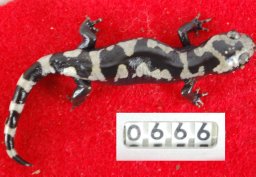
Plasticity in life history strategies can be advantageous for species that occupy spatially or temporally variable environments. We examined how phenotypic plasticity influences responses of the mole salamander, Ambystoma talpoideum , to disturbance events at the St. Marks National Wildlife Refuge (SMNWR), FL, USA from 2009 to 2014. We observed periods of extensive drought early in the study, in contrast to high rainfall and expansive flooding events in later years. Flooding facilitated colonization of predatory fishes to isolated wetlands across the refuge. We employed multistate occupancy models to determine how this natural experiment influenced the occurrence of aquatic larvae and paedomorphic adults and what implications this may have for the population. We found that, in terms of occurrence, responses to environmental variation differed between larvae and paedomorphs, but plasticity (i.e. the ability to metamorphose rather than remain in aquatic environment) was not sufficient to buffer populations from declining as a result of environmental perturbations. Drought and fish presence negatively influenced occurrence dynamics of larval and paedomorphic mole salamanders and, consequently, contributed to observed short-term declines of this species. Overall occurrence of larval salamanders decreased from 0.611 in 2009 to 0.075 in 2014 and paedomorph occurrence decreased from 0.311 in 2009 to 0.121 in 2014. Although variation in selection pressures has likely maintained this polyphenism previously, our results suggest that continued changes in environmental variability and the persistence of fish in isolated wetlands could lead to a loss of paedomorphosis in the SMNWR population and, ultimately, impact regional persistence in the future.
A fundamental goal of wetland restoration is to reinstate pre-disturbance hydrological conditions to degraded landscapes, facilitating recolonization by native species and the production of resilient, functional ecosystems. To evaluate restoration success, baseline conditions need to be determined and a reference target needs to be established that will serve as an ecological blueprint in the restoration process. During the summer wet seasons of 2010 and 2011, we used automated recording units to monitor a community of calling anuran amphibians in the Picayune Strand State Forest of Southwest Florida, USA. This area is undergoing hydrological restoration as part of the Comprehensive Everglades Restoration Plan. We compared occurrence of anurans at sites in the restoration area, to nearby locations in relatively undisturbed habitat (reference sites). We assessed the utility of the latter as restoration targets, using a hierarchical model of community species occupancy to estimate the probability of occurrence of anurans in restoration and reference locations. We detected 14 species, 13 of which were significantly more likely to occur in reference areas. All 14 species were estimated by our model to occur at these sites but, across both years, only 8–13 species were estimated to occur at restoration sites. The composition and structure of these habitats within and adjacent to the Picayune Strand State Forest indicate that they are suitable targets for habitat restoration, as measured by amphibian occurrence and species richness. These areas are important sources for recolonization of anuran amphibians as the hydrologically degraded Picayune Strand undergoes restoration to mitigate the effects of overdrainage and habitat loss.
In the southeastern U.S., changes in temperature and precipitation over the last three decades have been the most dramatic in winter and spring seasons. Continuation of these trends could negatively impact pond-breeding amphibians, especially those that rely on winter and spring rains to fill seasonal wetlands, trigger breeding, and ensure reproductive success. From 2009 to 2012, we monitored Spring and Fall presence of aquatic stages (larval and paedomorphic, gilled adult) of a winter-breeding amphibian (the mole salamander, Ambystoma talpoideum) and used multi-season models to estimate occupancy, local colonization and extinction. Seasonal estimates of occupancy, corrected for imperfect detection, declined from 22.3 % of ponds in Spring 2009 to 9.9 % in Fall 2012. Our best supported model suggested that changes in occupancy were driven by increased rates of extinction that corresponded with drought-related drying of ponds. Based on uncertainty in climate change projections for the Southeast, we present a conceptual model of predicted changes in wetland hydroperiods across a landscape with projected decreases and increases in future precipitation. Such precipitation changes could alter wetland hydroperiods, facilitate extinctions of species adapted to short, intermediate or long hydroperiod environments and, ultimately, modify the composition of amphibian communities within freshwater wetland ecosystems.
Amphibians in freshwater coastal wetlands periodically experience acute exposure to salinity from hurricane-related overwash events, as well as chronic exposure associated with rising sea levels. In a comparative experimental approach, we examined whether seven species of anuran amphibians vary in their tolerance to changes in salinity. In a laboratory study, we exposed larval Hyla cinerea (Green Treefrog), H. squirella (Squirrel Treefrog), Litho bates catesbeianus (American Bullfrog), L. sphenocephalus (Southern Leopard Frog), Anaxyrus terrestris (Southern Toad), and Gastrophryne carolinensis (Eastern Narrow-mouthed Toad) from an inland population in north central Florida, USA, and Osteopilus septentrionalis (Cuban Treefrog) tadpoles from an inland population in southwest Florida, to acute salinity for 72 h. For each species, we replicated trials in which tadpoles were exposed to salinities of 0.2 (control), 5, 10, 12, 14, and 16 ppt. For all species, tadpoles reared in the control and 5 ppt treatments had 96.7-100% survival. No individuals of G. carolinensis survived at salinities exceeding 5 ppt and no individuals of any species survived in the 14 or 16 ppt treatments. For all other native species, survival at 10 ppt ranged from 46.7 to 80%, but declined to 0% at 12 ppt (except for H. cinerea, of which only 3.3% survived at 12 ppt). In contrast, all individuals of the invasive, non-native 0. septentrionalis survived exposure to a salinity of 10 ppt, and survival in this species remained relatively high at 12 ppt. Our results illustrate that the non-native 0. septentrionalis has a higher salinity tolerance than the native species tested, which may contribute to its invasion potential. Moreover, species commonly associated with coastal freshwater wetlands differ in their salinity tolerances, suggesting that salt water intrusion due to storm surges and sea level rise may affect the species composition of these ecosystems.
The Class Amphibia is one of the most severely impacted taxa in an on-going global biodiversity crisis. Because amphibian reproduction is tightly associated with the presence of water, climatic changes that affect water availability pose a particularly menacing threat to both aquatic and terrestrial-breeding amphibians. We explore the impacts that one facet of climate change—that of extreme variation in precipitation—may have on amphibians. This variation is manifested principally as increases in the incidence and severity of both drought and major storm events. We stress the need to consider not only total precipitation amounts but also the pattern and timing of rainfall events. Such rainfall “pulses” are likely to become increasingly more influential on amphibians, especially in relation to seasonal reproduction. Changes in reproductive phenology can strongly influence the outcome of competitive and predatory interactions, thus potentially altering community dynamics in assemblages of co-existing species. We present a conceptual model to illustrate possible landscape and metapopulation consequences of alternative climate change scenarios for pond-breeding amphibians, using the Mole Salamander, Ambystoma talpoideum, as an example. Although amphibians have evolved a variety of life history strategies that enable them to cope with environmental uncertainty, it is unclear whether adaptations can keep pace with the escalating rate of climate change. Climate change, especially in combination with other stressors, is a daunting challenge for the persistence of amphibians and, thus, the conservation of global biodiversity.
A comprehensive revision of the cusk-eel genus Lepophidium, encompassing all 23 known species, is presented in a single work for the first time. A summary discussion of the status of Lepophidium and its position in the Lepophidiini is presented. Systematic accounts for each species of Lepophidium detail meristic, mensural, and pigment pattern variability, including features of the skeletal and internal anatomy. Eight species are described as new: Lepophidium collettei n. sp., Lepophidium zophochir n. sp., Lepophidium entomelan n. sp., Lepophidium cultratum n. sp., Lepophidium crossotum n. sp., Lepophidium wileyi n. sp., Lepophidium robustum n. sp., and Lepophidium gilmorei n. sp. Two subspecies are elevated to full species. Individual species distribution maps based on 1,012 collections of Lepophidium examined by the authors are presented. A dichotomous key to the 23 species of Lepophidium is provided. Study material, examined over the course of six decades by the senior author, is archived in various natural history museums detailed herein.
In this study, the hypoxia tolerance of three Everglades fishes, two native centrarchids (Lepomis gulosus and Lepomis marginatus) and a recently introduced cichlid (Hemichromis letourneuxi), were documented. Aquatic surface respiration (ASR) thresholds were lowest for H. letourneuxi, followed by L. gulosus, then L. marginatus. The ASR thresholds for L. marginatus were within ranges reported for small, freshwater tropical fishes, while those for L. gulosus were similar to swamp‐adapted fishes. For H. letourneuxi, ASR thresholds were some of the lowest reported. All three species showed excellent tolerance of low dissolved oxygen levels when allowed access to the surface. When denied surface access, L. marginatus lost equilibrium at a higher oxygen tension than the other species. Overall, although all species easily tolerated hypoxia, H. letourneuxi appeared to be best equipped to deal with hypoxia, followed by L. gulosus, then L. marginatus. Hemichromis letourneuxi also exhibited more aggressive behaviours than the centrarchids. These results suggest that hypoxia is not likely to prevent H. letourneuxi from exploiting the seasonally inundated wetlands of south Florida while expanding its range there.
 Susan Claire Walls合作论文数8
 William J. Barichivich合作论文数7ROBERT H. ROBINS合作论文数3
 Courtney Davis合作论文数Cornell Lab Ornithol, Cornell Univ3Pamela J. Schofield合作论文数3
 David A. W. Miller合作论文数Department of Ecosystem Science and Management, College of Agricultural Sciences, The Pennsylvania State University3Jeffrey W. Riley合作论文数2
 Melinda J. Schuman合作论文数1
 Ian Bartoszek合作论文数1jeromi hefner合作论文数1
 Scott David E合作论文数1
 Margaret E. Hunter合作论文数Wetland and Aquatic Research Center1Ferrante Jason合作论文数1J. Hardin Waddle合作论文数1
 W. F. Loftus合作论文数U. S. Geological Survey;Biological Resources Division;Biological Resources Division, U. S. Geological Survey1
 Blake Hossack合作论文数United States Geological Survey1




