Physiological direct current (DC) potential shifts in electroencephalography (EEG) can be masked by artifacts such as slow electrode drifts. To reduce the influence of these artifacts, linear detrending has been proposed as a pre-processing step. We considered quadratic detrending, which has hardly been addressed for ultralow frequency components in EEG. We compared the performance of linear and quadratic detrending in simultaneously acquired DC-EEG and transcutaneous partial pressure of carbon dioxide during two activation methods: hyperventilation (HV) and apnea (AP). Quadratic detrending performed significantly better than linear detrending in HV, while for AP, our analysis was inconclusive with no statistical significance. We conclude that quadratic detrending should be considered for DC-EEG preprocessing.
In the past decade deep brain stimulation (DBS)—the application of electrical stimulation to specific target structures via implanted depth electrodes—has become the standard treatment for medically refractory Parkinson's disease and essential tremor. These diseases are characterized by pathological synchronized neuronal activity in particular brain areas. We present an external trial DBS device capable of administering effectively desynchronizing stimulation techniques developed with methods from nonlinear dynamics and statistical physics according to a model-based approach. These techniques exploit either stochastic phase resetting principles or complex delayed-feedback mechanisms. We explain how these methods are implemented into a safe and user-friendly device.
Synchronization in the electroencephalogram, which can be quantified by time-variant coherence measures, reveals a communication between brain regions reflecting different functions (e.g. learning or memory). Aim of this work is to compare three time-variant coherence algorithms in single-trial. The first algorithm is based on the short-time Fourier transform, the second one on the adaptive discrete Fourier transform, whereas the third algorithm is based on a recursive smoothed pseudo Wigner-distribution. Parameters which describe the dynamic properties of the algorithms were calculated and compared on simulated data. Differences were observed in the estimation performance of the algorithms. Based on the obtained results, the algorithms are discussed for their utilization in future applications
In previous studies the fractal dimension (FD) has been shown to be a useful tool to detect non-stationarities and transients in biomedical signals like electroencephalogram (EEG) and electrocardiogram (ECG). The changes in FD are shown to characterise alterations in EEG due to changes in physiological states of brain, not only in normal but also in pathological functioning like epilepsy. The importance of long-term EEG monitoring for clinical evaluation in epilepsy has been also emphasised. Adaptive EEG. segmentation and classification of the obtained segments have been addressed to be a convenient solution to the problem of visual inspection of huge EEG data sets. The performance of adaptive segmentation plays an essential role in correct evaluation of the recordings. Thus, our aim in this study is to analyse the FD as a feature for adaptive EEG segmentation and compare its performance with those of previously used features on epileptic EEG data.
 M A Bhatti合作论文数2Ej Speckmann合作论文数2L Sasse合作论文数2
 Joel J Niederhauser合作论文数2
 Volker Sturm合作论文数University of Cologne2V. Krachkovskyi合作论文数2J-C Roulet合作论文数2
 Christian Hauptmann合作论文数Research Center Juelich, Institute of Medicine and Virtual Institute of Neuromodulation, 52425, Juelich, Germany2
 Utako Barnikol合作论文数2B Lysyansky合作论文数2s kudryavtseva合作论文数1H.-J. Freund合作论文数1
 Stefan Heyder合作论文数Inst Math, Tech Univ Ilmenau1Ivanova, G.合作论文数1Griessbach, G.合作论文数1Perez, D.合作论文数1
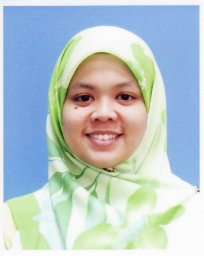 Maheza Irna Mohamad Salim合作论文数1
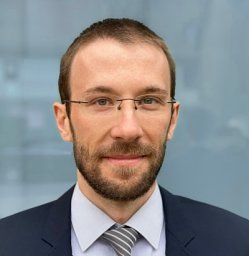 Patrique Fiedler合作论文数Technische Universität Ilmenau1
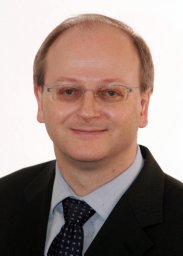 Jens Haueisen合作论文数Institute of Biomedical Engineering and Informatics, Technical University Ilmenau1
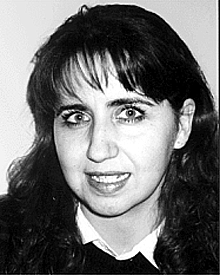 Galina Ivanova合作论文数1G. Henning合作论文数1
 Marko Helbig合作论文数1
 Eko Supriyanto合作论文数universiti teknologi malaysia1
 Peter Tass合作论文数Department of Neurosurgery, School of Medicine, Stanford University;Wu Tsai Neurosciences Institute, Stanford University1




