This paper presents the result of the team of the University of North Texas in the ImageCLEF 2011 Wikipedia and Medical Image Retrieval tasks. For Wikipedia image retrieval we compare the two query expansion methods: relevance models and query expansion using Wikipedia and flicker as external sources. The relevance models use a classic relevance feedback mechanism for Language models as proposed by Levrenko. The external query expansion mechanism uses an unsupervised two steps method that takes advantage of Salient Semantic Analysis (SSA) using Wikipedia and estimates the of terms using Flicker tags. Our results show that SSA and Flickr picturability can be used effectively to create very competitive runs that capture the semantic context of the original query. For Medical Image Retrieval we also use relevance models and query expansion using terms generated by MetaMap.
We demonstrate HeMT, a multilingual Web system for human evaluation of machine translated metadata records. It allows human evaluators to examine and assess machine translation results for sample metadata records in Chinese, English, and Spanish. This paper describes the design principles, users, and the functions of the system. It also presents the research design of a small-scale usability testing that will not only examine the appearance of the Website, but also the accuracy of the content and the Website's cultural appropriateness.
This paper presents the results of a user study conducted in the framework of the Interactive Image Retrieval task at CLEF 2009. The main goal of our research is to understand the way in which users search for images that have been annotated with multilingual tags. The study is based on the application of grounded theory to try to understand the challenges that users face when searching for images that have multilingual annotations, and how they cope with these challenges to find the information they need. The study includes two methods of data collection: an online survey and a face to face interview that included a search task using Flickling. Because this was our first year participating in the interactive image CLEF, we found that the most challenging aspect of conducting a user centered evaluation in the context of CLEF is the short amount of time that is available from the time the task is defined and the deadline for submitting results. We were able to conduct face to face interviews for approximately three weeks (from 6/29/2009 to 7/17/2009) before the Flickling system was shut down. Our online survey was also made available at the end of June and we report here the results that we have collected until the end of November 2009. During this time we collected 27 responses to the online questionnaire and 6 face to face interviews. Our results indicate that 67% of the users search for images at least once a week and that the most common purposes for finding images are entertainment and professional. Our results from the user interviews indicate that the users find the known-item retrieval task hard to do due to the difficulty in expressing the contents of the target image using tags that could have also been assigned by the creator of the image. The face to face interviews also give some feedback for improving the current Flickling interface, particularly the addition of a spell checking mechanism and the improvement of the multilingual translation of terms selected by users.
This paper describes the experiments conducted by the University of North Texas team as part of our participation in the Forum for Information Retrieval (FIRE). We concentrated on comparing the results using two morphological stemmers (YASS and Morfessor), studying the effect of using a part of speech tagger (Combined Random Fields) to weight the contribution of words with noun phrases, and to use a data fusion approach to improve performance of the system by combining these methods. We conducted our study using Hindi and explore the cross-language retrieval performance from English to Hindi using Google translations. Our results show that using the YASS stemmer yields a small increase in retrieval performance. Fusion of results also showed to be effective and improved results 5% in our experiments.
This paper presents the results of the team of the University of North Texas in the Wikipedia image retrieval track of Image-CLEF-2010. Our approach is based on performing translation of the French and German image captions to English and using of Language Models for generating our runs. We also explore the use of complex queries by asking two users to manually build queries based on the original topics distributed. Our results indicate that the approach of translating the image captions is feasible and yields results that are quite competitive with other teams that participated in the same track. This paper presents the results of the UNT team participation in the Wikipedia retrieval task. Traditionally, the most common approach to solve the cross language retrieval problem is to perform automatic translation of the user queries into the language of the document to be retrieved. However, in the presence of short queries the automatic translation might not have enough context to generate an appropriate translation. Our main goal was to explore the efficacy of using the captions associated with the Wikipedia images and providing automatic translations of them in English. We also address the effectiveness of using this approach using automatic queries as well as manual queries constructed by real users. Section 2 of this paper presents a short background of the CLIR retrieval problem in image retrieval. Section 3 presents the methods used to conduct our experiments. Section 4 presents our results and preliminary analysis of results. The last section of this paper presents our conclusion and plans for future work.
AbstractThis panel aims to discuss the importance of creating digital libraries for biodiversity and natural history collections, the state of the art in terms of standards, best practices and the challenges that natural history museums and herbaria face when trying to digitize their collections, and the creation and management of personal digital libraries for botanical learning.
For this year our team participated in the medical image retrieval task. Most of our effort was invested in processing the collection using Metamap to assign Unified Medical Language System (UMLS) concepts to each of the images that included some associated text. This process generated metadata that was added to each image and included the UMLS concept number as well as the primary terms associated to each concept. Queries were also processed using Metamap to generate the corresponding UMLS concepts and terms associated with each query request. The SMART system was used to perform retrieval using a generalized vector space model that included the original text, the automatically assigned UMLS concepts, and the UMLS terms. We use a simple weighting scheme (tf-idf) to perform retrieval. Our text based runs included a simple run and a retrieval feedback run. The parameters for retrieval feedback and for the linear combination of the generalized vector space model were tuned using queries for the 2008 CLEF medical image retrieval task (imageCLEFmed). We also worked on using the results from the open source content-based image retrieval (CBIR) system GIFT but ran into some technical problems that prevented us to generate the retrieval results on time for the deadline. However, the University of Geneva (UG) team allowed us to use one of their Image results. The mixed results were generated using the GIFT run provided by UG and used a standard fusion mechanism by combining the text and CBIR results into a single list. To tune the parameters for the combination we used the results from the imageclefmed 2008 queries. Our results indicate that the pseudo relevance feedback mechanism yields only small improvements. The Combination of image features and text gave mixed results. While the combination of standard retrieval and CBIR yields small improvements, the combination of retrieval feedback and CBIR resulted in results significantly below using only text. At this point we still are investigating the reasons for this unexpected result.
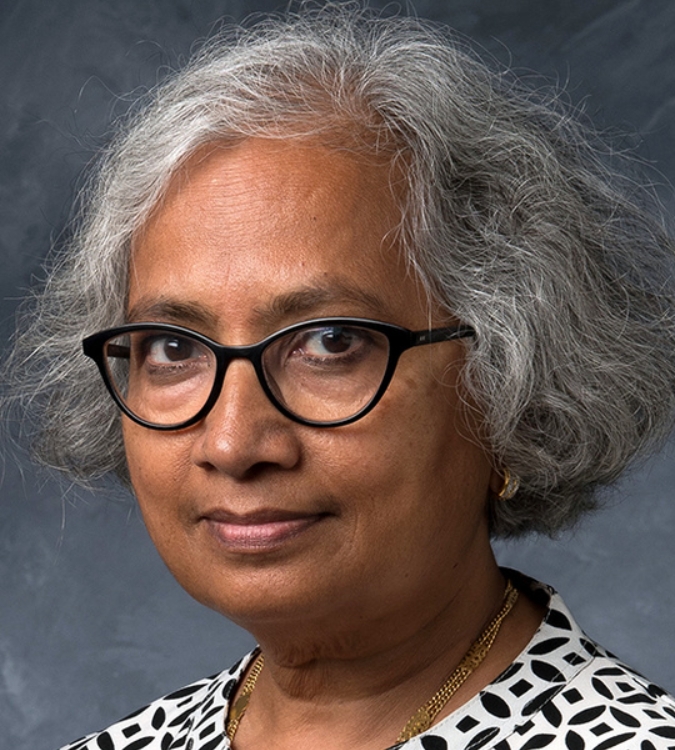 Padmini Srinivasan合作论文数Department of Computer Science, College of Liberal Arts and Sciences, University of Iowa15
 Munirathnam Srikanth合作论文数Language Computer Corporation6Omar Ramon Mejia合作论文数5Dianney Clavijo Grimaldi合作论文数5
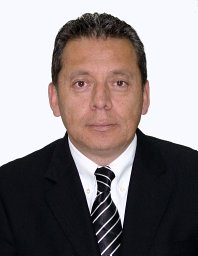 Ananías García Cardona合作论文数Instituto de Ciencias Básicas, Universidad Colegio Mayor de Nuestra Señora del Rosario5Grégory Alfonso合作论文数5w badilla合作论文数4d pezo合作论文数4Ciro Alfonso Casadiego合作论文数4
 J. M. Gonzalez-Cortina合作论文数4a ruiz合作论文数4Alan R. Aronson合作论文数4
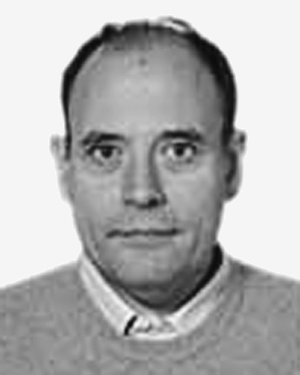 Josep Gallart合作论文数Instituto de Ciencias de la Tierra, CSIC4
 Jose J Diaz合作论文数Tampa General Hospital, USF Health;Department of Surgery, University of South Florida4Javier A. Pulgar合作论文数Departamento de Geología, Universidad de Oviedo4a camero合作论文数3arlene naranjo合作论文数3
 David Eichmann合作论文数School of Library and Information Science, The University of Iowa3
 Jiangping Chen合作论文数Department of Information Science, College of Information, University of North Texas3Lawrence H. Smith合作论文数3Elemer Bornemisza合作论文数3
 Patrick Ruch合作论文数HES-SO Genève;Swiss Institute of Bioinformatics3Sheikh Ajaz Rasool合作论文数3
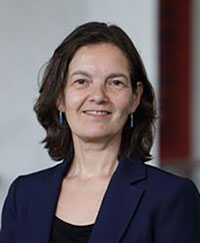 Dina Demner-Fushman合作论文数National Library of Medicine3Clarice Rosa Olivo合作论文数3
 W. John Wilbur合作论文数National Center for Biotechnology Information3Muhammad Faishal Ibrahim合作论文数Department of Real Estate, National University of Singapore3
 Sergio Dasso合作论文数Departamento de Ciencias de la Atmósfera y los Océanos, Facultad de Ciencias Exactas y Naturales, Universidad de Buenos Aires3Russell F. Loane合作论文数2villalobos c bertsch f合作论文数2v armendariz合作论文数2j p moraes s s puignau合作论文数2beckwith b l puignau j p合作论文数2c y munoz astaiza合作论文数2j l laneri合作论文数2j monterrey合作论文数2ahmad t mannetje l t合作论文数2j r navarro合作论文数2henry p r puignau j p合作论文数2c b ammerman合作论文数2c abu bakar合作论文数2j p puignau合作论文数2e f unsworth合作论文数2p d walton合作论文数2k vohnout合作论文数2i lopez de rojas合作论文数2Silvia B. Southwick合作论文数2Pok Chin合作论文数2l martinez montoya合作论文数2




