There has been significant prior work using templates to study bias against demographic attributes in MLMs. However, these have limitations: they overlook random variability of templates and target concepts analyzed, assume equality amongst templates, and overlook bias quantification. Addressing these, we propose a systematic statistical approach to assess bias in MLMs, using mixed models to account for random effects, pseudo-perplexity weights for sentences derived from templates and quantify bias using statistical effect sizes. Replicating prior studies, we match on bias scores in magnitude and direction with small to medium effect sizes. Next, we explore the novel problem of gender bias in the context of personality and character traits, across seven MLMs (base and large). We find that MLMs vary; ALBERT is unbiased for binary gender but the most biased for non-binary neo, while RoBERTa-large is the most biased for binary gender but shows small to no bias for neo. There is some alignment of MLM bias and findings in psychology (human perspective) - in agreeableness with RoBERTa-large and emotional stability with BERT-large. There is general agreement for the remaining 3 personality dimensions: both sides observe at most small differences across gender. For character traits, human studies on gender bias are limited thus comparisons are not feasible.
Although prior work on bias mitigation has focused on promoting social equality and demographic parity, less attention has been given to aligning LLM’s outputs to desired distributions. For example, we might want to align a model with real-world distributions to support factual grounding. Thus, we define bias as deviation from a desired distribution, which may be an equal or real-world distribution, depending on application goals. We propose a weighted adaptive loss based fine-tuning method that aligns LLM’s gender–profession output distribution with the desired distribution, while preserving language modeling capability. Using 3 profession sets—male-dominated, female-dominated, and gender-balanced—derived from U.S. labor statistics (2024), we assess both our adaptive method for reflecting reality and a non-adaptive variant for equality. Across three masked language models, bias is observed under both distributions. We achieve near-complete mitigation under equality and 30–75% reduction under real-world settings. Autoregressive LLMs show no bias under equality but notable bias under real-world settings, with the Llama Instruct models (3.2-3B, 3.1-8B) achieving a 50–62% reduction.
The development of tools and techniques to analyze and extract organizations’ data habits from privacy policies are critical for scalable regulatory compliance audits. Unfortunately, these tools are becoming increasingly limited in their ability to identify compliance issues and fixes. After all, most were developed using regulation-agnostic datasets of annotated privacy policies obtained from a time before the introduction of landmark privacy regulations such as EU’s GDPR and California’s CCPA. In this paper, we describe the first open regulation-aware dataset of expert-annotated privacy policies, C3PA (CCPA Privacy Policy Provision Annotations), aimed to address this challenge. C3PA contains over 48K expert-labeled privacy policy text segments associated with responses to CCPA-specific disclosure mandates from 411 unique organizations. We demonstrate that the C3PA dataset is uniquely suited for aiding automated audits of compliance with CCPA-related disclosure mandates.
Content has historically been the primary lens used to study language in online communities. This paper instead focuses on the linguistic style of communities. While we know that individuals have distinguishable styles, here we ask whether communities have distinguishable styles. Additionally, while prior work has relied on a narrow definition of style, we employ a broad definition involving 262 features to analyze the linguistic style of 9 online communities from 3 social media platforms discussing politics, television and travel. We find that communities indeed have distinct styles. Also, style is an excellent predictor of group membership (F-score 0.952 and Accuracy 96.09%). While on average it is statistically equivalent to predictions using content alone, it is more resilient to reductions in training data.
Mental illness, a serious problem across the globe, requires multi-pronged solutions including effective computational models to predict illness. Mental illness diagnosis is complicated by the pronounced sharing of symptoms and mutual pre-dispositions. Set in this context we offer a systematic comparison of seven deep learning and two conventional machine learning models for predicting mental illness from the history of present illness free-text descriptions in patient records. The models tested include a new architecture CB-MH which ranks best for F1 (0.62) while another attention model is best for F2 (0.71). We also explore model decisions using Integrated Gradients interpretability method which we use to identify key influential features. Overall, the majority of true positives have key features appearing in meaningful contexts. False negatives are most challenging with most key features appearing in unclear contexts. False positives are mostly true positives in actuality as supported by a small-scale clinician-based user judgement study.
Recent advances in natural language processing have enabled powerful privacy-invasive authorship attribution. To counter authorship attribution, researchers have proposed a variety of rule-based and learning-based text obfuscation approaches. However, existing authorship obfuscation approaches do not consider the adversarial threat model. Specifically, they are not evaluated against adversarially trained authorship attributors that are aware of potential obfuscation. To fill this gap, we investigate the problem of adversarial authorship attribution for deobfuscation. We show that adversarially trained authorship attributors are able to degrade the effectiveness of existing obfuscators from 20-30% to 5-10%. We also evaluate the effectiveness of adversarial training when the attributor makes incorrect assumptions about whether and which obfuscator was used. While there is a a clear degradation in attribution accuracy, it is noteworthy that this degradation is still at or above the attribution accuracy of the attributor that is not adversarially trained at all. Our results motivate the need to develop authorship obfuscation approaches that are resistant to deobfuscation.
Recent advances in natural language processing have enabled powerful privacy-invasive authorship attribution. To counter authorship attribution, researchers have proposed a variety of rule-based and learning-based text obfuscation approaches. However, existing authorship obfuscation approaches do not consider the adversarial threat model. Specifically, they are not evaluated against adversarially trained authorship attributors that are aware of potential obfuscation. To fill this gap, we investigate the problem of adversarial authorship attribution for deobfuscation. We show that adversarially trained authorship attributors are able to degrade the effectiveness of existing obfuscators from 20-30% to 5-10%. We also evaluate the effectiveness of adversarial training when the attributor makes incorrect assumptions about whether and which obfuscator was used. While there is a a clear degradation in attribution accuracy, it is noteworthy that this degradation is still at or above the attribution accuracy of the attributor that is not adversarially trained at all. Our results underline the need for stronger obfuscation approaches that are resistant to deobfuscation.
It is well recognized that sensory perceptions and language have interconnections through numerous studies in psychology, neuroscience, and sensorial linguistics. Set in this rich context we ask whether the use of sensorial language in writings is part of linguistic style? This question is important from the view of stylometrics research where a rich set of language features have been explored, but with insufficient attention given to features related to sensorial language. Taking this as the goal we explore several angles about sensorial language and style in collections of lyrics, novels, and poetry. We find, for example, that individual use of sensorial language is not a random phenomenon; choice is likely involved. Also, sensorial style is generally stable over time - the shifts are extremely small. Moreover, style can be extracted from just a few hundred sentences that have sensorial terms. We also identify representative and distinctive features within each genre. For example, we observe that 4 of the top 6 representative features in novels collection involved individuals using olfactory language where we expected them to use non-olfactory language.
Prior research has discussed and illustrated the need to consider linguistic norms at the community level when studying taboo (hateful/offensive/toxic etc.) language. However, a methodology for doing so, that is firmly founded on community language norms is still largely absent. This can lead both to biases in taboo text classification and limitations in our understanding of the causes of bias. We propose a method to study bias in taboo classification and annotation where a community perspective is front and center. This is accomplished by using special classifiers tuned for each community's language. In essence, these classifiers represent community level language norms. We use these to study bias and find, for example, biases are largest against African Americans (7/10 datasets and all 3 classifiers examined). In contrast to previous papers we also study other communities and find, for example, strong biases against South Asians. In a small scale user study we illustrate our key idea which is that common utterances, i.e., those with high alignment scores with a community (community classifier confidence scores) are unlikely to be regarded taboo. Annotators who are community members contradict taboo classification decisions and annotations in a majority of instances. This paper is a significant step toward reducing false positive taboo decisions that over time harm minority communities.
The algorithms and the interactions facilitated by online platforms have been used by radical groups to recruit vulnerable individuals to their cause. This has resulted in the sharp growth of violent events and deteriorating online discourse. The Manosphere, a collection of radical anti-feminist communities, is one such group which has attracted attention due to their rapid growth and increasingly violent real world outbursts. In this paper, we examine the social engagements between Reddit users who have participated in feminist discourse and the Manosphere communities on Reddit to understand the process of development of traits associated with the adoption of extremist ideologies. By using existing research on the psychology of radicalization we track how specific types of social engagement with the Manosphere influence the development of traits associated with radicalization. Our findings show that: (1) participation, even by the simple act of joining the Manosphere, has a significant influence on the language and outlook traits of a user, (2) Manosphere elites are extremely effective propagators of radical traits and cause their increase even outside the Manosphere, and (3) community perception can heavily influence a user's behavior. Finally, we examine how our findings can help draft community and platform moderation policies to help mitigate the problem of online radicalization.
The algorithms and the interactions facilitated by online platforms have been used by radical groups to recruit vulnerable individuals to their cause. This has resulted in the sharp growth of violent events and deteriorating online discourse. The Manosphere, a collection of radical anti-feminist communities, is one such group that has attracted attention due to its rapid growth and increasingly violent real-world outbursts. In this paper, we examine the social engagements between Reddit users who have participated in feminist discourse and the Manosphere communities on Reddit to understand the process of development of traits associated with the adoption of extremist ideologies. By using existing research on the psychology of radicalization we track how specific types of social engagement with the Manosphere influence the development of traits associated with radicalization. Our findings show that: (1) participation, even by the simple act of joining the Manosphere, has a significant influence on the language and outlook traits of a user, (2) Manosphere elites are extremely effective propagators of radical traits and cause their increase even outside the Manosphere, and (3) community perception can heavily influence a user's behavior. Finally, we examine how our findings can help draft community and platform moderation policies to help mitigate the problem of online radicalization.
Social media platforms are deploying machine learning based offensive language classification systems to combat hateful, racist, and other forms of offensive speech at scale. However, despite their real-world deployment, we do not yet comprehensively understand the extent to which offensive language classifiers are robust against adversarial attacks. Prior work in this space is limited to studying robustness of offensive language classifiers against primitive attacks such as misspellings and extraneous spaces. To address this gap, we systematically analyze the robustness of state-of-the-art offensive language classifiers against more crafty adversarial attacks that leverage greedy- and attention-based word selection and context-aware embeddings for word replacement. Our results on multiple datasets show that these crafty adversarial attacks can degrade the accuracy of offensive language classifiers by more than 50% while also being able to preserve the readability and meaning of the modified text.
Deep learning (DL) is being used extensively for text classification. However, researchers have demonstrated the vulnerability of such classifiers to adversarial attacks. Attackers modify the text in a way which misleads the classifier while keeping the original meaning close to intact. State-of-the-art (SOTA) attack algorithms follow the general principle of making minimal changes to the text so as to not jeopardize semantics. Taking advantage of this we propose a novel and intuitive defense strategy called Sample Shielding.It is attacker and classifier agnostic, does not require any reconfiguration of the classifier or external resources and is simple to implement. Essentially, we sample subsets of the input text, classify them and summarize these into a final decision. We shield three popular DL text classifiers with Sample Shielding, test their resilience against four SOTA attackers across three datasets in a realistic threat setting. Even when given the advantage of knowing about our shielding strategy the adversary’s attack success rate is <=10% with only one exception and often < 5%. Additionally, Sample Shielding maintains near original accuracy when applied to original texts. Crucially, we show that the ‘make minimal changes’ approach of SOTA attackers leads to critical vulnerabilities that can be defended against with an intuitive sampling strategy.
Stylometric approaches have been shown to be quite effective for real-world authorship attribution. To mitigate the privacy threat posed by authorship attribution, researchers have proposed automated authorship obfuscation approaches that aim to conceal the stylometric artefacts that give away the identity of an anonymous document’s author. Recent work has focused on authorship obfuscation approaches that rely on black-box access to an attribution classifier to evade attribution while preserving semantics. However, to be useful under a realistic threat model, it is important that these obfuscation approaches work well even when the adversary’s attribution classifier is different from the one used internally by the obfuscator. Unfortunately, existing authorship obfuscation approaches do not transfer well to unseen attribution classifiers. In this paper, we propose an ensemble-based approach for transferable authorship obfuscation. Our experiments show that if an obfuscator can evade an ensemble attribution classifier, which is based on multiple base attribution classifiers, it is more likely to transfer to different attribution classifiers. Our analysis shows that ensemble-based authorship obfuscation achieves better transferability because it combines the knowledge from each of the base attribution classifiers by essentially averaging their decision boundaries.
Given the potential misuse of recent advances in synthetic text generation by language models (LMs), it is important to have the capacity to attribute authorship of synthetic text. While stylometric organic (i.e., human written) authorship attribution has been quite successful, it is unclear whether similar approaches can be used to attribute a synthetic text to its source LM. We address this question with the key insight that synthetic texts carry subtle distinguishing marks inherited from their source LM and that these marks can be leveraged by machine learning (ML) algorithms for attribution. We propose and test several ML-based attribution methods. Our best attributor built using a fine-tuned version of XLNet (XLNet-FT) consistently achieves excellent accuracy scores (91% to near perfect 98%) in terms of attributing the parent pre-trained LM behind a synthetic text. Our experiments show promising results across a range of experiments where the synthetic text may be generated using pre-trained LMs, fine-tuned LMs, or by varying text generation parameters.
Most sentiment analysis studies address classification of a single source of data such as reviews or blog posts. However, the multitude of social media sources available for text analysis lends itself naturally to domain adaptation. In this study, we create a dataset spanning three social media sources -- blogs, reviews, and Twitter -- and a set of 37 common topics. We first examine sentiments expressed in these three sources while controlling for the change in topic. Then using this multi-dimensional data we show that when classifying documents in one source (a target source), models trained on other sources of data can be as good as or even better than those trained on the target data. That is, we show that models trained on some social media sources are generalizable to others. All source adaptation models we implement show reviews and Twitter to be the best sources of training data. It is especially useful to know that models trained on Twitter data are generalizable, since, unlike reviews, Twitter is more topically diverse.
Authorship attribution aims to identify the author of a text based on the stylometric analysis. Authorship obfuscation, on the other hand, aims to protect against authorship attribution by modifying a text's style. In this paper, we evaluate the stealthiness of state-of-the-art authorship obfuscation methods under an adversarial threat model. An obfuscator is stealthy to the extent an adversary finds it challenging to detect whether or not a text modified by the obfuscator is obfuscated - a decision that is key to the adversary interested in authorship attribution. We show that the existing authorship obfuscation methods are not stealthy as their obfuscated texts can be identified with an average F1 score of 0.87. The reason for the lack of stealthiness is that these obfuscators degrade text smoothness, as ascertained by neural language models, in a detectable manner. Our results highlight the need to develop stealthy authorship obfuscation methods that can better protect the identity of an author seeking anonymity.
Recent advances in text mining have provided new methods for capitalizing on the voluminous natural language text data created by organizations, their employees, and their customers. Although often overlooked, decisions made during text preprocessing affect whether the content and/or style of language are captured, the statistical power of subsequent analyses, and the validity of insights derived from text mining. Past methodological articles have described the general process of obtaining and analyzing text data, but recommendations for preprocessing text data were inconsistent. Furthermore, primary studies use and report different preprocessing techniques. To address this, we conduct two complementary reviews of computational linguistics and organizational text mining research to provide empirically grounded text preprocessing decision-making recommendations that account for the type of text mining conducted (i.e., open or closed vocabulary), the research question under investigation, and the data set’s characteristics (i.e., corpus size and average document length). Notably, deviations from these recommendations will be appropriate and, at times, necessary due to the unique characteristics of one’s text data. We also provide recommendations for reporting text mining to promote transparency and reproducibility.
 Christopher Harris合作论文数University of Northern Colorado18
 Sanmitra Bhattacharya合作论文数Department of Computer Science, The University of Iowa17
 Yelena Mejova合作论文数ISI Foundation15Miguel E. Ruiz合作论文数University of North Texas15Aditya Kumar Sehgal合作论文数Parity Computing15
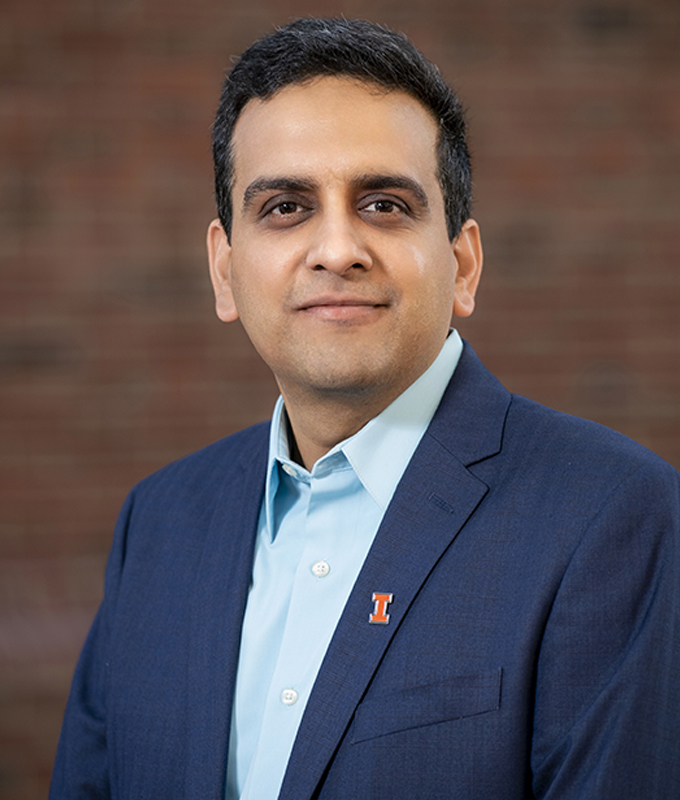 Gautam Pant合作论文数Gies College of Business, University of Illinois Urbana-Champaign14
 Viet Ha-Thuc合作论文数Amazon14
 David Eichmann合作论文数School of Library and Information Science, The University of Iowa13
 Zubair Shafiq合作论文数Department of Computer Science, University of California, Davis;The University of Iowa13
 Chao Yang合作论文数Meta10
 Xinying Qiu (丘心颖)合作论文数School of Information Science and Technology, Guangdong University of Foreign Studies10
 Filippo Menczer合作论文数Department of Informatics, Indiana University;Luddy Center for Artificial Intelligence, Luddy School of Informatics, Computing, and Engineering, Indiana University9
 Jonathan Rusert合作论文数Department of Computer Science, Purdue University Fort Wayne7
 Frederick Petry合作论文数Stennis Space Center, Naval Research Laboratory6
 Louiqa Raschid合作论文数Robert H. Smith School of Business, University of Maryland;Institute of Advanced Computer Studies, University of Maryland;Department of Computer Science, University of Maryland6
 Hung Tran合作论文数Texas Tech University5
 Philip M. Polgreen合作论文数Department of Internal Medicine, Carver College of Medicine, University of Iowa5
 Balasubramaniam Amirthalingam合作论文数Department of Veterinary Pathology, Veterinary College and Research Institute5
 Nick Street合作论文数Department of Business Analytics, The University of Iowa;Tippie College of Business, The University of Iowa;Department of Computer Science, University of Iowa;College of Nursing, University of Iowa5
 Arjen P. de Vries合作论文数Institute for Computing and Information Sciences, Radboud University;Faculty of Science, University of Nijmegen;Spinque5Robert Arens合作论文数5
 Denis Gračanin合作论文数Department of Computer Science
Virginia Polytechnic Institute & State University5
Denis Gračanin合作论文数Department of Computer Science
Virginia Polytechnic Institute & State University5 Carsten Eickhoff合作论文数University of Tuebingen;Medical Data Integration Center, University Hospital Tübingen5G. R. Boynton合作论文数4Serguei Mankovskii合作论文数4Huyen Le合作论文数4Li Zhang合作论文数4
 Ingroj Shrestha合作论文数Department of Computer Science, College of Liberal Arts and Sciences, The University of Iowa4HaoDa Huang (黄豪达)合作论文数4
 Balachandran Prasanna V合作论文数Div Theoret, Los Alamos Natl Lab4Dou Shen合作论文数4Murthy T R Gopala Krishna合作论文数4
 Gonzalo Navarro合作论文数Department of Computer Science, Faculty of Physical and Mathematical Sciences, University of Chile4
 Osama Khalid合作论文数Department of Computer Science, College of Liberal Arts and Sciences, University of Iowa4
 Ulrich Schiel合作论文数Computing and Systems Department, Federal University of Campina Grande4
 Manolis Koubarakis合作论文数Department of Informatics and Telecommunications, National and Kapodistrian University of Athens4
 James B D Joshi合作论文数School of Information Sciences, University of Pittsburgh4
 Paolo Terenziani合作论文数Computer Science Institute, Dipartimento di Scienze e Innovazione Tecnologica, Universita del Piemonte Orientale "Amedeo Avogadro"4
 Richard Thomas Snodgrass合作论文数Department of Computer Science, College of Science, University of Arizona4
 Jan Chomicki合作论文数Department of Computer Science and Engineering, School of Engineering and Applied Sciences, University at Buffalo4
 Omar Alonso合作论文数Amazon;Khoury College of Computer Sciences, Northeastern University4
 Christian S. Jensen合作论文数Department of Computer Science, Aalborg University4
 Sushil Jajodia合作论文数Center for Secure Information Systems, College of Engineering and Computing, George Mason University;Center for Cybersecurity Analytics and Automation4
 Olivier Bodenreider合作论文数National Library of Medicine,National Institutes of Health4
 Jef Wijsen合作论文数Departement d'Informatique, Universite de Mons4
 Philippe Bonnet合作论文数IT University of Copenhagen4
 Sonia Leila Fernandes Da Silva合作论文数4
 Jens Lechtenbörger合作论文数Department of Information Systems, School of Business and Economics, University of Münster4Betsy George合作论文数University of Minnesota4




