The Pulsed Power Sciences Center at Sandia National Laboratories operates the Z-machine for a variety of national security missions. Options are being evaluated for developing a new pulsed power driver capable of much higher peak current and power delivery to the load, with four options presented here. We provide an overview of technology maturation efforts that will reduce the technology risk associated with design and construction of any of these architectures.
Vulcan is a new pulsed power system at Sandia National Laboratories based on fast Marx technology. Vulcan will serve as an intermediate scale demonstration of a fast Marx system and as a testbed for vacuum insulator testing. Vulcan uses multiple parallel fast Marxes, in a layout we call a Fast Marx Array (FMA), and a pulse forming line (PFL) to generate pulses up to 5 MV with effective pulse lengths for vacuum insulator testing that are relevant to larger facilities like Z. Vulcan consists of two parallel 25 stage Marxes with a total stored energy of up to 20 kJ. Vulcan applies up to 5 MV to a vacuum insulator stack load, thereby enabling testing of large area insulator stacks with areas on the order of 1000 cm 2 . The PFL design includes an oil output switch to adjust the voltage stress duration applied to the vacuum insulator. We will discuss Vulcan’s design, including the FMA, Marx trigger generator, energy diverter, PFL, oil output switch, and results of initial commissioning experiments.
We present experimental results from the first systematic study of performance scaling with drive parameters for a magnetoinertial fusion concept. In magnetized liner inertial fusion experiments, the burn-averaged ion temperature doubles to 3.1 keV and the primary deuterium-deuterium neutron yield increases by more than an order of magnitude to 1.1×10^{13} (2 kJ deuterium-tritium equivalent) through a simultaneous increase in the applied magnetic field (from 10.4 to 15.9 T), laser preheat energy (from 0.46 to 1.2 kJ), and current coupling (from 16 to 20 MA). Individual parametric scans of the initial magnetic field and laser preheat energy show the expected trends, demonstrating the importance of magnetic insulation and the impact of the Nernst effect for this concept. A drive-current scan shows that present experiments operate close to the point where implosion stability is a limiting factor in performance, demonstrating the need to raise fuel pressure as drive current is increased. Simulations that capture these experimental trends indicate that another order of magnitude increase in yield on the Z facility is possible with additional increases of input parameters.
Pulsed power accelerators compress electrical energy in space and time to provide versatile experimental platforms for high energy density and inertial confinement fusion science. The 80-TW "Z" pulsed power facility at Sandia National Laboratories is the largest pulsed power device in the world today. Z discharges up to 22MJ of energy stored in its capacitor banks into a current pulse that rises in 100ns and peaks at a current as high as 30 MA in low-inductance cylindrical targets. Considerable progress has been made over the past 15years in the use of pulsed power as a precision scientific tool. This paper reviews developments at Sandia in inertial confinement fusion, dynamic materials science, x-ray radiation science, and pulsed power engineering, with an emphasis on progress since a previous review of research on Z in Physics of Plasmas in 2005.
Herein we describe the design, simulation and performance of a 118-GW linear transformer driver (LTD) cavity at Sandia National Laboratories. The cavity consists of 20 to 24 “Bricks”. Each brick is comprised of two 80 nF, 100 kV capacitors connected electrically in series with a custom, 200 kV, three-electrode, field-distortion gas switch. The brick capacitors are bi-polar charged to a total of 200 kV. Typical brick circuit parameters are 40 nF (two 80 nF capacitors in series) and 160 nH inductance. Over the course of over 10,000 shots the cavity generated a peak electrical current and power of 1.19 MA and 118 GW.
The Saturn X-ray generator is a 2.5 megavolt, 10 megampere electrical driver at Sandia National Laboratories. Saturn has been in operation for more than 30 years. Work is underway to identify key areas of the machine, improvement of which would benefit operational efficiency and reproducibility of the system. Saturn is used to create high-dose, short-pulse intense ionizing radiation environments for testing electronic and mechanical systems. Saturn has 36 identical modules driving a common electron beam bremsstrahlung load. Each module utilizes a microsecond Marx generator, a megavolt gas switch, and untriggered water switches in a largely conventional pulse-forming system. Achieving predictable and reliable radiation exposure is critical for users of the facility. Saturn has endured decades of continual use with minimal opportunities for research, improvements, or significant preventive maintenance. Because of degradation in components and limited attention to electrical performance, the facility has declined both in the number of useful tests per year and their repeatability. The Saturn system resides in a cylindrical tank 33m in diameter, and stores 5.6 MJ at the nominal operating Marx charge voltage. The system today is essentially identical to that described by Bloomquist in 1987. [1] Advances in technology for large pulsed power systems affords opportunities to improve the performance and more efficiently utilize the energy stored. Increased efficiency can improve reliability and reduce maintenance. The goals for the Saturn improvement work are increased shot rate, reduced X-ray dose shot-to-shot dose fluctuation, and reduced required maintenance. Major redesign with alternate pulsed power technology is considered outside the scope of this effort. More X-ray dose, larger exposure area, and lower X-ray endpoint energy are also important considerations but also deemed outside the scope of the present project due to schedule and resource constraints. The first considerations, described here, are improving the present design with better components.
 William Stygar合作论文数59Me Cuneo合作论文数41Brian Stoltzfus合作论文数35
 Daniel B. Sinars合作论文数Pulsed Power Sciences Center, Sandia National Laboratories33LeChien, K.合作论文数32JL Porter合作论文数29
 Ken Struve合作论文数Directed Energy Special Applications Department, Sandia National Laboratories26
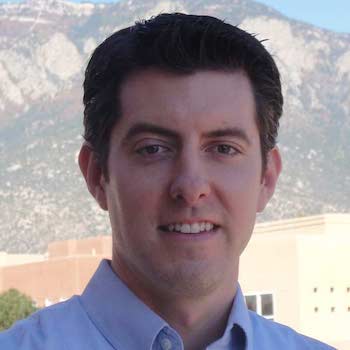 Ryan McBride合作论文数Nuclear Engineering and Radiological Sciences, College of Engineering, University of Michigan-Ann Arbor25Greg Rochau合作论文数25C. A. Jennings合作论文数23
 Matthew Gomez合作论文数Sandia National Laboratories20j r woodworth合作论文数20
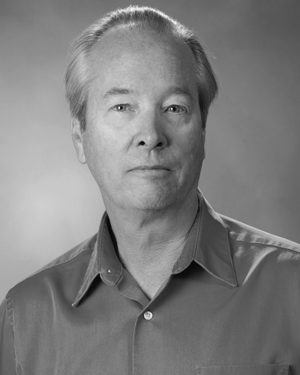 Sa Slutz合作论文数19
 Peterson, K.J.合作论文数19R. A. Vesey合作论文数19Mark Christopher Herrmann合作论文数19Ian C. Smith合作论文数18Martin, M.R.合作论文数18Peter Wakeland合作论文数18J. K. Moore合作论文数16
 Michael G. Mazarakis合作论文数16
 Derek C. Lamppa合作论文数16Dean C. Rovang合作论文数16Thomas James Awe合作论文数16
 David J. Ampleford合作论文数Radiation & Fusion Experiments Department, Sandia National Laboratories16
 Stephanie B Hansen合作论文数Sandia National Laboratories15
 Patrick Knapp合作论文数Pacific Fusion15McDaniel, D.H.合作论文数14
 Paul Schmit合作论文数Department of Astrophysical Sciences, Princeton University14
 G.R. Mckee合作论文数14D. E. Bliss合作论文数14B. T. Hutsel合作论文数13Brent Jones合作论文数Sandia National Laboratories13
 Dale R. Welch合作论文数Voss Scientific13john thompson合作论文数12
 Eric Harding合作论文数Sandia National Laboratories12
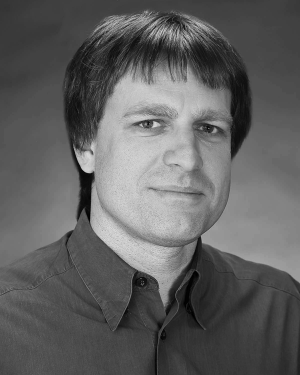 Mark Allen Gilmore合作论文数12
 R.W. Lemke合作论文数12k d hahn合作论文数11
 Matzen, M.K.合作论文数11Gordon Andrew Chandler合作论文数11
 Adam Sefkow合作论文数Department of Mechanical Engineering, Hajim School of Engineering & Applied Sciences, University of Rochester;Laboratory for Laser Energetics, University of Rochester;Department of Physics, University of Rochester;Department of Computer Science, University of Rochester11
 C. Ruiz合作论文数11Kenneth W. Struve合作论文数11M. L. Wisher合作论文数10a c owen合作论文数10G Robertson合作论文数10Timothy D. Pointon合作论文数10Sceiford, M.E.合作论文数10




