A reliable and precise in situ CO2 and CO analysis system has been developed and deployed at eight sites in the NOAA Earth System Research Laboratory's (ESRL) Global Greenhouse Gas Reference Network. The network uses very tall (> 300 m) television and radio transmitter towers that provide a convenient platform for mid-boundary-layer trace-gas sampling. Each analyzer has three sample inlets for profile sampling, and a complete vertical profile is obtained every 15 min. The instrument suite at one site has been augmented with a cavity ring-down spectrometer for measuring CO2 and CH4. The long-term stability of the systems in the field is typically better than 0.1 ppm for CO2, 6 ppb for CO, and 0.5 ppb for CH4, as determined from repeated standard gas measurements. The instrumentation is fully automated and includes sensors for measuring a variety of status parameters, such as temperatures, pressures, and flow rates, that are inputs for automated alerts and quality control algorithms. Detailed and time-dependent uncertainty estimates have been constructed for all of the gases, and the uncertainty framework could be readily adapted to other species or analysis systems. The design emphasizes use of off-theshelf parts and modularity to facilitate network operations and ease of maintenance. The systems report high-quality data with > 93% uptime. Recurrent problems and limitations of the current system are discussed along with general recommendations for high-accuracy trace-gas monitoring. The network is a key component of the North American Carbon Program and a useful model for future research-grade operational greenhouse gas monitoring efforts.
Abstract. A reliable and precise in situ CO2 and CO analysis system has been developed and deployed at eight sites in the NOAA Earth System Research Laboratory's (ESRL) Global Greenhouse Gas Reference Network. The network uses very tall (> 300 m) television and radio transmitter towers that provide a convenient platform for mid-boundary-layer trace-gas sampling. Each analyzer has three sample inlets for profile sampling, and a complete vertical profile is obtained every 15 min. The instrument suite at one site has been augmented with a cavity ring-down spectrometer for measuring CO2 and CH4. The long-term stability of the systems in the field is typically better than 0.1 ppm for CO2, 6 ppb for CO, and 0.5 ppb for CH4, as determined from repeated standard gas measurements. The instrumentation is fully automated and includes sensors for measuring a variety of status parameters, such as temperatures, pressures, and flow rates, that are inputs for automated alerts and quality control algorithms. Detailed and time-dependent uncertainty estimates have been constructed for all of the gases, and the uncertainty framework could be readily adapted to other species or analysis systems. The design emphasizes use of off-the-shelf parts and modularity to facilitate network operations and ease of maintenance. The systems report high-quality data with > 93% uptime. Recurrent problems and limitations of the current system are discussed along with general recommendations for high-accuracy trace-gas monitoring. The network is a key component of the North American Carbon Program and a useful model for future research-grade operational greenhouse gas monitoring efforts.
A robust in situ CO2 and CO analysis system has been developed and deployed at eight sites in the NOAA Earth System Research Laboratory's (ESRL) Tall Tower Greenhouse Gas Observing Network. The network uses very tall (> 300 m) television and radio transmitter towers that provide a convenient platform for mid-boundary layer trace gas sampling. Each analyzer has three sample inlets for profile sampling, and a complete vertical profile is obtained every 15 min. The instrument suite at one site has been augmented with a cavity ring-down spectrometer for measuring CO2 and CH4. The long-term stability of the systems in the field is typically better than 0.1 ppm for CO2, 6 ppb for CO, and 0.5 ppb for CH4, as determined from repeated standard gas measurements. The instrumentation is fully automated and includes sensors for measuring a variety of status parameters, such as temperatures, pressures and flow rates that are inputs for automated alerts and quality control algorithms. These algorithms provide detailed and time-dependent uncertainty estimates for all of the gases and could be adapted to other species or analysis systems. The design emphasizes use of off the shelf parts and modularity to facilitate network operations and ease of maintenance. The systems report high-quality data with > 93% uptime. Recurrent problems and limitations of the current system are discussed along with general recommendations for high accuracy trace-gas monitoring. The network is a key component of the North American Carbon Program and a useful model for future research-grade operational greenhouse gas monitoring efforts.
Thirteen years of continuous atmospheric carbon dioxide and methane measurements at the Mauna Loa Observatory in Hawaii are used to determine the methane emission rate from the summit of Mauna Loa volcano. We find no measurable methane emissions coming from the summit area, with a 95% confidence upper limit of 9 t CH4 yr−1. Recent studies have detected 10 ppb CH4 in the Martian atmosphere, requiring emissions of about 300 t CH4 yr−1. Volcanic activity has been suggested as a source of abiogenic CH4 on Mars, either by magmatic degassing or reactions in hydrothermal fluids heated by a magma intrusion. The most recent lava flows on Mars (2 My ago) are on the Tharsis shield volcanoes, which may still be active. If Mauna Loa is a valid terrestrial analog, our findings suggest that volcanic activity is not a significant source of methane to the Martian atmosphere.
 J. D. Kofler合作论文数5
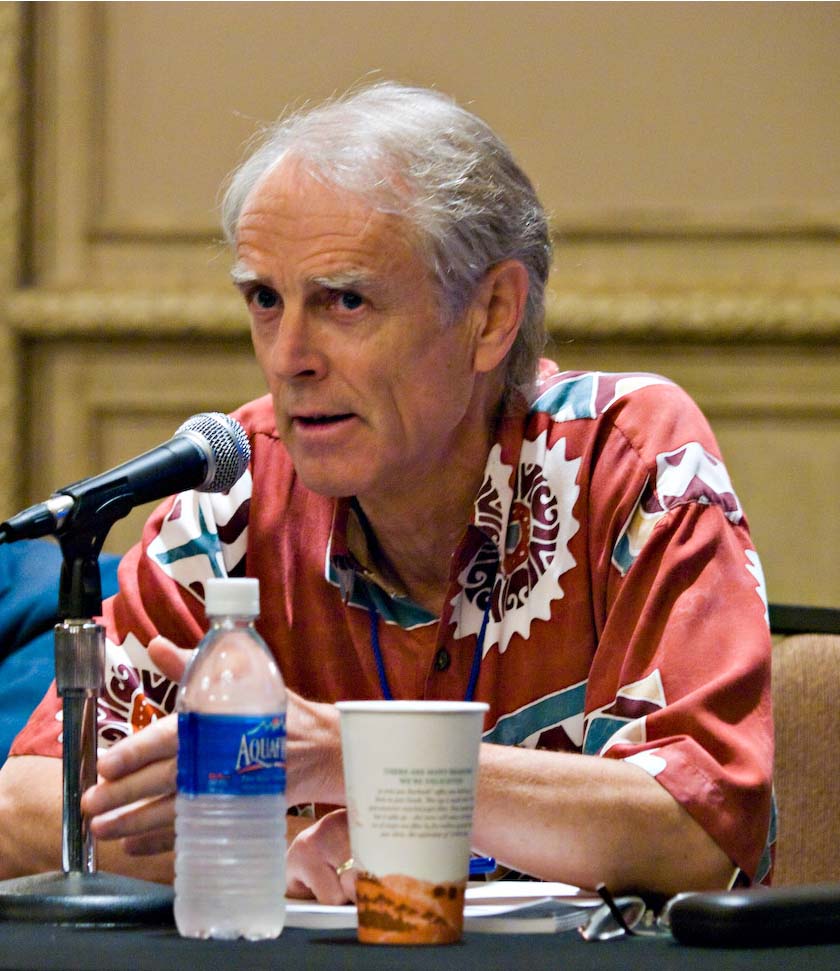 Pieter Tans合作论文数Global Monitoring Laboratory, National Oceanic & Atmospheric Administration;Institute of Arctic and Alpine Research, University of Colorado Boulder5
 Arlyn Andrews合作论文数Global Monitoring Laboratory, National Oceanic and Atmospheric Administration5D. H. Neff合作论文数4JC Williams合作论文数4E. J. Dlugokencky合作论文数4d d baumann合作论文数3
 Charles O. Stanier合作论文数Department of Chemical and Biochemical Engineering, University of Iowa3Paul C. Novelli合作论文数3Daniel E Wolfe合作论文数3Patricia M Lang合作论文数3Kenneth a Masarie合作论文数3
 Stephan De Wekker合作论文数Department of Environmental Sciences, University of Virginia3J. T. Lee合作论文数2d r kitzis合作论文数2A. R. Desai合作论文数2CONGLONG ZHAO合作论文数2Molly Crotwell合作论文数2
 Bill Munger合作论文数John A.Paulson School of Engineering and Applied Sciences, Harvard University2
 Marc Fischer合作论文数Atmospheric Science Department, Energy Analysis & Environmental Impacts Division, Lawrence Berkeley National Laboratory;Air Quality Research Center, University of California, Davis2J. W. Munger合作论文数1Duane Kitzis合作论文数1
 Frank-Thomas Koch合作论文数1m fischer合作论文数1J. G. Williams合作论文数1H. Chen合作论文数1
 Andrew Jacobson合作论文数Department of Earth and Planetary Sciences, Weinberg College of Arts and Sciences, Northwestern University1
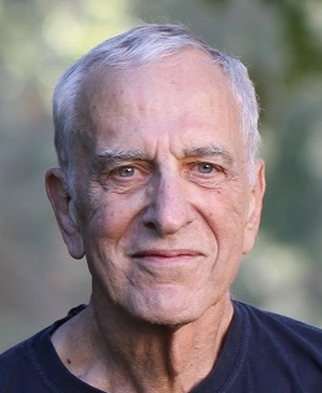 Joseph A. Berry合作论文数Department of Global Ecology, Carnegie Institution of Washington;Department of Biology, School of Humanities and Sciences, Stanford University1Jeannie T Lee合作论文数1
 Benjamin Miller合作论文数School of Political Sciences, University of Haifa;Center for National Security Studies, University of Haifa1
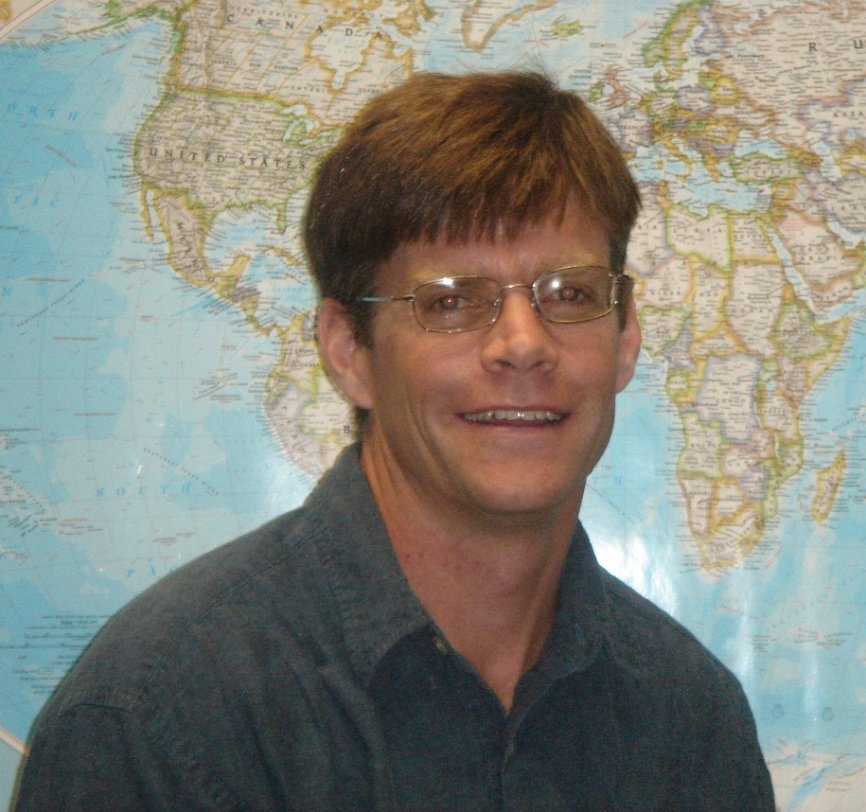 Colm Sweeney合作论文数Global Monitoring Laboratory, National Oceanic and Atmospheric Administration, Earth System Research Laboratories1
 Gabrielle Petron合作论文数1
 Roberto Kretschmer合作论文数1
 Stephen Montzka合作论文数Global Monitoring Laboratory, National Oceanic and Atmospheric Administration1
 Ian Baker合作论文数Cooperative Institute for Research in the Atmosphere, Colorado State University1Janusz Eluszkiewicz合作论文数1
 Elliott Campbell合作论文数Department of Global Ecology, Carnegie Institution1Thomas Nehrkorn合作论文数1Anna Karion合作论文数Division of Engineering and Applied Sciences, California Institute of Technology1
 Christian Gerbig合作论文数Max-Planck-Institute for Biogeochemistry1




