Forum papers are thought-provoking opinion pieces or essays founded in fact, sometimes containing speculation, on a civil engineering topic of general interest and relevance to the readership of the journal. The views expressed in this Forum article do not necessarily reflect the views of ASCE or the Editorial Board of the journal.
The COVID-19 pandemic affected the operation of water utilities across the world. In the context of utilities, new protocols were needed to ensure that employees can work safely, and that water service is not interrupted. This study reports on how the operations of 27 water utilities worldwide were affected by the COVID-19 pandemic. Interviews were conducted between June and October 2020; respondents represent utilities that varied in population size, location, and customer composition (e.g., residential, industrial, commercial, institutional, and university customers). Survey questions focused on the effects of the pandemic on water system operation, demand, revenues, system vulnerabilities, and the use and development of emergency response plans (ERPs). Responses indicate that significant changes in water system operations were implemented to ensure that water utility employees could continue working while maintaining safe social distancing or alternatively working from home. A total of 23 of 27 utilities reported small changes in demand volumes and patterns, which can lead to some changes in water infrastructure operations and water quality. Utilities experienced a range of impacts on finances, where most utilities discussed small decreases in revenues, with a few reporting more drastic impacts. The pandemic revealed new system vulnerabilities, including supply chain management, capacity of staff to perform certain functions remotely, and finances. Some utilities applied existing guidance developed through ERPs with slight modifications, other utilities developed new ERPs to specifically address unique conditions induced by the pandemic, and a few utilities did not use or reference their existing ERPs to change operations. Many utilities suggested that lessons learned would be used in future ERPs, such as personnel training on pandemic risk management or annual mock exercises for preparing employees to better respond to emergencies. (C) 2022 American Society of Civil Engineers.
A transient pressure wave is a sudden pressure change that occurs in a short time, which can be induced by sudden changes in valve and pump operation, and pipe bursts in a Water Distribution Network (WDN). An accurate estimation of a transient wave arrival time is crucial because it facilitates pipe condition assessment, hydraulic model calibration, and accurate localization of pipe burst events. Due to the noisy and highly fluctuating nature of the pressure signals, estimating an accurate transient pressure wave arrival time is not a trivial task. Among many methodologies proposed for detecting abrupt pressure changes, Discrete Wavelet Transform (DWT) and Cumulative Sum (CUSUM) were the two most popular approaches. However, several limitations involved with these two approaches can easily lead to unsatisfactory results. Moreover, some of the existing methodologies were only tested on either a single pipeline, engineered events, or a small sample size of events, making these methodologies suitable and accurate only for a limited number of scenarios. Driven by these limitations, a novel approach is proposed to estimate the wave arrival time in water distribution networks (WDNs). The backbone of this approach is the integration of wavelet decomposition and a knee point detection algorithm, thus gaining the name WAvelet kNEe (WANE). Through a comparative study against the other methodologies using 90 recorded transient events detected in a real WDN, WANE is found to provide the best wave arrival time estimation, with a Root Mean Square Error (RMSE) of 0.4 s. Based on the result, our estimation error is at least 15 s lesser than the other methodologies. With an improved wave arrival time estimation, WANE has the potential to minimize the response time of repair crews, service disruption time, as well as the associated water losses due to a pipe break.
Contaminants that are introduced to drinking water systems can threaten large populations, and the potential for catastrophic consequences accentuates the need for efficient post-disaster strategies, including optimal hydrant flushing. Efficient hydrant flushing can significantly reduce impacts on public health, but performance relies on information about the propagation of a contaminant and the affected regions in a water network. While observations from water quality sensors are useful in timely detections of contaminants, little information on its source, propagation, and affected regions can be inferred. In the absence of such information, opening or closing hydrants might not help discharge contaminants but could accelerate propagation of a plume through the water network due to drops in pressure. To address this limitation of sensor layout optimization models, this research has developed a new model to identify the optimal location of sensors to effectively support hydrant flushing mechanisms. The model has been developed in three steps: (1) contamination events were simulated in a water network; (2) spatially similar propagating contamination events were identified; and (3) the layout of water quality sensors was optimized. In the first step, a representative number of potential contamination events were simulated using a hydraulic model. The second step clustered contamination events based on spatial similarity in their propagation regimes. Finally, the last step identified locations for placing water quality sensors within clusters (identified in the previous step) while minimizing detection time and maximizing probability of detection. This model ensures that when a sensor alarm is activated, contaminated region where hydrants should be opened or closed are spatially restricted. The approach developed in this research was applied to design a sensor network for a benchmark case study, Mesopolis. The layout of 10 water quality sensors was optimized over a set of 9161 contamination events, leading to 76% probability of detection with an average detection time of 8.2 h. The solution was compared with sensor layouts based on existing approaches, and it was found that the new approach could improve the mass of contaminant that was removed from the pipe network through hydrant flushing strategies. The new approach model improves the effectiveness of hydrant flushing strategies by restricting the area where hydrants are flushed to predefined zones based on the activation of sensors.
A sustainably managed city should implement strategies to mitigate water distribution contamination events and warn consumers. A modeling framework is developed to assess management strategies for issuing warnings via wireless emergency alerts (WEA) and isolating a contaminant by manipulating pumps and hydrants. A pressure zone-based paradigm divides a service area into sub-sections of similar pressures and is used to target WEA messages and contain and flush contaminant within affected zones. The framework couples a hydraulic model of a pipe network with an agent-based model of utility operators, who implement management strategies, and of consumers, who receive messages, comply with alerts, reduce water use, and communicate about the hazard. The framework is applied for a hypothetical city to test management strategies for two water contamination events. Targeted messages mitigate the loss of access to water supplies and perform similar to citywide messages in reducing the number of exposed consumers, when combined with containment operations. When warnings are used alone, citywide warnings protect more consumers compared with targeted broadcasts. Warnings may perform better than containment alone at times when critical social dynamics, such as ingestion of water and travel among pressure zones, coincide with the movement of a contaminant plume.
Water distribution system models have long been widely used for design and planning purposes. Their application for supporting real-time operational decisions has been also gaining increasing interest over the past decade. Accurate end-user nodal demands are critical to the reliability of hydraulic simulations for real-time decision support. Conventionally, nodal demands are set to a handful of periodically updated ensembles of demand patterns, which cannot represent the vast heterogeneity and volatility of demands. With advances in metering technology, consumption data with unprecedentedly high temporal and spatial resolutions are available to water utilities on a real-time basis. A framework is developed here to create a dynamic demand assignment hydraulic model, in which consumption data are assigned to nodes to update the water network model with the streaming data from the data center and without interruption of the hydraulic simulation run. The developed framework is cloud-based and scalable, making it suitable for water distribution systems of all sizes. The framework modifies the core EPANET engine to directly assign updated demands in order to overcome current software limitations. The model is applied and demonstrated using a real-world case study in the US. The results show the importance of the real-time demand assignment for the reliability of hydraulic models for making real-time operational decisions and the realization of digital twins of water infrastructure systems.
Water distribution systems are vulnerable to hazards that threaten water delivery, water quality, and physical and cybernetic infrastructure. Water utilities and managers are responsible for assessing and preparing for these hazards, and researchers have developed a range of computational frameworks to explore and identify strategies for what-if scenarios. This manuscript conducts a review of the literature to report on the state of the art in modeling methodologies that have been developed to support the security of water distribution systems. First, the major activities outlined in the emergency management framework are reviewed; the activities include risk assessment, mitigation, emergency preparedness, response, and recovery. Simulation approaches and prototype software tools are reviewed that have been developed by government agencies and researchers for assessing and mitigating four threat modes, including contamination events, physical destruction, interconnected infrastructure cascading failures, and cybernetic attacks. Modeling tools are mapped to emergency management activities, and an analysis of the research is conducted to group studies based on methodologies that are used and developed to support emergency management activities. Recommendations are made for research needs that will contribute to the enhancement of the security of water distribution systems.
Recent years have witnessed a rise in the frequency and intensity of cyberattacks targeted at critical infrastructure systems. This study designs a versatile, data-driven cyberattack detection platform for infrastructure systems cybersecurity, with a special demonstration in water sector. A deep generative model with variational inference autonomously learns normal system behavior and detects attacks as they occur. The model can process the natural data in its raw form and automatically discover and learn its representations, hence augmenting system knowledge discovery and reducing the need for laborious human engineering and domain expertise. The proposed model is applied to a simulated cyberattack detection problem involving a drinking water distribution system subject to programmable logic controller hacks, malicious actuator activation, and deception attacks. The model is only provided with observations of the system, such as pump pressure and tank water level reads, and is blind to the internal structures and workings of the water distribution system. The simulated attacks are manifested in the model's generated reproduction probability plot, indicating its ability to discern the attacks. There is, however, need for improvements in reducing false alarms, especially by optimizing detection thresholds. Altogether, the results indicate ability of the model in distinguishing attacks and their repercussions from normal system operation in water distribution systems, and the promise it holds for cyberattack detection in other domains.
Streaming data can provide a timely understanding of the state of infrastructure networks to enable real-time monitoring and control. However, erroneous data is also inevitable and, if not identified and isolated effectively, may results in erroneous decisions and adverse consequences. This study leverages intra-and inter-similarity structures from monitoring stations for data validation in infrastructure networks. First, validation rules are developed to estimate similarity of new data from an individual sensing station to its routine patterns and flag suspicious data streams. Second, an unsupervised learning model is applied to identify clusters of stations that exhibit similar streaming data and test for cross-similarity to estimate the likelihood of the flagged data stream being invalid. The proposed model is demonstrated using steaming data collected from a real water distribution system. Preliminary results have revealed how a sensor's readings diverge from its historical patterns when a sensor fault occurs, and have discovered the presence of clusters of sensor stations with significant cross-similarity for boosting data validation performance.
Automation in science is increasingly marked by the use of workflow systems (eg, Matlab) to facilitate the scientific discovery. The sharing of workflows through publication mechanisms supports the reproducibility and extensibility of computational experiments. However, the subsequent scientific discovery from a workflow relates to the level of collaboration among scientists. An agent-based model (ABM) is developed by coupling a scientific workflow with a model of scientist agents. The scientist agents are able to collaborate using a simplified small-world network. After a query is submitted to scientist agents, each scientist agent is able to extract data from data-sets, which are widely available online, using automated workflows to prepare a scientific report for a query. After data are collected from a workflow, data can be shared among scientists using one of the four collaboration scenarios, which simulate alternative level of data availability. Each scientist uses the data, which is collected from the database or through a shared environment, to deduce a scientific discovery. The ABM is demonstrated and evaluated for application within ecological science. Scientist agents collaborate and use the workflow tool, Kepler, to develop a linear regression model that captures the relationship between zooplankton populations and codfish population in the Norwegian Sea.
The past quarter century has witnessed development of advanced modeling approaches, such as stochastic and agent-based modeling, to sustainably manage water systems in the presence of deep uncertainty and complexity. However, all too often data inputs for these powerful models are sparse and outdated, yielding unreliable results. Advancements in sensor and communication technologies have allowed for the ubiquitous deployment of sensors in water resources systems and beyond, providing high-frequency data. Processing the large amount of heterogeneous data collected is non-trivial and exceeds the capacity of traditional data warehousing and processing approaches. In the past decade, significant advances have been made in the storage, distribution, querying, and analysis of big data. Many tools have been developed by computer and data scientists to facilitate the manipulation of large datasets and create pipelines to transmit the data from data warehouses to computational analytic tools. A generic framework is presented to complete the data cycle for a water system. The data cycle presents an approach for integrating high-frequency data into existing water-related models and analyses, while highlighting some of the more helpful data management tools. The data tools are helpful to make sustainable decisions, which satisfy the objectives of a society. Data analytics distribution tool Spark is introduced through the illustrative application of coupling high-frequency demand metering data with a water distribution model. By updating the model in near real-time, the analysis is more accurate and can expose serious misinterpretations.
In the event that pathogens or toxins are introduced to a water distribution system, a utility manager may identify a threat through water quality data or alerts from public health officials. The utility manager may issue water advisories to warn consumers to reduce water use activities. As consumers react and change water demands, dynamic feedbacks among the community, utility managers, and the engineering infrastructure can create unexpected public health consequences and network hydraulics. A Complex Adaptive System (CAS)-based methodology is developed to couple an engineering model of a water distribution system with agent-based models (ABM) of consumers, public health officials, and utility managers to simulate feedback among management decisions, system hydraulics, and public behavior. A utility manager and a public health official are represented as agents, who respond to the event using a set of rules and equations that are based on a statistical analysis of a set of recorded water events. Consumers are represented as agents who update their water activities based on exposure to the contaminant and warnings from a utility agent and family members. A model of consumer compliance is developed using results from two surveys that report data to characterize consumer perceptions toward information sources during a water contamination event. The ABM framework is applied for an illustrative mid-sized virtual city to quantify the significance of interactions and advisories on public health consequences.
AbstractThe BATtle of the Attack Detection ALgorithms (BATADAL) is the most recent competition on planning and management of water networks undertaken within the Water Distribution Systems Analysis...
Large volumes of water are wasted through leakage in water distribution networks, and early detection of leakages is important to minimize lost water. Pressure sensors can be placed in a network to detect changes in pressure that indicate the presence of a new leak. This study presents a new approach for placing a set of pressure sensors by creating a list of candidate locations based on sensitivity to leaks that are simulated at all potential nodes in a network. The selection of a set of sensors is explored for two objectives, which are the minimization of the number of sensors and the time of detection. The non-dominated sorting genetic algorithm (NSGA-II) is used to explore trade-offs between these objectives. The effect of measurement uncertainty on the selection of sensor locations is explored by identifying alternative non-dominated fronts for different values for sensor error. The evolutionary algorithm-based approach is applied and demonstrated for the C-Town water network.
Systems Analysis Symposium. The goal of the battle was to compare the performance of 8 algorithms for the detection of cyber-physical attacks, whose frequency increased in the past 9 few years along with the adoption of smart water technologies. The design challenge was set 10 for C-Town network, a real-world, medium-sized water distribution system operated through 11 Programmable Logic Controllers and a Supervisory Control And Data Acquisition (SCADA) 12 system. Participants were provided with datasets containing (simulated) SCADA observa-13 tions, and challenged with the design of an attack detection algorithm. The effectiveness of 14 all submitted algorithms was evaluated in terms of time-to-detection and classification accu-15 racy. Seven teams participated in the battle and proposed a variety of successful approaches 16 leveraging data analysis, model-based detection mechanisms, and rule checking. Results were 17 presented at the Water Distribution Systems Analysis Symposium (World Environmental & 18 Water Resources Congress), in Sacramento, on May 21-25, 2017. This paper summarizes the 19 BATADAL problem, proposed algorithms, results, and future research directions. 20
In the event that a contaminant enters a water distribution system, opening hydrants to flush contaminated water can protect consumers from becoming exposed. Strategies for operating hydrants can be developed to specify the selection of hydrants and the timing of operations to maintain a minimum water quality for every demand nodes in the network or maximize the amount of contaminant that is removed from the network. As an event unfolds, however, sensor data may be the only information that is available to indicate the location and timing of the contaminant source, and ultimately, hydrant strategies must be selected in a highly uncertain environment. The decision-making framework for making real-time decisions to select hydrant strategies relies on computational and sensor technologies, including the accuracy and precision of sensor data; the timeliness of data availability (e.g., streaming data or data that is collected manually); and computational capabilities to execute search simulation-optimization frameworks in real-time. This research will explore a decision-making framework to provide a library of response options that can be selected based on sensor data as an event unfolds. The library of hydrant strategies is developed a priori using a simulation-optimization framework. Potential sources are classified based on the order of sensors that are activated, and hydrant strategies are identified to maximize average performance for events within each class through the application of a genetic algorithm framework. The decision-making frameworks are applied and compared for a set of events that are simulated for two networks: the virtual city of Mesopolis and the town of Cary.
Reservoir water quality is important for water quality management downstream. A hierarchical approach is developed to present the monitoring locations within a format that satisfies the objectives of social stakeholders for making final decisions. First, a CE-QUAL-W2 model is applied to simulate water quality variables in the reservoir for a long time using a set of historic data. Second, transinformation entropy theory is used to quantify mutual information among a set of monitoring stations for each water quality variable. Then, a non-dominating sorting genetic algorithm-based model is developed for multi-objective optimization of the water quality monitoring network. Finally, a social choice method is applied to the identified non-dominated solutions to achieve a strategy that is compromised among stakeholders. The variations of the water quality variables at different depths and different seasons are investigated. The proposed approach is illustrated for Karkheh Reservoir in Iran. The number of optimized monitoring stations is the same for all seasons (three out of 22 potential stations) using different social choice methods. The results show the appropriate performance of the proposed methodology for optimization of reservoir water quality monitoring stations.
The sustainability of water resources depends on the dynamic interactions among the environmental, technological, and social characteristics of the water system and local population. These interactions can cause supply-demand imbalances at diverse temporal scales, and the response of consumers to water use regulations impacts future water availability. This research develops a dynamic modeling approach to simulate supply-demand dynamics using an agent-based modeling framework that couple models of consumers and utility managers with water system models. Households are represented as agents, and their water use behaviors are represented as rules. A water utility manager agent enacts water use restrictions, based on fluctuations in the reservoir water storage. Water balance in a reservoir is simulated, and multiple climate scenarios are used to test the sensitivity of water availability to changes in streamflow, precipitation, and temperature. The framework is applied to the water supply system in Raleigh, North Carolina to assess sustainability of drought management plans. Model accuracy is assessed using statistical metrics, and sustainability is calculated for a projected period as the satisfaction or deficit of meeting municipal demands. Multiple climate change scenarios are created by perturbing average monthly values of historical inflow, precipitation, and evapotranspiration data. Results demonstrate the use of the agent-based modeling approach to project the effectiveness of management policies and recommend drought policies for improving the sustainability of urban water resources. (C) 2016 Elsevier Ltd. All rights reserved.
AbstractIn the event that a contaminant is introduced to a water distribution system, utility managers must respond quickly to protect public health. Mitigation strategies specify response actions,...
 Emily Berglund合作论文数18
 Amin Rasekh合作论文数10
 Emily M. Zechman合作论文数9
 Marcio Giacomoni合作论文数College of Engineering and Integrated Design, The University of Texas at San Antonio5
 Sarin E. Chandy合作论文数Advanced Infrastructure Analytics, Xylem, Inc.4
 Lina Sela合作论文数Department of Civil, Architectural and Environmental Engineering, Cockrell School of Engineering, University of Texas at Austin4Zachary A. Barker合作论文数4
 Avi Ostfeld合作论文数Faculty of Civil and Environmental Engineering, Technion - Israel Institute of Technology4alireza mashhadi ali合作论文数3
 Mohammad Reza Nikoo合作论文数3Bruce Campbell合作论文数3
 Lu Xing合作论文数3Ami Preis合作论文数3
 Elad Salomons合作论文数OptiWater3andrew david berglund合作论文数2M. Fayzul K. Pasha合作论文数2
 Nikolaos Gatsis合作论文数2
 Joaquin Izquierdo合作论文数2
 Mohsen Aghashahi合作论文数Texas A&M Institute of Data Science, Texas A&M University;Corresponding author.;Texas A&M Institute of Data Science, Texas A&M University2Enrique Campbell合作论文数2Kelsey Haddad合作论文数2
 Jorge E. Pesantez合作论文数Department of Civil, Construction, and Environmental Engineering, North Carolina State University2
 Bijay KC合作论文数2Raanju Sundararajan合作论文数Department of Statistical Science, Southern Methodist University2
 Bruno Melo Brentan合作论文数Hydraul Engn & Water Resource Dept, Univ Fed Minas Gerais2
 Ahmed A. Abokifa合作论文数Dept Civil Mat & Environm Engn, Univ Illinois2
 Ahmad F. Taha合作论文数2
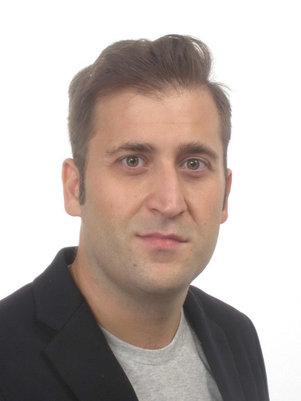 Riccardo Taormina合作论文数Department of Water Management, Faculty of Civil Engineering and Geosciences, Delft University of Technology2
 Ohar Ziv合作论文数Faculty of Civil and Environmental Engineering, Technion - Israel Institute of Technology2
 Pratim Biswas合作论文数Department of Chemical, Environmental and Materials Engineering, College of Engineering, University of Miami;Rosenstiel School of Marine, Atmospheric, and Earth Science, University of Miami2E. Downey Brill合作论文数2
 Margaret Katherine Banks合作论文数Zachry Department of Civil and Environmental Engineering, College of Engineering, Texas A&M University2
 Mashor Housh合作论文数Faculty of Civil and Environmental Engineering, Technion - Israel Institute of Technology2
 Mohsen Pourahmadi合作论文数Division of Statistics;Northern Illinois University;Division of Statistics, Northern Illinois University2
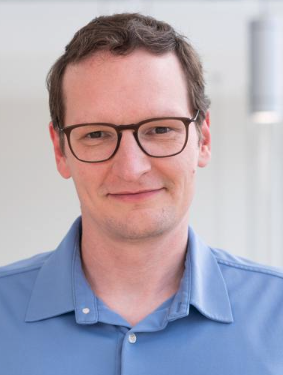 Nils Ole Tippenhauer合作论文数CISPA Helmholtz Center for Information Security2
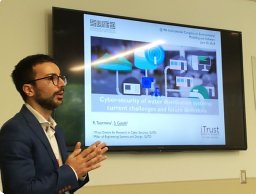 Stefano Galelli合作论文数Dipartimento di Elettronica e Informazione, Politecnico di Milano2
 Idel Montalvo合作论文数Centro Multidisciplinar de Modelación de Fluidos, Universidad Politécnica de Valencia2
 David Ayala-Cabrera合作论文数2Cynthia Lo合作论文数2
 Juan G. Saldarriaga合作论文数Environmental Sciences Division, Oak Ridge National Laboratory2
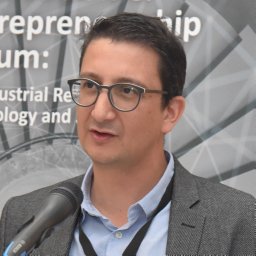 Demetrios G. Eliades合作论文数KIOS Research Center for Intelligent Systems and Networks, University of Cyprus2G. Mahinthakumar合作论文数1diego paez合作论文数1kristen drake合作论文数1gnanamanikam mahinthakumar合作论文数1Tom Walski合作论文数1
 P. L. Iglesias-Rey合作论文数1Jv Ribelles-Aguilar合作论文数1mehdy amirkhanzadeh barandouzi合作论文数1




