Legged robots are increasingly being adopted in industries such as oil, gas, mining, nuclear, and agriculture. However, new challenges exist when moving into natural, less-structured environments, such as forestry applications. This article presents a prototype system for autonomous, undercanopy forest inventory with legged platforms. Motivated by the robustness and mobility of modern legged robots, we introduce a system architecture, which enabled a quadruped platform to autonomously navigate and map forest plots. Our solution involves a complete navigation stack for state estimation, mission planning, and tree detection and trait estimation. We report the performance of the system from trials executed over one and a half years in forests in three European countries. Our results with the ANYmal robot demonstrate that we can survey plots up to 1-ha plot under 30 min while also identifying trees with typical diameter at breast height (DBH) accuracy of 2 cm. The findings of this project are presented as five lessons and challenges. In particular, we discuss the maturity of hardware development, state estimation limitations, open problems in forest navigation, future avenues for robotic forest inventory, and more general challenges to assess autonomous systems. By sharing these lessons and challenges, we offer insight and new directions for future research on legged robots, navigation systems, and applications in natural environments. Additional videos can be found in https://dy
Preference-based reinforcement learning (PBRL) enables policy learning through simple queries comparing trajectories from a single policy. While human responses to these queries make it possible to learn policies aligned with human preferences, PBRL suffers from low query efficiency, as policy bias limits trajectory diversity and reduces the number of discriminable queries available for learning preferences. This article identifies preference discriminability, which quantifies how easily a human can judge which trajectory is closer to their ideal behavior, as a key metric for improving query efficiency. To address this, we move beyond comparisons within a single policy and instead generate queries by comparing trajectories from multiple policies, as training them from scratch promotes diversity without policy bias. We propose discriminability-aware policy-to-policy preference-based efficient RL (DAPPER), which integrates preference discriminability with trajectory diversification achieved by multiple policies. DAPPER trains new policies from scratch after each reward update and employs a discriminator that learns to estimate preference discriminability, enabling the prioritized sampling of more discriminable queries. During training, it jointly maximizes the preference reward and preference discriminability score, encouraging the discovery of highly rewarding and easily distinguishable policies. Experiments in simulated and real-world legged robot environments demonstrate that DAPPER outperforms previous methods in query efficiency, particularly under challenging preference discriminability conditions.
Task-oriented handovers (TOH) are fundamental to effective humanrobot collaboration, requiring robots to present objects in a way that supports the human's intended post-handover use. Existing approaches are typically based on object- or task-specific affordances, but their ability to generalize to novel scenarios is limited. To address this gap, we present AFT-Handover, a framework that integrates large language model (LLM)-driven affordance reasoning with efficient texture-based affordance transfer to achieve zero-shot, generalizable TOH. Given a novel object-task pair, the method retrieves a proxy exemplar from a database, establishes part-level correspondences via LLM reasoning, and texturizes affordances for feature-based point cloud transfer. We evaluate AFT-Handover across diverse task-object pairs, showing improved handover success rates and stronger generalization compared to baselines. In a comparative user study, our framework is significantly preferred over the current state-of-the-art, effectively reducing human regrasping before tool use. Finally, we demonstrate TOH on legged manipulators, highlighting the potential of our framework for real-world robot-human handovers. CCS Concepts center dot Computer systems organization -> Robotics.
Dexterous grasping is fundamental to robotics, yet data-driven grasp prediction heavily relies on large, diverse datasets that are costly to generate and typically limited to a narrow set of gripper morphologies. Analytical grasp synthesis can be used to scale data collection, but necessary simplifying assumptions often yield physically infeasible grasps that need to be filtered in high-fidelity simulators, significantly reducing the total number of grasps and their diversity. We propose a scalable generate-and-refine pipeline for synthesizing large-scale, diverse, and physically feasible grasps. Instead of using high-fidelity simulators solely for verification and filtering, we leverage them as an optimization stage that continuously improves grasp quality without discarding precomputed candidates. More specifically, we initialize an evolutionary search with a seed set of analytically generated, potentially suboptimal grasps. We then refine these proposals directly in a high-fidelity simulator (Isaac Sim) using an asynchronous, gradient-free evolutionary algorithm, improving stability while maintaining diversity. In addition, this refinement stage can be guided toward human preferences and/or domain-specific quality metrics without requiring a differentiable objective. We further distill the refined grasp distribution into a diffusion model for robust real-world deployment, and highlight the role of diversity for both effective training and during deployment. Experiments on a newly introduced Handles dataset and a DexGraspNet subset demonstrate that our approach achieves over 120 distinct stable grasps per object (a 1.7-6x improvement over unrefined analytical methods) while outperforming diffusion-based alternatives by 46-60% in unique grasp coverage.
Bulk material handling involves the efficient and precise moving of large quantities of materials, a core operation in many industries, including cargo ship unloading, waste sorting, construction, and demolition. These repetitive, labor-intensive, and safety-critical operations are typically performed using large hydraulic material handlers equipped with underactuated grippers. In this work, we present a comprehensive framework for the autonomous execution of large-scale material handling tasks. The system integrates specialized modules for environment perception, pile attack point selection, path planning, and motion control. The main contributions of this work are two reinforcement learning-based modules: an attack point planner that selects optimal grasping locations on the material pile to maximize removal efficiency and minimize the number of scoops, and a robust trajectory following controller that addresses the precision and safety challenges associated with underactuated grippers in movement, while utilizing their free-swinging nature to release material through dynamic throwing. We validate our framework through real-world experiments on a 40 t material handler in a representative worksite, focusing on two key tasks: high-throughput bulk pile management and high-precision truck loading. Comparative evaluations against human operators demonstrate the system's effectiveness in terms of precision, repeatability, and operational safety. To the best of our knowledge, this is the first complete automation of material handling tasks on a full scale.
Seamless operation of mobile robots in challenging environments requires low-latency local motion estimation and accurate global localization. While most sensor-fusion approaches are designed for specific scenarios, this work introduces a flexible open-source solution for task- and setup-agnostic multimodal sensor fusion distinguished by its generality and usability. Holistic Fusion formulates sensor fusion as a combined estimation problem of i) the local and global robot state and ii) a (theoretically unlimited) number of dynamic variables, including automatic alignment of reference frames; this formulation fits countless real-world applications without conceptual modifications, offering a comprehensive solution beyond hard-coded/task-specific approaches. The proposed factor-graph formulation enables direct fusion of an arbitrary number of absolute, local, and landmark measurements expressed with respect to different frames by explicitly including them as states in the optimization and modeling their evolution as random walks. Moreover, local smoothness and consistency receive particular attention to prevent estimation jumps. Holistic Fusion enables low-latency and smooth online state estimation on typical robot hardware while simultaneously providing low-drift global localization at the IMU measurement rate. The efficacy of this released framework [1] is demonstrated in five real-world scenarios on three robotic platforms with distinct task requirements, highlighting the advantages of fusing multiple absolute measurement types [2]. [1] Code: https://github.com/leggedrobotics/holistic_fusion [2] Project: https://leggedrobotics.github.io/holistic_fusion
Many ceiling construction tasks still rely on heavy serial manipulators that are difficult to deploy in cluttered interiors, motivating lightweight, field-ready alternatives that reach ceiling height while maintaining millimeter-level accuracy and the stiffness demanded by overhead tool loads. We introduce Tripody, a wheeled 3-DoF parallel robot for high-reach tasks that replaces the base spherical joints of a classical 3-SPR (3 legs; S: base spherical joint; P: actuated prismatic joint; R: end-effector revolute joint) morphology with universal joints, intentionally overconstraining the mechanism; small, distributed elastic deflections absorb the resulting incompatibilities, preserving predominantly translational motion. The 33kg system extends from 1.7m to 3.4m in height, supports a continuous 32kg payload, and offers a modular end-effector interface for ceiling operations. We detail the mechanical design - including custom linear actuators and a kinematic-compatibility analysis - and a control stack for accurate positioning that combines SE(3) state estimation, forward kinematics, and task-space control. In experiments, Tripody exhibits similar in-plane stiffness to a spherical-base variant but substantially higher torsional stiffness - an increase of 67
The growing interest in exploring other planets calls for innovative robotic systems capable of deploying to and traversing challenging space environments. While wheeled rovers have traditionally fulfilled this role, they face limitations, including configuration dependence (e.g., requiring an upright orientation), susceptibility to impacts, and difficulty overcoming obstacles larger than their wheel radius. Tensegrity-based robotics presents a promising alternative for future rovers. These lightweight, compliant structures offer compactibility, adjustable stiffness, and the ability to absorb impacts without damage. Moreover, their unique form factor naturally protects scientific payloads. Recent research has explored tensegrity robots for rolling-based locomotion, with increasing interest in leveraging their structures for jumping-based movement. However, achieving hardware capable of high jumps greater than the robots body length (BL) and directional jumping control for steerable jumping remains a challenge. This work introduces a tensegrity robot that utilizes structural deformation for jumping locomotion. Through first-principles analyses, simulations, laboratory experiments, and field tests in a planetary analog environment, we demonstrate a robot capable of vertical jumps of 1.18 m (1.93 BLs), directional jumps covering horizontal distances up to 0.59 m (0.97 BLs), and surviving falls from heights of 21.5 m (35.2 BLs).
Active perception is a fundamental problem in autonomous robotics in which the robot must decide where to move and what to sense in order to obtain the most informative observations for accomplishing its mission. Existing approaches either solve a computationally expensive traveling salesman problem over heuristically selected informative nodes, or adopt a more efficient but overly constrained shortest path tree formulation. To address these limitations, we explore beam search algorithms as scalable alternatives. While the standard beam search provides scalability by preserving the top-B paths at each depth level, it is prone to local optima and exhibits parameter sensitivity. Our first contribution is a node-wise beam search (NBS) algorithm, which maintains top-B candidates per node to enable more effective exploration of the solution space. Systematic benchmarking on graphs shows that NBS consistently outperforms other baselines and maintains strong performance even at low beam widths. As a second contribution, we integrate the concept of frontiers into the path selection criterion, introducing the expected gain metric, which better balances exploration and exploitation compared to existing alternatives. Our third contribution proposes the rapidly-exploring random annulus graph (RRAG), a novel graph construction method that preserves full orientation sampling and ensures connectivity in cluttered environments through a fallback local sampling-based planner. Extensive experiments demonstrate that NBS combined with RRAG achieves the highest performance across all three representative active perception tasks, outperforming state-of-the-art algorithms by at least 20% in one or more tasks. We further validate the approach on real robotic platforms in different scenarios. Project page:
Mobile robots have become indispensable for exploring hostile environments, such as in space or disaster relief scenarios, but often remain limited to teleoperation by a human operator. This restricts the deployment scale and requires near-continuous low-latency communication between the operator and the robot. We present MOSAIC: a scalable autonomy framework for multi-robot scientific exploration using a unified mission abstraction based on Points of Interest (POIs) and multiple layers of autonomy, enabling supervision by a single operator. The framework dynamically allocates exploration and measurement tasks based on each robot’s capabilities, leveraging team-level redundancy and specialization to enable continuous operation. We validated the framework in a space-analog field experiment emulating a lunar prospecting scenario, involving a heterogeneous team of five robots and a single operator. Despite the complete failure of one robot during the mission, the team completed 82.3% of assigned tasks at an Autonomy Ratio of 86%, while the operator workload remained at only 78.2%. These results demonstrate that the proposed framework enables robust, multi-robot scientific exploration with limited operator intervention. We further derive practical lessons learned in robot interoperability, networking architecture, team composition, and operator workload management to inform future multi-robot exploration missions.
LiDAR serves as a primary sensing modality for robots operating in outdoor environments. However, the performance of deep learning models in this domain is severely limited by the scarcity of labeled data, a direct result of the high cost of 3D annotation. Self-supervised learning addresses this scarcity by learning general-purpose features from unlabeled data. In this work, we present a multi-modal, multi-teacher distillation framework for self-supervised learning on outdoor LiDAR point clouds. Building upon the Sonata architecture, we introduce Vernata, consisting of three extensions: sparse view augmentation to improve robustness against varying point densities, a memory bank mechanism to stabilize resource-constrained training, and cross-modal distillation utilizing dense, high-resolution 2D image features to enable fine-grained semantic guidance. We evaluate our method on the GrandTour, TartanGround, and Waymo datasets, as well as data collected from our own robotic platforms. Our experiments demonstrate a significant performance improvement over Sonata baselines, yielding mIoU scores of 54.7 on TartanGround (+5.9 points, +12.1
Accurate state estimation and multi-modal perception are prerequisites for autonomous legged robots in complex, large-scale environments. To date, no large-scale public legged-robot dataset captures the real-world conditions needed to develop and benchmark algorithms for legged-robot state estimation, perception, and navigation. To address this, we introduce the GrandTour dataset, a multi-modal legged-robotics dataset collected across challenging outdoor and indoor environments, featuring an ANYbotics ANYmal-D quadruped equipped with the Boxi multi-modal sensor payload. GrandTour spans a broad range of environments and operational scenarios across distinct test sites, ranging from alpine scenery and forests to demolished buildings and urban areas, and covers a wide variation in scale, complexity, illumination, and weather conditions. The dataset provides time-synchronized sensor data from spinning LiDARs, multiple RGB cameras with complementary characteristics, proprioceptive sensors, and stereo depth cameras. Moreover, it includes high-precision ground-truth trajectories from satellite-based RTK-GNSS and a Leica Geosystems total station. This dataset supports research in SLAM, high-precision state estimation, and multi-modal learning, enabling rigorous evaluation and development of new approaches to sensor fusion in legged robotic systems. With its extensive scope, GrandTour represents the largest open-access legged-robotics dataset to date. The dataset is available at https://grand-tour.leggedrobotics.com on HuggingFace (ROS-independent), and in ROS formats, along with tools and demo resources.
Autonomous robots capable of turning natural-language instructions into reliable physical actions remain a central challenge in artificial intelligence. Here we show that connecting a large language model agent to the robot operating system enables a versatile framework for embodied intelligence, and we release the complete implementation as freely available open-source code. The agent automatically translates large language model outputs into robot actions, supports interchangeable execution modes (inline code or behaviour trees), learns new atomic skills via imitation, and continually refines them through automated optimization and reflection from human or environmental feedback. Extensive experiments validate the framework, showcasing robustness, scalability and versatility in diverse scenarios and embodiments, including long-horizon tasks, tabletop rearrangements, dynamic task optimization and remote supervisory control. Moreover, all the results presented in this work were achieved by utilizing open-source pretrained large language models.
As humanoid robots become increasingly dynamic, coupling them with reinforcement learning offers a promising approach to solving the complex, underactuated mechanics of passive inline skating. Equipping a humanoid robot with passive inline skating wheels presents an opportunity to combine the versatile agility of humanoids with the high-speed, energy-efficient locomotion strategies utilized by human skaters. In this paper, we train and deploy a reinforcement learning control policy that enables novel locomotion strategies for a humanoid robot modified to equip consumer inline skates instead of conventional feet. Unlike previous work limited to quadrupedal robots or actively driven wheels, our system allows for precise 6-DoF control of the skates to execute dynamic, edge-driven propulsion strategies. Our skating strategies emerge entirely from our reward structure, without reliance on human motion data, imitation learning, or kinematic priors. We overcome the inherent instability of passive wheels and simulation contact artifacts by utilizing different geometric wheel models (spherical and ellipsoidal) during training and validation, along with a custom success-based command curriculum and a specialized rolling reward. Consequently, our policy demonstrates up to a 50
Achieving agile and generalized legged locomotion across terrains requires tight integration of perception and control, especially under occlusions and sparse footholds. Existing methods have demonstrated agility on parkour courses but often rely on end-to-end sensorimotor models with limited generalization and interpretability. By contrast, methods targeting generalized locomotion typically exhibit limited agility and struggle with visual occlusions. We introduce a unified reinforcement learning (RL) framework for agile and generalized locomotion that incorporates a novel attention-based map encoder in the control policy. This encoder extracts local and global mapping features and uses attention mechanisms to focus on salient regions, producing an interpretable and generalized embedding for RL-based control. We further propose a learning-based mapping pipeline that provides fast, uncertainty-aware terrain representations robust to noise and occlusions, serving as policy inputs. It uses neural networks to convert depth observations into local elevations with uncertainties, and fuses them with odometry. The pipeline also integrates with parallel simulation so that we can train controllers with online mapping, aiding sim-to-real transfer. We validate our framework with the proposed mapping pipeline on a quadruped and a biped robot, and the resulting controllers demonstrate strong agility and generalization to unseen terrains in simulation and in real-world experiments.
Forestry plays a vital role in our society, creating significant ecological, economic, and recreational value. Efficient forest management involves labor-intensive and complex operations. One essential task for maintaining forest health and productivity is selective thinning, which requires skilled operators to remove specific trees to create optimal growing conditions for the remaining ones. In this work, we present a solution based on a small-scale robotic harvester (SAHA) designed for executing this task with supervised autonomy. We build on a 4.5-ton harvester platform and implement key hardware modifications for perception and automatic control. We implement learning- and model-based approaches for precise control of hydraulic actuators, accurate navigation through cluttered environments, robust state estimation, and reliable semantic estimation of terrain traversability. Integrating state-of-the-art techniques in perception, planning, and control, our robotic harvester can autonomously navigate forest environments and reach targeted trees for selective thinning. We present experimental results from extensive field trials over kilometer-long autonomous missions in northern European forests, demonstrating the harvester's ability to operate in real forests. We analyze the performance and provide the lessons learned for advancing robotic forest management.
Humanoid and quadrupedal robots have the potential to revolutionize the way we work, interact, and coexist with intelligent machines. To understand their effects on society and how they can enable scientific discovery, we assess the current capabilities of these systems along hardware, locomotion, autonomy, data, and applications. We identify recent advances and key open challenges that must be overcome to enable widespread adoption and new use cases for legged robots. Last, we provide an outlook on the future of legged robots, exploring their ethical considerations, economic potential, policy implications, and broader societal effects.
Efficient robotic extraterrestrial exploration requires robots with diverse capabilities, ranging from scientific measurement tools to advanced locomotion. A robotic team enables the distribution of tasks over multiple specialized subsystems, each providing specific expertise to complete the mission. The central challenge lies in efficiently coordinating the team to maximize utilization and the extraction of scientific value. Classical planning algorithms scale poorly with problem size, leading to long planning cycles and high inference costs due to the combinatorial growth of possible robot-target allocations and possible trajectories. Learning-based methods are a viable alternative that move the scaling concern from runtime to training time, setting a critical step towards achieving real-time planning. In this work, we present a collaborative planning strategy based on Multi-Agent Proximal Policy Optimization (MAPPO) to coordinate a team of heterogeneous robots to solve a complex target allocation and scheduling problem. We benchmark our approach against single-objective optimal solutions obtained through exhaustive search and evaluate its ability to perform online replanning in the context of a planetary exploration scenario.
Autonomous navigation in complex, unstructured outdoor environments requires robots to operate over long ranges without prior maps and limited depth sensing. In such settings, relying solely on geometric frontiers for exploration is often insufficient. In such settings, the ability to reason semantically about where to go and what is safe to traverse is crucial for robust, efficient exploration. This work presents WildOS, a unified system for long-range, open-vocabulary object search that combines safe geometric exploration with semantic visual reasoning. WildOS builds a sparse navigation graph to maintain spatial memory, while utilizing a foundation-model-based vision module, ExploRFM, to score frontier nodes of the graph. ExploRFM simultaneously predicts traversability, visual frontiers, and object similarity in image space, enabling real-time, onboard semantic navigation tasks. The resulting vision-scored graph enables the robot to explore semantically meaningful directions while ensuring geometric safety. Furthermore, we introduce a particle-filter-based method for coarse localization of the open-vocabulary target query, that estimates candidate goal positions beyond the robot's immediate depth horizon, enabling effective planning toward distant goals. Extensive closed-loop field experiments across diverse off-road and urban terrains demonstrate that WildOS enables robust navigation, significantly outperforming purely geometric and purely vision-based baselines in both efficiency and autonomy. Our results highlight the potential of vision foundation models to drive open-world robotic behaviors that are both semantically informed and geometrically grounded. Project Page: https://leggedrobotics.github.io/wildos/
Generalist robot intelligence is often framed as a policy-scaling problem: collect more robot demonstrations, train larger Vision-Language-Action (VLA) models, and expect broader generalisation. In this position paper, we argue that this framing is incomplete. The central bottleneck is not only policy learning, but the absence of mechanisms that convert the world's abundant unstructured behavioural data into grounded robot supervision. Human motion, internet video, simulation rollouts, and interactive demonstrations contain rich information about tasks, goals, contacts, failures, and physical constraints, yet most of this information is not directly usable by robot policies because it lacks embodiment-specific action labels, task semantics, and reward structure. We identify four missing components for the next generation of robotics: data interfaces for autolabelling unstructured behaviour, embodiment interfaces for retargeting human motion to robot actions, world-model interfaces for physics-grounded 3D reasoning, and reward interfaces for inferring task progress and success from video and language. We survey recent progress in robot foundation models, cross-embodiment datasets, learning from video, world models, and reward modelling, and propose a research agenda for building robotics systems that can learn not only from robot demonstrations, but from the broader physical world.
 Roland Siegwart合作论文数Autonomous Systems Lab, ETH Zurich;Department of Mechanical and Process Engineering, ETH Zurich79
 Christian Gehring合作论文数ANYbotics42
 Péter Fankhauser合作论文数ANYbotics40
 Michael Bloesch合作论文数DeepMind39
 Cesar Cadena合作论文数Department of Mechanical and Process Engineering, ETH Zurich;Robotics Systems Lab, Institute of Robotics and Intelligent Systems, ETH Zurich38
 Farbod Farshidian合作论文数RAI Institute37
 Hendrik Kolvenbach合作论文数ETH Zurich35
 Mark Hoepflinger合作论文数35
 Marko Bjelonic合作论文数Robotic Systems Lab, ETH Zürich33
 Dario Bellicoso合作论文数Boston Dynamics AI Institute31
 Jonas Frey合作论文数Department of Aeronautics and Astronautics, Stanford University;University of California, Berkeley28
 C. David Remy合作论文数University of Michigan26
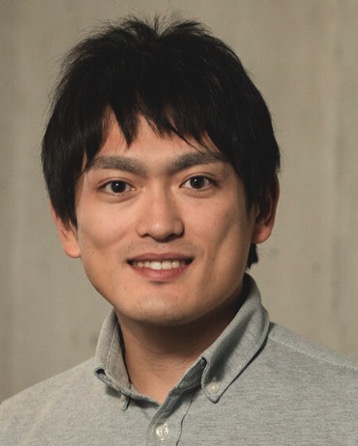 Takahiro Miki合作论文数Robotic Systems Lab, ETH Zurich25
 Lorenz Wellhausen合作论文数ETH Zurich25
 Ruben Grandia合作论文数Disney Research24
 Shehryar Khattak合作论文数Autonomous Robots Lab, University of Nevada Reno22
 Joonho Lee合作论文数ETH, Robotic Systems Lab, Zürich, Switzerland21
 Mayank Mittal合作论文数Robotic Systems Lab, ETH Zurich;NVIDIA18
 Giorgio Valsecchi合作论文数Robotic Systems Lab, ETH Zurich;Swiss-Mile18
 Turcan Tuna合作论文数Robotic Systems Lab, ETH Zurich17
 Nikita Rudin合作论文数17
 Julian Nubert合作论文数Robot Syst Lab, Max Planck Inst Intelligent Syst17
 Martin Wermelinger合作论文数Robotic Systems Lab, RSL ETH Zürich17
 Philip Arm合作论文数Robotics Systems Lab, Eidgenössische Technische Hochschule Zürich;Department of Mechanical and Process Engineering, Eidgenössische Technische Hochschule Zürich16
 Fabian Jenelten合作论文数Robot Syst Lab, ETH Zurich16
 Victor Klemm合作论文数Autonomous Systems Lab - ETH Zurich, Switzerland16
 Dominic Jud合作论文数Gravis Robotics16
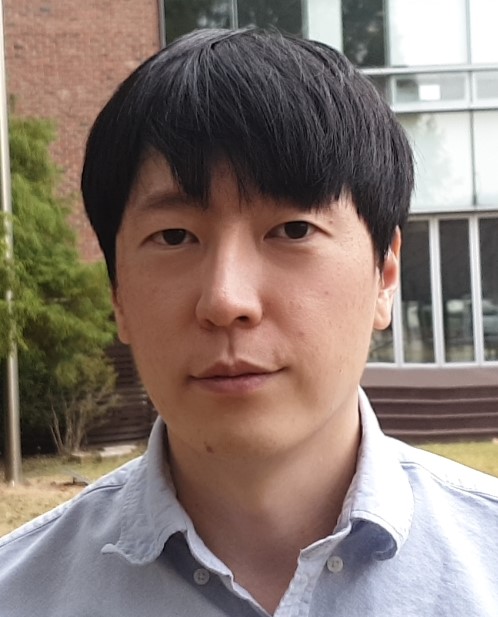 Jemin Hwangbo合作论文数Department of Mechanical Engineering, Korea Advanced Institute of Science and Technology;Rai Lab, Korea Advanced Institute of Science and Technology16
 David Hoeller合作论文数Inst Dynam Syst & Control, NVIDIA14
 Jan Carius合作论文数ETH Zurich13
 Stelian Coros合作论文数Computational Robotics Lab, Department of Computer Science, ETH Zurich13
 Edo Jelavic合作论文数Robotic Systems Lab, Eidgenössische Technische Hochschule Zürich12
 Pascal Egli合作论文数Robot Syst Lab, Swiss Fed Inst Technol12
 Chenhao Li合作论文数Robotic Systems Lab, ETH AI Center, ETH Zurich11
 Fan Yang合作论文数11
 Rene Zurbrugg合作论文数10
 Jean-Pierre Sleiman合作论文数Swiss Fed Inst Technol, Robot Syst Lab, Zurich, Switzerland10Remo Diethelm合作论文数10
 Fabio Gramazio合作论文数Department of Architecture, Eidgenossische Technische Hochschule Zurich10
 Matias Mattamala合作论文数Oxford Robotics Institute, University of Oxford, UK9
 Philipp Leemann合作论文数9Matthias Kohler合作论文数Department of Architecture, Eidgenossische Technische Hochschule Zurich9
 Konstantinos Alexis合作论文数Department of Engineering Cybernetics, Faculty of Information Technology and Electrical Engineering, Norwegian University of Science and Technology;Autonomous Robots Lab, Norwegian University of Science and Technology9
 Maurice Fallon合作论文数Department of Engineering Science, University of Oxford;Oxford Robotics Institute, University of Oxford9
 Maria Vittoria Minniti合作论文数8Manthan Patel合作论文数HoMeCell Lab, Indian Institute of Technology Gandhinagar8
 Vaishakh Patil合作论文数Computer Vision Lab, ETH Zurich8
 Vassilios Tsounis合作论文数Disney Research8
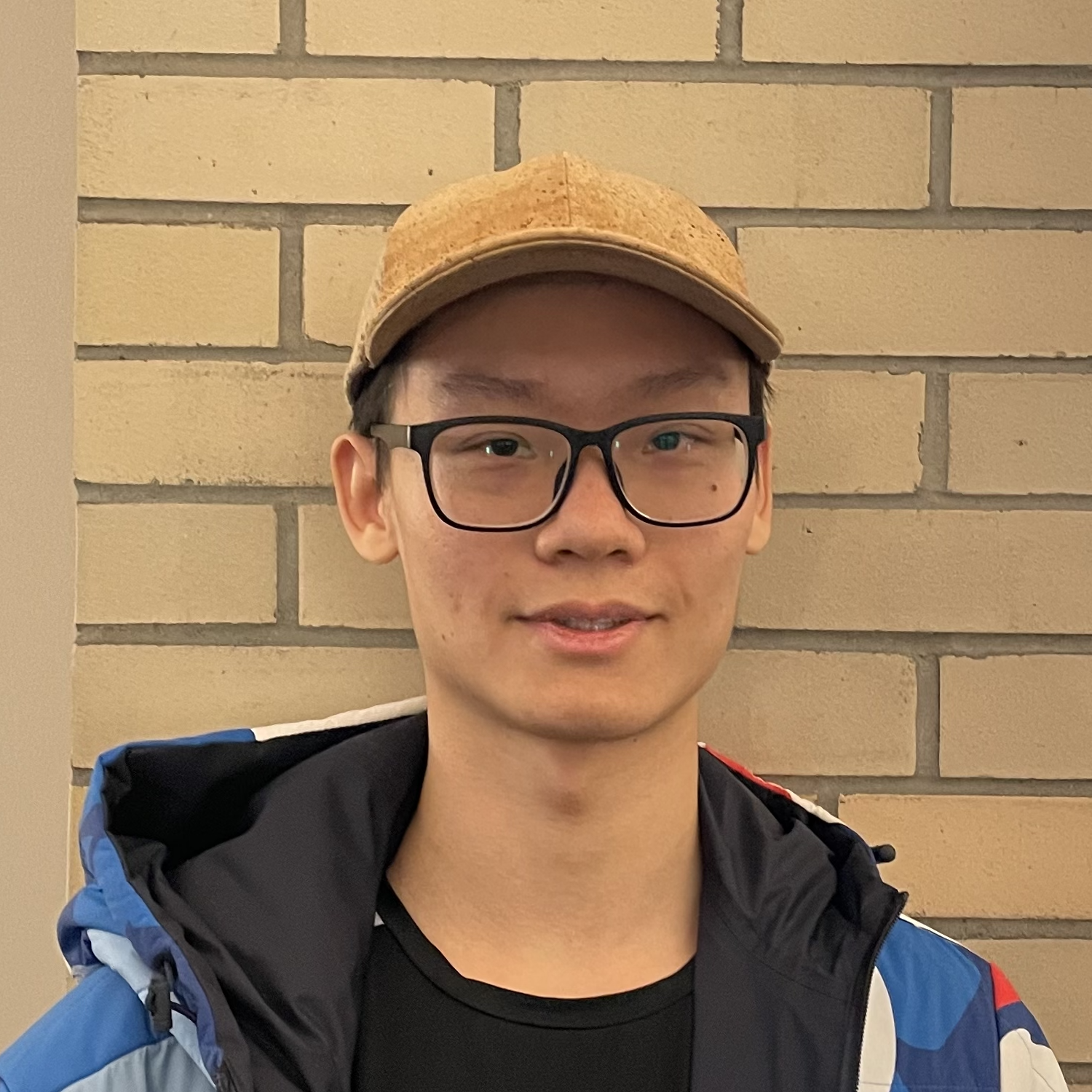 Chong Zhang合作论文数Robotic Systems Lab, ETH Zürich;Learning and Control for Agile Robotics Lab, Robotics Institute, Carnegie Mellon University7