Coordinated navigation of an arbitrary number of robots to an arbitrary number of goals is a big challenge in robotics, often hindered by scalability limitations of existing strategies. This letter introduces a decentralized multi-agent control system using neural network policies trained in simulation. By leveraging permutation invariant neural network architectures and model-free reinforcement learning, our policy enables robots to prioritize varying numbers of collaborating robots and goals in a zero-shot manner without being biased by ordering or limited by a fixed capacity. We validate the task performance and scalability of our policies through experiments in both simulation and real-world settings. Our approach achieves a 10.3% higher success rate in collaborative navigation tasks compared to a policy without a permutation invariant encoder. Additionally, it finds near-optimal solutions for multi-robot navigation problems while being two orders of magnitude faster than an optimization-based centralized controller. We deploy our multi-goal navigation policies on two wheeled-legged quadrupedal robots, which successfully complete a series of multi-goal navigation missions.
Logistics and service operations involving parcel preparation, delivery, and unpacking from a supply point to a user's home could be carried out completely by robots in the near future, taking advantage of the capabilities of the different robot morphologies for the logistics, outdoor, and domestic environments. The use of robots for parcel delivery can contribute to the goals of sustainability and reduced emissions by exploiting their different locomotion modalities (wheeled, legged, and aerial). This article reports the development and results obtained from the first robotics hackathon celebrated as part of the European Robotics and Artificial Intelligence Network involving eight robotic platforms in three domains: 1) an industrial robotic arm for parcel preparation at the supply point, 2) a Centauro robot, a dual-arm aerial manipulator, and a wheeled-legged quadruped for parcel transportation, and 3) two humanoid robots and two commercial mobile manipulators for parcel delivery and unpacking in domestic scenarios. The article describes the joint operation and the evaluation scenario, the features and capabilities of the robots, particularly those involved in the realization of the tasks, and the lessons learned.
Challenges in real-world robotic applications often stem from managing multiple, dynamically varying entities such as neighboring robots, manipulable objects, and navigation goals. Existing multi-agent control strategies face scalability limitations, struggling to handle arbitrary numbers of entities. Additionally, they often rely on engineered heuristics for assigning entities among agents. We propose a data driven approach to address these limitations by introducing a decentralized control system using neural network policies trained in simulation. Leveraging permutation invariant neural network architectures and model-free reinforcement learning, our approach allows control agents to autonomously determine the relative importance of different entities without being biased by ordering or limited by a fixed capacity. We validate our approach through both simulations and real-world experiments involving multiple wheeled-legged quadrupedal robots, demonstrating their collaborative control capabilities. We prove the effectiveness of our architectural choice through experiments with three exemplary multi-entity problems. Our analysis underscores the pivotal role of the end-to-end trained permutation invariant encoders in achieving scalability and improving the task performance in multi-object manipulation or multi-goal navigation problems. The adaptability of our policy is further evidenced by its ability to manage varying numbers of entities in a zero-shot manner, showcasing near-optimal autonomous task distribution and collision avoidance behaviors.
Autonomous wheeled-legged robots have the potential to transform logistics systems, improving operational efficiency and adaptability in urban environments. Navigating urban environments, however, poses unique challenges for robots, necessitating innovative solutions for locomotion and navigation. These challenges include the need for adaptive locomotion across varied terrains and the ability to navigate efficiently around complex dynamic obstacles. This work introduces a fully integrated system comprising adaptive locomotion control, mobility-aware local navigation planning, and large-scale path planning within the city. Using model-free reinforcement learning (RL) techniques and privileged learning, we developed a versatile locomotion controller. This controller achieves efficient and robust locomotion over various rough terrains, facilitated by smooth transitions between walking and driving modes. It is tightly integrated with a learned navigation controller through a hierarchical RL framework, enabling effective navigation through challenging terrain and various obstacles at high speed. Our controllers are integrated into a large-scale urban navigation system and validated by autonomous, kilometer-scale navigation missions conducted in Zurich, Switzerland, and Seville, Spain. These missions demonstrate the system's robustness and adaptability, underscoring the importance of integrated control systems in achieving seamless navigation in complex environments. Our findings support the feasibility of wheeled-legged robots and hierarchical RL for autonomous navigation, with implications for last-mile delivery and beyond.
Shifting from traditional control strategies to Deep Reinforcement Learning (RL) for legged robots poses inherent challenges, especially when addressing real-world physical constraints during training. While high-fidelity simulations provide significant benefits, they often bypass these essential physical limitations. In this paper, we experiment with the Constrained Markov Decision Process (CMDP) framework instead of the conventional unconstrained RL for robotic applications. We evaluated five constrained policy optimization algorithms for quadrupedal locomotion using three different robot models. Our aim is to evaluate their applicability in real-world scenarios. Our robot experiments demonstrate the critical role of incorporating physical constraints, yielding successful sim-to-real transfers, and reducing operational errors on physical systems. The CMDP formulation streamlines the training process by separately handling constraints from rewards. Our findings underscore the potential of constrained RL for the effective development and deployment of learned controllers in robotics.
Learning complex locomotion and manipulation tasks presents significant challenges, often requiring extensive engineering of, e.g., reward functions or curricula to provide meaningful feedback to the Reinforcement Learning (RL) algorithm. This paper proposes an intrinsically motivated RL approach to reduce task-specific engineering. The desired task is encoded in a single sparse reward, i.e., a reward of "+1" is given if the task is achieved. Intrinsic motivation enables learning by guiding exploration toward the sparse reward signal. Specifically, we adapt the idea of Random Network Distillation (RND) to the robotics domain to learn holistic motion control policies involving simultaneous locomotion and manipulation. We investigate opening doors as an exemplary task for robotic applications. A second task involving package manipulation from a table to a bin highlights the generalization capabilities of the presented approach. Finally, the resulting RL policies are executed in real-world experiments on a wheeled-legged robot in biped mode. We experienced no failure in our experiments, which consisted of opening push doors (over 15 times in a row) and manipulating packages (over 5 times in a row).
Reinforcement learning (RL) has emerged as a powerful approach for locomotion control of highly articulated robotic systems. However, one major challenge is the tedious process of tuning the reward function to achieve the desired motion style. To address this issue, imitation learning approaches such as adversarial motion priors have been proposed, which encourage a pre-defined motion style. In this work, we present an approach to enhance the concept of adversarial motion prior-based RL, allowing for multiple, discretely switchable motion styles. Our approach demonstrates that multiple styles and skills can be learned simultaneously without significant performance differences, even in combination with motion data-free skills. We conducted several real-world experiments using a wheeled-legged robot to validate our approach. The experiments involved learning skills from existing RL controllers and trajectory optimization, such as ducking and walking, as well as novel skills, such as switching between a quadrupedal and humanoid configuration. For the latter skill, the robot was required to stand up, navigate on two wheels, and sit down. Instead of manually tuning the sit-down motion, we found that a reverse playback of the stand-up movement helped the robot discover feasible sit-down behaviors and avoided the need for tedious reward function tuning.
Shifting from traditional control strategies to Deep Reinforcement Learning (RL) for legged robots poses inherent challenges, especially when addressing real-world physical constraints during training. While high-fidelity simulations provide significant benefits, they often bypass these essential physical limitations. In this paper, we experiment with the Constrained Markov Decision Process (CMDP) framework instead of the conventional unconstrained RL for robotic applications. We perform a comparative study of different constrained policy optimization algorithms to identify suitable methods for practical implementation. Our robot experiments demonstrate the critical role of incorporating physical constraints, yielding successful sim-to-real transfers, and reducing operational errors on physical systems. The CMDP formulation streamlines the training process by separately handling constraints from rewards. Our findings underscore the potential of constrained RL for the effective development and deployment of learned controllers in robotics.
The community in legged robotics focuses on bio-inspired robots, although there are some human inventions that nature could not recreate. One of the most significant examples is the wheel which has made our transportation system more efficient and faster. Inspired by this human-made evolution, we present a survey of wheeled-legged robots, allowing robotic systems to be efficient on flat as well as versatile on challenging terrain. This enhancement, however, comes at the cost of increased complexity due to additional degrees of freedom at the end-effector, which empowers motions along the rolling direction. The missing examples in nature make designing templates that capture the underlying locomotion principles cumbersome, making hybrid locomotion challenging. This paper reviews some of the novel locomotion frameworks overcoming these challenges.
We describe an optimization-based framework to perform complex locomotion skills for robots with legs and wheels. The generation of complex motions over a long-time horizon often requires offline computation due to current computing constraints and is mostly accomplished through trajectory optimization (TO). In contrast, model predictive control (MPC) focuses on the online computation of trajectories, robust even in the presence of uncertainty, albeit mostly over shorter time horizons and is prone to generating nonoptimal solutions over the horizon of the task’s goals. Our article’s contributions overcome this trade-off by combining offline motion libraries and online MPC, uniting a complex, long-time horizon plan with reactive, short-time horizon solutions. We start from offline trajectories that can be, for example, generated by TO or sampling-based methods. Also, multiple offline trajectories can be composed out of a motion library into a single maneuver. We then use these offline trajectories as the cost for the online MPC, allowing us to smoothly blend between multiple composed motions even in the presence of discontinuous transitions. The MPC optimizes from the measured state, resulting in feedback control, which robustifies the task’s execution by reacting to disturbances and looking ahead at the offline trajectory. With our contribution, motion designers can choose their favorite method to iterate over behavior designs offline without tuning robot experiments, enabling them to author new behaviors rapidly. Our experiments demonstrate complex and dynamic motions on our traditional quadrupedal robot ANYmal and its roller-walking version. Moreover, the article’s findings contribute to evaluating five planning algorithms.
The control problem of wheeled-legged locomotion is still an open problem in the robotics community. Each leg has multiple discrete control modes (rolling, point-foot mode, swing phase), which results in highly nonlinear system dynamics. Most existing works rely on model-based control approaches, and they reduce the complexity of the problem by introducing handcrafted contact sequences or simplified dynamics models. In this work, we attempt to develop a locomotion controller for a wheeled-legged robot using model-free Reinforcement Learning (RL). We train a control policy in simulation, where we simulate the full dynamics of the system and random external disturbances. We then deploy the trained policy on the real robot. Like recent state-of-the-arts in legged locomotion using RL, our preliminary results show that RL is a promising framework for wheeled-legged robots. The policy learns to dynamically switch between driving mode and walking mode in response to the user command and terrain.
Autonomous exploration of subterranean environments constitutes a major frontier for robotic systems, as underground settings present key challenges that can render robot autonomy hard to achieve. This problem has motivated the DARPA Subterranean Challenge, where teams of robots search for objects of interest in various underground environments. In response, we present the CERBERUS system-of-systems, as a unified strategy for subterranean exploration using legged and flying robots. Our proposed approach relies on ANYmal quadraped as primary robots, exploiting their endurance and ability to traverse challenging terrain. For aerial robots, we use both conventional and collision-tolerant multirotors to explore spaces too narrow or otherwise unreachable by ground systems. Anticipating degraded sensing conditions, we developed a complementary multimodal sensor-fusion approach, utilizing camera, LiDAR, and inertial data for resilient robot pose estimation. Individual robot pose estimates are refined by a centralized multi-robot map-optimization approach to improve the reported location accuracy of detected objects of interest in the DARPA-defined coordinate frame. Furthermore, a unified exploration path-planning policy is presented to facilitate the autonomous operation of both legged and aerial robots in complex underground networks. Finally, to enable communication among team agents and the base station, CERBERUS utilizes a ground rover with a high-gain antenna and an optical fiber connection to the base station and wireless “breadcrumb” nodes deployed by the legged robots. We report results from the CERBERUS system-of-systems deployment at the DARPA Subterranean Challenge’s Tunnel and Urban Circuit events, along with the current limitations and the lessons learned for the benefit of the community.
The common approach for local navigation on challenging environments with legged robots requires path planning, path following and locomotion, which usually requires a locomotion control policy that accurately tracks a commanded velocity. However, by breaking down the navigation problem into these sub-tasks, we limit the robot's capabilities since the individual tasks do not consider the full solution space. In this work, we propose to solve the complete problem by training an end-to-end policy with deep reinforcement learning. Instead of continuously tracking a precomputed path, the robot needs to reach a target position within a provided time. The task's success is only evaluated at the end of an episode, meaning that the policy does not need to reach the target as fast as possible. It is free to select its path and the locomotion gait. Training a policy in this way opens up a larger set of possible solutions, which allows the robot to learn more complex behaviors. We compare our approach to velocity tracking and additionally show that the time dependence of the task reward is critical to successfully learn these new behaviors. Finally, we demonstrate the successful deployment of policies on a real quadrupedal robot. The robot is able to cross challenging terrains, which were not possible previously, while using a more energy-efficient gait and achieving a higher success rate. Supplementary videos can be found on the project website: https://sites.google.com/leggedrobotics.com/end-to-end-loco-navigation
Navigating off-road with a fast autonomous vehicle depends on a robust perception system that differentiates traversable from non-traversable terrain. Typically, this depends on a semantic understanding which is based on supervised learning from images annotated by a human expert. This requires a significant investment in human time, assumes correct expert classification, and small details can lead to misclassification. To address these challenges, we propose a method for predicting high- and low-risk terrains from only past vehicle experience in a self-supervised fashion. First, we develop a tool that projects the vehicle trajectory into the front camera image. Second, occlusions in the 3D representation of the terrain are filtered out. Third, an autoencoder trained on masked vehicle trajectory regions identifies low- and high-risk terrains based on the reconstruction error. We evaluated our approach with two models and different bottleneck sizes with two different training and testing sites with a four-wheeled off-road vehicle. Comparison with two independent test sets of semantic labels from similar terrain as training sites demonstrates the ability to separate the ground as low-risk and the vegetation as high-risk with 81.1% and 85.1% accuracy.
A robotic platform for mobile manipulation needs to satisfy two contradicting requirements for many real-world applications: A compact base is required to navigate through cluttered indoor environments, while the support needs to be large enough to prevent tumbling or tip over, especially during fast manipulation operations with heavy payloads or forceful interaction with the environment. This letter proposes a novel robot design that fulfills both requirements through a versatile footprint. It can reconfigure its footprint to a narrow configuration when navigating through tight spaces and to a wide stance when manipulating heavy objects. Furthermore, its triangular configuration allows for high-precision tasks on uneven ground by preventing support switches. A model predictive control strategy is presented that unifies planning and control for simultaneous navigation, reconfiguration, and manipulation. It converts task-space goals into whole-body motion plans for the new robot. The proposed design has been tested extensively with a hardware prototype. The footprint reconfiguration allows to almost completely remove manipulation induced vibrations. The control strategy proves effective in both lab experiment and during a real-world construction task.
We present a model predictive controller (MPC) that automatically discovers collision-free locomotion while simultaneously taking into account the system dynamics, friction constraints, and kinematic limitations. A relaxed barrier function is added to the optimization's cost function, leading to collision avoidance behavior without increasing the problem's computational complexity. Our holistic approach does not require any heuristics and enables legged robots to find whole-body motions in the presence of static and dynamic obstacles. We use a dynamically generated euclidean signed distance field for static collision checking. Collision checking for dynamic obstacles is modeled with moving cylinders, increasing the responsiveness to fast-moving agents. Furthermore, we include a Kalman filter motion prediction for moving obstacles into our receding horizon planning, enabling the robot to anticipate possible future collisions. Our experiments demonstrate collision-free motions on a quadrupedal robot in challenging indoor environments. The robot handles complex scenes like overhanging obstacles and dynamic agents by exploring motions at the robot's dynamic and kinematic limits.
Our paper proposes a model predictive controller as a single-task formulation that simultaneously optimizes wheel and torso motions. This online joint velocity and ground reaction force optimization integrates a kinodynamic model of a wheeled quadrupedal robot. It defines the single rigid body dynamics along with the robot’s kinematics while treating the wheels as moving ground contacts. With this approach, we can accurately capture the robot’s rolling constraint and dynamics, enabling automatic discovery of hybrid maneuvers without needless motion heuristics. The formulation’s generality through the simultaneous optimization over the robot’s whole-body variables allows for a single set of parameters and makes online gait sequence adaptation possible. Aperiodic gait sequences are automatically found through kinematic leg utilities without the need for predefined contact and lift-off timings, reducing the cost of transport by up to 85 %. Our experiments demonstrate dynamic motions on a quadrupedal robot with non-steerable wheels in challenging indoor and outdoor environments. The paper’s findings contribute to evaluating a decomposed, i.e., sequential optimization of wheel and torso motion, and single-task motion planner with a novel quantity, the prediction error, which describes how well a receding horizon planner can predict the robot’s future state. To this end, we report an improvement of up to 71 % using our proposed single-task approach, making fast locomotion feasible and revealing wheeled-legged robots’ full potential.
Legged robots are exceedingly versatile and have the potential to navigate complex, confined spaces due to their many degrees of freedom. As a result of the computational complexity, there exist no online planners for perceptive whole‐body locomotion of robots in tight spaces. In this paper, we present a new method for perceptive planning for multilegged robots, which generates body poses, footholds, and swing trajectories for collision avoidance. Measurements from an onboard depth camera are used to create a three‐dimensional map of the terrain around the robot. We randomly sample body poses then smooth the resulting trajectory while satisfying several constraints, such as robot kinematics and collision avoidance. Footholds and swing trajectories are computed based on the terrain, and the robot body pose is optimized to ensure stable locomotion while not colliding with the environment. Our method is designed to run online on a real robot and generate trajectories several meters long. We first tested our algorithm in several simulations with varied confined spaces using the quadrupedal robot ANYmal. We also simulated experiments with the hexapod robot Weaver to demonstrate applicability to different legged robot configurations. Then, we demonstrated our whole‐body planner in several online experiments both indoors and in realistic scenarios at an emergency rescue training facility. ANYmal, which has a nominal standing height of 80 cm and a width of 59 cm, navigated through several representative disaster areas with openings as small as 60 cm. Three‐meter trajectories were replanned with 500 ms update times.
 Marco Hutter合作论文数Robotic Systems Lab, Eidgenössische Technische Hochschule Zürich;RAI Institute33
 Navinda Kottege合作论文数8
 Joonho Lee合作论文数ETH, Robotic Systems Lab, Zürich, Switzerland8
 Lorenz Wellhausen合作论文数ETH Zurich8
 Dario Bellicoso合作论文数Boston Dynamics AI Institute8
 Fabian Jenelten合作论文数Robot Syst Lab, ETH Zurich5
 Victor Klemm合作论文数Autonomous Systems Lab - ETH Zurich, Switzerland5
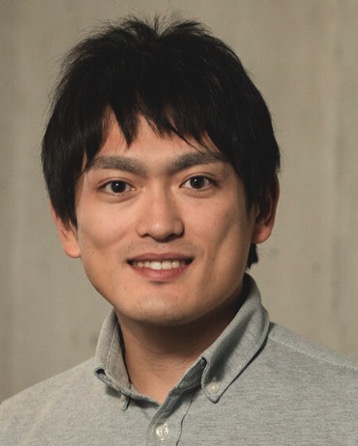 Takahiro Miki合作论文数Robotic Systems Lab, ETH Zurich4
 Alexander Reske合作论文数ETH Zurich4Timon Homberger合作论文数Department of Mechanical and Process Engineering, ETH Zürich, 8092 Zürich, Switzerland4
 Tirthankar Bandyopadhyay合作论文数CENSAM IRG, SMART, Singapore4
 Péter Fankhauser合作论文数ANYbotics4
 Russell Buchanan合作论文数Univ Oxford, Oxford Robot Inst, Oxford, England3
 Hendrik Kolvenbach合作论文数ETH Zurich3
 Ruben Grandia合作论文数Disney Research3
 Fabian Gunther合作论文数3
 Philipp Beckerle合作论文数Institute for Mechatronic Systems, Technische Universität Darmstadt3Lukas Schroth合作论文数2
 Edo Jelavic合作论文数Robotic Systems Lab, Eidgenössische Technische Hochschule Zürich2
 Jianfeng Gao合作论文数High Performance Humanoid Technologies Lab, Institute for Anthropomatics and Robotics, Karlsruhe Institute of Technology2Johann Huber合作论文数2Flavio De Vincenti合作论文数2Linus Isler合作论文数2
 Rui Bettencourt合作论文数2Oliver Harley合作论文数2
 Luca Rossini合作论文数Politecnico di Milano2
 Giorgio Valsecchi合作论文数Robotic Systems Lab, ETH Zurich;Swiss-Mile2
 Nikita Rudin合作论文数2Yvain de Viragh合作论文数2
 Dhionis V Sako合作论文数Robotic Systems Lab, ETH Zurich2Rytz David合作论文数University of Oxford,Oxford Robotics Institute,United Kingdom2Samuel Zimmermann合作论文数2
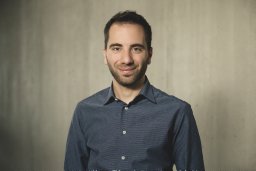 Marco Tranzatto合作论文数Swiss Fed Inst Technol, Robot Syst Lab, CH-8092 Zurich, Switzerland2
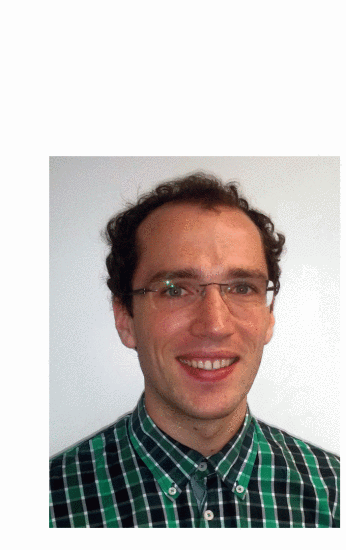 Peter Schmaus合作论文数German Aerospace Center2
 Carlos Azevedo合作论文数Institute for Systems and Robotics, Instituto Superior Técnico, Lisbon, Portugal2Vivian Suzano Medeiros合作论文数2
 Alessio De Luca合作论文数Humanoids and Human Centered Mechatronics Laboratory, Istituto Italiano di Tecnologia;European Space Agency2
 Marcus Hoerger合作论文数School of Mathematics and Physics, Faculty of Science, University of Queensland2Quentin Rouxel合作论文数School of Informatics, The University of Edinburgh2Samuel Bachmann合作论文数2
 Andreas Lauber合作论文数Karlsruhe Institute of Technology2
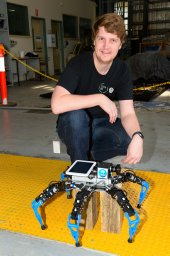 Ryan James Steindl合作论文数Robotics and Autonomous Systems Research Group, CSIRO2
 Benjamin Tam合作论文数Robotics and Autonomous Systems Research Group, CSIRO2
 Ross Dungavell合作论文数CSIRO Cyber Physical Systems, Commonwealth Scientific and Industrial Research Organisation2
 Thomas Gumpert合作论文数2Remo Diethelm合作论文数2
 Arturo Laurenzi合作论文数Advanced Robotics Department, Istituto Italiano di Tecnologia Genova2Luca Muratore合作论文数Dept. of Advanced Robotics, Istituto Italiano di Tecnologia2
 Vassilios Tsounis合作论文数Disney Research2




