A preliminary analysis of a sample of more than hundred stars, used as radial-velocity standards and followed with the CORAVEL spectrographs over I to 2 decades, is presented. Stars with intrinsic variability or orbital motions are pointed out.
Two large radial velocity surveys have been conducted during the last years with the two CORAVEL spectrometers. Up to now, more than 140 000 radial velocity measurements were obtained for some 40 000 late-type stars of the Hipparcos mission (Sp greater than or equal to F5). These surveys have been conducted at La Silla (ESO, Chile) on the 1.54-m Danish telescope and at the Haute-Provence Observatory (France) on the 1-m Swiss telescope. These ground-based complementary observations provide the third component of the space velocity, mandatory to most studies in Galactic dynamics. The cross-correlation functions measured for the stars not only give access to radial velocities but also to rotational velocities and metallicities. Not the least interesting part of these radial velocity surveys is the data obtained for the so-called Hipparcos 'survey'.
This paper presents a catalog [Table 1 is also available in electronic form at the CDS (Strasbourg) via anonymous ftp to 130.79.128.5] of the mean radial velocities of 471 giant stars in the galactic globular cluster omega Centauri, the large majority of which are confirmed as cluster members. The typical uncertainty in the mean velocities is less than 1 km s(-1); a variability indicator and notes on chemical peculiarities are provided. In extension of earlier dynamical analyses of omega Centauri, based on part of the data presented here (Meylan & Mayor 1986, A&A, 166, 122; Meylan 1987, A&A, 184, 144; Meylan ct al. 1995, A&A, 303, 761), a companion paper (Merritt et al. 1997, AJ, 114, 1074) rediscusses the subject, based on the full data set and a new theoretical approach, using nonparametric techniques. (C) 1997 American Astronomical Society.
We present Strömgrenuvby photometric observations and a series of radial velocities obtained with the Coravel scanner for the 11th magnitude star catalogued in the Guide Star Catalogue as GSC 0114401023. This star was serendipitously identified on UV frames taken with the Very-Wide-Field-Camera aboard Spacelab-1. Radial velocities show the star to be binary and we have determined accurate orbital elements. Photometric data and orbital elements are consistent with the system being a previously-unrecognized eclipsing binary, with period = 33.8766 days and eccentricity = 0.262.
On analyse les resultats d'observations photoelectriques precises des vitesses radiales de 169 etoiles de 47 Tuc, situees entre 2 et 30 rayons du noyau, du centre de l'amas. La vitesse radiale moyenne de 47 Tuc est -19±1 km s −1 . On a detecte et analyse la rotation differentielle de l'amas
Radii and luminosities for Cepheid variables provide fundamental information on stellar evolution. Such data, obtained by the Baade-Wesselink method, are available and have been used for a number of galactic Cepheids. It is of particular interest to obtain corresponding data for Cepheids in the Magellanic Clouds. Firstly, this allows a comparative study of stellar evolution between the Galaxy and the Magellanic Clouds. Secondly, it provides data for an independent determination of the distance to the Magellanic Clouds.Radial-velocity observations have been made for a total of around 20 Cepheid variables in both the LMC and the SMC. All measurements were made with the photoelectric scanner CORAVEL attached to the Cassegrain focus of the Danish 1.54-m telescope at European Southern Observatory, La Silla, Chile. Observations were made from January 1981 through October 1983. The accuracy of individual radial-velocity observations is of the order of 1 km s−1. The B magnitudes of the six Cepheids presented range from 13.0 to 15.5.
Donnees de vitesse radiale des 14 etoiles sud. HD 006655, HD 024331, HD 039194, CPD-43°2527, HD 048381, HD 083443, HD 083516, HD 101266, HD 111417, HD 120223, HD 176047, HD 193231, HD 196983 et HD 219509
 Emilie Maurice合作论文数Laboratoire Leprince-Ringuet;école Polytechnique14
 H. Lindgren合作论文数13Johannes Andersen合作论文数12
 Birgitta Nordstrom合作论文数12L. Prevot合作论文数12a ardeberg合作论文数11willy benz合作论文数8
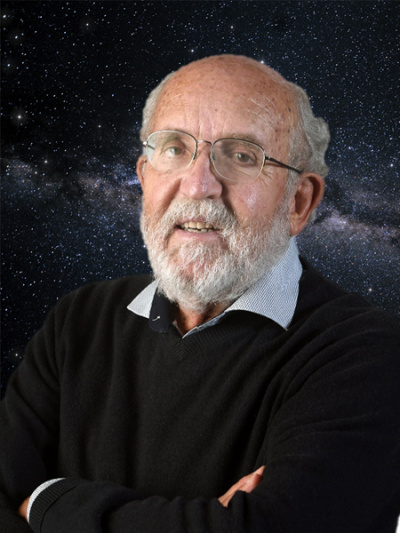 Michel Mayor合作论文数Department of Astronomy, University of Geneva8laurent prevot合作论文数4M. Mayor合作论文数4E. Rebeirot合作论文数3
 N. M. Martin合作论文数Division of Synchrotron Radiation Research, Lund University3
 Judith Rousseau合作论文数Department of Statistics, Jesus College, University of Oxford3Antoine Duquennoy合作论文数3
 Stéphane Udry合作论文数Department of Astronomy, Universite de Geneve3F. Crifo合作论文数2n c martin合作论文数2c turon合作论文数2
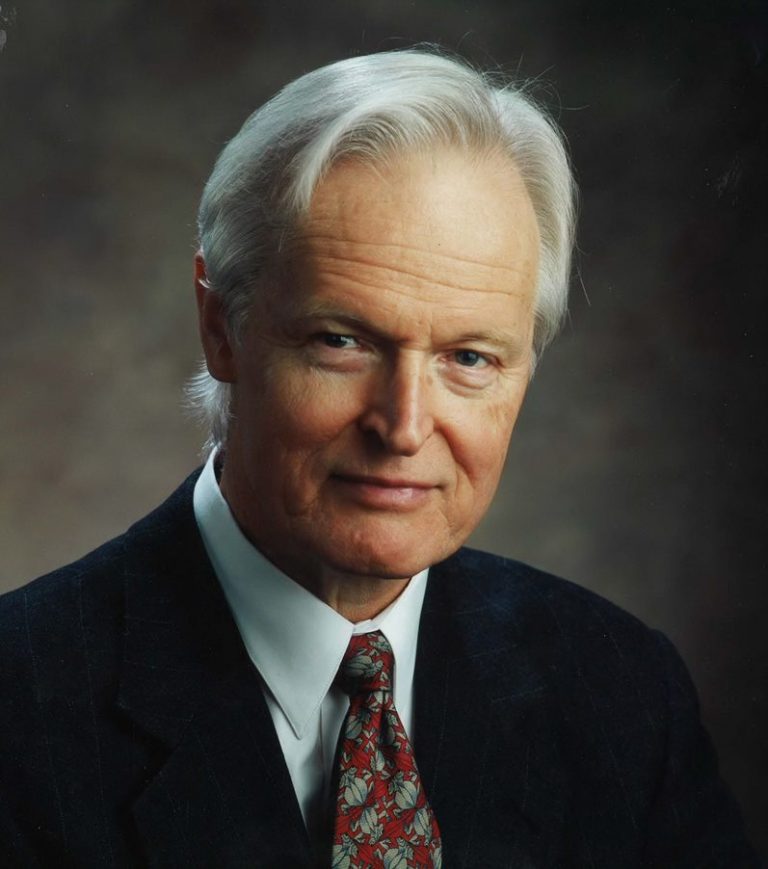 C. Wayne Bardin合作论文数Division of Endocrinology, Penn State University2Jean-Claude Mermilliod合作论文数2Jean-Paul Brunet合作论文数1b pernier合作论文数1b nordstroem合作论文数1cl bardin合作论文数1andre baranne合作论文数1michel grenon合作论文数1s grenier合作论文数1William Tobin合作论文数1M Grenon合作论文数1nicolas martin合作论文数1A. Gomez合作论文数1Jens O. Andersen合作论文数1Rosanna Faraggiana合作论文数1Michele Gerbaldi合作论文数1
 Georges Meylan合作论文数École Polytechnique Fédérale de Lausanne1M. Viton合作论文数1




