This work studies nonparametric Bayesian estimation of the intensity function of an inhomogeneous Poisson point process in the important case where the intensity depends on covariates, based on the observation of a single realisation of the point pattern over a large area. It is shown how the presence of covariates allows to borrow information from far away locations in the observation window, enabling consistent inference in the growing domain asymptotics. In particular, optimal posterior contraction rates under both global and point-wise loss functions are derived. The rates in global loss are obtained under conditions on the prior distribution resembling those in the well established theory of Bayesian nonparametrics, combined with concentration inequalities for functionals of stationary processes to control certain random covariate-dependent loss functions appearing in the analysis. The local rates are derived with an ad-hoc study that builds on recent advances in the theory of P & oacute;lya tree priors, extended to the present multivariate setting with a novel construction that makes use of the random geometry induced by the covariates.
The monitoring of conflict risk in the humanitarian sector is largely based on simple historic averages. The overarching goal of this work is to assess the potential for using a more statistically rigorous approach to monitor the risk of political violence and conflict events in practice, and thereby improve our understanding of their temporal and spatial patterns, to inform preventative measures. In particular, a Bayesian, spatiotemporal variant of the Hawkes process is fitted to data gathered by the Armed Conflict Location and Event Data (ACLED) project to obtain sub-national estimates of conflict risk in South Asia over time and space. Our model can effectively estimate the risk level of these events within a statistically sound framework, with a more precise understanding of uncertainty than was previously possible. The model also provides insights into differences in behaviours between countries and conflict types. We also show how our model can be used to monitor short and long term trends, and that it is more stable and robust to outliers compared to current practices that rely on historical averages.
In this paper, we study semiparametric inference for linear multivariate Hawkes processes, a class of point processes widely used to describe self and mutually exciting phenomena. We establish a convolution theorem giving the best limiting distribution for a regular estimator of smooth functional. Then, in the Bayesian setting, we prove a semiparametric Bernstein-von Mises (BvM) theorem for nonparametric random series priors. We apply this result to histogram and wavelet based priors. Taken together, the convolution and BvM theorems show that, from a frequentist point of view, semiparametric Bayesian procedures have asymptotically the optimal behavior. Deriving the BvM property for random series priors led us to prove L2 posterior contraction, complementing for these priors the results of Donnet, Rivoirard and Rousseau (2020).
Bayes-filtered transformers are transformers meta-learned on sequences from a prior predictive distribution to approximate the corresponding posterior predictive distribution. They output total predictive uncertainty in a single forward pass but never explicitly represent a posterior distribution, making the standard route to separating aleatoric from epistemic uncertainty unavailable. We address this challenge through the lens of Bayesian predictive inference (BPI). Our main result is a predictive Central Limit Theorem (CLT) for supervised settings under conditions that are among the weakest known in the BPI literature. The CLT characterises the posterior of the limiting predictive distribution given an observed context as asymptotically Gaussian; the variance of this Gaussian quantifies epistemic uncertainty. We apply the framework to TabPFN, a Bayes-filtered transformer that is a state-of-the-art foundation model for tabular prediction. The resulting credible bands achieve near-nominal frequentist coverage as context length grows, and the decomposition largely matches standard desiderata: epistemic uncertainty shrinks with context length and is highest in sparsely observed regions within the span of the context data, while aleatoric uncertainty dominates near decision boundaries where classes overlap.
In this paper we study the frequentist properties of Bayesian approaches in linear high dimensional Hawkes processes in a sparse regime where the number of interaction functions acting on each component of the Hawkes process is much smaller than the dimension. We consider two types of loss function: the empirical L_1 distance between the intensity functions of the process and the L_1 norm on the parameters (background rates and interaction functions). Our results are the first results to control the L_1 norm on the parameters under such a framework. They are also the first results to study Bayesian procedures in high dimensional Hawkes processes.
We propose a novel framework for measuring privacy from a Bayesian game-theoretic perspective. This framework enables the creation of new, purpose-driven privacy definitions that are rigorously justified, while also allowing for the assessment of existing privacy guarantees through game theory. We show that pure and probabilistic differential privacy are special cases of our framework, and provide new interpretations of the post-processing inequality in these settings. Further, we demonstrate that privacy guarantees can be established for deterministic algorithms, which are overlooked by current privacy standards.
We present a new approach to semiparametric inference using corrected posterior distributions. The method allows us to leverage the adaptivity, regularization and predictive power of nonparametric Bayesian procedures to estimate low-dimensional functionals of interest without being restricted by the holistic Bayesian formalism. Starting from a conventional nonparametric posterior, we target the functional of interest by transforming the entire distribution with a Bayesian bootstrap correction. We provide conditions for the resulting $\textit{one-step posterior}$ to possess calibrated frequentist properties and specialize the results for several canonical examples: the integrated squared density, the mean of a missing-at-random outcome, and the average causal treatment effect on the treated. The procedure is computationally attractive, requiring only a simple, efficient post-processing step that can be attached onto any arbitrary posterior sampling algorithm. Using the ACIC 2016 causal data analysis competition, we illustrate that our approach can outperform the existing state-of-the-art through the propagation of Bayesian uncertainty.
We consider the nonparametric regression problem when the covariates are located on an unknown smooth compact submanifold of a Euclidean space. Under defining a random geometric graph structure over the covariates we analyze the asymptotic frequentist behaviour of the posterior distribution arising from Bayesian priors designed through random basis expansion in the graph Laplacian eigenbasis. Under Holder smoothness assumption on the regression function and the density of the covariates over the submanifold, we prove that the posterior contraction rates of such methods are minimax optimal (up to logarithmic factors) for any positive smoothness index.
Guidance is a cornerstone of modern diffusion models, playing a pivotal role in conditional generation and enhancing the quality of unconditional samples. However, current approaches to guidance scheduling–determining the appropriate guidance weight–are largely heuristic and lack a solid theoretical foundation. This work addresses these limitations on two fronts. First, we provide a theoretical formalization that precisely characterizes the relationship between guidance strength and classifier confidence. Second, building on this insight, we introduce a stochastic optimal control framework that casts guidance scheduling as an adaptive optimization problem. In this formulation, guidance strength is not fixed but dynamically selected based on time, the current sample, and the conditioning class, either independently or in combination. By solving the resulting control problem, we establish a principled foundation for more effective guidance in diffusion models.
Hawkes processes are often applied to model dependence and interaction phenomena in multivariate event data sets, such as neuronal spike trains, social interactions, and financial transactions. In the nonparametric setting, learning the temporal dependence structure of Hawkes processes is generally a computationally expensive task, all the more with Bayesian estimation methods. In particular, for generalised nonlinear Hawkes processes, Monte-Carlo Markov Chain methods applied to compute the doubly intractable posterior distribution are not scalable to high-dimensional processes in practice. Recently, efficient algorithms targeting a mean-field variational approximation of the posterior distribution have been proposed. In this work, we first unify existing variational Bayes approaches under a general nonparametric inference framework, and analyse the asymptotic properties of these methods under easily verifiable conditions on the prior, the variational class, and the nonlinear model. Secondly, we propose a novel sparsity-inducing procedure, and derive an adaptive mean-field variational algorithm for the popular sigmoid Hawkes processes. Our algorithm is parallelisable and therefore computationally efficient in high-dimensional setting. Through an extensive set of numerical simulations, we also demonstrate that our procedure is able to adapt to the dimensionality of the parameter of the Hawkes process, and is partially robust to some type of model mis-specification.
We study the multivariate deconvolution problem of recovering the distribution of a signal from independent and identically distributed observations additively contaminated with random errors (noise) from a known distribution. For errors with independent coordinates having ordinary smooth densities, we derive an inversion inequality relating the $L^1$-Wasserstein distance between two distributions of the signal to the $L^1$-distance between the corresponding mixture densities of the observations. This smoothing inequality outperforms existing inversion inequalities. As an application of the inversion inequality to the Bayesian framework, we consider $1$-Wasserstein deconvolution with Laplace noise in dimension one using a Dirichlet process mixture of normal densities as a prior measure on the mixing distribution (or distribution of the signal). We construct an adaptive approximation of the sampling density by convolving the Laplace density with a well-chosen mixture of normal densities and show that the posterior measure concentrates around the sampling density at a nearly minimax rate, up to a log-factor, in the $L^1$-distance. The same posterior law is also shown to automatically adapt to the unknown Sobolev regularity of the mixing density, thus leading to a new Bayesian adaptive estimation procedure for mixing distributions with regular densities under the $L^1$-Wasserstein metric. We illustrate utility of the inversion inequality also in a frequentist setting by showing that an appropriate isotone approximation of the classical kernel deconvolution estimator attains the minimax rate of convergence for $1$-Wasserstein deconvolution in any dimension $d\geq 1$, when only a tail condition is required on the latent mixing density and we derive sharp lower bounds for these problems
Multivariate point processes are widely applied to model event-type data such as natural disasters, online message exchanges, financial transactions or neuronal spike trains. One very popular point process model in which the probability of occurrences of new events depend on the past of the process is the Hawkes process. In this work we consider the nonlinear Hawkes process, which notably models excitation and inhibition phenomena between dimensions of the process. In a nonparametric Bayesian estimation framework, we obtain concentration rates of the posterior distribution on the parameters, under mild assumptions on the prior distribution and the model. These results also lead to convergence rates of Bayesian estimators. Another object of interest in event-data modelling is to recover the graph of interaction - or Granger connectivity graph - of the phenomenon. We provide consistency guarantees on Bayesian methods for estimating this quantity; in particular, we prove that the posterior distribution is consistent on the graph adjacency matrix of the process, as well as a Bayesian estimator based on an adequate loss function.
In applications of Bayesian procedures, once a class of priors has been chosen, it may be tempting to fix the prior's hyperparameters from the data, in an empirical Bayes (EB) fashion, usually by their maximum marginal likelihood estimates (MMLE). This is a quite common but questionable practice, lacking a rigorous theoretical basis. We provide a theoretical framework where this form of EB is regarded as a computational strategy for approximating a genuine Bayesian posterior distribution and prove its general properties for parametric models. While computing the MMLE may still be demanding, we prove novel results that allow us to provide a simple proxy. These results establish the limit behavior of the MMLE in quite general settings, including both identifiable and non-identifiable models - specifically, overfitted mixture models - significantly filling a gap in the literature. Moreover, we study higher order merging, showing that, when not degenerate, the EB posterior approximates at a faster rate an oracle-Bayes posterior distribution based on the prior law that, within the given class of priors, expresses the most information on the true model's parameters. This is a faster approximation than classic Bernstein-von Mises results. Our work provides formal content to common beliefs on this popular practice.
We consider the problem of estimation in Hidden Markov models with finite state space and nonparametric emission distributions. Efficient estimators for the transition matrix are exhibited, and a semiparametric Bernstein-von Mises result is deduced. Following from this, we propose a modular approach using the cut posterior to jointly estimate the transition matrix and the emission densities. We derive a general theorem on contraction rates for this approach. We then show how this result may be applied to obtain a contraction rate result for the emission densities in our setting; a key intermediate step is an inversion inequality relating $L^1$ distance between the marginal densities to $L^1$ distance between the emissions. Finally, a contraction result for the smoothing probabilities is shown, which avoids the common approach of sample splitting. Simulations are provided which demonstrate both the theory and the ease of its implementation.
This article studies the asymptotic properties of Bayesian or frequentist estimators of a vector of parameters related to structural properties of sequences of graphs. The estimators studied originate from a particular class of graphex model introduced by Caron and Fox. The analysis is however performed here under very weak assumptions on the underlying data generating process, which may be different from the model of Caron and Fox or from a graphex model. In particular, we consider generic sparse graph models, with unbounded degree, whose degree distribution satisfies some assumptions. We show that one can relate the limit of the estimator of one of the parameters to the sparsity constant of the true graph generating process. When taking a Bayesian approach, we also show that the posterior distribution is asymptotically normal. We discuss situations where classical random graphs models such as configuration models, sparse graphon models, edge exchangeable models or graphon processes satisfy our assumptions.
We study the Bayesian density estimation of data living in the offset of an unknown submanifold of the Euclidean space. In this perspective, we introduce a new notion of anisotropic H & ouml;lder for the underlying density and obtain posterior rates that are minimax optimal and adaptive to the regularity of the density, to the intrinsic dimension of the manifold, and to the size of the offset, provided that the latter is not too small-while still allowed to go to zero. Our Bayesian procedure, based on location-scale mixtures of Gaussians, appears to be convenient to implement and yields good practical results, even for quite singular data.
Many real-life applications involve estimation of curves that exhibit complicated shapes including jumps or varying-frequency oscillations. Practical methods have been devised that can adapt to a locally varying complexity of an unknown function (e.g. variable-knot splines, sparse wavelet reconstructions, kernel methods or trees/forests). However, the overwhelming majority of existing asymptotic minimaxity theory is predicated on homogeneous smoothness assumptions. Focusing on locally Holderian functions, we provide new locally adaptive posterior concentration rate results under the supremum loss for widely used Bayesian machine learning techniques in white noise and non-parametric regression. In particular, we show that popular spike-and-slab priors and Bayesian CART are uniformly locally adaptive. In addition, we propose a new class of repulsive partitioning priors which relate to variable knot splines and which are exact-rate adaptive. For uncertainty quantification, we construct locally adaptive confidence bands whose width depends on the local smoothness and which achieve uniform asymptotic coverage under local self-similarity. To illustrate that spatial adaptation is not at all automatic, we provide lower-bound results showing that popular hierarchical Gaussian process priors fall short of spatial adaptation.
This paper investigates properties of the class of graphs based on exchangeable point processes. We provide asymptotic expressions for the number of edges, number of nodes, and degree distributions, identifying four regimes: (i) a dense regime, (ii) a sparse, almost dense regime, (iii) a sparse regime with power-law behaviour, and (iv) an almost extremely sparse regime. We show that, under mild assumptions, both the global and local clustering coefficients converge to constants which may or may not be the same. We also derive a central limit theorem for subgraph counts and for the number of nodes. Finally, we propose a class of models within this framework where one can separately control the latent structure and the global sparsity/power-law properties of the graph.
 Kerrie Mengersen合作论文数29
 Robert Christian P.合作论文数Centre de Recherche en Mathématiques de la Décision, Université Paris Dauphine - PSL28Vincent Rivoirard合作论文数14Catia Scricciolo合作论文数12
 Donnet Sophie合作论文数Unité Mathématiques et Informatique Appliquées, Institut National de la Recherche Agronomique;Unité Mathématiques et Informatique Appliquées, Institut National de la Recherche Agronomique10Chantal Guihenneuc合作论文数8E. Rebeirot合作论文数7
 Soufiane Hayou合作论文数Department of Applied Mathematics and Statistics, The Johns Hopkins University7Nicole M. White合作论文数7
 Arnaud Doucet合作论文数DeepMind;Department of Statistics, University of Oxford7Offer Lieberman合作论文数University of Canterbury7
 Zoe Van Havre合作论文数ACEMS, Queensland Univ Technol6
 David M. Zucker合作论文数Department of Statistics, Hebrew University6
 Darfiana Nur合作论文数School of Mathematical and Physical Sciences, University of Newcastle6Christine Cuervo-Lombard合作论文数Service de Psychiatrie d'Adultes, Centre Hospitalier Universitaire de Reims6Jean-Paul Brunet合作论文数5
 Nicolas Chopin合作论文数Department of Statistics, École Nationale de La Statistique et de l'Administration Économique5
 Sonia Petrone合作论文数5
 François Caron合作论文数Department of Statistics, University of Oxford;Keble College, University of Oxford5Dorota Gajda合作论文数4Deborah Sulem合作论文数Dept Stat, Univ Oxford4
 David T. Frazier合作论文数Corresponding author.4
 Ross McVinish合作论文数School of Mathematics and Physics, Faculty of Science, The University of Queensland4Albert Isabelle合作论文数4
 Andrew Gelman合作论文数Department of Statistics, Columbia University;Department of Political Science, Columbia University4Georges Paturel合作论文数4
 Jean-Michel Marin合作论文数Inst Math & Modelisat Montpellier, Univ Montpellier 24
 Willem Kruijer合作论文数Universit4
 Elisabeth Gassiat合作论文数Laboratoire de Mathematiques;Equipe de Probabilites, Statistique et Modelisation;Universite Paris-Sud4
 Julyan Arbel合作论文数CNRS, Univ Grenoble Alpes4Samantha Low Choy合作论文数3Paul Rosa合作论文数3Raiha Browning合作论文数3ismael castillo合作论文数Laboratoire de Probabilités, Statistique et Modélisation, Université de Paris and Sorbonne Université3
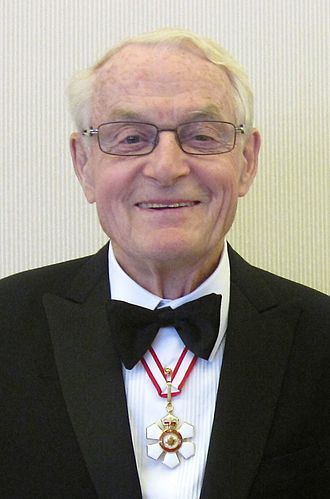 Donald Fraser合作论文数University of Toronto3M. Imbert合作论文数3
 Brunero Liseo合作论文数Dip. di studi geoeconomici, linguistici, statistici e storici, Università di Roma Sapienza3M. C. Marthinet合作论文数3
 Aad Van Der Vaart合作论文数Delft Institute of Applied Mathematics, Faculty of Electrical Engineering, Mathematics and Computer Science, Delft University of Technology3Ghislaine Gayraud合作论文数3
 Samantha Lowchoy合作论文数School of Mathematical Sciences;Queensland University of Technology;School of Mathematical Sciences, Queensland University of Technology3L. Prevot合作论文数3Isabelle Vauglin合作论文数3j borsenberger合作论文数2a ardeberg合作论文数2Emmanuel Grenier合作论文数2Botond Szabo合作论文数2Stefano Rizzelli合作论文数2n c martin合作论文数2




