The enhanced dexterity of the human hand is unique among primates, an ability that is traditionally thought to have evolved in response to tool-related behaviours and a release from the biomechanical constraints of locomotion in our bipedal hominin ancestors. However, recent fossil and archaeological evidence, as well as novel analyses, suggest that dexterity-related morphology and abilities evolved earlier that traditionally thought and that fossil hominins used their hands for locomotion until much later than presumed.
Morphological analysis of teeth found at Lida Ajer shows that these belong to Homo sapiens , indicating that modern humans were in Sumatra between 73,000 and 63,000 years ago.
Thick molar enamel is among the few diagnosticcharacters of hominins which are measurable infossil specimens. Despite a long history ofstudy and characterization of Paranthropusmolars as relatively ‘hyper-thick’, only a fewtooth fragments and controlled planes of section(designed to be proxies of whole-crown thick-ness) have been measured. Here, we measuremolar enamel thickness in Australopithecusafricanus and Paranthropus robustus usingaccurate microtomographic methods, recordingthe whole-crown distribution of enamel. Bothtaxa have relatively thick enamel, but are thin-ner than previously characterized based on two-dimensional measurements. Three-dimensionalmeasurements show that P. robustus enamelis not hyper-thick, and A. africanus enamel isrelatively thinner than that of recent humans.Interspecific differences in the whole-crowndistribution of enamel thickness influence cross-sectional measurements such that enamel thick-ness is exaggerated in two-dimensional sectionsof A. africanus and P. robustus molars. As such,two-dimensional enamel thickness measure-ments in australopiths are not reliable proxiesfor the three-dimensional data they are meantto represent. The three-dimensional distributionof enamel thickness shows different patternsamong species, and is more useful for theinterpretation of functional adaptations thansingle summary measures of enamel thickness.Keywords: hominin evolution; microtomography;enamel distribution1. INTRODUCTIONThick molar enamel is among the few diagnosticcharacters of hominins observable in the fossil record(e.g. Martin 1985; Strait et al. 1997). Relatively thickenamel distinguishes hominins from thin-enamelledAfrican apes, and enamel thickness is discussed in theseminal diagnosis of nearly every newly describedhominin taxon (e.g. Leakey et al. 2001; Senut et al.2001; Brunet et al. 2002). Thick molar enamel isoften associated with the mastication of hard orabrasive foodstuffs, although recent evidence indicatesthat enamel thickness may not relate directly to theprimary dietary strategies of hominins (Ungar et al.2008). Although much is said about thick enamel inhominins, few fossil molars have been measured usingstandardized techniques. Previous studies employedtooth fragments or cross sections produced manuallyor via medical CT (e.g. Beynon & Wood 1986;Grine & Martin 1988; Macho & Thackeray 1992;Schwartz et al. 1998). These cross sections weredesigned to yield proxy measures of the entire toothcrown, since medical imaging techniques were insuffi-cient to record the whole-crown measurements at thetime of their development (Martin 1985). These two-dimensional methods prohibit the examination ofenamel thickness distribution over the entire molarcrown (sensu Kono 2004; Olejniczak et al. 2008a).Recently, non-destructive three-dimensionalmicro-CT techniques have been applied to the studyof enamel thickness in several taxa, including recentand fossil hominoids (Kono 2004; Tafforeau 2004;Olejniczak et al. 2008a,b), recent humans (Suwa &Kono 2005), Neandertals (Olejniczak et al. 2008c)and fossil Homo sapiens (Smith et al. 2006, 2007).The australopith fossil record, however, has not beensystematically studied using modern techniques (e.g.Macchiarelli et al. 2004). Here, we measure molars oftwo australopith taxa (Australopithecus africanus andParanthropus robustus), with the aim of documentingfossil hominin enamel thickness using a whole-crown,three-dimensional technique. We also compare two-dimensional sections (analogous to those of previousstudies) with three-dimensional data, to assess theimpact of methodological differences on the enamelthickness measurements.2. MATERIAL AND METHODS
Thick molar enamel is among the few diagnostic characters of hominins which are measurable in fossil specimens. Despite a long history of study and characterization of Paranthropus molars as relatively 'hyper-thick', only a few tooth fragments and controlled planes of section (designed to be proxies of whole-crown thickness) have been measured. Here, we measure molar enamel thickness in Australopithecus africanus and Paranthropus robustus using accurate microtomographic methods, recording the whole-crown distribution of enamel. Both taxa have relatively thick enamel, but are thinner than previously characterized based on two-dimensional measurements. Three-dimensional measurements show that P. robustus enamel is not hyper-thick, and A. africanus enamel is relatively thinner than that of recent humans. Interspecific differences in the whole-crown distribution of enamel thickness influence cross-sectional measurements such that enamel thickness is exaggerated in two-dimensional sections of A. africanus and P. robustus molars. As such, two-dimensional enamel thickness measurements in australopiths are not reliable proxies for the three-dimensional data they are meant to represent. The three-dimensional distribution of enamel thickness shows different patterns among species, and is more useful for the interpretation of functional adaptations than single summary measures of enamel thickness.
 Thomas C. Terwilliger合作论文数Los Alamos National Laboratory8
 Jean-Jacques Hublin合作论文数Department of Human Evolution, Max Planck Institute for Evolutionary Anthropology6
 Andrew H.-J. Wang (王惠鈞)合作论文数Institute of Biological Chemistry, Academia Sinica6
 Anthony J. Olejniczak合作论文数Department of Human Evolution, Max Planck Institute for Evolutionary Anthropology, Deutscher Platz 6, D-04103 Leipzig, Germany5
 Warren S. Sandberg合作论文数Department of Anesthesiology, School of Medicine, Vanderbilt University Medical Center4
 Tanya M. Smith合作论文数Department of Human Evolution, Max Planck Institute for Evolutionary Anthropology, Deutscher Platz 6, D-04103 Leipzig, Germany4
 H. Bellamy合作论文数2
 J. Francis Thackeray合作论文数Evolutionary Studies Inst, Univ Witwatersrand2
 Alistair Evans合作论文数School of Biological Sciences, Faculty of Science, Monash University2N. H. Xuong合作论文数2
 Frederick E. Grine合作论文数Departments of Anthropology, Stony Brook University;Departments of Anthropology and Anatomical Sciences, Renaissance School of Medicine, Stony Brook University2Kottayil I Varughese合作论文数Department of Molecular and Experimental Medicine;Scripps Research Institute;Department of Molecular and Experimental Medicine, Scripps Research Institute2D.H. Leschnitzer合作论文数2Robin N.M. Feeney合作论文数Department of Human Evolution, Max Planck Institute for Evolutionary Anthropology, Deutscher Platz 6, D-04103 Leipzig, Germany2R. N. H. Konings合作论文数1Rnh Konings合作论文数1C.W. Gray合作论文数1Jm Whiteley合作论文数1J. de Vos合作论文数1John M. Whiteley合作论文数1David A. Matthews合作论文数1Bambang Sulistyanto合作论文数SMAN 6 Yogyakarta1
 Emma E. Bird合作论文数Sch Anthropol & Conservat, Univ Kent1Y Su合作论文数1Robert M. Sweet合作论文数Ctr BioMol Struct, Brookhaven Natl Lab1tom bray合作论文数1
 Alexander Synek合作论文数Institute of Lightweight Design and Structural Biomechanics, TU Wien1
 Jianxin Zhao合作论文数School of the Environment, Faculty of Science, The University of Queensland1
 Gilbert Price合作论文数School of the Environment, Faculty of Science, The University of Queensland1Aidan Couzens合作论文数School of Earth and Environment, University of Western Australia1
 Dunmore Christopher合作论文数Department of Anthropology, University College London1
 Benedikt Hallgrimsson合作论文数Department of Cell Biology and Anatomy, Cumming School of Medicine, University of Calgary1
 Ameline Bardo合作论文数UMR 7179 - CNRS/MNHN, Adaptive Mechanisms: From Organisms to Communities, Department of Ecology and Management of Biodiversity, 55 rue Buffon, 75321 Paris Cedex 5, France.1
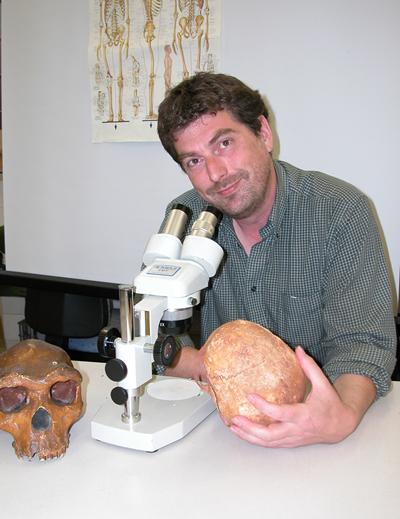 Alistair Pike合作论文数Department of Archaeology,University of Southampton1
 Alastair Key合作论文数Department of Archaeology, University of Cambridge1
 Gert Van den Bergh合作论文数1Tim Compton合作论文数1H Zhang合作论文数1
 James A. Hoch (James Hoch)合作论文数Department of Molecular Medicine, Scripps Research Institute1Leslie Kinsley合作论文数1M.J. Morwood合作论文数1
 Richard Bailey合作论文数Luminescence Dating Laboratory, School of Geography and the Environment, University of Oxford1Richard A. Lazenby合作论文数1R. Awe Due合作论文数1
 Philipp Gunz合作论文数Department of Human Evolution, Max Planck Institute for Evolutionary Anthropology, Deutscher Platz 6, D-04103 Leipzig, Germany1Jukka Jernvall合作论文数1
 Chris Stringer合作论文数Department of Research, Natural History Museum;Institute of Archaeology, University College London1
 Rosas González Antonio合作论文数Museo Nacional de Ciencias Naturales1
 Julien Louys合作论文数School of Biological and Earth Sciences, Liverpool John Moores University1




