We report on the conversion of the Manitoba II mass spectrometer into a versatile low-energy proton beam facility. This infrastructure is adaptable to any detector-under-test (DUT), and has proven itself effective with the characterization of silicon detectors used in subatomic beyond-the-Standard-Model (BSM) searches, namely the Nab experiment. A pencil beam of mono-energetic protons can be produced in a range from 25 keV to 35 keV, achieving a beam current of similar to 1 x 10-18 A. Electrostatic steering plates were constructed to direct the Gaussian-profile proton beam over a 117 mm diameter area-of-interest with full-width at half-maxima (FWHM) ranging from 0.6 mm to 1.26 mm. This work discusses the modifications and subsequent tests to confirm the beam specifications met the demands of the aforementioned detectors.
The Nab (Neutron a b) experiment is designed to measure the beta-antineutrino angular correlation in free neutron β decay with an ultimate precision goal of 0.1
A polarized neutron beam and the Nab spectrometer (pNAB) at the Spallation Neutron Source will enable simultaneous measurements of the beta (A) and neutrino (B) asymmetries in free neutron decay. Combined Nab and pNAB measurements of the correlation parameters a, A, and B will determine the axial-vector to vector coupling ratio in the weak interaction with a precision of about 0.025%. Neutrons are polarized with supermirror polarizers and analyzed with polarized 3He. Together with precise neutron lifetime measurements, these results will provide the most stringent test of Cabibbo-Kobayashi-Maskawa (CKM) matrix unitarity from free neutron decay.
Precision measurements of observables in neutron beta decay are used to test the standard model description of the weak interaction and search for evidence of new physics. The Nab experiment at the Fundamental Neutron Physics Beamline at the Spallation Neutron Source was constructed to measure correlations in neutron decay by utilizing an asymmetric spectrometer and novel detection system to accurately reconstruct the proton momentum and electron energy for each beta decay. This work describes the detection of neutron beta-decay products in the Nab spectrometer and presents the first full Dalitz plot representation of the phase space of neutron beta decay for all electrons >100 keV. In addition, new constraints are placed on a possible excited neutron state, hypothesized to explain the disagreement between the appearance and disappearance neutron lifetime techniques.
The Nab experiment aims to extract the neutron beta decay correlation coefficients 'a' and 'b'. This will be accomplished using a 7 m tall electromagnetic spectrometer which measures electron energies and proton momenta. Detection of electrons and protons resulting from neutron beta decay will be carried out using large-area, thick, highly-segmented, single-crystal silicon detectors. These detectors and accompanying electronics will be cooled by a recirculating, gaseous helium cooling system to below 150 K with +/- 0.5 K stability. We will motivate the need for detector cooling in the Nab experiment and discuss design and performance of this cooling system.
Precision measurements of observables in neutron β-decay are used to test the Standard Model description of the weak interaction and search for evidence of new physics. The Nab experiment at the Fundamental Neutron Physics Beamline at the Spallation Neutron Source was constructed to measure correlations in neutron decay by utilizing an asymmetric spectrometer and novel detection system to accurately reconstruct the proton momentum and electron energy for each β-decay. This work describes the detection of neutron β-decay products in the Nab spectrometer and presents the first full Dalitz plot representation of the phase space of neutron β-decay for all electrons >100 keV. In addition, new constraints are placed on a possible excited neutron state, hypothesized to explain the disagreement between the appearance and disappearance neutron lifetime techniques.
The current three sigma tension in the unitarity test of the Cabbibo-Kobayashi-Maskawa (CKM) matrix is a notable problem with the Standard Model of elementary particle physics. A long-standing goal of the study of free neutron beta decay is to better determine the CKM element Vud through measurements of the neutron lifetime and a decay correlation parameter. The Nab collaboration intends to measure a, the neutrino-electron correlation, with accuracy sufficient for a competitive evaluation of Vud based on neutron decay data alone. This paper gives a status report and an outlook.
The LANSCE accelerator complex exploits a flexible, high power 800 MeV proton linear accelerator to enable a broad swath of experimental work supporting multiple scientific programs. The beam requirements for these programs are diverse and change over time. The purpose of this document is to record, at a high level, the experimental requirements driving the beam delivery requirements for each experimental facility at LANSCE. Revision 0 serves to baseline the current set of experiments, and we expect to revise the document on an as-needed basis when either the experimental requirements change or are found to require a more complete definition.
We summarize recent progress in ultrafast Complementary Metal Oxide Semiconductor (CMOS) image sensor development and the application of neural networks for post-processing of CMOS and charge-coupled device (CCD) image data to achieve sub-pixel resolution (thus $super$-$resolution$). The combination of novel CMOS pixel designs and data-enabled image post-processing provides a promising path towards ultrafast high-resolution multi-modal radiographic imaging and tomography applications.
The Nab experiment at Oak Ridge National Laboratory, USA, aims to measure the beta-antineutrino angular correlation following neutron 0 decay to an anticipated precision of approximately 0.1%. The proton momentum is reconstructed through proton time-of-flight measurements, and potential systematic biases in the timing reconstruction due to detector effects must be controlled at the nanosecond level. We present a thorough and detailed semiconductor and quasiparticle transport simulation effort to provide precise pulse shapes, and report on relevant systematic effects and potential measurement schemes.
 Russell Mammei合作论文数7Alexander Saunders合作论文数Oak Ridge National Laboratory7Nadia Fomin合作论文数7
 Leah Broussard合作论文数Fundamental Nuclear and Particle Physics Section, Physics Division, Physical Sciences Directorate, Oak Ridge National Laboratory7Stefan Baeßler合作论文数7Grant Riley合作论文数6Aaron Jezghani合作论文数6
 Christopher Crawford合作论文数Department of Physics and Astronomy, College of Arts and Sciences, University of Kentucky6
 C. L. Morris合作论文数6E. S. Smith合作论文数Thomas Jefferson National Accelerator Facility6Nick Macsai合作论文数5
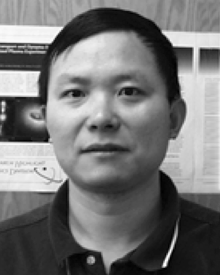 Zhehui Wang (王哲晖)合作论文数Los Alamos National Laboratory5
 Ricardo Alarcon合作论文数Department of Physics, Arizona State University5
 N. Birge合作论文数Los Alamos National Laboratory4Francisco Gonzalez合作论文数4Marion Gericke合作论文数Laboratorium voor Fysiologie, KU Leuven4Mark McCrea合作论文数3D. Pocanic合作论文数3Randy Spaulding合作论文数3A. R. Young合作论文数3A.R. Young合作论文数3Steven M Clayton合作论文数University of Illinois at Urbana-Champaign3Jin Ha Choi合作论文数2Dale Carver合作论文数2G. Hogan合作论文数2kiwhan chung合作论文数2Fesseha G. Mariam合作论文数2August Mendelsohn合作论文数2Austin Nelsen合作论文数2
 Sky Sjue合作论文数Los Alamos Natl Lab2Matthew Frost合作论文数Oak Ridge Natl Lab, Neutron Technol Div2
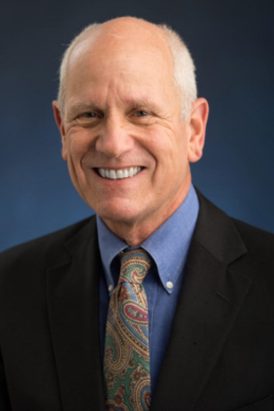 Timothy Chupp合作论文数Department of Physics, College of Literature, Science, and the Arts, University of Michigan2Frederick Wysocki合作论文数2Matthew Murray合作论文数2Bradley Plaster合作论文数2
 Dinko Počanić合作论文数Department of Physics, School of Data Science, University of Virginia;Institute of Nuclear and Particle Physics, University of Virginia2
 Steven J Greene合作论文数Texas Tech University2
 Erik B Iverson合作论文数Spallation Neutron Source, Oak Ridge National Laboratory2
 Laurie Waters合作论文数2Hye Lee合作论文数1L. Hayen合作论文数1S. J. Greene合作论文数1
 Kathy Prestridge合作论文数Los Alamos National Laboratory1Ellen M. O'Brien合作论文数1mary m sandstrom合作论文数1Jason Fry合作论文数1Seppo Penttila合作论文数1Deion Elgin Fellers合作论文数1tony andrew forest合作论文数1




