Large-size Resistive Micromegas have been chosen for the upgrade of the forward muon spectrometer of the ATLAS experiment, the New Small Wheel project. These chambers, together with small-strip Thin Gap Chambers (sTGC), allow reconstruction of high-momentum muon tracks in a high-radiation environment and provide a robust low-threshold single-muon trigger. A collaboration of seven INFN units built 32 SM1 type chambers, corresponding to one fourth of the total number needed for this upgrade. Each SM1 chamber has a surface of approximately 2 m2 and four sensitive layers. The production was shared among five INFN construction sites and it was completed in fall 2020. The construction methods, as well as the results of the quality tests done on components of the detector and on the assembled chambers, are reported in the present paper.
Large volume Liquid Argon Time Projection Chambers (LAr-TPC) are used and proposed for neutrino physics and rare event search. Most of these detectors make use of the scintillation light of liquid argon for trigger purposes. Two different approaches can be adopted to provide these detectors with an effective trigger system, relying upon analog or digital processing of signal coming from photodetectors, like photomultiplier tubes or silicon photomultipliers. Each method presents advantages and drawbacks, so the implementation of a hybrid solution can benefit from both approaches. To this purpose, an innovative electronic board prototype has been designed and proposed for the use in large volume LAr-TPC detectors.
The Italian National Centre of Hadrontherapy for Cancer Treatment (CNAO -Centro Nazionale di Adroterapia Oncologica) in Pavia, Italy, has started the treatment of selected cancers with the first patients in late 2011. In the coming months at CNAO plans are to activate a new dedicated treatment line for irradiation of uveal melanomas using the available active beam scan. The beam characteristics and the experimental setup should be tuned in order to reach the necessary precision required for such treatments. Collaboration between CNAO foundation, University of Pavia and INFN has started in 2011 to study the feasibility of these specialised treatments by implementing a MC simulation of the transport beam line and comparing the obtained simulation results with measurements at CNAO. The goal is to optimise an eye-dedicated transport beam line and to find the best conditions for ocular melanoma irradiations. This paper describes the Geant4 toolkit simulation of the CNAO setup as well as a modelised human eye with a tumour inside. The Geant4 application could be also used to test possible treatment planning systems. Simulation results illustrate the possibility to adapt the CNAO standard transport beam line by optimising the position of the isocentre and the addition of some passive elements to better shape the beam for this dedicated study.
 A. Rimoldi合作论文数Univ Pavia3B. Marino合作论文数2Cristina Riccardi合作论文数Dipartimento di Fisica, Università di Pavia2F Parente合作论文数2E. Romano合作论文数2Antonio Ardizzoia合作论文数2Giovanni Ucci合作论文数2
 Roberto Moretti合作论文数2M. Del Gaudio合作论文数1Sansoni A合作论文数1b ponzio合作论文数1G. Rovelli合作论文数1L. Vannoli合作论文数1I. Bashta合作论文数1M. T. Camerlingo合作论文数1C. Arcangeletti合作论文数1L. Pezzotti合作论文数1F. Vercellati合作论文数1G. Capradossi合作论文数1M Petruccetti合作论文数1P. Piersimoni合作论文数1O. Barnaba合作论文数1A. Iaciofano合作论文数1S. Cerioni合作论文数1D. Calabro合作论文数1J. Agarwala合作论文数1
 Edisher Tskhadadze合作论文数1E. Vilucchi合作论文数1S. Gigli合作论文数1B. De Fazio合作论文数1C. Scagliotti合作论文数1F Perna合作论文数1S. Bargiggia合作论文数1G. Pontoriere合作论文数1C. Cassese合作论文数1I. Saracino合作论文数1T. Vassilieva合作论文数1G. Pileggi合作论文数1A. Mirto合作论文数1
 Fabrizio Petrucci合作论文数Dipartimento di Matematica e Fisica, Università Roma Tre1
 S. Sottocornola合作论文数INFN, Pavia, Italy1roberto di nardo合作论文数1
 Fabio Anulli合作论文数Istituto Nazionale di Fisica Nucleare1
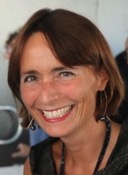 Daniela Rebuzzi合作论文数Dipartimento di Fisica, Università degli Studi di Pavia;INFN Sezione di Pavia;CERN1
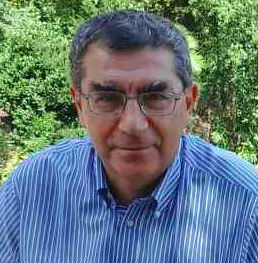 Vincenzo Canale合作论文数Dipartimento di Fisica, Università degli Studi di Napoli Federico II1
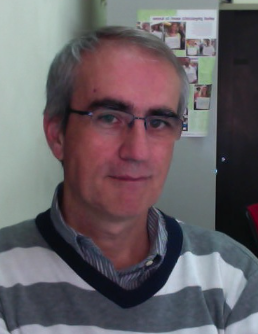 Cesare Bini合作论文数Dipartimento di Fisica, Facoltà di Scienze Matematiche, Fisiche e Naturali, Sapienza Università di Roma1
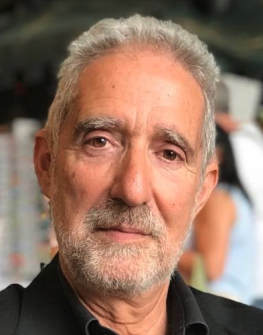 Antonio Baroncelli合作论文数Istituto Nazionale di Fisica Nucleare;Roma TRE University1
 Valentina Vecchio合作论文数1S. Auricchio合作论文数1




