ABSTRACT Catch‐and‐release fishing campaigns have aided in fish conservation. In some cases, this success has perversely led to the decline of trophy fish via increased fish density. Little information exists on how to best address such cases of widely spread, but imperfectly implemented, social norms in fisheries. Our study tested a variety of message sources to establish the most effective format for changing angler behaviour. A survey experiment was administered online to licensed anglers in Wisconsin, Florida, and Missouri. All respondents were asked about their anticipated future behaviour regarding selective harvest after viewing at least two placebo videos related to fishing. Individuals in the treated groups watched a short additional video about the benefits of selective harvest, with the sole difference between treatments being the title given to the primary speaker. Anglers were significantly more likely to keep a small or big fish when presented with information on selective harvest regardless of the information source compared to not being provided information on selective harvest, except in the scenario of ‘at a fishery known for small fish, catch a big fish’. Anglers were significantly more likely to keep a small or big fish when presented with any information on selective harvest versus not, except in the scenario of ‘at a fishery known for small fish, catch a big fish’. Our results suggested that any information on selective harvest (contingent on anglers receiving it as was forced by our experimental design) had the potential to increase the likelihood of keeping a small fish. An overall reluctance to keep any size of fish was evident, particularly for big fish. Lingering reluctance to keep fish suggests a need for further research regarding revealed behavioural changes in response to education to promote selective harvest to satisfy diverse anglers desires of higher catch rates and trophy potential.
We examine recreational fisher behaviour and recreational fishery systems through the lens of an ecologist to understand the dynamical properties of these social-ecological systems. From the perspective of an ecologist, recreational fishers and the fish they capture can be viewed as analogous to predator-prey systems. Our understanding of predator-prey interactions is supported by a richness of empirical and conceptual research, primarily developed within sub-fields of behavioural, population, and community ecology. We develop this analogy between predator-prey ecology and fisher behaviour by examining the key underlying processes within a conceptual framework based on simple models. We then characterize several processes inherent to recreational fisheries that can, at least in part, decouple these simple predator-prey interactions. We examine the impacts on fisher behaviour and fishery outcomes of non-random spatial distributions of fishers and fish, heterogeneity of fisher behaviour, and multi-species fisheries, and develop an enhanced framework to understand these dynamic interactions. Population ecology and density-dependent feedbacks are important concepts underlying fish population dynamics, and also set limits to the sustainability of fisher harvest. Predator-prey theory is helpful in understanding fisher behaviour and its feedback with fish production, fishery quality, and sustainability. As fishers often prefer larger sizes in their catch, the predator-prey dynamic involves ecological concepts related to life-history theory and size-structured interactions. Although some recreational fisheries target a single species, many involve multi-species fisheries, such that food web theory is also important in understanding ecological feedbacks between fisher behaviour and fishery outcomes. In addition, individual recreational fisheries are typically embedded within landscapes of alternative fisheries, so the spatial configuration of fishing opportunities and the spatial behaviour of fishers is central in understanding fishery outcomes across landscapes. We discuss field methods used to measure fisher behaviour and provide empirical examples from well-studied recreational fisheries. Field methods to measure catchability, catch-per-unit effort, and landscape distribution of fisher effort are informed by the ecological theory of functional and numerical responses. Methods and implications of catch-and-release behaviour, multi-species fisheries, and non-catch related fisher site choice are discussed as related to our understanding of fisher behaviour and fisheries outcomes.
Objective Lake Talquin and its tailrace located below the Jackson Bluff Dam provide a popular Striped Bass Morone saxatilis fishery in the Florida panhandle. The system also serves as an important broodfish repository for hatchery programs participating in Striped Bass restoration efforts throughout their Gulf of Mexico range. In recent years, larger Striped Bass required for spawning purposes have become increasingly rare. We sought to understand the underlying causes behind the reduction of larger size-classes.Methods Water temperatures and dissolved oxygen concentrations of creeks used as thermal refuge in Lake Talquin were measured during the summer of 2020 to evaluate summer habitat quality. A total of 201 Striped Bass were tagged with high-dollar-reward dart tags in Lake Talquin and below the Jackson Bluff Dam from December 2020 to February 2021 to investigate angling exploitation. An age sample was collected from December 2021 to January 2022 to examine population structure.Results Marginal thermal and dissolved oxygen refuge exists for adult Striped Bass in Lake Talquin, and this refuge appears to be transitory in space and time. Annual exploitation was 25%, and there was evidence of substantial population connectivity between Lake Talquin and the lower Ochlockonee River via dam escapement. Exploitation was focused below the dam and limited to two cohorts of fish, and the harvest rate was greater for fish of larger sizes. The age sample showed that Striped Bass in Lake Talquin appear to be growing rapidly until age 3 before experiencing high levels of mortality.Conclusions Marginal summer habitat is likely contributing to high levels of natural mortality and the reduction of larger size-classes. The truncated age structure is likely to degrade further if conditions worsen. This directed research indicated that changes in the management strategies were warranted to conserve this population in the wake of a changing climate. Impacts from a changing climate pose threats for a population of Striped Bass that are critical for the conservation of this species throughout their existing Gulf of Mexico range. As a result, changes in management strategies for this fishery are warranted.
Salinity regimes in coastal ecosystems are highly dynamic and driven by complex geomorphic and hydrological processes. Estuarine biota are generally adapted to salinity fluctuation, but are vulnerable to salinity extremes. Characterizing coastal salinity regime for ecological studies therefore requires representing extremes of salinity ranges at time scales relevant to ecology (e.g., daily, monthly, and seasonally). Here, we propose a framework for modeling coastal salinity with these overall goals: (1) quantify uncertainty in salinity associated with important terrestrial and oceanographic drivers, (2) examine time scales of salinity response to river streamflow events, and (3) predict salinity continuously over space at key time scales. Salinity is modeled as quantile surfaces related to river discharge, tidal dynamics, wind, and spatial location, applied to Suwannee Sound estuary, FL, USA, where salinity has been monitored spatially since 1981. Each quantile level is regressed independently, and together they comprise a distribution of salinity uncertainty across space, with upper and lower quantiles describing salinity extremes. Effects of physical drivers on salinity are compared through four base models with various combinations of tide and wind variables, each including spatial coordinates and a single streamflow metric (in cubic meters per second). Multiple time scales of streamflow are considered by taking means across various periods, from 1 to 12 days, and at various lagged intervals prior to salinity sample, totaling 144 streamflow metrics. We found that the Suwannee coastal salinity regime is dynamic at multiple time scales and varies nonlinearly across space from the river effluence outward. Salinity increases nonlinearly with decreasing river flow rates below 200 m(3)/s, most prominently in the lower quantiles of salinity (t = 0.05-0.25). Wind appears to have a stronger influence on salinity than astronomic tides for this estuary. The regression approach developed here can be applied to any coastal system that has sufficient spatial and temporal monitoring coverage to capture multiple flood and drought events. It is implemented with a simple R routine, and is less computationally-intensive than finite difference hydrodynamic modeling. The characterizations of salinity uncertainty developed in these analyses can be directly applied to future studies of fish and wildlife responses to changes in watershed management.
Recreational fishing is especially important to Florida’s economy and ecosystems. One of the most important metrics of recreational fisheries is “effort”—defined as the number of trips taken during a time and place. Effort is so important because it directly affects fish population sustainability, economic value and market activity. But what determines fishing effort? This publication describes the mechanisms that drive fishing effort. It specifically details the processes by which management actions can directly and indirectly affect fishing effort, and how feedbacks between these actions can change effort. The information in this document is critical for people involved with management decisions, like agency personnel and their stakeholders; those wanting to explain it to others, like extension agents; directly affected stakeholders like recreational fishers and guides; or simply the general public who want to know more about recreational fisheries in Florida.
Commercialized harvest for invasive species offers a compelling solution to control their abundances and reduce their impacts on ecosystems. However, reducing an invasive species’ population will reduce their catch rates and can make their harvest uneconomical. We examined this apparent paradox with a bioeconomic case study of invasive lionfish ( Pterois volitans ) on artificial reefs in the northeastern Gulf of Mexico (nGOM). Different methodological approaches provided the first estimates for the intrinsic growth rate ( r ) and environmental carrying capacity ( K ) of the nGOM lionfish population. With these estimated parameters, we calculated open access equilibrium (OAE) solutions for stock, yield, and effort, and then assessed what harvest levels would be needed to deplete the population beyond maximum sustainable yield (MSY). Overall, lionfish demonstrated strong compensation and were robust to fishing pressure. The r -values estimated suggest that lionfish densities may be hyperstable on artificial reefs, and the range of estimated K -values indicated uncertainty regarding the level of natural population control. Our models projected that a stable OAE fishery could develop, but that the potential profits in the fishery were relatively small. Under current market conditions, harvest at the estimated OAE solution produced annual yields slightly less than MSY. Alternative market scenarios simulated further decreases in lionfish biomass if the ex-vessel price was higher or fishing costs were lower, and we discuss private and public mechanisms that could incentivize fishing efforts via product marketing, value-added products, or subsidies. Collectively, these models provide estimates of life history parameters for understanding lionfish population dynamics and harvest, examine fundamental assumptions for commercialized invasive species harvest, and explore how economic strategies could support invasive species control.
Despite the widespread use of stock enhancements to improve fisheries across the world, there is a lack of robust knowledge under which conditions fish stocking provides additive effects rather than merely replacing a fraction of natural recruitment. Fully controlled and replicated studies at the level of entire ecosystems are needed to provide answers. Properly monitored experimental releases also allow testing mechanisms of density- and size-dependent population regulation. In this study, the population-level outcome of stocking juvenile pike (Esox lucius L.) in naturally reproducing lentic stocks was investigated. We used a replicated before-after-control-impact design in 15 experimental lakes involving two stocking densities and unstocked controls. Releasing age-0 pike failed to generate additive effects at the age-2 cohort. As expected from theory, we observed density-dependent mortality and differential survival of wild and stocked pike. Stocked and wild fishes showed contrasting responses in terms of growth to variation in predator density, competitor density and the forage base, suggesting both subpopulations differed in their response to stocking-induced changes in population traits (e.g., density). Despite the lack of additive effects caused by stocking, a fraction of the stocked individuals established in the stock-enhanced cohort, indicating that replacement of wild recruits by stocked conspecifics had occurred. Depending on the origin of the stocking material, pike stocking thus has the potential for genetic hybridization, while not necessarily benefiting fisheries catch. We conclude that whenever a natural pike population exists, stocking juvenile pike will not produce additive effects in lakes and that enhanced pike populations will be strongly regulated by size- and density-dependent juvenile mortality and less by density-dependent growth.
The Diamond-backed Terrapin (Malaclemys terrapin) inhabits coastal islands along the Gulf coast of Florida (sometimes in numbers > 100), but factors associated with terrapin occurrence on islands are poorly understood. We conducted a study of terrapin occupancy on coastal islands in the Suwannee Estuary in Florida. We used remote sensing to assess 24 discrete islands, and in 2017-2018 we conducted terrapin surveys twice per year on each island. Our results indicated that terrapin occurrence was negatively associated with increased forest coverage and positively associated with increased distance from the mainland, whereas other characteristics we measured (e.g., island size, mangrove coverage, and grass coverage) were not relevant predictors of terrapin occurrence. Overall, terrapins potentially occupy more isolated islands that are less likely inhabited by predators. Although more research is needed, this is potentially a conservation concern because these islands may lose their suitability due to sea-level rise, forcing terrapins to relocate to potentially less suitable habitats that could negatively affect nesting, survival rates, and population persistence.
Environmental pressures can influence recruitment of estuarine fishes by impacting growth and survival of juveniles as well as adult habitat use and behavior. Identifying potential drivers of year-class strength is an important tool for assessing stock health and implementing management decisions. The goal of this study was to determine how environmental factors and adult stock influence trends in recruitment of Spotted Seatrout Cynoscion nebulosus in Cedar Key, Florida. Juvenile indices of abundance were generated using sampling data from the Florida Fish and Wildlife Conservation Commission's Fisheries-Independent Monitoring program. Young-of-the-year indices of abundance suggested that annual recruitment was variable in this system and declined throughout the majority of the 1996-2018 time series. Adult abundance and water temperature in the spawning season were the most significant variables in predicting Spotted Seatrout recruitment, and both had positive relationships with recruitment. Salinity and river discharge were not significant environmental variables in predicting year-class strength of Spotted Seatrout in this study. Our results indicated that recruitment was associated with interannual changes in water temperature and adult abundance, which could be used to explore how Spotted Seatrout recruitment dynamics could vary for stock assessments, for management decisions, and as a result of warming waters due to climate change.
Climate change is transforming ecosystems and affecting ecosystem goods and services. Along the Gulf of Mexico and Atlantic coasts of the southeastern United States, the frequency and intensity of extreme freeze events greatly influence whether coastal wetlands are dominated by freeze-sensitive woody plants (mangrove forests) or freeze-tolerant grass-like plants (salt marshes). In response to warming winters, mangroves have been expanding and displacing salt marshes at varying degrees of severity in parts of north Florida, Louisiana, and Texas. As winter warming accelerates, mangrove range expansion is expected to increasingly modify wetland ecosystem structure and function. Because there are differences in the ecological and societal benefits that salt marshes and mangroves provide, coastal environmental managers are challenged to anticipate the effects of mangrove expansion on critical wetland ecosystem services, including those related to carbon sequestration, wildlife habitat, storm protection, erosion reduction, water purification, fisheries support, and recreation. Mangrove range expansion may also affect wetland stability in the face of extreme climatic events and rising sea levels. Here, we review the current understanding of the effects of mangrove range expansion and displacement of salt marshes on wetland ecosystem services in the southeastern United States. We also identify critical knowledge gaps and emerging research needs regarding the ecological and societal implications of salt marsh displacement by expanding mangrove forests. One consistent theme throughout our review is that there are ecological trade-offs for consideration by coastal managers. Mangrove expansion and marsh displacement can produce beneficial changes in some ecosystem services, while simultaneously producing detrimental changes in other services. Thus, there can be local-scale differences in perceptions of the impacts of mangrove expansion into salt marshes. For very specific local reasons, some individuals may see mangrove expansion as a positive change to be embraced, while others may see mangrove expansion as a negative change to be constrained.
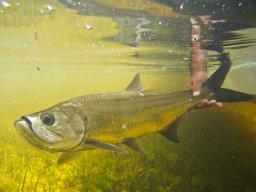
Tropical and subtropical coastal flats are shallow regions of the marine environment at the intersection of land and sea. These regions provide myriad ecological goods and services, including recreational fisheries focused on flats-inhabiting fishes such as bonefish, tarpon, and permit. The cascading effects of climate change have the potential to negatively impact coastal flats around the globe and to reduce their ecological and economic value. In this paper, we consider how the combined effects of climate change, including extremes in temperature and precipitation regimes, sea level rise, and changes in nutrient dynamics, are causing rapid and potentially permanent changes to the structure and function of tropical and subtropical flats ecosystems. We then apply the available science on recreationally targeted fishes to reveal how these changes can cascade through layers of biological organization-from individuals, to populations, to communities-and ultimately impact the coastal systems that depend on them. We identify critical gaps in knowledge related to the extent and severity of these effects, and how such gaps influence the effectiveness of conservation, management, policy, and grassroots stewardship efforts.
Theoretical, field-based, and experimental research all suggest that animal populations remain relatively stable under increasing habitat alteration until a critical threshold is reached, after which small changes to habitats result in large negative responses. However, there are few empirical examples demonstrating this in marine fishes, making identification of such thresholds difficult. Here, we synthesized long-term (25 + year) fisheries and habitat datasets across four estuaries in Florida (USA) to examine the combined effects of a once in ninety-year cold spell and habitat alterations on populations of an estuarine dependent fish, common snook (Centropomus undecimalis). In Florida, common snook support an important recreational fishery where harvest is well-managed. Common snook populations in three estuaries with less severe habitat alterations recovered to pre-disturbance levels within 4 years of the cold spell. However, in the estuary with the most extensive habitat alteration-including 34% loss of mangrove habitats, near complete loss or fragmentation of saltmarsh habitats, a 65,000 acre seagrass die-off, and eutrophication-the common snook population had yet to recover 8 years after the cold spell. Using a life-stage explicit approach, habitat alterations affecting early life history processes (i.e., juvenile survival and larval settlement) may be responsible for decreased resilience. This study highlights the need for fisheries management to consider habitat loss and disturbance, along with harvest in stock assessment and management processes. Adopting policies to protect and restore habitats will improve fish population resiliency to disturbance, thereby mitigating non-linear and costly declines to fisheries.
The assessment of the stock status of inland artisanal fisheries is extremely difficult due to limited or absent historical data on catch, effort, or recruitment. Most of these fisheries are considered potentially overfished due to their "open-access" nature and poor management. Alternately, fishing below maximum yield could cause a loss in potential yield as well as food supply for local communities. The Giant Cichlid Petenia splendida has been considered to be overexploited in Guatemala. Our objective was to measure fishing mortality using a passive tagging study with reward tags for the Giant Cichlid fishery in Lake Peten Itza to explore the potential for overfishing. In total, 24% of the tags were returned, and the return rate increased with the value of the reward (similar to US$6, $12, $18, and $25). We explored two reporting rate scenarios. Exploitation rate was estimated as 0.36 when the reporting rate was 100% and 0.48 when the reporting rate was 75%. A sensitivity analysis for yield-per-recruit and spawning potential ratio models indicated that this fishery was below the maximum sustainable yield without recruitment overfishing risk under both scenarios; thus, more stringent regulations are not required at this time. Moreover, under a conservative scenario, exploitation rates could increase yield by up to 40% for fish over 240 mm, suggesting the potential for increased resource utilization without causing growth or recruitment overfishing, and should not exceed 60% with fish under 220 mm TL. This study provides a preliminary assessment of the size limit and harvest rate that can prevent overfishing of the Giant Cichlid. Similar tag reward methods can be effectively applied to assess artisanal fisheries. The underfished condition in this fishery demonstrates that open-access fisheries are not always overexploited, and there is a need for a better understanding of local regulations' effectiveness and the role of social and economic factors influencing artisanal fisher behavior.
The ecology of estuaries is shaped significantly by the extent of freshwater discharge which regulates abiotic processes and influences overall biological productivity. The Suwannee River Estuary of Florida's Big Bend Coastline has historically been a productive and diverse estuarine ecosystem supported by significant freshwater inputs from the Suwannee River. In recent years, significant changes in land use and climatic conditions have resulted in lower discharges from the Suwannee. Our objectives were to explore the impact of freshwater inputs from the Suwannee River on the estuarine forage fish and sportfish communities downstream. We built a trophic-dynamic food web model in Ecopath with Ecosim to simulate different levels of discharge and evaluate how changes in discharge (drought and floods) would influence the trophic structure of the food web. Using the fitted model, we applied a series of different short-term and long-term flow projections under different climatic scenarios to evaluate impacts on fish functional groups and sportfish biomass. Simulations suggested that ecological production was more influenced by drought conditions than flood conditions. In our short-term scenarios, the drought simulations produced biomass changes that were approximately twice as substantial as the flood scenarios. When making comparisons to other published EwE models, we generally observed smaller changes in biomass production. Although this model focused on the influence of bottom-up effects, we observed strong top-down control of snook (Centropomus undecimalis) on the system. Several functional groups were particularly sensitive to changes in snook abundance which included spotted seatrout (Cynoscion nebulosus), sand seatrout (C. arenarius), and other members of the family Sciaenidae. Because snook have recently colonized the estuary, likely as a result of warmer winter temperatures, this finding has implications for climate change and natural resource management.
In the Western Indian Ocean (WIO) region, information and data on marine recreational fisheries (MRF) is lacking, which undermines efforts towards their sustainable development. Our paper reviews the challenges and opportunities for sustainably developing marine recreational fisheries in the WIO. We identified several challenges that are discussed in two broad categories: (i) governance and (ii) socio-cultural and economic. We also show that addressing these challenges requires a holistic understanding of the socio-ecological complexities and the multi-scale nature of WIO MRF. Realizing the potential for sustainable development of this sector calls for the involvement of coastal communities in the sharing of benefits and decision-making. Further, coordinated efforts between the multi-government agencies and non-governmental organizations is critical for integrating recreational fisheries into local and national agendas. We conclude that the sustainable development of MRF in the WIO region is possible. Still, such growth will be dependent upon the sustained capacity building of coastal communities and indigenous fishers, collaboration from stakeholders, and the long-term sustainability of the resource.
Inland recreational fishing, defined as primarily leisure-driven fishing in freshwaters, is a popular pastime in the USA. State natural resource agencies endeavor to provide high-quality and sustainable fishing opportunities for anglers. Managers often use creel and other angler survey data to inform state- and waterbody-level management efforts. Despite the broad implementation of angler surveys and their importance to fisheries management at state scales, regional and national coordination among these activities is minimal, limiting data applicability for larger-scale management practices and research. Here, we introduce the U.S. Inland Creel and Angler Survey Catalog (CreelCat), a first-of-its-kind, publicly available national database of angler survey data that establishes a baseline of national inland recreational fishing metrics. We highlight research and management applications to help support sustainable inland recreational fishing practices, consider cautions, and make recommendations for implementation.
Discard mortality can make fishing unsustainable, even in catch-and-release or highly regulated fisheries. However, fishing practices and gears that minimize hook injury, handling, and air exposure can considerably improve fitness and survival in released fish. This study tested whether modified hooks could allow anglers to successfully land and then release fish in the water and without handling. Standard, barbless, and bite-shortened hooks were used to catch Spotted Seatrout Cynoscion nebulosus (n > 75 per hook type), and logistic models were used to assess the differences in landing success and hook self-release success by hook type and categorical fish size. Average landing success was >90% with all three hook types. Bite-shortened hooks were able to successfully self-release from 87% of landed fish, compared to success rates of 47% using barbless hooks and 20% using standard hooks. Small fish had higher rates of both unintentional release during reel-in and intentional handling-free release boatside. Size selectivity by hook type was not observed. Continued gear testing of bite-shortened hooks appears warranted with other lure types, fish species, and a diversity of anglers. With further validation, self-releasing hooks could allow for recreational fishing opportunities in sensitive fisheries or areas, e.g., no-take aquatic reserves, with minimal discard effects.
Understanding trends in abundance is important to fisheries conservation, but techniques for estimating streamwide abundance of cryptic fishes with strong habitat-abundance relationships are not well established and need further development. We developed techniques for addressing this need using the Harlequin Darter Etheostoma histrio, a small, cryptic freshwater fish associated with submerged wood in streams. Our objectives were to (1) determine how Harlequin Darter abundance and the amount of submerged wood were related at sampled sites and (2) use this relationship to estimate Harlequin Darter abundance at unsampled sites and extrapolate Harlequin Darter abundance estimates and associated uncertainty streamwide. We conducted a mark-recapture study to estimate abundance of Harlequin Darters in 25-m stream reaches at 24 sites in Big Escambia Creek (BEC) and 18 sites in Pine Barren Creek (PBC) (Escambia River tributaries in northwestern Florida). The number of wood pieces (submerged wood >= 1.5 m long and >= 0.25 m in circumference) in both creeks was counted and mapped using side-scan sonar and a geographic information system. Harlequin Darter and wood data were used in a Bayesian multinomial mixture model to estimate site abundance of Harlequin Darters, to determine the relationship between wood and Harlequin Darter abundance, and to extrapolate Harlequin Darter abundance streamwide. We found a positive relationship between wood and Harlequin Darter abundance in both creeks, and there were more wood pieces in PBC than in BEC. Streamwide abundance of Harlequin Darters was greater in PBC than in BEC. The extrapolated streamwide abundance estimates were 9,369 Harlequin Darters (95% credible interval = 6,668-13,402) in PBC and 7,439 Harlequin Darters (95% credible interval = 4,493-11,226) in BEC. Our methods effectively estimated abundance of a small, cryptic fish that uses complex wood habitat. In addition, our findings may assist in the conservation of the Harlequin Darter.
 Robert Ahrens合作论文数21Mark W. Rogers合作论文数14Matthew J. Catalano合作论文数11
 Daniel C. Gwinn合作论文数Department of Biological Sciences, Towson University11
 Robert Arlinghaus合作论文数Department of Biology and Ecology of Fishes, Leibniz-Institute of Freshwater Ecology and Inland Fisheries9Wesley F. Porak合作论文数9
 David D Chagaris合作论文数School of Forest, Fisheries and Geomatic Sciences, University of Florida8
 Leandro E. Miranda (Steve Miranda)合作论文数College of Forest Resources, Division of Agriculture, Forestry, and Veterinary Medicine, Mississippi State University8
 William E. Pine合作论文数School of Forest Resources and Conservation, University of Florida7Randall Myers合作论文数7Andrew C. Dutterer合作论文数6
 Janice Kerns合作论文数Wisconsin Cooperat Fishery Res Unit, Univ Wisconsin6Holden E. Harris合作论文数6
 Stephanie Shaw合作论文数Department of Environmental Science, Policy, and Management, University of California6
 Timothy F. Bonvechio合作论文数6Kimberly I. Tugend合作论文数6William F. Patterson合作论文数5w e pine合作论文数5
 Bryan G. Matthias合作论文数5
 Edward Camp合作论文数School of Forest Resources and Conservation, University of Florida5
 Kyle Wilson合作论文数Department of Psychology, University of Canterbury5
 Carl Walters合作论文数Institute for the Oceans and Fisheries, Faculty of Science, The University of British Columbia;Department of Zoology, Faculty of Science, The University of British Columbia5
 John Hargrove合作论文数DSI-NRF Centre of Excellence in Epidemiological Modelling and Analysis, Stellenbosch University5
 Taylor Hunt合作论文数Department of Primary Industries, Marine and Freshwater Fisheries Research Institute5
 John Douglas合作论文数5
 Brandon C. Thompson合作论文数4
 James M. Long合作论文数4
 Michael J. Maceina合作论文数School of Fisheries and Allied Aquacultures, Auburn University4
 Paul Brown合作论文数4T. Douglas Beard合作论文数US Geol Survey, Natl Climate Change & Wildlife Sci Ctr4Michael D. Netherland合作论文数4Nicholas A. Trippel合作论文数4
 Steven M. Sammons合作论文数4Kimberly I. Bonvechio合作论文数4
 Michael D. Tringali合作论文数4s l shaw合作论文数3
 Timothy Birdsong合作论文数3
 Olaf L. F. Weyl合作论文数Dept Ichthyol & Fisheries Sci, Rhodes Univ3
 Zachary Siders合作论文数School of Forest, Fisheries, and Geomatics Sciences, University of Florida3
 Kai Lorenzen合作论文数School of Forest, Fisheries, and Geomatics Sciences, University of Florida3
 Steven Cooke合作论文数Department of Biology, Carleton University;Institute of Environmental and Interdisciplinary Science, Carleton University3
 Len M. Hunt合作论文数Ontario Ministry of Natural Resources, Centre for Northern Forest Ecosystem Research3Brandon L. Barthel合作论文数3
 Joseph E. Hightower合作论文数United States Geological Survey;North Carolina Cooperative Fish and Wildlife Research Unit;Department of Biology;North Carolina State University;Department of Biology, North Carolina State University3Jason R. Dotson合作论文数3
 Aaron J. Adams合作论文数Center for Fisheries Enhancement;Mote Marine Laboratory;Mote Marine Laboratory, Center for Fisheries Enhancement3Travis Tuten合作论文数3Fiona D Johnston合作论文数3
 Cory Suski合作论文数Department of Natural Resources and Environmental Sciences, College of Agricultural, Consumer and Environmental Sciences, University of Illinois at Urbana-Champaign3




