Abstract I propose a method for linking archaeological or historical evidence with research on urban resilience today. The greatest harms from climate change—the most severe negative impacts on the greatest numbers of people—occur in cities, particularly cities in the Global South. How can archaeology and history contribute to this topic? I begin with the literature on contemporary urban adaptations to climate change, and highlight a list of twenty-one adaptation measures identified in the latest report by the IPCC (Intergovernmental Panel on Climate Change). I select four of these adaptation measures—water provisioning, food production, livelihoods, and housing—plus urban relocation, and illustrate some of the pertinent archaeological and historical research. I then describe four criteria for evaluating the long-term success of cities (persistence, resilience to shocks, growth, and prosperity), and discuss how these can be used to test or evaluate the five adaptation measures in the past. The final step in my proposed method—the coproduction of knowledge with urban sustainability scientists and policy makers to integrate these findings into broader scientific and policy realms—has yet to be carried out.
Adapting to a global urban future requires diverse, long-term perspectives on urbanism. URBank supports this by bringing together global deep-time urban datasets in a modern open-science computing platform. Its design eschews checklist definitions of cities, representing the variability of past urbanism and enabling systematic comparative spatiotemporal research.
Abstract How relevant can history be to policy? History can have enormous persuasive power and offer a long-term cultural-historical context through which policymakers and other stakeholders can make sense of emerging phenomena. Historical analysis can also serve as a quantitative or qualitative tool for benchmarking and evaluation, indicating best (or worst) practices that can emerge under a given set of circumstances. But reaching a situation where historical and archaeological evidence has a positive influence on policy decisions is a particularly difficult task. In this introductory chapter we address questions of quality of data, timescale, types of historical analysis, the kinds of effect research can have in the policy domain, the range and types of audience for historical research, as well as issues of knowledge transfer. We conclude by emphasizing that greater precision is needed in what we can offer, to whom, and with what aims; that we need to identify those policy areas in which our research results have some relevance; and that greater attention should be paid to the important role of mediators, who can provide links to policy but whose role is at present largely ignored in discussions in the historical literature. Historians and archaeologists need to interact and collaborate with policy specialists to achieve acceptance for our research findings beyond our own disciplines.
Understanding urbanization trends, dynamics and environmental consequences is at the heart of charting sustainable futures in the 21st century. Interdisciplinary research is crucial to this, yet there often remains separation between the scales of urban analysis — searches for quantifiable, generalizable trends and detailed local, historical analyses — and between both scientific scales and policy. We argue for the importance of long-term institutional spaces and workflows that stimulate constant interaction between scalar perspectives and policy within a single epistemic, theory-based process to help to navigate an increasingly central way of human life.
Non-Technical Summary Why did some early cities thrive for centuries, while others collapsed after a short time? Archaeologists and historians are trying to identify the factors responsible for early urban resilience. This knowledge may hold insights for our understanding how cities today can best adapt to the disruptions caused by climate change. I single out two current research directions: shocks and persistence. A focus on individual cities reveals the responses of cities to specific types of shock, while a consideration of the lengths of occupation of cities and settlements (persistence through time) identifies those cities most successful in the long run.Technical Summary Because they offer deep temporal perspectives, the historical and archaeological records of past cities have potential to make unique contributions to the scientific understanding of urban resilience and urban adaptations to climate change today. I single out two ways that archaeologists and historians have begun to explore this potential for early cities: shocks and persistence. The responses of urban residents and institutions to diverse types of shock is a kind of specified resilience (i.e., resilience to what, who, when, and where) that can be studied for some well-documented early cities. I use the example of ancient earthquakes to discuss this theme. The temporal persistence of cities over time, on the other hand, provides insights into the general resilience of early cities by differentiating between cities that were more and less successful over the long run. I use the example of archaeological survey projects to illustrate persistence analysis, a new approach in archaeology. These two approaches build on current efforts in the fields of resilience and urban adaptations to address the importance of disturbances and deep temporal perspectives.Social Media Summary Archaeologists and historians can study ancient urban resilience by focusing on specific shocks and the longevity of cities.
Abstract The earliest of ancient cities developed an urban morphology with a capacity to sustain intensive urban public life for dense and heterogeneous populations. The Indus city of Mohenjo- Daro (2600–1900 bc ) is one of the earliest cities for which we have detailed evidence of the street and laneway morphologies of everyday urban life. Merging archaeology with urban design theory, an innovative mapping reveals the spatial logic and generative forces that produced this public access network and its ‘commons’. While often regarded as a ‘planned’ city, this was an informal, adaptive, and experimental process of inventing an urban morphology that could enable and sustain the energized crowding at the heart of urban life, yet also manage the stresses of everyday face-to-face encounter with strangers. This contributes to debates about relations between planned and unplanned cities, between cities and states, and between cities and urbanity.
We describe an analysis of the flaked stone tools recovered from households in the Postclassic central Mexican city of Calixtlahuaca (a.d. 1130-1530). Most artifacts are obsidian and represent the blade-core technology, but biface and bipolar artifacts are also represented. Even though household residents were involved in limited biface and bipolar reduction, it appears that the city did not have any resident blade producers. This finding is at odds with the views of many archaeologists, who tend to associate craft production with the emergence of complex Mesoamerican urban centers. We examine the technologies from temporally distinct Calixtlahuacan household assemblages. We discuss why the quantity and quality artifacts associated with blade production are not consistent with resident blade making in the city. Finally, we examine four models for blade provisioning: (1) whole-blade trade, (2) processed-blade trade, (3) long-distance itinerant craftsmen, and (4) local, hinterland-based craftsmen. Evaluating how the Calixtlahuacans got their flaked stone tools has important implications for the comparative understanding of the organization and scale of economic provisioning systems in Postclassic central Mexico. This analysis supports new inferences about the nature of commercial networks that supplied the Toluca Valley prior to the arrival of the Spanish in the sixteenth century. En este estudio describimos un analisis de artefactos lasqueados recuperados de los asentamientos poblacionales del periodo posclasico en la antigua ciudad de Calixtlahuaca, ubicada en el centro de Mexico (1130-1530 d.C.). La mayoria de los artefactos son de obsidiana (95%) de las fuentes de Pachuca, Otumba y Ucareo. Tecnologicamente, en la coleccion predominan artefactos de la industria de navajas prismaticas (67%), pero tambien registramos artefactos bifaciales (21%) y bipolares (11%). Curiosamente, aunque los lugarenos estuvieron involucrados en la reduccion bifacial y bipolar limitada, parece que Calixtlahuaca no tenia ningun productor local de navajas.La inferencia de que las navajas no se fabricaron en la ciudad esta respaldada por los porcentajes arrojados por el analisis de las muestras extremadamente bajos de dos categorias de artefactos que se usan tipicamente para interpretar contextos de produccion. Estos son conocidos como indicadores primarios y secundarios dentro de la produccion de navajas. El indicador primario se refiere a varios artefactos basicos, incluidos los nucleos prismaticos, los artefactos de nucleo rejuvenecido, los nucleos reciclados y los nucleos como instrumentos usados. Estos artefactos se consideran primarios porque representan evidencia directa de la produccion de navajas prismaticas (es decir, las navajas se extraen de estos nucleos).Por el contrario, la evidencia secundaria incluye macrolascas, macronavajas y pequenas navajas percutidas, extraidas durante la primera fase de trabajo del nucleo, y navajas por presion de la serie inicial, errores de extraccion de navajas de la tercera serie (por ejemplo, navajas con fractura tipo bisagra, etc.), artefactos recuperados de errores de produccion y fragmentos de navajas. Estos artefactos se consideran secundarios porque representan evidencia indirecta de la produccion de navajas (es decir, artefactos que son derivados del proceso de reduccion general). Aunque estan presentes, en comparacion a contextos bien documentados de produccion de navajas en otras partes de Mesoamerica, muy pocos de estos elementos se encontraron en el conjunto de Calixtlahuaca.La aparente ausencia de fabricantes locales de navajas fue algo inesperado. En general, investigaciones anteriores han demostrado que existe una correlacion entre los centros urbanos densos y la especializacion artesanal de los residentes. Sin embargo, este no es siempre el caso. De hecho, el que una industria artesanal en particular se concentre en un entorno urbano parece haber dependido del entorno sociocultural en el que estaba incrustada. En Mesoamerica, las limitaciones energeticas a menudo significaban que un porcentaje significativo de agricultores vivia en las ciudades, mientras que muchas industrias artesanales especializadas con economias de escala limitadas a menudo, estaban dispersas por el campo. Aunque sabemos muy poco sobre las comunidades alrededor de Calixtlahuaca durante el periodo azteca, en la ciudad misma sugiere que sus habitantes se especializaron en gran medida en la produccion agricola. Hay muy poca evidencia de produccion artesanal de cualquier otro tipo.Si la ciudad no contaba con talleres de produccion de navajas, como conseguian los calixtlahuacanos estas instrumentos lasqueados? Esta pregunta tiene implicaciones importantes para la comprension comparativa de la organizacion y la escala de los sistemas de suministro economico en el Mexico Central del Posclasico. Para explorar esta pregunta, examinamos cuatro modelos para el abastecimiento de navajas: (1) comercio de navajas enteras, (2) comercio de navajas procesadas, (3) artesanos itinerantes de areas lejanas y (4) artesanos locales. Esta evaluacion incluyo el observar la limitada frecuencia de los indicadores primarios y secundarios de la produccion de navajas, y las proporciones respectivas de las secciones de las navajas prismaticas proximal a medial y distal. Ademas, al separar estos articulos de acuerdo con la obsidiana verde (de Pachuca) y gris (de Ucareo), pudimos comparar los sistemas de suministro provenientes tanto del centro como del oeste de Mexico (muy pocas navajas fueron elaboradas en obsidiana gris de Otumba). Concluimos que gran parte de la obsidiana gris probablemente llego a la ciudad a traves de un sistema de comercio de navajas procesadas. En contraste, gran parte de la obsidiana verde de Pachuca probablemente llego a la ciudad a traves de comerciantes/artesanos itinerantes de areas distantes que salian de la Cuenca de Mexico. Por lo tanto, este estudio apoya nuevas interpretaciones sobre la naturaleza de las redes comerciales que abastecian al Valle de Toluca antes de la llegada de los espanoles en el siglo XVI.
We explore two approaches to social inequality — social class and spatial inequality — in relation to the distribution of neighbourhood plazas at ancient Teotihuacan, a large premodern urban centre in the basin of Mexico. We use the digitized map from the Teotihuacan Mapping Project to identify publicly accessible plazas and three-temple complexes across the city, and we measure spatial access to these facilities for elite and non-elite residents. Our findings are twofold. First, Teotihuacan had a large amount of assembly space, and all Teotihuacanos have good access to it, irrespective of class. This finding is consistent with a collective model of Teotihuacan government. Second, there is significant inequality in spatial access to service facilities between elites and non-elites, with elites living closer to facilities. This pattern of accessibility suggests both relatively high quality of life for the residents of Teotihuacan as well as the maintenance of hierarchical inequality within the city. Alexandra L. Norwood, Anne Sherfield, and Michael E. Smith, 'Plazas, Social Class, and Spatial Inequality at Ancient Teotihuacan, Mexico', Journal of Urban Archaeology, 10 (Turnhout: Brepols, 2024), 35–54
The concept of urban order is important for research in urban sustainability science. I review the concepts and methods used by archaeologists to address the question of what holds early cities together. Archaeologists are starting to come around to the standard interpretation of urban order in the social sciences: urban order is created and maintained by the operation of two types of social forces: institutions (top-down forces) and generative processes (bottom-up forces). I review the changes in archaeological thinking that led from obsolete and inadequate models of social order (statism and agency) to the emerging current understanding. I discuss the concept of institutions and provide a new archaeologically-useful definition, and I describe five types of early urban institutions (political, economic, political economy, social, and religious). I then discuss three types of generative process: population/demography, self-governance, and self-coordination. These developments in the archaeology of urbanism have two benefits. They help archaeologists produce better models and interpretations of past cities; and, they help other urban scientists understand the deep history of cities and urban life. This approach allows new research findings on ancient cities to contribute to urban sustainability science today. What holds cities together? That is, how do city residents create and maintain a level of security, predictability, and cohesion that permits a city to flourish and persist through time? These are crucial questions for the United Nations Sustainable Development Goal 11, “Sustainable Cities and Communities,” and for the New Urban Agenda [1–3]. A recent United Nations report notes that progress on the Sustainable Development Goals needs to be based on solid scientific and social scientific data. Furthermore, progress requires input from countries in the developing world and data from cities in those countries [4]. I argue that this broader urban perspective will remain incomplete without input from the growing body of scientific findings on past cities and early urban development. In this paper I pursue this approach through a focus on urban order. If archaeologists and historians can determine the nature and sources of social order in early cities, this knowledge has the potential to illuminate a number of issues in urban sustainability science today.
This study employs canonical methods and theory from urban economics and economic geography to analyze the urban structure of the ancient city of Teotihuacan. We present evidence that Teotihuacan’s overall configuration, which includes spatial patterning in land use, demography, and social class, reveals density gradients that are consistent with the assumptions of urban spatial equilibrium. In general, spatial equilibrium posits that locational advantages conferred by proximity to desirable land (i.e., urban amenities) are offset by the associated land and transportation costs. These results provide insights into the process of urbanization at the ancient metropolis as well as its structural underpinnings such as social inequality and spatial competition. Based on these results, we argue that the framework employed here is broadly applicable to archaeological case studies and can lead to new inferences about the comparative dynamics of ancient urbanization.
The archaeology of early urbanism is a growing and dynamic field of research, which has benefited in recent years from numerous advances at both a theoretical and a methodological level. Scholars are increasingly acknowledging that premodern urbanization was a much more diverse phenomenon than traditionally thought, with alternative forms of urbanism now identified in numerous parts of the world. In this article, we review recent developments, focusing on the following main themes: (a) what cities are (including questions of definitions); (b) what cities do (with an emphasis on the concentration of people, institutions, and activities in space); (c) methodological advances (from LiDAR to bioarchaeology); (d) the rise and fall of cities (through a focus on persistence); and (e) challenges and opportunities for urban archaeology moving forward. Our approach places people—with their activities and networks—at the center of analysis, as epitomized by the quotation from Shakespeare used as the subtitle of our article.
I address the question of what holds cities—particularly early cities—together. I first discuss the question of urban order, or social order in cities. Archaeologists are starting to come around to the standard answer to that question in the social sciences: urban order is created and maintained by the operation of two types of social forces: institutions (top-down forces) and generative processes (bottom-up forces). I review the changes in archaeological thinking that led from obsolete and inadequate models of social order (statism and agency) to the emerging current understanding. I discuss the concept of institutions, including a new archaeologically-useful definition, and describe five types of early urban institutions (political, economic, political economy, social, and religious). I then present three types of generative process: population/demography, self-governance, and self-coordination. I also urge archaeologists to stop using idiosyncratic definitions of concepts (like institution) that serve to isolate archaeology from wider scholarship in the social and natural sciences.
In Everyday Life in the Aztec World, Frances Berdan and Michael E. Smith offer a view into the lives of real people, doing very human things, in the unique cultural world of Aztec central Mexico. The first section focuses on people from an array of social classes - the emperor, a priest, a feather worker, a merchant, a farmer, and a slave - who interacted in the economic, social and religious realms of the Aztec world. In the second section, the authors examine four important life events where the lives of these and others intersected: the birth and naming of a child, market day, a day at court, and a battle. Through the microscopic views of individual types of lives, and interweaving of those lives into the broader Aztec world, Berdan and Smith recreate everyday life in the final years of the Aztec Empire.
 Jose Lobo合作论文数21
 Ortman Scott G合作论文数Department of Anthropology, University of Colorado Boulder;Santa Fe Institute;Santa Fe Institute, University of Colorado Boulder13
 Marilyn A. Masson合作论文数13Alan Gevins合作论文数12John W. Janusek合作论文数11
 Brett A. Houk合作论文数11
 Angela Huster合作论文数10
 Timothy Dennehy合作论文数10
 Abigail M. York合作论文数School of Human Evolution and Social Change, Arizona State University9
 Gary Feinman合作论文数Negaunee Integrative Research Center, Field Museum;Shandong University8Barbara L. Stark合作论文数8
 Benjamin W. Stanley合作论文数School of Sustainability8Rider Lisa G合作论文数7
 Daniel J. Lovell合作论文数Cincinnati Children's Hospital Medical Center;Department of Pediatrics, College of Medicine, University of Cincinnati5
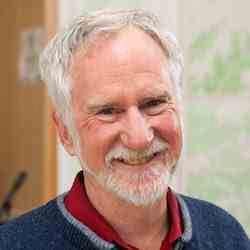 Timothy (Tim) A. Kohler合作论文数Washington State University;Crow Canyon Archaeological Center5
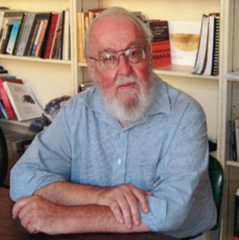 George L. Cowgill合作论文数Department of Anthropology, School of Human Evolution and Social Change, Arizona State University5
 Linda K. Mcevoy合作论文数University of California, San Diego5
 Christian E. Peterson合作论文数Department of Anthropology, University of Hawaii at Manoa5Ole Elgstrom合作论文数5
 Luís M. A. Bettencourt合作论文数Department of Ecology and Evolution, The University of Chicago;Department of Sociology, The University of Chicago;Santa Fe Institute5Cynthia Heath-Smithl合作论文数4
 Anne Sherfield合作论文数4
 Laura Ellyson合作论文数Washington State University4
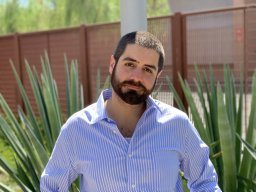 Rudolf Cesaretti合作论文数Sch Human Evolut & Social Change, Arizona State Univ4J Hicks合作论文数4
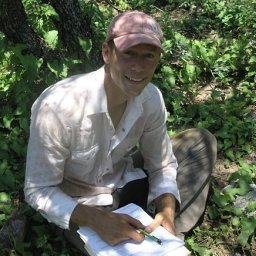 Matthew Pailes合作论文数Dept Anthropol, Univ Oklahoma4
 Amy Bogaard合作论文数Department of Neolithic and Bronze Age Archaeology, Oxford University4M Jain合作论文数4Deborah L. Nichols合作论文数Department of Anthropology, Dartmouth College4
 Anna Prentiss合作论文数Department of Anthropology, University of Montana4Juliana Novic合作论文数4Lisa Montiel合作论文数4C Lindsley合作论文数3Alleen Betzenhauser合作论文数3
 Jan Olson合作论文数3Melissa Allen-Dumas合作论文数3AAL Evans合作论文数3
 april kampwhittaker合作论文数Dept Anthropol, 1 Univ New Mexico3Dan Lawrence合作论文数3R Wesley合作论文数3
 Nicolas Gauthier合作论文数Florida Museum Nat Hist, Univ Florida3
 Timothy Earle合作论文数Department of Anthropology, Weinberg College of Arts & Sciences, Northwestern University3
 Frederick W Miller合作论文数National Institute of Environmental Health Sciences;National Institutes of Health3
 Marina Alberti合作论文数Department of Urban Design and Planning, College of Built Environments, University of Washington3
 Katja Weber合作论文数Sam Nunn School of International Affairs, Ivan Allen College of Liberal Arts, Georgia Institute of Technology3Linda M. Nicholas合作论文数3Roy H. Ginsberg合作论文数3Harrison Leong合作论文数3
 Ramin Eskandari合作论文数Department of Neurosurgery, University of Utah3




