Interstellar Boundary Explorer (IBEX) measurements from 2009-2010 identified a set of possible solutions with very tight coupling between the interstellar He inflow longitude, latitude, speed, and temperature. The center of this allowable parameter space suggested that the heliosphere could be moving more slowly and in a slightly different direction with respect to the interstellar medium than indicated by earlier Ulysses observations. In this study we examine data from 2012-2014 and compare results from an analytic analysis and a detailed computer model. For observations where the IBEX spacecraft pointing is near the ecliptic plane, the latest measurements indicate a different portion of IBEX's four-dimensional tube of possible parameters-one that is more consistent with the Ulysses flowdirection and speed, but with a much higher temperature. Together, the current combined IBEX/Ulysses values we obtain are V-ISM infinity similar to 26 km s(-1), lambda(ISM infinity) similar to 75 degrees, beta(ISM infinity) similar to -5 degrees, and T-He infinity similar to 7000-9500 K. These indicate that the heliosphere is in a substantially warmer region of the interstellar medium than thought from the earlier Ulysses observations alone, and that this warmer region may be roughly isothermal. However, measurements taken when IBEX was pointing similar to 5 degrees south of the ecliptic are inconsistent with this solution and suggest a slower speed, lower temperature, and flow direction similar to IBEX's prior central values. IBEX measures much deeper into the tails of the distributions of the inflowing interstellar material than Ulysses did and these observations indicate that the heliosphere's interstellar interaction is likely far more complex and interesting than previously appreciated.
Context. A recent analysis of IBEX measurements of the neutral interstellar He flux showed that the inflow velocity vector is different from the results of an earlier analysis of observations from the GAS instrument onboard Ulysses. A recently published compilation of published results on the helium inflow direction from the past similar to 40 years suggested that the inflow direction may be changing with time.Aims. We reanalyzed the old Ulysses data and reprocessed them to increase the accuracy of the instrument pointing to investigate whether the GAS/Ulysses observations, carried out during almost two solar cycles, support the hypothesis that the direction of the interstellar helium inflow is changing.Methods. We employed a similar analysis method as had been used in the analysis of the IBEX data. We sought a parameter set that minimizes the reduced chi(2), using the Warsaw test-particle model for the interstellar He flux at Ulysses with a state-of-the-art model of neutral He ionization in the heliosphere that precisely reproduces the observation conditions. We also propose a supplementary method of constraining the parameters based on cross-correlations of parameters obtained from an analysis of carefully selected subsets of data.Results. We find that the ecliptic longitude and speed of interstellar He agree very well with the values reported in the original GAS analysis. We find, however, that the temperature is markedly higher. The three-seasons best-fit parameter set is lambda = 255.3 degrees, beta = 6 degrees (J2000), v = 26.0 km s(-1), and T = 7500 K. We do not find evidence that these parameters are varying with time, but their uncertainty range is wider than originally reported.Conclusions. The originally derived parameters of interstellar He from direct sampling on GAS/Ulysses agree well with those currently derived, except for the temperature, which seems to be appreciably higher; this agrees well with interstellar absorption line results. While the results of our analysis agree marginally with the previously reported results from IBEX, the most likely values from the two analyses differ for reasons that are still not understood.
Neutral gas of the local interstellar medium flows through the inner solar system while being deflected by solar gravity and depleted by ionization. The dominating feature in the energetic neutral atom Interstellar Boundary Explorer ( IBEX) all-sky maps at low energies is the hydrogen, helium, and oxygen interstellar gas flow. The He and O flow peaked around 8 February 2009 in accordance with gravitational deflection, whereas H dominated after 26 March 2009, consistent with approximate balance of gravitational attraction by solar radiation pressure. The flow distributions arrive from a few degrees above the ecliptic plane and show the same temperature for He and O. An asymmetric O distribution in ecliptic latitude points to a secondary component from the outer heliosheath.
The Interstellar Boundary Explorer (IBEX) mission will make the first global observations of the heliosphere’s interaction with the interstellar medium. IBEX achieves these breakthrough observations by traveling outside of the Earth’s magnetosphere in a highly elliptical orbit and taking global Energetic Neutral Atoms (ENA) images over energies from ∼10 eV to 6 keV. IBEX’s high‐apogee (∼50 RE) orbit enables heliospheric ENA measurements by providing viewing from far above the Earth’s relatively bright magnetospheric ENA emissions. This high energy orbit is achieved from a Pegasus XL launch vehicle by adding the propulsion from an IBEX‐supplied solid rocket motor and the spacecraft’s hydrazine propulsion system. IBEX carries two very large‐aperture, single‐pixel ENA cameras that view perpendicular to the spacecraft’s Sun‐pointed spin axis. Each six months, the continuous spinning of the spacecraft and periodic re‐pointing to maintain the sun‐pointing spin axis naturally lead to global, all‐sky images. Over the course of our NASA Phase B program, the IBEX team optimized the designs of all subsystems. In this paper we summarize several significant advances in both IBEX sensors, our expected signal to noise (and background), and our groundbreaking approach to achieve a very high‐altitude orbit from a Pegasus launch vehicle for the first time. IBEX is in full scale development and on track for launch in June of 2008.The Interstellar Boundary Explorer (IBEX) mission will make the first global observations of the heliosphere’s interaction with the interstellar medium. IBEX achieves these breakthrough observations by traveling outside of the Earth’s magnetosphere in a highly elliptical orbit and taking global Energetic Neutral Atoms (ENA) images over energies from ∼10 eV to 6 keV. IBEX’s high‐apogee (∼50 RE) orbit enables heliospheric ENA measurements by providing viewing from far above the Earth’s relatively bright magnetospheric ENA emissions. This high energy orbit is achieved from a Pegasus XL launch vehicle by adding the propulsion from an IBEX‐supplied solid rocket motor and the spacecraft’s hydrazine propulsion system. IBEX carries two very large‐aperture, single‐pixel ENA cameras that view perpendicular to the spacecraft’s Sun‐pointed spin axis. Each six months, the continuous spinning of the spacecraft and periodic re‐pointing to maintain the sun‐pointing spin axis naturally lead to global, all‐sky images. Over...
The neutral gas component of the local interstellar cloud (LIC) flows through the inner heliosphere due to the relative motion of the Sun and the surrounding medium. Interstellar ions are diverted around the heliosphere, which leads to filtration of many species, in particular H and O. A recent coordinated analysis hosted by the International Space Science Institute (ISSI) has produced consolidated physical He parameters from in-situ observations of the neutral He flow. Starting with the assumption that He represents kinetic LIC parameters for all species, a similar effort is underway for interstellar H, which is substantially filtered. Using pick-up ion, solar wind slowdown, and UV scattering observations at various solar distances, and a full chain of modeling from the pristine LIC to the inner heliosphere, the filtering of H and its density in the LIC, as well as ionization fractions and the radiation environment in the LIC are inferred.
We have developed a three-dimensional model for solar EUV fluxes observed at any heliospheric position, using daily SOHO EIT observations, over successive Carrington rotations, projected to any heliospheric position. The combined effects of solar rotational and latitude-dependent flux variability are explicitly treated in this model.The flux model has been directly compared with other direct irradiance observations in the ecliptic plane with the SOHO/SEM irradiance time series for validation. We then use this flux to compute the photoionization rate of the in-flowing neutral He, and compare the modeled change with time along the spacecraft trajectory with the direct measurements from the out-of-ecliptic Ulysses GAS observations.
Because of the orbit characteristics of the vast majority of spacecraft, the solar flux has been generally measured at Earth or in the plane of the ecliptic. So far, most published studies did not consider the fact that the extreme ultraviolet (EUV) solar flux is largely anisotropic. Indeed, in the EUV, the distribution of very contrasted bright and dark features at the surface of the Sun produces both the obvious rotational (longitudinal) modulation of the flux, but also a strong latitudinal anisotropy. Although largely ignored up to now, the latitudinal anisotropy affects the physical conditions in the corona and heliosphere. We describe an empirical model of the all-sky He II 30.4 nm flux based on EIT/SOHO data. The 30.4 nm flux was found to be strongly anisotropic. The anisotropy Ipol/Ieq between the fluxes computed for viewpoints located above the solar poles and within the solar equatorial plane ranges from 0.9 at solar minimum to 0.6 at solar maximum. A 20% asymmetry was also discovered between the north and south polar fluxes.
Because of the orbit characteristics of the vast majority of spacecraft, the solar flux has predominantly been measured at Earth or at least in the plane of the ecliptic. Therefore, the existing data do not directly demonstrate the fact that the latitudinal distribution of the extreme-ultraviolet (EUV) solar flux is largely anisotropic. Indeed, in the EUV the nonuniform distribution of very contrasted bright features (i.e., active regions) and dark features (i.e., coronal holes) at the surface of the Sun produces both the obvious rotational (or longitudinal) modulation of the flux and also a strong latitudinal anisotropy. Although largely ignored up to now, the latitudinal anisotropy affects the physical conditions in the corona and heliosphere and should therefore be taken into account in several solar and heliospheric physics applications. We describe in this paper a technique for computing the He II 30.4 nm flux at an arbitrary position in the heliosphere from Solar and Heliospheric Observatory ( SOHO) EUV Imaging Telescope (EIT) images. This procedure was used to produce daily all-sky maps of the 30.4 nm flux from 1996 January to 2003 August, covering the first 8 yr of solar cycle 23. As could be expected from the examination of the EIT images, the 30.4 nm flux was found to be strongly anisotropic. The anisotropy I-pol/I-eq between the fluxes computed for viewpoints located above the solar poles and within the solar equatorial plane ranges from 0.9 at solar minimum to 0.6 at solar maximum. A 20% difference was also discovered between the north and south polar fluxes. The generalization of this technique to other lines of the EUV and far-ultraviolet (FUV) spectrum is discussed.
The Interstellar Boundary Explorer (IBEX) is scheduled to launch in June 2008 to make the first global observations of the heliosphere’s interaction with the interstellar medium. IBEX achieves these breakthrough observations by traveling outside of the Earth’s magnetosphere in a highly elliptical, high-apogee orbit and taking global Energetic Neutral Atoms (ENA) images over energies from ~10 eV to 6 keV. IBEX’s orbit enables heliospheric ENA measurements by providing viewing from outside the earth’s relatively bright magnetospheric ENA emissions, and is achieved by adding an IBEX-supplied solid rocket motor on top of a standard Pegasus launch vehicle. IBEX carries two very large-aperture, single-pixel ENA cameras that view perpendicular to the spacecraft’s sun-pointed spin axis. Over the course of each six months, the spacecraft spin and progression of the sun-pointing spin axis in inertial space naturally lead to global, all-sky images. McComas et al. (2004) described the IBEX science background, requirements, and measurement strategies; here we summarize IBEX’s measurement approach and mission. Additional information on IBEX is also available at www.ibex.swri.edu.
The GAS-instrument onboard the space probe Ulysses is designed to measure the local angular distribution of the flow of interstellar neutral He-atoms within approximate to3 AU distance from the sun. It allows to infer the kinetic parameters ( velocity vector, temperature and density) of these particles outside the heliosphere ("at infinity"). During three observational periods, 1990/1991, shortly after launch and during the two fast latitude scans of Ulysses, from 9/1994 to 8/1996 and from 9/2000 to 8/2002, more than 300 measurements of the distributions were obtained and analyzed in detail. Known issues that relate to the pointing accuracy of the detector and to the efficiency calibration along with their impact on the results are addressed in this paper. The average values, derived from these observations and their refined analysis, are the bulk speed (v(Heinfinity) = 26.3 +/- 0.4 kms(-1)), the flow direction (ecliptic longitude lambda(infinity) = 74.7degrees +/- 0.5degrees, ecliptic latitude betainfinity = -5.2degrees +/- 0.2degrees) and temperature (T-Heinfinity = 6300 K +/- 340 K). From 1990 to 2002, covering a complete solar cycle, no significant temporal variations of these parameters were observed, nor variations with solar latitude. In contrast, in the density n(Heinfinity), derived from the series of local observations along the Ulysses-orbit, substantial apparent variations were seen. After a first attempt to explain these by an inadequate energy calibration of the efficiency they are now interpreted as variations in the loss processes ( predominantly photo-ionization), which the neutral gas experiences along its trajectory to the observer. While the temporal variations of the ionization rate were taken into account using the measured solar EUV irradiance (from CELIAS/SEM on SOHO), the residual latitudinal variation has been attributed to a dependence of the solar irradiance on latitude, which thus far has not been accessible to direct observations. As a result of a simple model that includes these effects a density n(Heinfinity) = 0.015 +/- 0.003 cm(-3) has been deduced, which is in good agreement with an independent result from pickup ion observations.
A coordinated effort to combine all three methods that are used to determine the physical parameters of interstellar gas in the heliosphere has been undertaken. In order to arrive at a consistent parameter set that agrees with the observations of neutral gas, pickup ions and UV backscattering we have combined data sets from coordinated observation campaigns over three years from 1998 through 2000. The key observations include pickup ions with ACE and Ulysses SWICS, neutral atoms with Ulysses GAS, as well as UV backscattering at the He focusing cone close to the Sun with SOHO UVCS and at 1 AU with EUVE. For the first time also the solar EUV irradiance that is responsible for photo ionization was monitored with SOHO CELIAS SEM, and the He I 58.4 nm line that illuminates He was observed simultaneously with SOHO SUMER. The solar wind conditions were monitored with SOHO, ACE, and WIND. Based on these data the modeling of the interstellar gas and its secondary products in the heliosphere has resulted in a consistent set of interstellar He parameters with much reduced uncertainties, which satisfy all observations, even extended to earlier data sets. It was also established that a substantial ionization in addition to photo ionization, most likely electron impact, is required, with increasing relative importance closer to the Sun. Furthermore, the total combined ionization rate varies significantly with solar latitude, requiring a fully three dimensional and time dependent treatment of the problem.
 Helmut Rosenbauer合作论文数22Erhard Keppler合作论文数16
 Valeriy Vasiljevich Afonin合作论文数14
 Stefano Livi合作论文数Max Planck Institute for Aeronomy, Lindau, Germany12E. Kirsch合作论文数12
 Marek Banaszkiewicz合作论文数Space Research Centre11Maciej Bzowski合作论文数11a varga合作论文数10K. I. Gringauz合作论文数10H. Kunow合作论文数10s mckennalawlor合作论文数8
 David J. McComas合作论文数Department of Astrophysical Sciences, Princeton University8K. Schwingenschuh合作论文数8
 K. Kecskemety合作论文数Central Research Institute for Physics8donald r mcmullin合作论文数8AK RICHTER合作论文数7D. O'Sullivan合作论文数7H. Grünwaldt合作论文数7
 Nathan Schwadron合作论文数College of Engineering and Physical Sciences, University of New Hampshire7
 j w cook合作论文数University of Houston6h hempe合作论文数6R Muller-Mellin合作论文数6
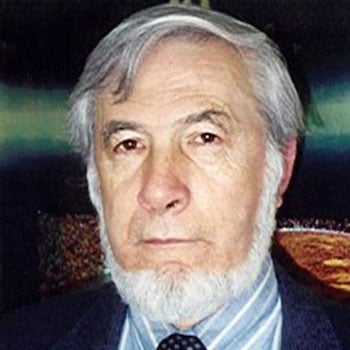 George M. Gloeckler合作论文数Department of Climate and Space Sciences and Engineering, College of Engineering, University of Michigan-Ann Arbor6
 Marzena Kubiak合作论文数Zakład Fizyki Układu Słonecznego i Astrofizyki, Space Research Centre, Polish Academy of Sciences6N.M. Shutte合作论文数6A. J. Somogyi合作论文数6
 Vladislav Izmodenov合作论文数Space Research Institute, Russian Academy of Sciences;Faculty of Mechanics and Mathematics, Lomonosov Moscow State University6
 Eberhard Moebius合作论文数Institute for the Study of Earth, Oceans, and Space, University of New Hampshire;Space Science Center, University of New Hampshire6Gerd Wibberenz合作论文数6
 Frédéric Auchère合作论文数Institut d'Astrophysique Spatiale, CNRS6P. Rusznyak合作论文数6
 R. Von Steiger合作论文数International Space Science Institute6
 Peter Wurz合作论文数5l szabo合作论文数5peter kiraly合作论文数5
 Stephen Fuselier合作论文数Southwest Research Institute, University of Texas at San Antonio5
 Eckart Marsch合作论文数Institute for Experimental and Applied Physics, Christian Albrechts University at Kiel5
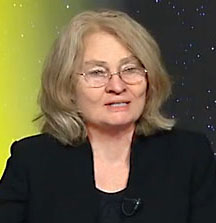 Priscilla C. Frisch合作论文数Department of Astronomy and Astrophysics, University of Chicago5
 Hans Jörg Fahr合作论文数Institut für Astrophysik und Extraterrestrische Forschung der Universität Bonn5K.-P. Wenzel合作论文数5Harald Kucharek合作论文数College of Engineering and Physical Sciences, University of New Hampshire5Klaus Jockers合作论文数5
 R. Schwenn合作论文数5A. Thompson合作论文数5A. Somogyi合作论文数5Willibald K. Riedler合作论文数5
 Herbert Funsten合作论文数Los Alamos National Laboratory5
 Karoly Szego合作论文数5E. Möbius合作论文数4




