In the years between 2000 and 2022, thick security weakened and left European nationstates vulnerable to political, economic, and cultural ruptures with no organizational fallback in sight. A 'post-security' polity emerged that lacked the institutions that guarded security in the past. Post-security implies the absence of security mechanisms, not the absence of a need for security. The post-security polity privileges markets and peoples that cross borders, fosters austerity that threatens solidarity, and supports multicultural inclusion at the expense of nationalist exclusion. Security encapsulates what others have analyzed in terms of trust and risk. Explaining the ascendance of the nationalist right in terms of a security crisis is a more robust way of thinking of current events than explanations that focus on conceptions of cultural identity or purely economistic explanations. In contrast to the past where security issues were national, contemporary security issues such as climate change, disease, migration, terrorism, and finance are transnational in scope. The globalization of security and its opposites - insecurity, threats, and fears - raise questions of responsibility and render contemporary security crises less tractable of solutions. Right nationalists have stepped into the void with simple solutions to difficult problems that require complex and transnational solutions.
In 2020, historians and public intellectuals began to ask whether fascism had come to America, with many analysts arguing in the affirmative. I argue here that fascism as a category has an “epistemic plasticity” that attenuates its analytic utility when it is used outside of historical context. Fascism as an analytic device in the American context, therefore, obscures dangerous tendencies in American politics and culture. Where European political culture is characterized by secular and religious solidarity rooted in national state institutions, American political culture lacks collectivism and solidarity and is susceptible to nativism, a distinctly American impulse that is unmoored from institutional arrangements. In the 2024 American election cycle, analysts should focus on factors that threaten democratic institutions and strategies that strengthen democracy. Comparisons that apply imperfectly to the American situation will not save democracy.
Identity is not constitutive of illiberalism. This chapter argues that some form of collective identity is necessary to produce the level of social cohesion and community that makes a democratic and liberal form of political organization possible. Identity is constitutive of belonging on multiple levels. Laws and institutions define identity categories. Nation states are the modern repository of political identities – the political form where emotion and law, culture, and contract intersect. Identity becomes the basis of illiberal politics when the cultural dimension of national belonging merges with the contractual dimensions of national organization. The fusion of culture and contract more typically occurs on a continuum. There is a threshold at which pragmatic nationalism, at one end of the continuum, slides into the identitarianism and nativism of the other end. This chapter first takes up the concept of identity and its meaning; second, it explores the relation between identity and illiberalism; and third, it dissects benign and less benign nationalism as the major contemporary political identity, including a discussion of identitarianism and nativism as toxic forms of nationalism.
As the 2020 American presidential election approaches, it is worth thinking about the current electoral moment in terms of lessons from the recent and not‐so‐recent past. This article begins with an unlikely analysis. Ordinary life captures the attention of citizens who vote but do not spend their lives 24/7 on social media or cable news or public radio. Ordinary people do not spend their time discussing social policy over dinner. Ordinary people go to dinner—not dinner parties. The ordinary people are the path to victory in any political contest. This article explores the “ordinary” and its relation to politics.
Political developments in the United States and Europe have generated a resurgence in the use of the terms fascism and populism across multiple media. Fascism is a historically specific term that Benito Mussolini coined in Italy to define his regime. Over time, political analysts erased the historical specificity of fascism and deployed it as an analytic category. In contrast, populism is an analytic category that, depending on context, includes varying aggregates of popular preferences that often lack a coherent and unifying ideology. This review draws upon interdisciplinary scholarship and empirical cases to revisit the terms fascism and populism, focusing on institutionalized politics. Contemporary fascist and populist politics are increasingly global. This review argues that comparative political and historical sociologists need to develop an analytically cogent approach to researching this encroaching political phenomenon. The review suggests a research agenda that treats fascism and populism as more than conceptual categories.
Social movement scholars have recently turned their attention to the interactions between political parties and social movements, but little is known about how social media have impacted these relationships, despite widespread adoption of these technologies. We present a case study of the relationship between Britain First, a far-right anti-Muslim social movement, and the U.K. Independence Party, the Eurosceptic political party that spearheaded the Brexit campaign. The movement appeared marginal in the press but it dominated social media, and used this presence to support to the party. We examine the dynamics of the relationship between these groups from 2013 until 2017, drawing upon data from social media, newspapers, and other online sources, and focusing both interactions on between elites and rank-and-file supporters. Our findings illustrate how far-right groups have used new technologies to generate an unprecedented amount of popular support and to attempt to influence the political mainstream.
This article extends the concept of events to bring cultural analysis to bear on political explanation and privileges “thick description” and narrative as methodological tools. Drawing on the views of Emile Durkheim, it argues that events constitute “social facts”—phenomena with sufficient identity and coherence that the social collectivity recognizes them as discrete and important. The article first considers the tension between the political and the cultural using a metaphor from sports and biology that unites agency and nature. It then discusses the intersection of events and experience as an analytic category that incorporates the “counterfactual” turn in historical analysis by drawing on William Sewell’s sociological theory of events. It also argues for the existence of “political facts” and concludes by proposing an analytic typology of political facts based on the classification of events along a temporal or spatial axis.
 Isaac William Martin合作论文数Urban Studies and Planning, Division of Social Sciences, University of California, San Diego5
 catherine lee合作论文数3Anne N. Costain合作论文数3
 Thomas J. Davidson合作论文数Picower Institute for Learning and Memory, Massachusetts Institute of Technology;RIKEN-MIT Neuroscience Research Center, Massachusetts Institute of Technology;Department of Brain and Cognitive Sciences, Massachusetts Institute of Technology;RIKEN-MIT Neuroscience Research Center, Massachusetts Institute of Technology3
 Kathleen M. Fallon合作论文数3Agnes Ku合作论文数2Paul Jones合作论文数2Guiseppe Sciortino合作论文数2Peter Wagner合作论文数2Ken Thompson合作论文数2Allen Chun合作论文数2
 Patrick Baert合作论文数Department of Sociology, University of Cambridge2
 Jeffrey C. Alexander合作论文数Department of Sociology, Yale University2Nick Crossley合作论文数2Newsletter Editor合作论文数2
 Veena Das合作论文数Department of Anthropology, Krieger School of Arts & Sciences, Johns Hopkins University2thomas piazza合作论文数1
 Alicia Eads合作论文数Department of Sociology, Faculty of Arts and Science, University of Toronto;Centre for Industrial Relations and Human Resources, Faculty of Arts and Science, University of Toronto1
 Gianpaolo Baiocchi合作论文数Department of Sociology, College of Arts & Science, New York University1
 Monica Prasad合作论文数Department of Sociology, Weinberg College of Arts and Sciences, Northwestern University1
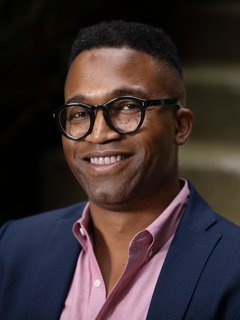 Frederick Wherry合作论文数Department of Sociology, Princeton University1Stephens John R合作论文数Division of General Medicine and Clinical Epidemiology, University of North Carolina School of Medicine1Alan Cassels合作论文数1
 Paul Lichterman合作论文数1Katherine Verdery合作论文数1Fuyuki Kurasawa合作论文数1
 Martin Schain合作论文数1
 Juan Diez Medrano合作论文数1
 Howard Lune合作论文数Department of Sociology;William Paterson University;Department of Sociology, William Paterson University1
 Yasemin Nuhoglu Soysal合作论文数1
 Paul Sniderman合作论文数Department of Political Science, School of Humanities and Sciences, Stanford University1
 Larry Isaac合作论文数Florida State University1Ronald N. Jacobs合作论文数Department of Sociology;University at Albany;State University of New York;University at Albany, State University of New York1




