The present study present chemometric bioindication methodology for fast and effective monitoring in long distant distribution of top soil pollution and evidence for element soil dust deposition.Both varieties of Briophytes, Hypnum cupressiforme (Hedw.)and Homalothecium lutescens (Hedw.)has been used for improving the effective nondestructive bio-indication.Although mosses do not have a root system, influence from soil dusting cannot be disregarded, in praticular in areas with windblown mineral dust from local soil.As far as the surface bound fraction is concerned, little is known about the binding mechanisms, but the fact that different metals show rather large differences in their retention capacities, indicates that both simple cation exchange on negative surface charges and complex formation with ligands on the moss surface are involved.Laboratory analysis, using field emission scanning electron microscopy (FESEM) and energy dispersive X-ray spectrometer (EDS) has been involved for determination of the dry deposition occurred within moss biomonitors.The bioindication chemometric model was improved for nondestuctive evidence effectively for biogenic elements carbon and oxygen, macroelements Mg, Al, Si, K, Ca, and microelements Fe, Cu and Zn.Both moss species can be used interchangeable for dust deposition investigation.
Mosses have been used for biomonitoring in a number of different ways which may lead to rather different results, and some kind of classification seems necessary at this point. Epigeic mosses (growing on the ground) are preferred in the regional surveys in Europe. Trace elements may be either absorbed on the moss from the atmosphere as soluble chemical species in wet deposition or contained in particles from dry deposition. Part of the trace element content of particulates may eventually be released by weathering and reabsorbed by the moss. Whereas uptake efficiencies for particulate-bound trace elements are generally poorly known, ions may be subject to active uptake into cells or attached on the moss surface by physical and chemical forces. Methods are available to distinguish between intracellular and surface-bound fractions of elements. The main problem with the issue of moss biomonitoring is revealed as (a) the transport of soluble compounds from the soil into moss tissue, particularly during periods with excessive soil/water contact. Although mosses do not have a root system, influence from this source cannot be disregarded, in particular in areas with low atmospheric deposition and (b) windblown mineral dust from local soil. As far as the surface-bound fraction is concerned, little is known about the binding mechanisms, but the fact that different metals show rather large differences in their retention capacities indicates that both simple cation exchange on negative surface charges and complex formation with ligands on the moss surface are involved. Laboratory analysis using scanning electron microscopy has been involved for the determination of the dry deposition occurring within moss bioindicators.
ZnO polycrystalline thin films and ZnO nanorod arrays were obtained by the spray pyrolysis method at a substrate temperature of 450 °C. By analyzing the XRD diffractograms, the hexagonal crystal structure of the ZnO films and ZnO nanorods was determined. On the other hand, the grain size of the films and nanorods was determined using the Debye-Scherrer equation. The optical properties of the films and nanorods were determined by measuring the dependence of the transmission on the wavelength of the light. Also, the optical band gap of 3.28 eV for the ZnO films and 3.21 eV for the ZnO nanorods was estimated. The photoconductivity spectrum of thin films and nanorods was recorded in the visible light range and their photoconductivity was studied when they were illuminated by X-rays, where the incident X-rays increase the conductivity of thin films of nanorods. The surface morphologies of the ZnO films and the ZnO nanorods, as well as the grain size of the film and the dimensions of the nanorods, were studied by a scanning electron microscope.
The physico-mechanical, chemical and mineralogical characteristics of volcanic glass (perlite) from the Mariovo region (Macedonia) as well as the mineralogical changes that occur during its thermal treatment were investigated to demonstrate its utilization for industrial use. The native perlite was characterized by chemical analysis, X-ray powder diffraction (XRPD), infrared (IR) spectroscopy, thermal analysis (TGA/DTA), scanning electron microscopy (SEM-EDX), transmission electron microscopy (TEM), and solid- state NMR. The chemical examination suggests that the perlite represents an acidic volcanic rock with a high percentage of SiO2 (72.45%), high in alkali metal oxides (4.21 wt.% K2O, 3.56 wt.% Na2O), with a loss of ignition 3.54 wt.%. Results from the XRPD indicated major amorphous behaviour, with low amounts of feldspars, quartz, and cristobalite. SEM examinations revealed glassy structure with presence of certain pores (dimensions ranging from 50-100 mu m). The determined expansion coefficient was 20 times its original volume. XRPD of expanded perlite compared to the native perlite depicted new intensive peaks of cristobalite. SEM and TEM revealed irregular morphology with broken or ragged edges. On the basis of the chemical and mineralogical composition, the studied perlite is classified as an appropriate material suitable as ceramic flux to lower the sintering temperature.
This paper describes the development of a simple method for mixed non-covalent and covalent bonding of partially purified inulinase on functionalized multiwall carbon nanotubes (f-MWCNTs) with polypyrrole (PPy). The pyrrole (Py) was electrochemically polymerized on MWCNTs in order to fabricate MWCNTs/PPy nanocomposite. Two multiple forms of enzyme were bound to N-H functional groups from PPy and -COO- from activated MWCNTs to yield a stable MWCNTs/PPy/PEG immobilized preparation with increased thermal stability. Fourier transform infrared (FTIR) spectroscopy and scanning electron microscopy (SEM) were used to confirm functionalization of nanoparticles and immobilization of the enzyme. The immobilization yield of 85% and optimal enzyme load of 345 mu g protein onto MWCNTs was obtained. The optimum reaction conditions and kinetic parameters were established using the UV-Vis analytical assay. The best functional performance for prepared heterogeneous catalyst has been observed at pH 3.6 and 10, and at the temperatures of 60 and 80oC. The half-life (t(1/2)) of the immobilized inulinase at 60 and 80oC was found to be 231 and 99 min, respectively. The reusability of the immobilized formulation was evaluated based on a method in which the enzyme retained 50% of its initial activity, which occurred after the eighteenth operation cycle.
The Allchar Sb-As-Tl-Au volcanogenic hydrothermal deposit is situated at the northwestern margins of Kožuf Mts. (Republic of Macedonia), close to the border between Republic of Macedonia and Greece. From the geotectonic point of view, ore mineralization is related to a Pliocene volcano-intrusive complex located between the rigid Pellagonian block in the west, and the labile Vardar zone in the east. From the metallogenic point of view, the Allchar deposit belongs to the Kožuf ore district as part of the Serbo-Macedonian metallogenetic province.The locality is one of the Unique deposits in the world not because of its size but because of its mineral composition and diversity, including an abundance of particularly rare thallium sulfosalts.
 Ivan B. Boev合作论文数AMBICON Lab, Univ Goce Delcev4
 Blazo Boev合作论文数Faculty of Mining and Geology, University of Skopje4
 Lucian Barbu-Tudoran合作论文数2
 Maria Suciu合作论文数2
 Biljana Balabanova合作论文数Faculty of Agriculture, Goce Delčev University2
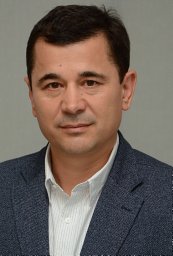 Sasa Mitrev合作论文数2
 Blagoj Pavlovski合作论文数1
 Kiril Lisichkov合作论文数Cyril and Methodius University of Skopje1
 Emilija Arsov合作论文数1Arianit A. Reka合作论文数1Aleksandar Petrovski合作论文数1
 Mishela Temkov合作论文数Department of Biotechnology, University of Food Technologies1
 Jashari Ahmed合作论文数1
 Gligor Jovanovski合作论文数Institute of Chemistry, SS. Cyril and Methodius University1Emilija Kostadinovska合作论文数1
 Petre Makreski合作论文数Institute of Chemistry;Faculty of Science;Methodius University;Institute of Chemistry, Methodius University1
 Aliaksandr Baidak合作论文数Radiation Laboratory, University of Notre Dame1
 Anita Grozdanov合作论文数Faculty of Technology;University Sts;Faculty of Technology, University Sts1
 Ayhan Oral合作论文数Faculty of Sciences and Arts, Canakkale Onsekiz Mart University1
 Albert Krastanov合作论文数Department of Biotechnology, University of Food Technologies1
 Volkan Eskizeybek合作论文数Mechanical Engineering Department, Selcuk University1
 Aleksandar Todor Dimitrov合作论文数1
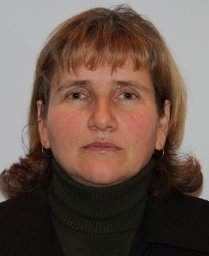 Violeta Stefanova合作论文数Department of Analytical Chemistry, University of Plovdiv1
 Atanas Tanusevski合作论文数Institute of Physics, Sts. Cyril and Methodius University1
 Perica Paunovic合作论文数1Emil Popovski合作论文数Institut of Chemistry;Faculty of Natural Sciences;Methodius University1




