The mesocopic structure features in the coke fillers and binding carbon regions of a synthetic graphite grade have been examined by high resolution transmission electron microscopy (TEM) and Raman spectroscopy. Within the fillers, the three-dimensional structure is composed of crystal laminae with the basal plane dimensions (La) of hundreds nanometres, and thicknesses (Lc) of tens of nanometres. These laminae have a nearly perfect graphite structure with almost parallel c-axes, but their a-b planes are orientated randomly to form a “crazy paving” structure. A similar structure exists in the binding carbon regions, with a smaller La. Significantly bent laminae are widely seen in quinoline insoluble inclusions and the graphite regions developed around them. The La values measured by TEM are consistent with estimates from the intensity ratios of the D to G Raman peak in these regions. Atomistic modelling finds that the lowest energy interfaces in the crazy paving structure comprise 5, 6 and 7 member carbon rings. The bent laminae tend to maintain the 6 member rings, but are strained elastically. We suggest that a 7 member carbon ring leaves a cavity representing an arm-chair graphite edge contributing to the Raman spectra D peak.
The mesocopic structure features in the coke fillers and binding carbon regions of a synthetic graphite grade have been examined by high resolution transmission electron microscopy (TEM) and Raman spectroscopy. Within the fillers, the three-dimensional structure is composed of crystal laminae with the basal plane dimensions (La) of hundreds nanometres, and thicknesses (Lc) of tens of nanometres. These laminae have a nearly perfect graphite structure with almost parallel c-axes, but their a–b planes are orientated randomly to form a “crazy paving” structure. A similar structure exists in the binding carbon regions, with a smaller La. Significantly bent laminae are widely seen in quinoline insoluble inclusions and the graphite regions developed around them. The La values measured by TEM are consistent with estimates from the intensity ratios of the D to G Raman peak in these regions. Atomistic modelling finds that the lowest energy interfaces in the crazy paving structure comprise 5, 6 and 7 member carbon rings. The bent laminae tend to maintain the 6 member rings, but are strained elastically. We suggest that a 7 member carbon ring leaves a cavity representing an arm-chair graphite edge contributing to the Raman spectra D peak.
The data in this article are related to the research article “Mesoscopic structure features in synthetic graphite” (März et al., 2018) [1]. Details of the manufacture of isostatically moulded graphite (iso-graphite), thin foil preparation by focused ion beams (FIB) for analysis, and characterisation methods are provided. The detailed structures of coke filler and binding carbon are presented through scanning electron microscopy (SEM), scanning transmission electron microscopy (STEM) and Raman spectroscopy characterisation. Atomistic modelling results of mesoscopic structural features are included.
AA-stacked graphite and closely related structures, where carbon atoms are located in registry in adjacent graphene layers, are a feature of graphitic systems including twisted and folded bilayer graphene, and turbostratic graphite. We present the results of ab initio density functional theory calculations performed to investigate the complexes that are formed from the binding of vacancy defects across neighbouring layers in AA-stacked bilayers. As with AB stacking, the carbon atoms surrounding lattice vacancies can form interlayer structures with sp(2) bonding that are lower in energy than in-plane reconstructions. The sp(2) interlayer bonding of adjacent multivacancy defects in registry creates a type of stable sp(2) bonded 'wormhole' or tunnel defect between the layers. We also identify a new class of 'mezzanine' structure characterised by sp(3) interlayer bonding, resembling a prismatic vacancy loop. The V-6 hexavacancy variant, where six sp(3) carbon atoms sit midway between two carbon layers and bond to both, is substantially more stable than any other vacancy aggregate in AA-stacked layers. Our focus is on vacancy generation and aggregation in the absence of extreme temperatures or intense beams.
We have performed first principles simulations, based on density functional theory (DFT), to investigate the core properties of the basal a-type screw dislocation in wurtzite gallium nitride. Our calculations demonstrate that the fully coordinated shuffle core configuration is the most energetically favourable. The calculated electronic structure of the a-type screw dislocation was found to exhibit exclusively shallow gap states which are not associated with any extended metallization. This may explain why a-type screw dislocations are less detrimental to the performance of GaN based electronic devices than c-type screw dislocations.
The environment dependent interatomic potential (EDIP) including Ziegler-Biersack-Littermark (ZBL) interactions for close encounters is applied to cascades starting from a host atom and from an interstitial atom. We find the room temperature displacement threshold to be 25 eV, increasing to 30 eV at 900 K. The latter correlates well with the measured threshold for vacancy production. Additionally, divacancy production is found to occur, including interlayer divacancies from around 60 eV. The data suggest a new, continuous damage function applies, where the threshold region depends on the square root of the primary knock-on atom (PKA) energy in excess of the threshold, evolving to a linear dependence on PKA energy. (C) 2015 The Authors. Published by Elsevier Ltd.
Although molecular dynamics simulations of energetic impacts and collision cascades in graphite have been investigated for over 25 years, recent investigations have shown a difference between the types of defects predicted by the commonly used empirical potentials compared to ab initio calculations. As a result a new ReaXFF potential has been fitted which reproduces the formation energies of many of the defects predicted by the ab initio calculations and the energy pathways between different defect states, important for investigating long term defect evolution. The data sets in the fitting have been added to the existing data sets used for modelling hydrocarbons and fullerenes. The elastic properties of the potential are less well modelled than the point defect structures with the elastic constants c33 being too high and c44 too low compared to experiment. Preliminary results of low energy collision cascades show many point defect structures develop that are in agreement with those predicted from the ab initio results. (C) 2016 The Authors. Published by Elsevier B.V.
The Stone–Wales (SW) transformation, or carbon-bond rotation, has been fundamental to understanding fullerene growth and stability, and ab initio calculations show it to be a high-energy process. The nature and topology of the fullerene energy landscape shows how the Ih-C60 must be the final product, if SW transformations are fast enough, and various mechanisms for their catalysis have been proposed. We review SW transformations in fullerenes and then discuss the analogous transformation in graphite, where they form the Dienes defect, originally posited to be a transition state in the direct exchange of a bonded atom pair. On the basis of density functional theory calculations in the local density approximation, we propose that non-equilibrium concentrations of the Dienes defect arising from displacing radiation are rapidly healed by point defects and that equilibrium concentrations of Dienes defects are responsible for the divergent ultra-high-temperature heat capacity of graphite. This article is part of the themed issue ‘Fullerenes: past, present and future, celebrating the 30th anniversary of Buckminster Fullerene’.
In this work, the ability of methods based on empirical potentials to simulate the effects of radiation damage in graphite is examined by comparing results for point defects, found using ab initio calculations based on density functional theory (DFT), with those given by two state of the art potentials: the Environment-Dependent Interatomic Potential (EDIP) and the Adaptive Intermolecular Reactive Empirical Bond Order potential (AIREBO). Formation energies for the interstitial, the vacancy and the Stone–Wales (5775) defect are all reasonably close to DFT values. Both EDIP and AIREBO can thus be suitable for the prompt defects in a cascade, for example. Both potentials suffer from arefacts. One is the pinch defect, where two α-atoms adopt a fourfold-coordinated sp3 configuration, that forms a cross-link between neighbouring graphene sheets. Another, for AIREBO only, is that its ground state vacancy structure is close to the transition state found by DFT for migration. The EDIP fails to reproduce the ground state self-interstitial structure given by DFT, but has nearly the same formation energy. Also, for both potentials, the energy barriers that control diffusion and the evolution of a damage cascade, are not well reproduced. In particular the EDIP gives a barrier to removal of the Stone–Wales defect as 0.9 eV against DFT's 4.5 eV. The suite of defect structures used is provided as supplementary information as a benchmark set for future potentials.
In recent years, a plethora of theoretical carbon allotropes have been proposed, none of which has been experimentally isolated. We discuss here criteria that should be met for a new phase to be potentially experimentally viable. We take as examples Haeckelites, 2D networks of sp(2)-carbon-containing pentagons and heptagons, and "penta-graphene," consisting of a layer of pentagons constructed from a mixture of sp(2)- and sp(3)-coordinated carbon atoms. In 2D projection appearing as the "Cairo pattern," penta-graphene is elegant and aesthetically pleasing. However, we dispute the author's claims of its potential stability and experimental relevance.
Molecular dynamics simulations of single crystal graphite have been performed, incorporating point and extended defect structures formed as a result of thermally annealed radiation damage. These AIREBO potential calculations have simulated the changes to crystal dimensions, elastic moduli and thermal expansion due to the formation of different representative morphologies of extended irradiation-induced defects (vacancy and interstitial aggregates) and over a range of atomic displacement fractions. We find that, in addition to the simulation method reproducing the important mechanical and thermal properties of virgin graphite, the property changes caused by the formation of extended defects in the graphite crystal structure qualitatively agree with experimental observations at different irradiation/annealing temperature regimes. The results of these calculations provide a direct insight into how the underlying atomic scale defects and dislocations created by radiation damage can lead to material property changes, and demonstrate how this computationally efficient simulation method can be employed to reproduce crystallite changes in large-scale models of polygranular graphite.
The strong excitonic emission at 5.75 eV of hexagonal boron nitride (h-BN) makes this material one of the most promising candidate for light emitting devices in the far ultraviolet (UV). However, single excitons occur only in perfect monocrystals that are extremely hard to synthesize, while regular h-BN samples present a complex emission spectrum with several additional peaks. The microscopic origin of these additional emissions has not yet been understood. In this work we address this problem using an experimental and theoretical approach that combines nanometric resolved cathodoluminescence, high resolution transmission electron microscopy and state of the art theoretical spectroscopy methods. We demonstrate that emission spectra are strongly inhomogeneus within individual flakes and that additional excitons occur at structural deformations, such as faceted plane folds, that lead to local changes of the h-BN stacking order.
Mary Chan-Park opened the discussion of the paper by Philip R. Davies: The O(1) peak is difficult to deconvolute – did you verify the C–O–C group using C(1s) spectra? Or can you use other techniques? Philip Davies replied: We did look very carefully at the C(1s) spectra but we ar
The formation of extended defects in graphene from the coalescence of individual mobile vacancies can significantly alter its mechanical, electrical and chemical properties. We present the results of ab initio simulations which demonstrate that the strain created by multi-vacancy complexes in graphene determine their overall growth morphology when formed from the coalescence of individual mobile lattice vacancies. Using density functional theory, we map out the potential energy surface for the motion of mono-vacancies in the vicinity of multi-vacancy defects. The inhomogeneous bond strain created by the multi-vacancy complexes strongly biases the activation energy barriers for single vacancy motion over a wide area. Kinetic Monte Carlo simulations based on rates from ab initio derived activation energies are performed to investigate the dynamical evolution of single vacancies in these strain fields. The resultant coalescence processes reveal that the dominant morphology of multi-vacancy complexes will consist of vacancy lines running in the two primary crystallographic directions, and that more thermodynamically stable structures, such as holes, are kinetically inaccessible from mono-vacancy aggregation alone.
The impact of graphitisation-type processes on the carbon K-edge ELNES is explored for model systems using the CASTEP density functional theory code. For c lattice direction expansion, contraction of spectral peaks occurs between 20 and 27 eV above the edge onset, for a/b lattice dimension expansion spectral peaks are heavily compressed in terms of energy separation and are shifted towards the edge-onset, consistent with a 1/a2 relationship. For a nanotube model system, it is shown that for higher curvature, an additional feature was observed in the spectrum ~5 eV, arguably consistent with 'fullerene'-type character.
Due to the layered nature of graphite, the migration and interaction of point defects in the graphite crystal structure are highly anisotropic, and it is usually assumed that individual mobile lattice vacancies are confined to diffuse on a single plane. We present the results of ab initio calculations based on density functional theory which demonstrate that vacancies can, in fact, move between adjacent planes when they interact with one another via relatively low energy pathways, often with barriers of less than 1 eV. These interlayer transition mechanisms can significantly alter both the kinetics of point-defect aggregation and coalescence and also the resultant morphologies of multivacancy complexes that form as a result of migrating vacancies interacting.
The first page of this article is displayed as the abstract.
 P. R. Briddon合作论文数University of Exeter Department of Physics23
 Christopher D. Latham合作论文数Luleå University of Technology17
 Christopher Paul Ewels合作论文数CNRS16
 R. Jones合作论文数14I. Suarez-Martinez合作论文数Nanochemistry Research Institute, Curtin University of Technology12Sven Oberg合作论文数11
 Jean-Joseph Adjizian合作论文数Institut des Matériaux Jean Rouxel, Université de Nantes8
 Giorgio Savini合作论文数Physics and Astronomy Department, Faculty of Mathematical & Physical Sciences, University College London8Thomas Trevethan合作论文数Department of Physics and Astronomy, University College London8
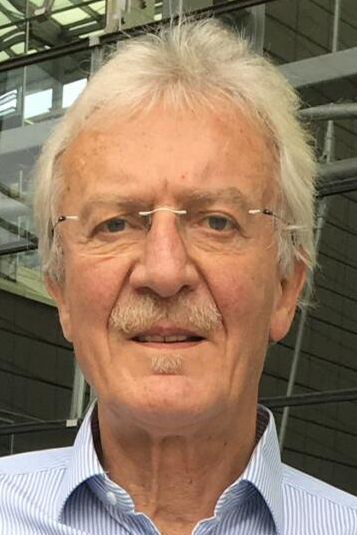 Frauenheim Thomas合作论文数Beijing Computational Science Research Center;Bremen Center for Computational Material Sciences, University of Bremen7
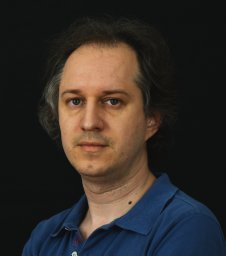 Alberto Zobelli合作论文数Phys Solides Lab, Univ Paris 117J. Elsner合作论文数6
 Ahmed a Elbarbary合作论文数Faculty of Science, Tanta University6
 LG Bulusheva合作论文数Nikolaev Institute of Inorganic Chemistry, Siberian Branch of Russian Academi of Sciences6
 Kenny Jolley合作论文数Department of Engineering, University of Leicester6M. J. Rayson合作论文数6
 Jonathan Goss合作论文数School of Electrical and Electronic Engineering, Newcastle University/School of Mathematics, Statistics and Physics, Newcastle University6G. Haffenden合作论文数5
 Aleksandr V Okotrub合作论文数Institute of Inorganic Chemistry, Russian Academy of Sciences5Mats Nylen合作论文数5
 Gianluca Savini合作论文数Dipartimento di Energetica, Università Politecnica delle Marche5Sven Öberg合作论文数5
 Roger M Smith合作论文数Loughborough University Department of Chemistry4
 Odile Stephan合作论文数Laboratoire De Physique Des Solides, University Paris-Sud4Josep M. Campanera合作论文数4
 Houzheng Wu合作论文数4
 Michael Haugk合作论文数Department of Emergency Medicine, Medical University of Vienna4Mark J. Rayson合作论文数3Benjamin März合作论文数3
 Philip Rosser Davies合作论文数3
 Rafael Gutierrez合作论文数3
 Romain Bourrellier合作论文数3
 Rob Telling合作论文数Shearwater Geoservices3
 Milo Shaffer合作论文数Department of Chemistry, Faculty of Natural Sciences, Imperial College London3
 Ayse Turak合作论文数Dept Engn Phys, McMaster Univ3Seabourne Che R合作论文数School of Process, Environmental and Materials Engineering, University of Leeds3
 James Marrow合作论文数Department of Materials, University of Oxford3Toshiaki Enoki合作论文数Tokyo Institute of Technology3
 Mathieu Kociak合作论文数Laboratoire de Physique des Solides, Centre National de la Recherche Scientifique;Université Paris Sud3
 Juan Casado Giménez合作论文数Department of Chemistry, Faculty of Sciences, Autonomous University of Barcelona3
 Vladimir Kuznetsov合作论文数Research Group, Boreskov Institute of Catalysis3
 Andreas Hirsch合作论文数Department of Chemistry and Pharmacy, Friedrich Alexander University Erlangen-Nurnberg3
 Zhaoxia Zhou合作论文数3Philip Tole合作论文数3
 Victoria V Ivanovskaya合作论文数Russian Academy of Sciences Institute of Solid-State Chemistry3A. Blumenau合作论文数3
 Nazario Martín León合作论文数Departamento de Química Orgánica, Facultad de Ciencias Químicas, Universidad Complutense Madrid3
 Luiz Galvao-Tizei合作论文数Laboratoire de Physique des Solides, Centre National de la Recherche Scientifique3
 Pulickel Ajayan合作论文数Department of Materials Science and NanoEngineering, Rice University;Department Chemical and Biomolecular Engineering, Rice University;Department of Chemistry, Rice University3




