We carefully examine the exact analytic spectrum of quasinormal modes of general black holes in the socalled subtracted geometry of maximally supersymmetric supergravity. These black holes have the same area and surface gravity at both the outer and inner horizons as asymptotically flat Kerr black holes. We proceed to explore the relationship with conformal field theories that describe horizon physics of these black holes. As a consequence, we show that it is consistent to view the horizon area of these black holes as being quantized in units of 8,cl2Pl.
We formulate the classical gravitational entropy of a horizon as a Noether charge that does not require the notion of a temperature, and which is applicable to horizons that are not necessarily associated with black holes. This introduces a correction to the covariant phase space formalism that accounts for the configuration-dependence of the generating vector field conjugate to the charge. The vector field is related to the proposal of Bousso that the gravitational entropy of a region is determined by the lightsheet at its boundary. We test the formula on various black hole and cosmological horizons.
Ensembl (https://www.ensembl.org) is a freely available genomic resource that has produced high-quality annotations, tools, and services for vertebrates and model organisms for more than two decades. In recent years, there has been a dramatic shift in the genomic landscape, with a large increase in the number and phylogenetic breadth of high-quality reference genomes, alongside major advances in the pan-genome representations of higher species. In order to support these efforts and accelerate downstream research, Ensembl continues to focus on scaling for the rapid annotation of new genome assemblies, developing new methods for comparative analysis, and expanding the depth and quality of our genome annotations. This year we have continued our expansion to support global biodiversity research, doubling the number of annotated genomes we support on our Rapid Release site to over 1700, driven by our close collaboration with biodiversity projects such as Darwin Tree of Life. We have also strengthened support for key agricultural species, including the first regulatory builds for farmed animals, and have updated key tools and resources that support the global scientific community, notably the Ensembl Variant Effect Predictor. Ensembl data, software, and tools are freely available.
The duality relating the four-dimensional Kerr-Taub-NUT black hole to a thermal two-dimensional CFT with central charges cL = cR = 12J0 is analyzed in detail, generalizing an argument given recently for Kerr within the soft-hair approach. The hidden conformal symmetry is realized in the form of V irL × V irR diffeomorphisms which act non-trivially on the black hole horizon. Semiclassical formulae are derived for the temperature and central charges of the dual CFT. Assuming the applicability of the Cardy formula, these CFT quantities precisely reproduce the macroscopic Bekenstein-Hawking area law. Various further generalizations including the complete family of black holes in four dimensions are discussed.
The specific activity of the β decay of ^39 Ar in atmospheric argon is measured using the DEAP-3600 detector. DEAP-3600, located 2 km underground at SNOLAB, uses a total of (3269 ± 24) kg of liquid argon distilled from the atmosphere to search for dark matter. This detector is well-suited to measure the decay of ^39 Ar owing to its very low background levels. This is achieved in two ways: it uses low background construction materials; and it uses pulse-shape discrimination to differentiate between nuclear recoils and electron recoils. With 167 live-days of data, the measured specific activity at the time of atmospheric extraction is (0.964 ± 0.001 _stat ± 0.024 _sys ) Bq/kg _atmAr , which is consistent with results from other experiments. A cross-check analysis using different event selection criteria and a different statistical method confirms the result.
While static Love number vanish identically for Kerr black holes, we show that the corresponding dynamical tidal coefficients are generically non-zero and exhibit logarithmic behavior. The computational method employs a related but simpler scheme consistent with CFT descriptions, low-frequency regimes and post-Newtonian results. These coefficients are illustrated with a numerical examples.
We construct the standard and dual supertranslation charges on the future horizon of the Schwarzschild black hole, using the first-order formulation of gravity with the Holst action. The Dirac bracket algebra of standard and dual supertranslation charges is shown to exhibit a central term in the presence of singularities in the two-sphere function associated with supertranslation. We show that one can cancel this anomalous term and restore the asymptotic symmetry algebra by introducing a gravitational Chern-Simons theory on the horizon. This demonstrates that consistency of the asymptotic symmetry algebra requires a new structure on the horizon.
We start by looking at why we believe that black holes have entropy. According to Boltzmann, the entropy is a measure of the number of microstates of a system. We suggest here that the entropy arises from a holographic conformal field theory on the black hole horizon. Finally, we discuss some of the implications for the information paradox.
The DEAP-3600 detector searches for the scintillation signal from dark matter particles scattering on a 3.3 tonne liquid argon target. The largest background comes from 39 Ar beta decays and is suppressed using pulse-shape discrimination (PSD). We use two types of PSD estimator: the prompt-fraction, which considers the fraction of the scintillation signal in a narrow and a wide time window around the event peak, and the log-likelihood-ratio, which compares the observed photon arrival times to a signal and a background model. We furthermore use two algorithms to determine the number of photons detected at a given time: (1) simply dividing the charge of each PMT pulse by the mean single-photoelectron charge, and (2) a likelihood analysis that considers the probability to detect a certain number of photons at a given time, based on a model for the scintillation pulse shape and for afterpulsing in the light detectors. The prompt-fraction performs approximately as well as the log-likelihood-ratio PSD algorithm if the photon detection times are not biased by detector effects. We explain this result using a model for the information carried by scintillation photons as a function of the time when they are detected.
The black hole information paradox has been with us for some time. We outline the nature of the paradox. We then propose a resolution based on an examination of the properties of quantum gravity under circumstances that give rise to a classical singularity. We show that the gravitational wavefunction vanishes as one gets close to the classical singularity. This results in a future boundary condition inside the black hole that allows for quantum information to be recovered in the evaporation process.
Recently it has been shown that the vacuum state in QED is infinitely degenerate. Moreover a transition among the degenerate vacua is induced in any nontrivial scattering process and determined from the associated soft factor. Conventional computations of scattering amplitudes in QED do not account for this vacuum degeneracy and therefore always give zero. This vanishing of all conventional QED amplitudes is usually attributed to infrared divergences. Here we show that if these vacuum transitions are properly accounted for, the resulting amplitudes are nonzero and infrared finite. Our construction of finite amplitudes is mathematically equivalent to, and amounts to a physical reinterpretation of, the 1970 construction of Faddeev and Kulish. † Center for the Fundamental Laws of Nature, Harvard University, Cambridge, MA, USA ∗ Department of Applied Mathematics and Theoretical Physics, University of Cambridge, Cambridge, UK
The black hole information paradox is the incompatibility of quantum mechanics with the semi-classical picture of Hawking radiation. Hawking radiation appears thermal and eventually leads to the complete disappearance of a black hole. However, black holes could be formed from a pure quantum state. The transition from such an initial state to the final state of pure Hawking radiation cannot be described by unitary time evolution. In this paper, we present an analysis in quantum gravity that shows how boundary conditions in the future prevent a loss of quantum mechanical information from the spacetime. In classical physics, the future boundary of the spacetime in the black hole interior is a singularity. Realistic gravitational collapse results in a BKL type of approach to the singularity. But, solving the Wheeler-DeWitt equation reveals that the singularity does not form and can be replaced by specifying a final state density matrix. Such a condition is natural within the context of consistent histories version of quantum mechanics. We provide a self-contained treatment of these issues. How information escapes from the black hole will be treated elsewhere.
M-theory compactified on a G(2) manifold with resolved E8 singularities realizes four-dimensional N = 1 supersymmetric gauge theories coupled to gravity with three families of Standard Model fermions. Beginning with one E-8 singularity, three fermion families emerge when E-8 is broken by geometric engineering deformations to a smaller subgroup with equal rank. In this paper, we use the local geometry of the theory to explain the origin of the three families and their mass hierarchy. We linearize the blowing up of two-cycles associated with resolving E-8 singularities. After imposing explicit constraints on the effectively stabilized moduli, we arrive at Yukawa couplings for the quarks and leptons. We fit the high scale Yukawa couplings approximately which results in the quark masses agreeing reasonably well with the observations, implying that the experimental hierarchy of the masses is achievable within this framework. The hierarchy separation of the top quark from the charm and up is a stringy effect, while the spitting of the charm and up also depends on the Higgs sector. The Higgs sector cannot be reduced to having a single vacuum expectation value (VEV); all three VEVs must be nonzero. Three extra U(1) s survive to the low scale but are not massless, so Z states are motivated to occur in the spectrum, but may be massive.
We present a method for finding, in principle, all asymptotic gravitational charges. The basic idea is that one must consider all possible contributions to the action that do not affect the equations of motion for the theory of interest; such terms include topological terms. As a result we observe that the first order formalism is best suited to an analysis of asymptotic charges. In particular, this method can be used to provide a Hamiltonian derivation of recently found dual charges.
Stephen Hawking's contributions to the understanding of gravity, black holes and cosmology were truly immense. They began with the singularity theorems in the 1960s followed by his discovery that black holes have an entropy and consequently a finite temperature. Black holes were predicted to emit thermal radiation, what is now called Hawking radiation. He pioneered the study of primordial black holes and their potential role in cosmology. His organization of and contributions to the Nuffield Workshop in 1982 consolidated the picture that the large-scale structure of the universe originated as quantum fluctuations during the inflationary era. Work on the interplay between quantum mechanics and general relativity resulted in his formulation of the concept of the wavefunction of the universe. The tension between quantum mechanics and general relativity led to his struggles with the information paradox concerning deep connections between these fundamental areas of physics. These achievements were all accomplished following the diagnosis during the early years of Stephen's studies as a post-graduate student in Cambridge that he had incurable motor neuron disease—he was given two years to live. Against all the odds, he lived a further 55 years. The distinction of his work led to many honours and he became a major public figure, promoting with passion the needs of disabled people. His popular best-selling book, A brief history of time , made cosmology and his own work known to the general public world-wide. He became an icon for science and an inspiration to all.
Recently a set of diffeomorphisms were found which act nontrivially on the Kerr horizon and form a left-right pair of Virasoro algebras. Using the boundary formula for the associated central charge and assuming applicability of the Cardy formula to a putative dual CFT, the Bekenstein-Hawking entropy for the Kerr black hole was reproduced. In this paper, the addition of charge to the black hole is shown to require a minimal modification to this construction which then reproduces the Bekenstein-Hawking entropy for the Kerr-Newman black hole.
A bstract We study well-motivated dark matter candidates arising from weakly-coupled hidden sectors in compactified string/ M -theory. Imposing generic top-down constraints greatly restricts allowed candidates. By considering the possible mechanisms for achieving the correct dark matter relic density, we compile categories of viable dark matter candidates and annihilation mediators. We consider the case where supersymmetry breaking occurs via moduli stabilisation and is gravitationally mediated to the visible and other hidden sectors, without assuming sequestering of the sector in which supersymmetry is broken. We find that in this case, weakly-coupled hidden sectors only allow for fermionic dark matter. Additionally, most of the mechanisms for obtaining the full relic density only allow for a gauge boson mediator, such as a dark Z ′. Given these considerations, we study the potential for discovering or constraining the allowed parameter space given current and future direct detection experiments, and direct production at the LHC. We also present a model of a hidden sector which would contain a satisfactory dark matter candidate.
Vertebrates have greatly elaborated the basic chordate body plan and evolved highly distinctive genomes that have been sculpted by two whole-genome duplications. Here we sequence the genome of the Mediterranean amphioxus (Branchiostoma lanceolatum) and characterize DNA methylation, chromatin accessibility, histone modifications and transcriptomes across multiple developmental stages and adult tissues to investigate the evolution of the regulation of the chordate genome. Comparisons with vertebrates identify an intermediate stage in the evolution of differentially methylated enhancers, and a high conservation of gene expression and its cis-regulatory logic between amphioxus and vertebrates that occurs maximally at an earlier mid-embryonic phylotypic period. We analyse regulatory evolution after whole-genome duplications, and find that-in vertebrates-over 80% of broadly expressed gene families with multiple paralogues derived from whole-genome duplications have members that restricted their ancestral expression, and underwent specialization rather than subfunctionalization. Counter-intuitively, paralogues that restricted their expression increased the complexity of their regulatory landscapes. These data pave the way for a better understanding of the regulatory principles that underlie key vertebrate innovations.
Resumen del poster presentado en el 7th meeting of the European Society for Evolutionary Developmental Biology (EED), celebrado en Galway (Irlanda) del 26 al 29 de junio de 2018.
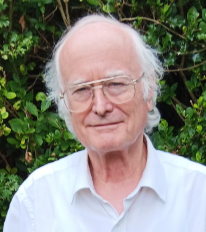 Gary Gibbons合作论文数Department of Applied Mathematics and Theoretical Physics, Faculty of Mathematics, University of Cambridge12
 David S. Berman合作论文数Carnegie Museum of Natural History12
 Gordon L. Kane合作论文数College of Literature, Science, and the Arts, University of Michigan10
 Hadi Godazgar合作论文数8
 Stephen Hawking合作论文数Department of Applied Mathematics and Theoretical Physics, University of Cambridge7
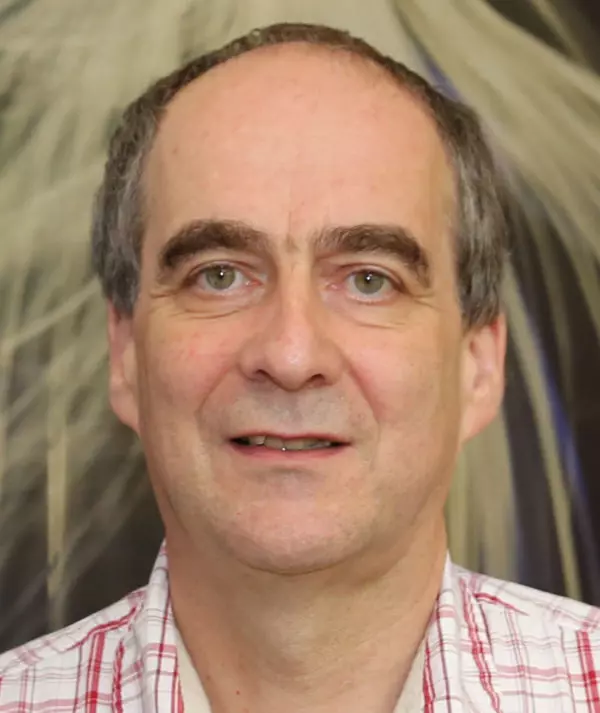 Christopher Pope合作论文数Department of Physics and Astronomy, College of Arts & Sciences, Texas A&M University7
 Andrew Strominger合作论文数Center for the Fundamental Laws of Nature, Department of Physics, Harvard University6
 Miguel Salvado Costa合作论文数5Ing-Simmons Elizabeth合作论文数MRC Clinical Sciences Centre, Imperial College London;MRC Clinical Sciences Centre, Imperial College London;Imperial College London, Imperial College London4
 Fred Adams合作论文数College of Literature, Science, and the Arts, University of Michigan4Boris Lenhard合作论文数Center for Genomics and Bioinformatics, Karolinska Institutet, Stockholm, Sweden4Mahdi Godazgar合作论文数4
 Gary Horowitz合作论文数Department of Physics, University of California, Santa Barbara3Anna N. Zytkow合作论文数3
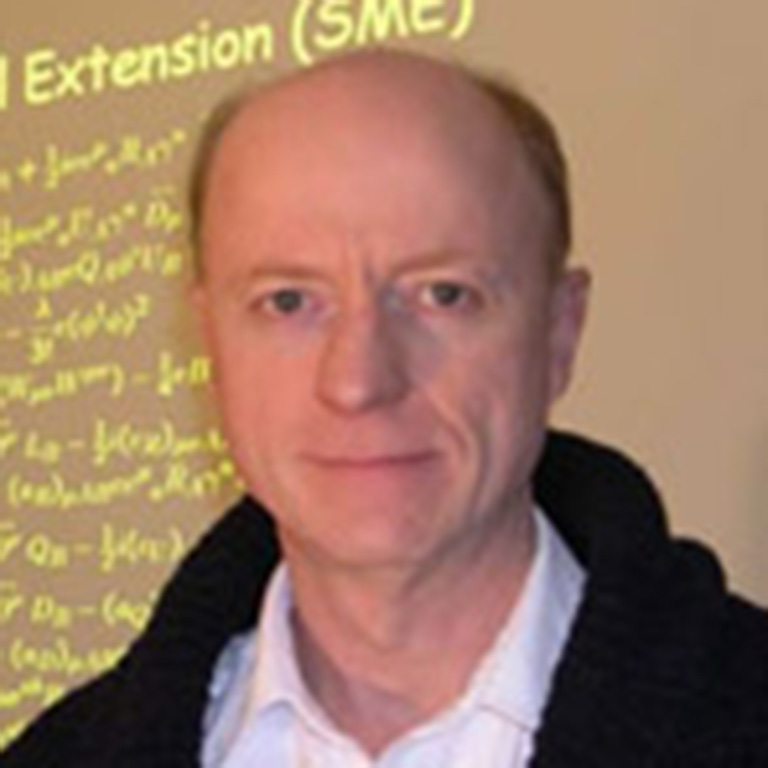 V. Alan Kostelecky合作论文数Department of Physics, College of Arts & Sciences, Indiana University Bloomington3Stephen F. Hewson合作论文数3P. Garcia Abia合作论文数2R. Stainforth合作论文数2J. Lock合作论文数2A. Zuñiga-Reyes合作论文数2E. W. Kolb合作论文数2E. Ellingwood合作论文数2J. B. Ruhland合作论文数2c ouellet合作论文数2J. M. Corning合作论文数2M. Alpízar-Venegas合作论文数2kevin graham blyth合作论文数2m cardenas montes合作论文数2N. Fatemi-Ghomi合作论文数2v strickland合作论文数2J. Walding合作论文数2C. Rethmeier合作论文数2P. Pasuthip合作论文数2C. Mielnichuk合作论文数2S. Florian合作论文数2J. DiGioseffo合作论文数2K. Dering合作论文数2P. M. Burghardt合作论文数2J. F. Bueno合作论文数2T Lindner合作论文数2S. Choi合作论文数2adrian j butcher合作论文数2M. Lissia合作论文数2Derek Cranshaw合作论文数2J. Bonatt合作论文数2S. S. Farahani合作论文数2H. Benmansour合作论文数2S. Daugherty合作论文数2Y. Chen (陈雨)合作论文数2




