Teacher-Student Curriculum Learning (TSCL) is a curriculum learning framework that draws inspiration from human cultural transmission and learning. It involves a teacher algorithm shaping the learning process of a learner algorithm by exposing it to controlled experiences. Despite its success, understanding the conditions under which TSCL is effective remains challenging. In this paper, we propose a data-centric perspective to analyze the underlying mechanics of the teacher-student interactions in TSCL. We leverage cooperative game theory to describe how the composition of the set of experiences presented by the teacher to the learner, as well as their order, influences the performance of the curriculum that is found by TSCL approaches. To do so, we demonstrate that for every TSCL problem, an equivalent cooperative game exists, and several key components of the TSCL framework can be reinterpreted using game-theoretic principles. Through experiments covering supervised learning, reinforcement learning, and classical games, we estimate the cooperative values of experiences and use value-proportional curriculum mechanisms to construct curricula, even in cases where TSCL struggles. The framework and experimental setup we present in this work represents a novel foundation for a deeper exploration of TSCL, shedding light on its underlying mechanisms and providing insights into its broader applicability in machine learning.
Teaching robots how to execute tasks through demonstrations is appealing since it sidesteps the need to explicitly specify a reward function. However, posing imitation learning as a simple supervised learning problem suffers from the well-known problem of distributional shift - the teacher will only demonstrate the optimal trajectory and therefore the learner is unable to recover if it deviates even slightly from this trajectory since it has no training data for this case. This problem has been overcome in the literature by some element of interactivity in the learning process - usually be somehow interleaving the execution of the learner and the teacher so that the teacher can demonstrate to the learner also how to recover from mistakes. In this paper, we consider the cases where the robot has the potential to do harm, and therefore safety must be imposed at every step in the learning process. We show that uncertainty is an appropriate measure of safety and that both the mixing of the policies and the data sampling procedure benefit from considering the uncertainty of both the learner and the teacher. Our method, uncertainty-aware policy sampling and mixing (UPMS), is used to teach an agent to drive down a lane with less safety violations and less queries to the teacher than state-of-the-art methods.
The goal of continuous control is to synthesize desired behaviors. In reinforcement learning (RL)-driven approaches, this is often accomplished through careful task reward engineering for efficient exploration and running an off-the-shelf RL algorithm. While reward maximization is at the core of RL, reward engineering is not the only -- sometimes nor the easiest -- way for specifying complex behaviors. In this paper, we introduce \braxlines, a toolkit for fast and interactive RL-driven behavior generation beyond simple reward maximization that includes Composer, a programmatic API for generating continuous control environments, and set of stable and well-tested baselines for two families of algorithms -- mutual information maximization (MiMax) and divergence minimization (DMin) -- supporting unsupervised skill learning and distribution sketching as other modes of behavior specification. In addition, we discuss how to standardize metrics for evaluating these algorithms, which can no longer rely on simple reward maximization. Our implementations build on a hardware-accelerated Brax simulator in Jax with minimal modifications, enabling behavior synthesis within minutes of training. We hope Braxlines can serve as an interactive toolkit for rapid creation and testing of environments and behaviors, empowering explosions of future benchmark designs and new modes of RL-driven behavior generation and their algorithmic research.
We offer a novel approach to balance exploration and exploitation in reinforcement learning (RL). To do so, we characterize an environment’s exploration difficulty via the Second Largest Eigenvalue Modulus (SLEM) of the Markov chain induced by uniform stochastic behaviour. Specifically, we investigate the connection of state-space coverage with the SLEM of this Markov chain and use the theory of contraction coefficients to derive estimates of this eigenvalue of interest. Furthermore, we introduce a method for estimating the contraction coefficients on a local level and leverage it to design a novel exploration algorithm. We evaluate our algorithm on a series of GridWorld tasks of varying sizes and complexity.
Despite recent breakthroughs, the ability of deep learning and reinforcement learning to outperform traditional approaches to control physically embodied robotic agents remains largely unproven. To help bridge this gap, we created the 'AI Driving Olympics' (AI-DO), a competition with the objective of evaluating the state of the art in machine learning and artificial intelligence for mobile robotics. Based on the simple and well specified autonomous driving and navigation environment called 'Duckietown', AI-DO includes a series of tasks of increasing complexity -- from simple lane-following to fleet management. For each task, we provide tools for competitors to use in the form of simulators, logs, code templates, baseline implementations and low-cost access to robotic hardware. We evaluate submissions in simulation online, on standardized hardware environments, and finally at the competition event. The first AI-DO, AI-DO 1, occurred at the Neural Information Processing Systems (NeurIPS) conference in December 2018. The results of AI-DO 1 highlight the need for better benchmarks, which are lacking in robotics, as well as improved mechanisms to bridge the gap between simulation and reality.
Domain randomization is a popular technique for improving domain transfer, often used in a zero-shot setting when the target domain is unknown or cannot easily be used for training. In this work, we empirically examine the effects of domain randomization on agent generalization. Our experiments show that domain randomization may lead to suboptimal, high-variance policies, which we attribute to the uniform sampling of environment parameters. We propose Active Domain Randomization, a novel algorithm that learns a parameter sampling strategy. Our method looks for the most informative environment variations within the given randomization ranges by leveraging the discrepancies of policy rollouts in randomized and reference environment instances. We find that training more frequently on these instances leads to better overall agent generalization. Our experiments across various physics-based simulated and real-robot tasks show that this enhancement leads to more robust, consistent policies.
One of the many challenges faced by visually impaired (VI) individuals is the crossing of intersections while remaining within the crosswalk. We present a Learning from Demonstration (LfD) approach to tackle this problem and provide VI users with an assistive agent. Contrary to previous methods, our solution does not presume the existence of particular features in crosswalks. The application of the LfD framework helped us transfer sighted individuals' abilities to the intelligent assistive agent. Our proposed approach started from a collection of 215 demonstrative videos of intersection crossings executed by sighted individuals ("the experts"). We labeled the video frames to gather the experts' recommended actions, and then applied a policy derivation technique to extract the optimal behavior using state-of-the-art Convolutional Neural Networks. Finally, to assess the feasibility of such a solution, we evaluated the performance of the trained agent in predicting expert actions.
 Liam Paull合作论文数Department of Computer Science and Operations Research, Faculty of Arts and Science, Universite de Montreal;Courtois Institute, Universite de Montreal;Quebec Artificial Intelligence Institute;Duckietown5
 Florian Golemo合作论文数Mila2
 Bhairav Mehta合作论文数CharacterQuilt2
 Thomas Fevens合作论文数Department of Computer Science and Software Engineering
Faculty of Engineering and Computer Science
Concordia University2
Thomas Fevens合作论文数Department of Computer Science and Software Engineering
Faculty of Engineering and Computer Science
Concordia University2 Jan Hakenberg合作论文数1Ruslan Hristov合作论文数1Gianmarco Bernasconi合作论文数ETH Zurich1
 Julian G. Zilly合作论文数1Byron David合作论文数Google1
 Erik Frey合作论文数1
 Sunil Mallya合作论文数Amazon AWS1
 Andrea F Daniele合作论文数Toyota Technological Institute at Chicago1
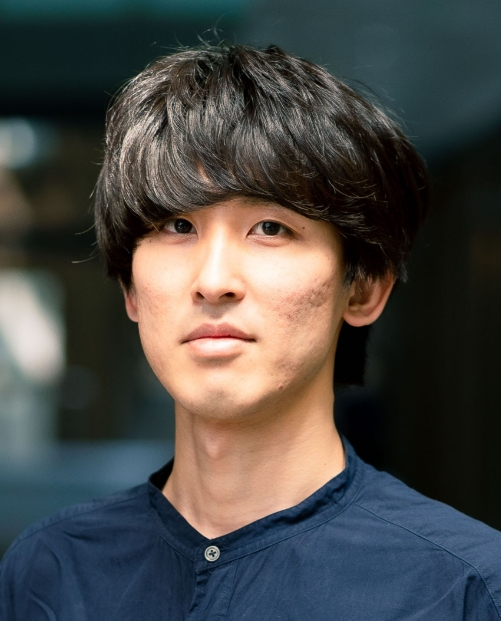 Hiroki Furuta (古田拓毅)合作论文数Department of Technology Management for Innovation, Graduate School of Engineering, The University of Tokyo;Matsuo-Iwasawa Lab, The University of Tokyo;Google DeepMind1
 Claudio Ruch合作论文数Autom. Control Lab., ETH Zurich;c;Autom. Control Lab., ETH Zurich1
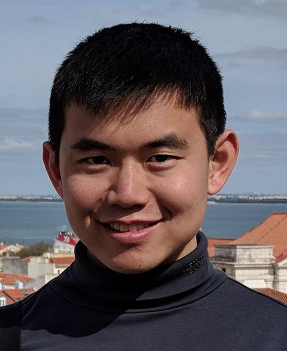 Shixiang Shane Gu合作论文数Google DeepMind1
 Breandan Considine合作论文数School of Computer Science, McGill University1
 Christopher Pal合作论文数Department of Computer Engineering and Software Engineering, Polytechnique Montréal;Department of Computer Science and Operations Research,;Mila;ServiceNow Research;UdeM DIRO1
 Emilio Frazzoli合作论文数Laboratory for Information and Decision Systems, Massachusetts Institute of Technology;Operations Research Center, Massachusetts Institute of Technology;Eidgenössische Technische Hochschule Zürich1
 Anton Raichuk合作论文数Google1
 Roger Girgis合作论文数Polytechnique Montréal1
 Olivier Bachem合作论文数Google DeepMind1
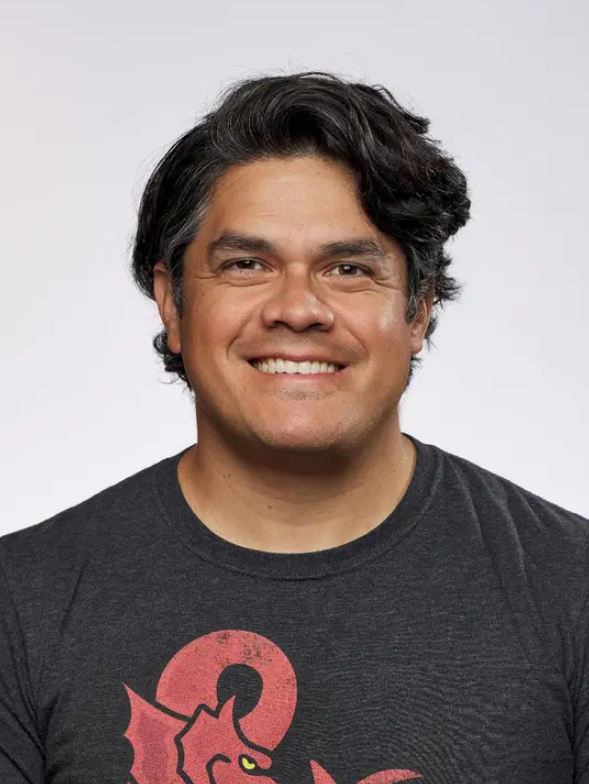 Pablo Samuel Castro合作论文数Google DeepMind1
 Andrea Tacchetti合作论文数Google DeepMind1
 Erwin Coumans合作论文数NVIDIA1
 Jeremy R. Cooperstock合作论文数Department of Electrical and Computer Engineering, McGill University;Centre for Intelligent Machines, McGill University;Centre for Interdisciplinary Research in Music Media and Technology, McGill University1
 Jacopo Tani合作论文数1
 Andrea Censi合作论文数Institute for Dynamic Systems and Control, ETH Zurich;Department of Mechanical and Process Engineering, ETH Zurich;ZuperMind;NCCR Automation;Duckietown1
 Seyed Kamyar Seyed Ghasemipour合作论文数Generalist1
 Matthew Walter合作论文数Robot Intelligence through Perception Laboratory, Toyota Technological Institute at Chicago;Woods Hole Oceanographic Institution1




