Optimal control for fully observed diffusion processes is well established and has led to numerous numerical implementations based on, for example, Bellman’s principle, model free reinforcement learning, Pontryagin’s maximum principle, and model predictive control. In contrast, much fewer algorithms are available for optimal control of partially observed processes. However, this scenario is central to the digital twin paradigm, where a physical twin is partially observed and control laws are derived based on a digital twin. In this paper, we contribute to this challenge by combining data assimilation in the form of the ensemble Kalman filter with the recently proposed McKean–Pontryagin approach to stochastic optimal control. We derive forward evolving mean-field evolution equations for states and co-states which simultaneously allow for an online assimilation of data as well as an online computation of control laws. The proposed methodology is therefore perfectly suited for real time applications of digital twins. We present numerical results for controlled Lorenz-63 and Lorenz-96 systems as well as an inverted pendulum.
Variability of motility behavior in populations of microbiological agents is a ubiquitous phenomenon even in the case of genetically identical cells. Accordingly, passive objects introduced into such biological systems and driven by them will also exhibit heterogeneous motion patterns. Here, we study a biohybrid system of passive beads driven by active ameboid cells and use a likelihood approach to estimate the heterogeneity of the bead dynamics from their discretely sampled trajectories. We showcase how this approach can deal with information-scarce situations and provides natural uncertainty bounds for heterogeneity estimates. Using these advantages, we particularly uncover that the heterogeneity in the system is time-dependent.
The use of ordinary and stochastic differential equations has led to substantial progress in generative machine learning with applications to, for example, image, video and biomolecule generation. This paper provides a self-contained and informal introduction to the differential equations, the probabilistic framework for using them in generative modeling and the Fokker–Planck equation that governs the temporal evolution of the marginal distribution of the stochastic variables of the differential equations. The variational lower bound on the log-likelihood (the evidence lower bound, ELBO) is derived and used as a general starting point for a discussion of diffusion models, score matching, and flow matching. All of these approaches may be viewed as specific parameterizations of the most general variational approach. A one-dimensional density modeling problem is used as a simple example to compare different parameterizations.
Modelling extreme events and heavy-tailed phenomena is central to building reliable predictive systems in domains such as finance, climate science, and safety-critical AI. While Lévy processes provide a natural mathematical framework for capturing jumps and heavy tails, Bayesian inference for Lévy-driven stochastic differential equations (SDEs) remains intractable with existing methods: Monte Carlo approaches are rigorous but lack scalability, whereas neural variational inference methods are efficient but rely on Gaussian assumptions that fail to capture discontinuities. We address this tension by introducing a neural exponential tilting framework for variational inference in Lévy-driven SDEs. Our approach constructs a flexible variational family by exponentially reweighting the Lévy measure using neural networks. This parametrization preserves the jump structure of the underlying process while remaining computationally tractable. To enable efficient inference, we develop a quadratic neural parametrization that yields closed-form normalization of the tilted measure, a conditional Gaussian representation for stable processes that facilitates simulation, and symmetry-aware Monte Carlo estimators for scalable optimization. Empirically, we demonstrate that the method accurately captures jump dynamics and yields reliable posterior inference in regimes where Gaussian-based variational approaches fail, on both synthetic and real-world datasets.
The inherent complexity of biological agents often leads to motility behavior that appears to have random components. Robust stochastic inference methods are therefore required to understand and predict the motion patterns from time-discrete trajectory data provided by experiments. In many cases, second-order Langevin models are needed to adequately capture the motility. Additionally, population heterogeneity needs to be taken into account when analyzing data from several individual organisms. In this work, we describe a maximum likelihood approach to infer dynamical, stochastic models and, simultaneously, estimate the heterogeneity in a population of motile active particles from discretely sampled, stochastic trajectories. To this end, we propose a method to approximate the likelihood for non-linear second-order Langevin models. We show that this maximum likelihood ansatz outperforms alternative approaches, especially for short trajectories. Additionally, we demonstrate how a measure of uncertainty for the heterogeneity estimate can be derived. We thereby pave the way for the systematic, data-driven inference of dynamical models for actively driven entities based on trajectory data, deciphering temporal fluctuations and inter-particle variability.
Generative modeling of high-energy collisions at the Large Hadron Collider (LHC) offers a data-driven route to simulations, anomaly detection, among other applications. A central challenge lies in the hybrid nature of particle-cloud data: each particle carries continuous kinematic features and discrete quantum numbers such as charge and flavor. We introduce a transformer-based multimodal flow that extends flow-matching with a continuous-time Markov jump bridge to jointly model LHC jets with both modalities. Trained on CMS Open Data, our model can generate high fidelity jets with realistic kinematics, jet substructure and flavor composition.
We consider unsourced random access (uRA) in a cell-free (CF) user-centric wireless network, where a large number of potential users compete for a random access slot, while only a finite subset is active. The random access users transmit codewords of length L symbols from a shared codebook, which are received by B geographically distributed radio units (RUs), each equipped with M antennas. Our goal is to devise and analyze a centralized decoder to detect the transmitted messages (without prior knowledge of the active users) and estimate the corresponding channel state information. A specific challenge lies in the fact that, due to the geographically distributed nature of the CF network, there is no fixed correspondence between codewords and large-scale fading coefficients (LSFCs). This makes current activity detection approaches which make use of this fixed LSFC-codeword association not directly applicable. To overcome this problem, we propose a scheme where the access codebook is partitioned in location-based subcodes, such that users in a particular location make use of the corresponding subcode. The joint message detection and channel estimation is obtained via a novel Approximated Message Passing (AMP) algorithm for a linear superposition of matrix-valued sources corrupted by noise. The statistical asymmetry in the fading profile and message activity leads to different statistics for the matrix sources, which distinguishes the AMP formulation from previous cases. In the regime where the codebook size scales linearly with L, while B and M are fixed, we present a rigorous high-dimensional (but finite-sample) analysis of the proposed AMP algorithm. Exploiting this, we then present a precise (and rigorous) large-system analysis of the message missed-detection and false-alarm rates, as well as the channel estimation mean-square error. The resulting system allows the seamless formation of user-centric clusters and very low latency beamformed uplink-downlink communication without explicit user-RU association, pilot allocation, and power control. This makes the proposed scheme highly appealing for low-latency random access communications in CF networks.
This papers outlines a novel extension of the classical Pontryagin minimum (maximum) principle to stochastic optimal control problems. Contrary to the well-known stochastic Pontryagin minimum principle involving forward-backward stochastic differential equations, the proposed formulation is deterministic and of mean-field type. We denote it the McKean-Pontryagin minimum principle. The Hamiltonian structure of the proposed McKean-Pontryagin minimum principle is achieved via the introduction of an appropriate gauge variable. The gauge freedom can be used to decouple the forward and reverse time equations; hence simplifying the solution of the underlying boundary value problem. We also consider infinite horizon discounted cost optimal control problems. In this case, the mean-field formulation allows converting the computation of the desired optimal control law into solving a pair of forward mean-field ordinary differential equations. The McKean-Pontryagin minimum principle is tested numerically for a controlled inverted pendulum and a controlled Lorenz-63 system.
We present a hierarchical, control theory inspired method for variational inference (VI) for neural stochastic differential equations (SDEs). While VI for neural SDEs is a promising avenue for uncertainty-aware reasoning in time-series, it is computationally challenging due to the iterative nature of maximizing the ELBO. In this work, we propose to decompose the control term into linear and residual non-linear components and derive an optimal control term for linear SDEs, using stochastic optimal control. Modeling the non-linear component by a neural network, we show how to efficiently train neural SDEs without sacrificing their expressive power. Since the linear part of the control term is optimal and does not need to be learned, the training is initialized at a lower cost and we observe faster convergence.
We present *Fractional Diffusion Bridge Models* (FDBM), a novel generative diffusion bridge framework driven by the rich and non-Markovian fractional Brownian motion (fBM). Real stochastic processes exhibit a degree of memory effects (correlations in time), long-range dependencies, roughness and anomalous diffusion phenomena that are not captured in standard diffusion or bridge modeling due to the use of Brownian motion (BM). As a remedy, leveraging a recent Markovian approximation (MA-fBM), we construct FDBM that enable tractable inference while preserving the non-Markovian nature of fBM. We prove that the resulting bridge is a coupling-preserving process and leverage it for future state prediction from paired training data. We then extend our formulation to the Schrödinger bridge problem and derive a principled loss function to learn the unpaired data translation. We evaluate FDBM on both tasks: predicting future protein conformations from aligned data, and unpaired image translation. In both settings, FDBM achieves superior performance compared to the Brownian baselines, yielding lower root mean squared deviation (RMSD) of C$_\alpha$ atomic positions in protein structure prediction and lower Fréchet Inception Distance (FID) in unpaired image translation.
Motivated by the recent application of approximate message passing (AMP) to the analysis of convex optimizations in multi-class classifications [Loureiro, et. al., 2021], we present a convergence analysis of AMP dynamics with non-separable multivariate nonlinearities. As an application, we present a complete (and independent) analysis of the motivated convex optimization problem.
Generative modeling via stochastic processes has led to remarkable empirical results as well as to recent advances in their theoretical understanding. In principle, both space and time of the processes can be discrete or continuous. In this work, we study time-continuous Markov jump processes on discrete state spaces and investigate their correspondence to state-continuous diffusion processes given by SDEs. In particular, we revisit the $\textit{Ehrenfest process}$, which converges to an Ornstein-Uhlenbeck process in the infinite state space limit. Likewise, we can show that the time-reversal of the Ehrenfest process converges to the time-reversed Ornstein-Uhlenbeck process. This observation bridges discrete and continuous state spaces and allows to carry over methods from one to the respective other setting, such as for instance loss functions that lead to improved convergence. Additionally, we suggest an algorithm for training the time-reversal of Markov jump processes which relies on conditional expectations and can thus be directly related to denoising score matching. We demonstrate our methods in multiple convincing numerical experiments.
We consider unsourced random access (uRA) in user-centric cell-free (CF) wireless networks, where random access users send codewords from a common codebook during specifically dedicated random access channel (RACH) slots. The system is conceptually similar to the so-called 2-step RACH currently discussed in 3GPP standardization. In order to cope with the distributed and CF nature of the network, we propose to partition the network coverage area into zones (referred to as ”locations”) and assign an uRA codebook to each location, such that users in a certain location make use of the associated codebook. The centralized uRA decoder makes use of the multisource AMP algorithm recently proposed by the authors. This yields at once the list of active uRA codewords, an estimate of the corresponding channel vectors, and an estimate of the active users' position. We show excellent performance of this approach and perfect agreement with the rigorous theoretical ”state evolution” analysis. We also show that the proposed ”location-based” partitioned codebook approach significantly outperforms a baseline system with a single non-partitioned uRA codebook.
We present a novel variational framework for performing inference in (neural) stochastic differential equations (SDEs) driven by Markov-approximate fractional Brownian motion (fBM). SDEs offer a versatile tool for modeling real-world continuous-time dynamic systems with inherent noise and randomness. Combining SDEs with the powerful inference capabilities of variational methods, enables the learning of representative function distributions through stochastic gradient descent. However, conventional SDEs typically assume the underlying noise to follow a Brownian motion (BM), which hinders their ability to capture long-term dependencies. In contrast, fractional Brownian motion (fBM) extends BM to encompass non-Markovian dynamics, but existing methods for inferring fBM parameters are either computationally demanding or statistically inefficient. In this paper, building upon the Markov approximation of fBM, we derive the evidence lower bound essential for efficient variational inference of posterior path measures, drawing from the well-established field of stochastic analysis. Additionally, we provide a closed-form expression to determine optimal approximation coefficients. Furthermore, we propose the use of neural networks to learn the drift, diffusion and control terms within our variational posterior, leading to the variational training of neural-SDEs. In this framework, we also optimize the Hurst index, governing the nature of our fractional noise. Beyond validation on synthetic data, we contribute a novel architecture for variational latent video prediction,-an approach that, to the best of our knowledge, enables the first variational neural-SDE application to video perception.
We introduce the first continuous-time score-based generative model that leverages fractional diffusion processes for its underlying dynamics. Although diffusion models have excelled at capturing data distributions, they still suffer from various limitations such as slow convergence, mode-collapse on imbalanced data, and lack of diversity. These issues are partially linked to the use of light-tailed Brownian motion (BM) with independent increments. In this paper, we replace BM with an approximation of its non-Markovian counterpart, fractional Brownian motion (fBM), characterized by correlated increments and Hurst index $H \in (0,1)$, where $H=0.5$ recovers the classical BM. To ensure tractable inference and learning, we employ a recently popularized Markov approximation of fBM (MA-fBM) and derive its reverse-time model, resulting in *generative fractional diffusion models* (GFDM). We characterize the forward dynamics using a continuous reparameterization trick and propose *augmented score matching* to efficiently learn the score function, which is partly known in closed form, at minimal added cost. The ability to drive our diffusion model via MA-fBM offers flexibility and control. $H \leq 0.5$ enters the regime of *rough paths* whereas $H>0.5$ regularizes diffusion paths and invokes long-term memory. The Markov approximation allows added control by varying the number of Markov processes linearly combined to approximate fBM. Our evaluations on real image datasets demonstrate that GFDM achieves greater pixel-wise diversity and enhanced image quality, as indicated by a lower FID, offering a promising alternative to traditional diffusion models
A Schrödinger bridge is a stochastic process connecting two given probability distributions over time. It has been recently applied as an approach for generative data modelling. The computational training of such bridges requires the repeated estimation of the drift function for a time-reversed stochastic process using samples generated by the corresponding forward process. We introduce a modified score- function-based method for computing such reverse drifts, which can be efficiently implemented by a feed-forward neural network. We applied our approach to artificial datasets with increasing complexity. Finally, we evaluated its performance on genetic data, where Schrödinger bridges can be used to model the time evolution of single-cell RNA measurements.
Here we consider a problem of multiple measurement vector (MMV) compressed sensing with multiple signal sources. The observation model is motivated by the application of {\em unsourced random access} in wireless cell-free MIMO (multiple-input-multiple-output) networks. We present a novel (and rigorous) high-dimensional analysis of the AMP (approximate message passing) algorithm devised for the model. As the system dimensions in the order, say $\mathcal O(L)$, tend to infinity, we show that the empirical dynamical order parameters -- describing the dynamics of the AMP -- converge to deterministic limits (described by a state-evolution equation) with the convergence rate $\mathcal O(L^{-\frac 1 2})$. Furthermore, we have shown the asymptotic consistency of the AMP analysis with the replica-symmetric calculation of the static problem. In addition, we provide some interesting aspects on the unsourced random access (or initial access) for cell-free systems, which is the application motivating the algorithm.
The spatio-temporal epidemic type aftershock sequence (ETAS) model is widely used to describe the self-exciting nature of earthquake occurrences. While traditional inference methods provide only point estimates of the model parameters, we aim at a fully Bayesian treatment of model inference, allowing naturally to incorporate prior knowledge and uncertainty quantification of the resulting estimates. Therefore, we introduce a highly flexible, non-parametric representation for the spatially varying ETAS background intensity through a Gaussian process (GP) prior. Combined with classical triggering functions this results in a new model formulation, namely the GP-ETAS model. We enable tractable and efficient Gibbs sampling by deriving an augmented form of the GP-ETAS inference problem. This novel sampling approach allows us to assess the posterior model variables conditioned on observed earthquake catalogues, i.e., the spatial background intensity and the parameters of the triggering function. Empirical results on two synthetic data sets indicate that GP-ETAS outperforms standard models and thus demonstrate the predictive power for observed earthquake catalogues including uncertainty quantification for the estimated parameters. Finally, a case study for the l’Aquila region, Italy, with the devastating event on 6 April 2009, is presented.
In this paper, we propose to leverage the Bayesian uncertainty information encoded in parameter distributions to inform the learning procedure for Bayesian models. We derive a first principle stochastic differential equation for the training dynamics of the mean and uncertainty parameter in the variational distributions. On the basis of the derived Bayesian stochastic differential equation, we apply the methodology of stochastic optimal control on the variational parameters to obtain individually controlled learning rates. We show that the resulting optimizer, StochControlSGD, is significantly more robust to large learning rates and can adaptively and individually control the learning rates of the variational parameters. The evolution of the control suggests separate and distinct dynamical behaviours in the training regimes for the mean and uncertainty parameters in Bayesian neural networks.
 Ole Winther合作论文数Department of Applied Mathematics and Computer Science, Danmarks Tekniske Universitet;Section for Cognitive Systems, DTU Compute, Technical University of Denmark;Section for Computational and RNA Biology, Department of Biology, University of Copenhagen;Raffle.ai30
 Dan Cornford合作论文数Neural Computing Research Group;Aston University;Neural Computing Research Group, Aston University22
 Burak Çakmak合作论文数Dept. of Electron. Syst., Aalborg Univ.;c;Dept. of Electron. Syst., Aalborg Univ.16
 Andreas Ruttor合作论文数Institut fur Theoretische;Universitat Wurzburg;Institut fur Theoretische, Universitat Wurzburg16
 Guido Sanguinetti合作论文数Institute for Adaptive and Neural Computation, School of Informatics, The University of Edinburgh14Lehel Csato合作论文数Faculty of Mathematics and Informatics, Universitatea BABES-BOLYAI14
 Cédric Archambeau合作论文数Department of Computer Science ;Centre for Computational Statistics and Machine Learning;University College London11
 Christian Donner合作论文数Bernstein Ctr Computat Neurosci, Berlin, Germany9
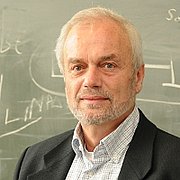 Wolfgang Kinzel合作论文数Institut für Theoretische Physik und Astrophysik, Julius Maximilians Universität Würzburg9
 Dorthe Malzahn合作论文数9
 Theo Galy-Fajou合作论文数Technical University of Berlin8
 Ron Meir合作论文数Viterbi Faculty of Electrical Engineering, Technion Israel Institute of Technology8
 John Shawe-Taylor合作论文数Department of Computer Science, University College London;IRCAI7
 César Ojeda合作论文数Fraunhofer IAIS Sankt Augustin6
 David Haussler合作论文数Department of Bioengineering and Therapeutic Sciences, University of California, San Francisco;Stanford University School of Medicine;Genomics Institute, University of California, Santa Cruz6
 Michail D. Vrettas合作论文数Neural Computing Research Group Aston Triangle, Aston University6
 Yuan Shen (沈渊)合作论文数Department of Electronic Engineering, Tsinghua University5
 Sebastian Reich合作论文数Department of Mathematics, Imperial College5
 Yuval Harel合作论文数5
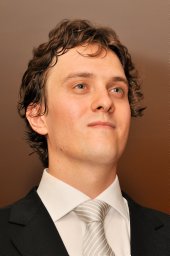 Alex K. Susemihl合作论文数Dept Artificial Intelligence, Tech Univ Berlin5
 Botond Cseke合作论文数Volkswagen AG5
 Birdal Tolga合作论文数Stanford University5
 David Saad合作论文数4
 Rembert Daems合作论文数Ghent University4Ludovica Bachschmid-Romano合作论文数4
 Noa Malem-Shinitski合作论文数Inst Math, Univ Potsdam4
 Florian Wenzel合作论文数Amazon AWS AI4
 Ulrich Paquet合作论文数Google DeepMind;African Institute for Mathematical Sciences South Africa4
 Florian Stimberg合作论文数DeepMind4
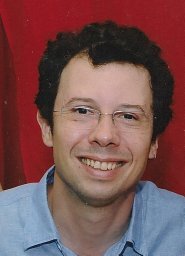 Mauro Copelli合作论文数Laboratorio de F ´ õsica Teorica e Computacional;Departamento de F ´ õsica;Universidade Federal de Pernambuco;Laboratorio de F ´ õsica Teorica e Computacional, Universidade Federal de Pernambuco4
 Jakob Macke合作论文数University of Tuebingen4
 Ludwig Winkler合作论文数Berlin Institute of Technology, Technische Universität Berlin;Prescient Design3
 Dimitra Maoutsa合作论文数Dept Theoret Comp Sci, Tech Univ Berlin3
 Matthias Bethge合作论文数Bethge Lab, University of Tuebingen;Institute for Theoretical Physics, Faculty of Science, University of Tuebingen;AI Cente, University of Tuebingen;Bundeswettbewerb KI;European Laboratory for Learning and Intelligent Systems;Maddox AI;DeepArt UG3
 Haim Sompolinsky合作论文数Center for Neural Computation, Racah Institute of Physics;Hebrew University;Racah Institute of Physics and Center for Neural Computation, Hebrew University3Bruno Lopez合作论文数Observatoire de la Côte d’Azur, UMR LAGRANGE3
 Peter Sollich合作论文数Institut Fur Theoretische Physik, Fakultat Fur Physik, Georg-August-Universitat Gottingen;Department of Mathematics, King's College London3Hannes Bolterauer合作论文数3Rainer Dietrich合作论文数3Robert Urbanczik合作论文数3Philipp Batz合作论文数3h eissfeller合作论文数2Valerio Perrone合作论文数2
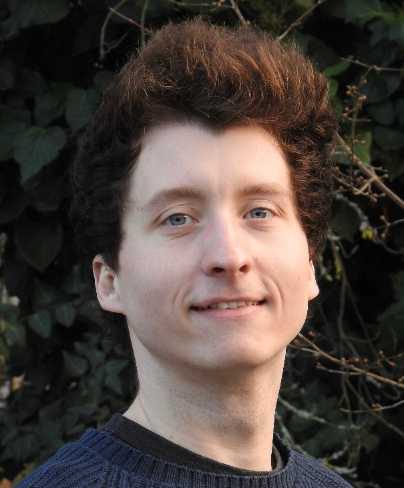 Gabriel Nobis合作论文数Department of Artificial Intelligence, Fraunhofer Heinrich-Hertz-Institute;Imperial College London2S. Diederich合作论文数2
 Barbara Bravi合作论文数Department of Mathematics, Imperial College London2David Evans合作论文数2




