We study a non-reciprocal version of Model B, as the continuum theory for non-reciprocal particle mixtures. In contrast to non-reciprocal Cahn-Hilliard models, it is important in this context to consider the dependence of mobility coefficients on the local concentrations. We show that a homogeneous state that is linearly stable for one form of the mobility can be unstable for a different form of mobility, an effect that would be impossible in equilibrium and implies a crucial role for mobilities in non-reciprocal mixtures. For unstable homogeneous states we study the spinodal dynamics governing the onset of phase separation. We find, again in contrast to non-reciprocal Cahn-Hilliard models, that exceptional point transitions between static and oscillatory instabilities are generically avoided by first order transitions where the spinodal lengthscale changes discontinuously. At these transitions we find intricate spinodal dynamics with two competing lengthscales, one governing a static instability and the other an oscillatory instability, i.e. one that generates travelling waves. We demonstrate that, depending on interaction strengths, more complex transitions can occur in the spinodal dynamics, including coexistence of three lengthscales and first order transition lines, terminated by critical points, between distinct static instabilities. Finally, we explore the effects of additional non-reciprocity in the interfacial chemical potentials, which would generically be expected when obtaining Model B by coarse graining from a non-reciprocal particle model. We show that interfacial non-reciprocity can increase the region in the spinodal phase diagram where oscillatory instabilities occur, but only up to a certain boundary that we establish analytically and demonstrate numerically.
Molecules in dense environments, such as biological cells, are subjected to forces that fluctuate both in time and in space. While spatial fluctuations are captured by Lifson-Jackson-Zwanzig's model of "diffusion in a rough potential," and temporal fluctuations are often viewed as leading to additional friction effects, a unified view where the environment fluctuates both in time and in space is currently lacking. Here, we introduce a discrete-state model of a landscape fluctuating both in time and in space. Importantly, the model accounts for the reciprocal interaction of the diffusing particle with the landscape, which alters the landscape dynamics. As a result we find, surprisingly, that many features of the observable dynamics do not depend on the temporal fluctuation timescales and are already captured by the model of diffusion in a rough potential, even though this assumes a static energy landscape. Using this model, we reevaluate results of several experimental studies of protein dynamics and propose more accurate bounds on the inferred energetic roughness scales, which account for landscape dynamics.
Computational modeling has emerged as a powerful approach to studying cytoskeletal dynamics. The simulation software Cytosim provides intuitive yet flexible simulations of filament polymerization, cross-linking, and motor activity. Here, we present Cytocalc, a lightweight Python toolkit designed to streamline and standardize the analysis of Cytosim simulation output, supporting studies of biological functionality and physical properties of cytoskeletal systems. After introducing Cytocalc and validating it, we use it to establish a new workflow for quantifying network viscoelasticity from Cytosim simulations. Specifically, we determine the complex shear modulus of cross-linked networks and quantify how the storage modulus increases with cross-linker density. The cross-linker dependence of the network’s elasticity exhibits two regimes, a scaling regime consistent with elasticity arising from the suppression of thermal bending fluctuations of filaments as well as a much weaker dependence at high cross-linker concentration.
Molecules in dense environments, such as biological cells, are subjected to forces that fluctuate both in time and in space. While spatial fluctuations are captured by Lifson-Jackson-Zwanzig’s model of “diffusion in a rough potential,” and temporal fluctuations are often viewed as leading to additional friction effects, a unified view where the environment fluctuates both in time and in space is currently lacking. Here, we introduce a discrete-state model of a landscape fluctuating both in time and in space. Importantly, the model accounts for the reciprocal interaction of the diffusing particle with the landscape, which alters the landscape dynamics. As a result we find, surprisingly, that many features of the observable dynamics do not depend on the temporal fluctuation timescales and are already captured by the model of diffusion in a rough potential, even though this assumes a static energy landscape. Using this model, we reevaluate results of several experimental studies of protein dynamics and propose more accurate bounds on the inferred energetic roughness scales, which account for landscape dynamics.
Understanding the influence of activity on dense amorphous assemblies is crucial for biological processes such as wound healing, embryogenesis, or cancer progression. Here, we study the effect of self-propulsion forces of amplitude [Formula: see text] and persistence time [Formula: see text] in dense assemblies of soft repulsive particles by simulating a model particle system that interpolates between particulate active matter and biological tissues. We identify the fluid and glass phases of the three-dimensional phase diagram obtained by varying [Formula: see text], [Formula: see text], and the packing fraction [Formula: see text]. The morphology of the phase diagram accounts for a nonmonotonic evolution of the relaxation time with [Formula: see text], which is a direct consequence of the crossover in the dominant relaxation mechanism, from glassy to jamming. A second major consequence is the evolution of the glassy dynamics from sub-Arrhenius to super-Arrhenius. We show that this tunable glass fragility extends to active systems analogous observations reported for passive particles. This analogy allows us to apply a dynamic scaling analysis proposed for the passive case, in order to account for our results for active systems. Finally, we discuss similarities and differences between our results and recent findings in the context of computational models of biological tissues.
We propose and analyze a new variation of the so-called exponential Hopfield model, a recently introduced family of associative neural networks with unprecedented storage capacity. Our construction is based on a cost function defined through exponentials of standard Mean Squared Error (MSE) loss function per pattern, which naturally favors configurations corresponding to perfect recall. Despite not being a mean-field system, the model admits a tractable mathematical analysis of its dynamics and retrieval properties that agree with those for the original exponential model introduced by Ramsauer and coworkers. By means of a signal-to-noise approach, we demonstrate that stored patterns remain stable fixed points of the zero-temperature dynamics up to an exponentially large number of patterns in the system size. We further quantify the basins of attraction of the retrieved memories, showing that while enlarging their radius reduces the overall load, the storage capacity nonetheless retains its exponential scaling. An independent derivation in the perfect recall regime confirms these results and provides an estimate of the relevant prefactors. We also compare typical case (as standard in statistical mechanics) vs worst case (as standard in machine learning) recall criteria, finding an exponential storage capacity even for the latter case. Our findings thus complement and extend previous studies on exponential Hopfield networks, establishing that even under robustness constraints these models preserve their exceptional storage capabilities. Beyond their theoretical interest, such networks point towards principled mechanisms for massively scalable associative memory, potentially offering a theoretical way out of the storage-bottleneck problem caused by the current trend of digital data production doubling roughly every couple of years. As an illustration, we show that in order to store 150 zettabytes, i.e. approximately all digital data stored worldwide at present, an exponential Hopfield model of the proposed type with less than a hundred neurons would suffice.
Fatigue failure occurs when a solid is subjected to repeated, cyclic loading. Glasses subjected to cyclic to shear deformation have recently been investigated using computer simulations and theoretical models, to characterize and rationalize the dependence of the number of cycles to failure, depending on the properties of the glasses, and the deformation amplitude. The average number of cycles to failure has been observed to diverge as the strain amplitude approaches the so-called fatigue limit from above. In this work, rather than the average times themselves, we investigate by computer simulations the distribution of fatigue failure times, in model glasses subjected to cyclic shear deformation and in an elasto-plastic model. In particular, we observe in atomistic simulations that the standard deviation of the logarithm of failure times are proportional to their mean values, with the proportionality constant decreasing as the system size increases, indicating a sharper distribution of failure times. Using a finite-element-based elasto-plastic model, we observe similar behavior and perform a system-size analysis showing that the ratio of the standard deviation to the mean tends toward zero in the thermodynamic limit. Such distributions, rather than arising solely from the distribution of disorder in the samples that have been subjected to cyclic deformation, appear to arise from the intrinsic stochasticity of the failure process, which we analyze through a stochastic damage accumulation model.
Rheological properties of chiral active materials have been an important area of research in the recent past, in particular regarding odd terms in their mechanical response. While much progress has been made in the study of odd viscous fluids and odd elastic solids, there is still a lack of understanding of odd viscoelastic responses. We introduce a chiral soft glassy rheology model to understand the emergence and nature of such odd viscoelastic responses in a class of amorphous solids. We use this model, which effectively considers an ensemble of actively rotating inclusions in a glassy matrix, to study the linear stress response to steady and oscillatory shear flows. For steady shear we find an odd viscosity that, non-trivially, grows as the active rotation frequency Ω decreases. In oscillatory shear we find an odd viscoelastic spectrum with a non-trivial dependence on the driving frequency ω, combining resonance effects around ω = 2Ω with glassy power laws at larger ω.
Designing the phase behavior of multicomponent mixtures is a rich area with many potential applications. One key question is how more than M+1 phases, as would normally be allowed by Gibbs' phase rule at generic temperature in a mixture of M molecular species, can be made to coexist in equilibrium. While such "super-Gibbs" phase coexistence is possible in the grand-canonical ensemble by tuning interactions among the M species, there is no straightforward equivalence in the canonical ensemble: Only a subset of the grand-canonical phases will generically be realized. Here, we show that, upon further design of interface tensions, it is possible to stabilize a super-Gibbs number of phases also in the experimentally relevant canonical ensemble, thus effectively restoring equivalence to the grand-canonical one. Using a graph-theoretical approach, we determine a sufficient set of inequalities for the interfacial tensions for which all grand-canonical phases are realized. We illustrate the design method for a two-component mixture with four coexisting phases and point out the route for generalizing this to a higher number of components.
Molecules in dense environments, such as biological cells, are subjected to forces that fluctuate both in time and in space. While spatial fluctuations are captured by Lifson-Jackson-Zwanzig's model of "diffusion in a rough potential", and temporal fluctuations are often viewed as leading to additional friction effects, a unified view where the environment fluctuates both in time and in space is currently lacking. Here we introduce a discrete-state model of a landscape fluctuating both in time and in space. Importantly, the model accounts for the back-reaction of the diffusing particle on the landscape. As a result we find, surprisingly, that many features of the observable dynamics do not depend on the temporal fluctuation timescales and are already captured by the model of diffusion in a rough potential, even though this assumes a static energy landscape.
Recent computer simulations reveal several intriguing features in the evolution of properties of amorphous solids subjected to repeated cyclic shear deformation. These include the divergence of the number of cycles to reach steady states as the yielding point is approached, a non-monotonic change of properties with cycles, and the possibility of a spectrum of frozen states. Theoretical attempts to capture these properties through simple models, including the Ehrenfest model describing a random walk in a confining potential, have met partial success. Here, we show that incorporating the influence of mechanical noise through a feedback term leads to a genuine dynamical transition with characteristics reflecting those of yielding. Coarse graining the dynamics into a small number of variables leads to new insights regarding the dynamics of yielding.
How activity affects the glassy dynamics is crucial for several biological processes. Furthermore, active glasses offer fascinating phenomenologies, extend the scope of equilibrium glass-forming liquids, and can provide novel insights into the original problem. We introduce a family of novel approaches to investigating the relaxation dynamics of active glasses via an active elastoplastic model (EPM). These approaches describe the relaxation dynamics via local plastic yielding and can provide improved insights as we can study various aspects of the system separately. Activity enters the model via three crucial features: activity-mediated plastic yielding, activated barrier crossing, and persistent rotational dynamics of the yielding direction. We first consider a minimal active EPM that adds the effect of active yielding to a thermal EPM. We show that this active EPM captures the known results of active glasses within a reasonable parameter space. The results also agree well with the analytical results for active glasses when activity is small. The minimal model breaks down at very low temperatures where other effects become important. Looking at the broader model class, we demonstrate that whereas active yielding primarily dominates the relaxation dynamics, the persistence of the yielding direction governs the dynamic heterogeneity in active glasses.
We study within a paradigmatic model for glassy dynamics, the Barrat-Mézard trap model, the effect of a nontrivial network structure in the connectivity among traps. Sparseness of this network has recently been shown to lead to divergences in the bulk of the spectrum of the associated master operator [1, 2]. We analyse here specifically the properties of the relaxation modes that contribute to these spectral divergences. We characterize the statistics of the corresponding wavefunctions and demonstrate that they are localized with multifractal properties. The localization patterns are unrelated to the spatial (network) topology, however, and instead fall within the recently introduced class of statistical localization phenomena [3]. To rationalize these results we develop an effective model that successfully explains both the spectral divergences and the power law tails in the wavefunction entries, and provides a clear physical picture of why the localization is statistical rather than spatial.
The detection of the top eigenvalue and its corresponding eigenvector in ensembles of random matrices has significant applications across various fields. An existing method, based on the linear stability of a complementary set of cavity equations, has been successful in identifying the top eigenvalue when the associated eigenvector is extended. However, this approach fails when the eigenvector is localized. In this work, we adapt the real-valued cavity method to address this limitation by introducing a novel criterion that exploits the constraints of the cavity equations to detect the top eigenvalue in systems with a localized top eigenvector. Our results are validated using the Anderson model as a paradigmatic example.
All the fundamental interactions (such as gravity or electromagnetic interactions) are reciprocal in nature. However, in the macroscopic world, in particular outside equilibrium, non-reciprocal or non-mutual interactions are quite ubiquitous. Understanding the impact of such non-reciprocal interactions has drawn a significant amount of interest in physics and other fields of sciences in recent years. We explore a non-reciprocal version of coupled oscillators (known as the Kuramoto model) with the aim of understanding the role of non-reciprocity, particularly in relation to chimera states, where oscillators spontaneously break into mutually synchronous and asynchronous groups. Our findings suggest that non-reciprocity not only alters the state diagram of the chimera state significantly but can also lead to new dynamical states, such as traveling chimera, run-and-chase and coexistence phases.
We study the spectral properties and eigenvector statistics of the Laplacian on highly-connected networks with random coupling strengths and a gamma distribution of rescaled degrees. The spectral density, the distribution of the local density of states, the singularity spectrum and the multifractal exponents of this model exhibit a rich behaviour as a function of the first two moments of the coupling strengths and the variance of the rescaled degrees. In the case of random coupling strengths, the spectral density diverges within the bulk of the spectrum when degree fluctuations are strong enough. The emergence of this singular behaviour marks a transition from non-ergodic delocalized states to localized eigenvectors that exhibit pronounced multifractal scaling. For constant coupling strengths, the bulk of the spectrum is characterized by a regular spectral density. In this case, the corresponding eigenvectors display localization properties reminiscent of the critical point of the Anderson localization transition on random graphs.
There are two key paradigms for nonequilibrium dynamics: on the one hand, aging toward an equilibrium state that cannot be reached on reasonable timescales; on the other, external driving that can lead to nonequilibrium steady states. We explore how these two mechanisms interact by studying the behavior of trap models, which are paradigmatic descriptions of slow glassy dynamics, when driven by trajectory bias toward high or low activity. To diagnose whether the driven systems continue to age, we establish a framework for mapping the biased dynamics to a Markovian time evolution with time-dependent transition rates. We find that the original aging dynamics reacts in two qualitatively distinct ways to the driving: it can be destroyed by the driving of any nonzero strength ("fragile" aging), whereby the dynamics either reaches an active steady state or effectively freezes, or it can persist within a finite range of driving strengths around the undriven case ("robust" aging). This classification into fragile and robust aging could form the basis for distinguishing different universality classes of aging dynamics.
Active matter systems display collective behaviors that are impossible in thermodynamic equilibrium. One such feature, observed in in dense active matter systems is the appearance of long-range velocity correlations without explicit aligning interaction. However, the conditions for the appearance of these correlations remain largely unexplored. Here we show that such long-range velocity correlations can also be generated in a dense athermal passive system by the inclusion of a very small fraction of active Brownian particles. We develop a continuum theory to explain the emergence of velocity correlations generated via such active dopants. We validate the predictions for the effects of magnitude and persistence time of the active force and the area fractions of active and passive particles using extensive Brownian dynamics simulation of a canonical active-passive mixture. Our work decouples the roles that density and activity play in generating long-range velocity correlations in such exotic non-equilibrium steady states. Crowded systems of active particles show collective movement with pronounced velocity correlations. Using simulations and analytical theory, the authors show that very similar movement patterns with the same velocity correlations are found if a small number of randomly moving active particles is added to a dense system of passive particles.
Emergent nonreciprocal interactions violating Newton's third law are widespread in out-of-equilibrium systems. Phase separating mixtures with such interactions exhibit traveling states with no equilibrium counterpart. Using extensive Brownian dynamics simulations, we investigate the existence and stability of such traveling states in a generic nonreciprocal particle system. By varying a broad range of parameters including aggregate state of mixture components, diffusivity, degree of nonreciprocity, effective spatial dimension and density, we determine that traveling states do exist below the predator-prey regime, but nonetheless are only found in a narrow region of the parameter space. Our work also sheds light on the physical mechanisms for the disappearance of traveling states when relevant parameters are being varied, and has implications for a range of nonequilibrium systems including nonreciprocal phase separating mixtures, nonequilibrium pattern formation and predator-prey models.
In this contribution to the proceedings of the 29th Solvay Conference on Physics I will give an overview of some key challenges in our theoretical understanding of the rheology of glasses, focussing on (i) steady shear flow curves and their relation to the glass and jamming transitions, (ii) ductile versus brittle yielding in shear startup and (iii) yielding under oscillatory shear. I will also briefly discuss connections to the reversible-irreversible and random organization transitions as well as to the broad field of memory formation in materials.
 Nigel B. Wilding合作论文数School of Physics, University of Bristol16
 Peter Mayer合作论文数14
 Rituparno Mandal合作论文数Indian Inst Sci, Ctr Condensed Matter Theory, Dept Phys, Bangalore 560012, Karnataka, India12
 Ludovic Berthier合作论文数Laboratoire Charles Coulomb, Universite de Montpellier12
 Surajit Sengupta合作论文数Bose National Centre for Basic Sciences11
 Reimer Kühn合作论文数Department of Mathematics, Faculty of Natural, Mathematical & Engineering Sciences, King’s College London10Suzanne M. Fielding合作论文数Department of Physics, Durham University9
 Ganguly Saswati合作论文数Indian Association for the Cultivation of Science;2B Raja S. C. Mullick Road, Jadavpur, Kolkata 700032, India. camsg@iacs.res.in.;Indian Association for the Cultivation of Science9
 Robert L. Jack合作论文数Department of Chemistry, University of Cambridge9
 Diego Tapias合作论文数Inst Theoret Phys, Georg August Univ Gottingen8
 Jürgen Horbach合作论文数Institut für Theoretische Physik II, Heinrich-Heine-Universität Düsseldorf7
 Michael Cates合作论文数Department of Applied Mathematics and Theoretical Physics, University of Cambridge7
 Adriano Barra合作论文数Dipartimento di Fisica;Sapienza Universita di Roma;Dipartimento di Matematica;Universita di Bologna;Sapienza Universita di Roma, Universita di Bologna7Moreno Fasolo合作论文数7
 Smarajit Karmakar合作论文数6
 Edgar Herrera-Delgado合作论文数Institut Curie, PSL Research University6
 Barbara Bravi合作论文数Department of Mathematics, Imperial College London6
 Jibran Yousafzai合作论文数Department of Electronic Engineering;Department of Mathematics;College London6
 Juan P. Garrahan合作论文数School of Physics & Astronomy, Faculty of Science, University of Nottingham6A.C.C. Coolen合作论文数5
 Jack Thomas Parley合作论文数Physics of Complex Systems Laboratory, Institute of Physics, School of Basic Sciences, Ecole Polytechnique Fédérale de Lausanne5
 Massimo Pica Ciamarra合作论文数Division of Physics and Applied Physics, School of Physical and Mathematical Sciences, College of Science, Nanyang Technological University5Ager, M.合作论文数5
 James Briscoe合作论文数Briscoe Lab, The Francis Crick Institute5
 Pablo de Castro合作论文数Departamento de Física, Universidade Federal de Pernambuco5
 David Barber合作论文数Department of Computer Science, University College London;Centre for Artificial Intelligence, University College London;Warden AI;Vectify AI;UiPath;Humanloop;Data Science Systems5
 Aleksandra Aloric合作论文数4
 Alessandro Speranza合作论文数4
 Riccardo Giuseppe Margiotta合作论文数SISSA4Adrian Baule合作论文数Rock, efeller University4
 Stefan Klumpp合作论文数Max-Planck-Institut fur Kolloid - und Grenzflachenforschung4Matthew Urry合作论文数4
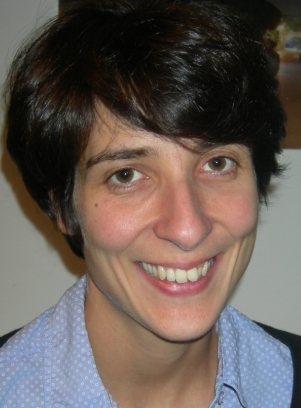 Alessia Annibale合作论文数Department of Mathematics, Faculty of Natural, Mathematical & Engineering Sciences, King’s College London4Matteo Buzzacchi合作论文数Department of Physics;University of Bath4H NISHIMORI合作论文数3A. C. C. Coolen合作论文数3
 David Saad合作论文数3
 Saulo Diles合作论文数Corresponding author.3Robin Nicole合作论文数Dept Math, Kings Coll London3
 Debankur Das合作论文数Tata Institute of Fundamental Research3
 Parswa Nath合作论文数Tata Inst Fundamental Res, Ctr Interdisciplinary Sci, Hyderabad 500107, Andhra Pradesh, India3
 Ruben Perez-Carrasco合作论文数Department of Life Sciences, Faculty of Natural Sciences, Imperial College London3
 Daniele Tantari合作论文数Dipartimento di Fisica, Sapienza Università di Roma3Rubin Katy J合作论文数3
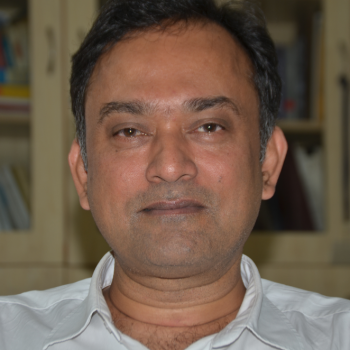 Srikanth Sastry合作论文数Theoretical Science Unit, Jawaharlal Nehru Centre for Advanced Scientific Research3
 Manfred Opper合作论文数Department of Metabolism and Systems Science, University of Birmingham3
 Lane Palmer Hughston合作论文数Department of Mathematics;College London;Department of Mathematics, King ' s College London3
 Achille Giacometti合作论文数Universita' di Venezia3
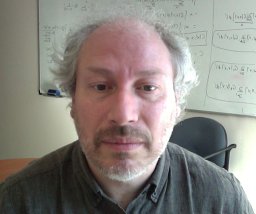 Rodrigo Soto合作论文数Departamento de Física;Universidad de Chile;Departamento de Física, Universidad de Chile3




