The recently proposed MaskFormer gives a refreshed perspective on the task of semantic segmentation: it shifts from the popular pixel-level classification paradigm to a mask-level classification method. In essence, it generates paired probabilities and masks corresponding to category segments and combines them during inference for the segmentation maps. In our study, we find that per-mask classification decoder on top of a single-scale feature is not effective enough to extract reliable probability or mask. To mine for rich semantic information across the feature pyramid, we propose a transformer-based Pyramid Fusion Transformer (PFT) for per-mask approach semantic segmentation with multi-scale features. The proposed transformer decoder performs cross-attention between the learnable queries and each spatial feature from the feature pyramid in parallel and uses cross-scale inter-query attention to exchange complimentary information. We achieve competitive performance on three widely used semantic segmentation datasets. In particular, on ADE20K validation set, our result with Swin-B backbone surpasses that of MaskFormer's with a much larger Swin-L backbone in both single-scale and multi-scale inference, achieving 54.1 mIoU and 55.7 mIoU respectively. Using a Swin-L backbone, we achieve single-scale 56.1 mIoU and multi-scale 57.4 mIoU, obtaining state-of-the-art performance on the dataset. Extensive experiments on three widely used semantic segmentation datasets verify the effectiveness of our proposed method.
Few-shot object detection (FSOD) aims to transfer knowledge from base classes to novel classes, which receives widespread attention recently. The performance of current techniques is, however, limited by the poor classification ability and the improper features in the detection head. To circumvent this issue, we propose a Multi-level Feature Enhancement (MFE) model to improve the feature for classification from three different perspectives, including the spatial level, the task level and the regularization level. First, we revise the classifier’s input feature at the spatial level by using information from the regression head. Secondly, we separate the RoI-Align feature into two different feature distributions in order to improve features at the task level. Finally, taking into account the overfitting problem in FSOD, we design a simple but efficient regularization enhancement module to sample features into various distributions and enhance the regularization ability of classification. Extensive experiments show that our method achieves competitive results on PASCAL VOC datasets, and exceeds current state-of-the-art methods in all shot settings on challenging MS-COCO datasets.
3D human shape and pose estimation is the essential task for human motion analysis, which is widely used in many 3D applications. However, existing methods cannot simultaneously capture the relations at multiple levels, including spatial-temporal level and human joint level. Therefore they fail to make accurate predictions in some hard scenarios when there is cluttered background, occlusion, or extreme pose. To this end, we propose Multi-level Attention Encoder-Decoder Network (MAED), including a Spatial-Temporal Encoder (STE) and a Kinematic Topology Decoder (KTD) to model multi-level attentions in a unified framework. STE consists of a series of cascaded blocks based on Multi-Head Self-Attention, and each block uses two parallel branches to learn spatial and temporal attention respectively. Meanwhile, KTD aims at modeling the joint level attention. It regards pose estimation as a top-down hierarchical process similar to SMPL kinematic tree. With the training set of 3DPW, MAED outperforms previous state-of-the-art methods by 6.2, 7.2, and 2.4 mm of PA-MPJPE on the three widely used benchmarks 3DPW, MPI-INF-3DHP, and Human3.6M respectively. Our code is available at https://github.com/ziniuwan/maed.
The invention relates to a network training method and device and an image processing method and device. The network training method comprises the steps that a sample image in a training set and a transformed image of the sample image are input into a first network to be processed, a first processing result of the sample image and a second processing result of the transformed image are obtained, and the transformed image is obtained by conducting geometric transformation on the sample image; the transformed image of the sample image is inputted into a pre-trained second network for processingto obtain a third processing result of the transformed image; and the first network is trained according to the annotation results and the first processing result of the plurality of sample images andthe second processing result and the third processing result of the transformed images of the plurality of sample images. According to the embodiment of the invention, the performance of the trainedstudent network can be improved.
Although person re-identification (ReID) has achieved significant improvement recently by enforcing part alignment, it is still a challenging task when it comes to distinguishing visually similar identities or identifying the occluded person. In these scenarios, magnifying details in each part features and selectively fusing them together may provide a feasible solution. In this work, we propose MagnifierNet, a triple-branch network which accurately mines details from whole to parts. Firstly, the holistic salient features are encoded by a global branch. Secondly, to enhance detailed representation for each semantic region, the "Semantic Adversarial Branch" is designed to learn from dynamically generated semantic-occluded samples during training. Meanwhile, we introduce "Semantic Fusion Branch" to filter out irrelevant noises by selectively fusing semantic region information sequentially. To further improve feature diversity, we introduce a novel loss function "Semantic Diversity Loss" to remove redundant overlaps across learned semantic representations. State-of-the-art performance has been achieved on three benchmarks by large margins. Specifically, the mAP score is improved by 6% and 5% on the most challenging CUHK03-L and CUHK03-D benchmarks.
Pedestrian attribute recognition aims to accurately identify attributes from pedestrian images. Visually similar pedestrian images tend to share similar attributes, and the upper and lower clothing attributes normally match in style. However, how to effectively capture these relations remains a challenging topic. In this paper, we propose a novel network Pentadent-Net (PD-Net). The network consists of a “Representation Refining Branch (RRB)” and an “Attribute Fusion Branch (AFB)”. The RRB reduces the feature distances among visually similar images, and the AFB generates a joint-representation for each attribute based on its correlation with other attributes. The polished features from the two branches are then applied to capture the inter-sample relations and attribute dependencies respectively. We also further associate features from the two branches to enrich feature representations. Experimental results on two benchmark datasets (PETA and PA-100K) by our proposed approach demonstrate its advantages over state-of-the-art methods.
Person re-identification is an important topic in intelligent surveillance and computer vision. It aims to accurately measure visual similarities between person images for determining whether two images correspond to the same person. State-of-the-art methods mainly utilize deep learning based approaches for learning visual features for describing person appearances. However, we observe that existing deep learning models are biased to capture too much relevance between background appearances of person images. We design a series of experiments with newly created datasets to validate the influence of background information. To solve the background bias problem, we propose a person-region guided pooling deep neural network based on human parsing maps to learn more discriminative person-part features, and propose to augment training data with person images with random background. Extensive experiments demonstrate the robustness and effectiveness of our proposed method.
Person re-identification (ReID) is an important task in video surveillance and has various applications. It is non-trivial due to complex background clutters, varying illumination conditions, and uncontrollable camera settings. Moreover, the person body misalignment caused by detectors or pose variations is sometimes too severe for feature matching across images. In this study, we propose a novel Convolutional Neural Network (CNN), called Spindle Net, based on human body region guided multi-stage feature decomposition and tree-structured competitive feature fusion. It is the first time human body structure information is considered in a CNN framework to facilitate feature learning. The proposed Spindle Net brings unique advantages: 1) it separately captures semantic features from different body regions thus the macro-and micro-body features can be well aligned across images, 2) the learned region features from different semantic regions are merged with a competitive scheme and discriminative features can be well preserved. State of the art performance can be achieved on multiple datasets by large margins. We further demonstrate the robustness and effectiveness of the proposed Spindle Net on our proposed dataset SenseReID without fine-tuning.
Pedestrian analysis plays a vital role in intelligent video surveillance and is a key component for security-centric computer vision systems. Despite that the convolutional neural networks are remarkable in learning discriminative features from images, the learning of comprehensive features of pedestrians for fine-grained tasks remains an open problem. In this study, we propose a new attention-based deep neural network, named as HydraPlus-Net (HP-net), that multi-directionally feeds the multi-level attention maps to different feature layers. The attentive deep features learned from the proposed HP-net bring unique advantages: (1) the model is capable of capturing multiple attentions from low-level to semantic-level, and (2) it explores the multi-scale selectiveness of attentive features to enrich the final feature representations for a pedestrian image. We demonstrate the effectiveness and generality of the proposed HP-net for pedestrian analysis on two tasks, i.e. pedestrian attribute recognition and person re-identification. Intensive experimental results have been provided to prove that the HP-net outperforms the state-of-the-art methods on various datasets.
 Shuai Yi合作论文数10
 Hongsheng Li (李鴻升)合作论文数Department of Electronic Engineering, The Chinese University of Hong Kong;Multimedia Laboratory, The Chinese University of Hong Kong5
 Xiaogang Wang (王曉剛)合作论文数Department of Electronic Engineering, The Chinese University of Hong Kong3
 Junjie Yan (闫俊杰)合作论文数MiniMax3
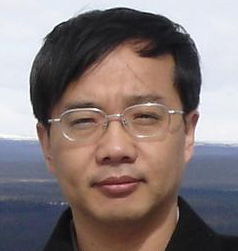 Jianbo Liu (刘建波)合作论文数School of Earth and Space Sciences, Peking University3
 Zhengjia Li合作论文数Tongji Univ, Dept Comp Sci & Technol, Shanghai 201804, Peoples R China2Xinchi Zhou合作论文数University of Sydney2
 Yuan Liu合作论文数Zhejiang Univ, Interdisciplinary Ctr Quantum Informat, State Key Lab Modern Opt Instrumentat, Hangzhou 310027, Peoples R China2Xuesen Zhang合作论文数SenseTime2
 Jing Shao (邵婧)合作论文数SenseTime;Shanghai Jiao Tong University;Nanyang Technological University Singapore2Haiyu Zhao合作论文数ByteDance2Shihua Li合作论文数1Zipeng Qin合作论文数1
 Sean Xiaoou Tang (汤晓鸥)合作论文数Department of Computer Science & Engineering, Faculty of Engineering, The Chinese University of Hong Kong;Shenzhen Institute of Advanced Technology, Chinese Academy of Sciences;SenseTime1
 Jianping Shi (石建萍)合作论文数SenseTime Group Limited1Ziniu Wan合作论文数1YuShi Lan (蓝羽石)合作论文数The 28th Research Institute of China Electronics Technology Group Corporation1
 Shuyang Sun (孙书洋)合作论文数University of Oxford1
 Aojun Zhou (周奥军)合作论文数Department of Electronic Engineering, The Chinese University of Hong Kong1
 Dongzhan Zhou合作论文数Shanghai Artificial Intelligence Laboratory1
 Lu Sheng (盛律)合作论文数School of Software, Beihang University1
 Xihui Liu (刘希慧)合作论文数Department of Electrical and Electronic Engineering, Faculty of Engineering, The University of Hong Kong;Institute of Data Science, The University of Hong Kong;Department of AI and Data Science, The University of Hong Kong1
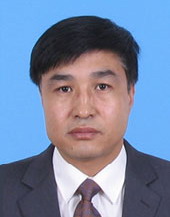 Duoqian Miao (苗夺谦)合作论文数School of Computer Science and Technology, Tongji University1
 Dapeng Chen合作论文数Huawei1
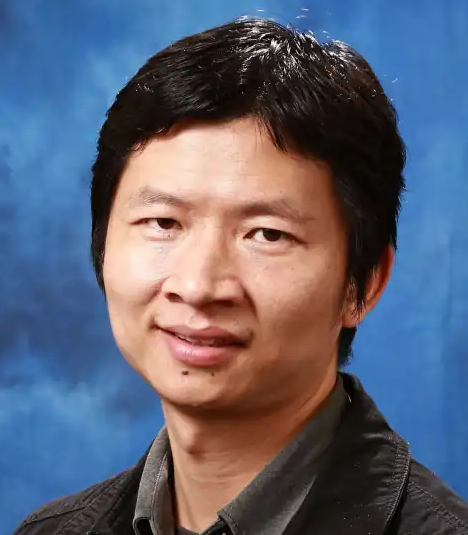 Wanli Ouyang (欧阳万里)合作论文数Shanghai Artificial Intelligence Laboratory1
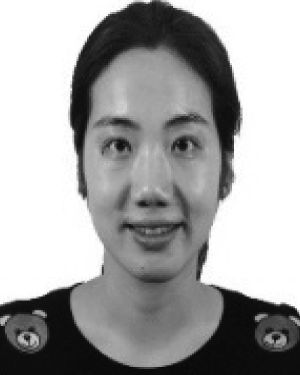 Jun Hou合作论文数Key Laboratory of Natural Resources of Changbai Mountain & Functional Molecules, Yanbian University),1
 Xiaolin Zhang (张晓林)合作论文数University of Technology Sydney;Shandong University of Science and Technology1
 Penn LIN合作论文数School of Electrical & Electronic Engineering, Nanyang Technological University1




