A comienzos de la década de 1960, cuando las relaciones entre Cuba y Estados Unidos se deterioraron rápidamente y el conflicto caribeño se entrelazó con las tensiones globales de la Guerra Fría, varios países latinoamericanos buscaron inicialmente evitar una escalada del conflicto mediante iniciativas de mediación y llamados a la resolución pacífica de las disputas en foros multilaterales, en particular las Naciones Unidas. Sin embargo, estos esfuerzos coexistieron con crecientes presiones hemisféricas impulsadas por Estados Unidos que terminaron por conducir al aislamiento diplomático de Cuba por parte de la mayoría de los Gobiernos latinoamericanos. Este artículo examina el papel de Ecuador, un país geopolíticamente marginado que, pese a intensas presiones externas y divisiones internas, intentó sostener una política exterior basada en la no intervención, la soberanía estatal y la solución pacífica de controversias. A través del análisis de iniciativas diplomáticas ecuatorianas, el ensayo demuestra que estas posiciones no fueron anomalías ni meros gestos retóricos, sino expresiones de una tradición regional arraigada que privilegiaba el derecho internacional y la negociación diplomática aun en el contexto polarizado de la Guerra Fría. Al hacerlo, el artículo cuestiona visiones que reducen a América Latina a un escenario pasivo o inherentemente violento y recupera una dimensión poco estudiada de la diplomacia latinoamericana durante aquellos años.
Revolutions are a commonly studied but only vaguely understood historical phenomenon. This clear and concise text extends our understanding with a critical narrative analysis of key case studies: the 1910–1920 Mexican Revolution; the 1944–1954 Guatemalan Spring; the 1952–1964 MNR-led revolution in Bolivia; the Cuban Revolution that triumphed in 1959; the 1970–1973 Chilean path to socialism; the leftist Sandinistas in Nicaragua in power from 1979–1990; failed guerrilla movements in Colombia, El Salvador, and Peru; and the Bolivarian Revolution in Venezuela after Hugo Chávez’s election in 1998. Historian Marc Becker opens with a theoretical introduction to revolutionary movements, including a definition of what “revolution” means and an examination of factors necessary for a revolution to succeed. He analyzes revolutions through the lens of those who participated and explores the sociopolitical conditions that led to a revolutionary situation, the differing responses to those conditions, and the outcomes of those political changes. Each case study provides an interpretive explanation of the historical context in which each movement emerged, its main goals and achievements, its shortcomings, its outcome, and its legacy. The book concludes with an analysis of how elected leftist governments in the twenty-first century continue to struggle with issues that revolutionaries confronted throughout the twentieth century.
Scholars have long understood the collaborative nature of US diplomats and labor unions as they sought to pull Latin American labor movements into a pro-US orbit. This article extends that discussion by delving into less-explored dimensions of US labor programs through an examination of activities in Ecuador during the late 1950s and early 1960s. It reveals a broad and extensive labor program, with US officials engaged in a variety of strategies and propaganda campaigns that included the distribution of films, the publication of newspapers and other printed materials, the production of a radio program, and the leveraging of the ambassador’s personal contacts and friendships to promote an anticommunist agenda. Most importantly, domestic labor education courses and international travel grants were essential to the US embassy’s efforts to promote an anticommunist agenda. Results varied, and the labor program encountered challenges that occasionally led to disillusionment among participants. Despite criticism, US officials viewed negative reactions from their leftist opponents as indicators of success. In shedding new light on the intricacies and uncertainties of labor initiatives within a politically turbulent Cold War context, this article provides a deeper understanding of the multifaceted US labor program’s operations.
Activists in Ecuador established in the 1940s what have come to be remembered as the country's first Indigenous-run bilingual schools. Or at least this is the image that their founders presented when reflecting back on their achievements years later, and what has become fixed in the minds of subsequent educators. Archival records, however, present a more complicated picture. Rather than as "Indigenous" or created them as "syndicate" schools to mobilize against the racial discrimination and economic exploitation that agricultural workers faced on government-owned haciendas. In the process, organizers came into conflict with government policies that mandated the creation of public schools in rural communities and on haciendas. The competing school systems became an arena in which public policy debates were carried out with ramifications that extended to rival notions of how society should be properly organized.
An abstract is not available for this content so a preview has been provided. Please use the Get access link above for information on how to access this content.
Book Review| June 26 2024 José Carlos Mariátegui o el "cojito genial": Historia y discapacidad en el Perú José Carlos Mariátegui o el "cojito genial": Historia y discapacidad en el Perú. By Paulo Drinot. Perú Breve. Lima: Planeta, 2023. Notes. 100 pp. Paper, S/39.90. Marc Becker Marc Becker Truman State University Search for other works by this author on: This Site Google Hispanic American Historical Review 11384682. https://doi.org/10.1215/00182168-11384682 Views Icon Views Article contents Figures & tables Video Audio Supplementary Data Peer Review Share Icon Share Facebook Twitter LinkedIn Email Tools Icon Tools Permissions Cite Icon Cite Search Site Citation Marc Becker; José Carlos Mariátegui o el "cojito genial": Historia y discapacidad en el Perú. Hispanic American Historical Review 2024; 11384682. doi: https://doi.org/10.1215/00182168-11384682 Download citation file: Zotero Reference Manager EasyBib Bookends Mendeley Papers EndNote RefWorks BibTex toolbar search Search Dropdown Menu toolbar search search input Search input auto suggest filter your search Books & JournalsAll JournalsHispanic American Historical Review Search Advanced Search The text of this article is only available as a PDF. Copyright © 2024 by Duke University Press2024 Article PDF first page preview Close Modal You do not currently have access to this content.
The success of Indigenous movements in Ecuador was predicated on their ability to build alliances with other movements, navigate the intersection of class demands with ethnic identities, and employ a variety of strategies to mobilize support for their concerns. We learn from their experiences and struggles that there are no such things as magical solutions or simple answers, but rather that advancing a political agenda is a matter of experimentation that can result in reversals and losses as well as occasional victories. In this way, Indigenous movements in Ecuador provide a fascinating case study of how to navigate multiple issues and factors on the road to success.
This essay reviews the following works: Health in the Highlands: Indigenous Healing and Scientific Medicine in Guatemala and Ecuador . By David Carey Jr. Oakland: University of California Press, 2023. Pp. viii + 384. $34.95 paperback, $85.00 hardcover, $34.95 e-book. ISBN: 9780520344792. Conjuring the State: Public Health Encounters in Highland Ecuador, 1910–1945 . By A. Kim Clark. Pittsburgh, PA: University of Pittsburgh Press, 2023. Pp. 200. $50.00 hardcover. ISBN: 9780822947820. La última guerra del Siglo de las Luces: Revolución Liberal y republicanismo popular en Ecuador . By Valeria Coronel. Quito: FLACSO Ecuador, 2022. Pp. xiv + 419. $18.00 paperback, $12.00 e-book. ISBN: 9789978676202. Global Governance of the Environment, Indigenous Peoples and the Rights of Nature: Extractive Industries in the Ecuadorian Amazon . By Linda Etchart. New York: Palgrave Macmillan, 2022. Pp. xxxv + 270. $109.99 paperback, $109.99 hardcover, $84.99 e-book. ISBN: 9783030815219. In the Shadow of Tungurahua: Disaster Politics in Highland Ecuador . By A. J. Faas. New Brunswick, NJ: Rutgers University Press, 2023. Pp. ix + 246. $34.95 paperback, $120.00 hardcover, $34.95 e-book. ISBN: 9781978831568. A Feast of Flowers: Race, Labor, and Postcolonial Capitalism in Ecuador . By Christopher Krupa. Philadelphia: University of Pennsylvania Press, 2022. Pp. 328. $39.95 paperback, $99.95 hardcover, $39.95 e-book. ISBN: 9780812225129. Transforming Ethnicity: Youth and Migration in the Southern Ecuadorian Andes. By Jorge Daniel Vásquez. New York: Palgrave Macmillan, 2023. Pp. xix + 105. $44.99 hardcover, $34.99 e-book. ISBN: 9783031300967. Extractivism and Universality: Inside an Uprising in the Amazon. By Japhy Wilson. Abingdon, UK: Routledge, 2023. Pp. x +132. $128.00 hardcover, $42.36 e-book. ISBN: 9781032386126.
‘Creole’, or domestically birthed, anticommunisms came in many different flavours and are in need of deeper investigation to understand how they responded to local conditions. This study examines one case from Ecuador where political leaders eagerly manipulated an anticommunist agenda to advance their own partisan prospects in ways that were distinct from the United States government’s global geopolitical concerns. Conservatives had their own motivations, which sometimes paralleled with and at other times came into conflict with those of larger political powers. These ‘creole anticommunisms’ could be more aggressive than those of United States officials, even as they served other purposes. [q]TQ3[/q]
PDF file - 298K, 1) Ki67 IHC staining of patient & Avatars; 2) pan-CK, CD45, vimentin staining of Avatars; 3) graph of gains/losses by aCGH in Avatars; 4) Ca125 levels in serum of patients/Avatars.
PDF - 32KB, No significant change in body weight was observed throughout the experimental duration.
Supplemental Figure 1. Ultrasound is an accurate and precise measurement of actual tumor weight and ascites volume.
Revolutions are a commonly studied but only vaguely understood historical phenomenon. Now updated to include the perspectives of grassroots revolutionary movements and biographies of often marginalized voices, this clear and concise text extends our understanding with a critical narrative analysis of key case studies: the 1910–1920 Mexican Revolution; the 1944–1954 Guatemalan Spring; the 1952–1964 MNR-led revolution in Bolivia; the Cuban Revolution that triumphed in 1959; the 1970–1973 Chilean path to socialism; the leftist Sandinistas in Nicaragua in power from 1979–1990; failed guerrilla movements in Colombia, El Salvador, and Peru; and the Bolivarian Revolution in Venezuela after Hugo Chávez’s election in 1998. Historian Marc Becker opens with a theoretical introduction to revolutionary movements, including a definition of what “revolution” means and an examination of factors necessary for a revolution to succeed. He analyzes revolutions through the lens of those who participated and explores the sociopolitical conditions that led to a revolutionary situation, the differing responses to those conditions, and the outcomes of those political changes. Each case study provides an interpretive explanation of the historical context in which each movement emerged, its main goals and achievements, its shortcomings, its outcome, and its legacy. The book concludes with an analysis of how elected leftist governments in the twenty-first century continue to struggle with issues that revolutionaries confronted throughout the twentieth century.
José Carlos Mariátegui’s open engagement with Marxist theory and his adaptation of its ideas to his Latin American reality brought him into conflict with other leftists. At a continental conference of communist parties in Buenos Aires in 1929, he criticized the Comintern’s proposal to carve up the Americas into independent African-descent and Quechua and Aymara republics, arguing that conceptualizing the struggle in ethnic rather than class terms was a mistake. From documents preserved in the Comintern archives it appears that these comments had echoes in Moscow. Two newly translated Spanish-language documents on the “national question” challenge notions that Comintern officials were unaware of or ill-informed about developments in Latin America and are important to understanding their responses and challenges to his ideas on race and oppressed nationalities. El compromiso abierto de José Carlos Mariátegui con la teoría marxista y su adaptación de estas ideas a la realidad latinoamericana lo pusieron en conflicto con otras y otros de la izquierda. En una conferencia continental de partidos comunistas en Buenos Aires en 1929, criticó la propuesta de la Internacional Comunista de dividir las Américas en repúblicas independientes afrodescendientes y quechuas y aymaras, argumentando que conceptualizar la lucha en términos étnicos en lugar de términos de clase era un error. Los documentos conservados en los archivos de la Internacional Comunista sugieren que estos comentarios hicieron eco en Moscú. Dos documentos en español recientemente traducidos en torno a la “cuestión nacional” desafían las nociones de que los funcionarios de la Internacional Comunista no estaban al tanto o estaban mal informados sobre los acontecimientos en América Latina, asunto que resultan importante para comprender sus respuestas y desafíos a las ideas de Mariátegui sobre raza y nacionalidades oprimidas.
Ecuador's Indigenous Movements and Neoliberal Multiculturalism - Undoing Multiculturalism: Resource Extraction and Indigenous Rights in Ecuador. By Carmen Martínez Novo. Pittsburgh: University of Pittsburgh Press, 2021. Pp. 296. $50.00 cloth. - Volume 79 Issue 2
 Paul Haluska合作论文数27
 Hou Xiaonan合作论文数23Michael Stassen合作论文数22S. John Weroha合作论文数Department of Oncology, Mayo Clinic19
 Christian Taube合作论文数14
 Tobias B. Huber合作论文数Zentrum für Innere Medizin, Universitätsklinikum Hamburg-Eppendorf;III. Department of Medicine, University Medical Center Hamburg-Eppendorf13
 Hansjorg Schild合作论文数13Edgar Schmitt合作论文数12
 Sean C Harrington合作论文数11
 Matthias Klein合作论文数10
 Douglas Yee合作论文数Division of Hematology, Oncology and Transplantation, Department of Medicine, Medical School, University of Minnesota;Masonic Cancer Center, University of Minnesota10Kalli Kimberly R合作论文数9Sebastian Reuter合作论文数9
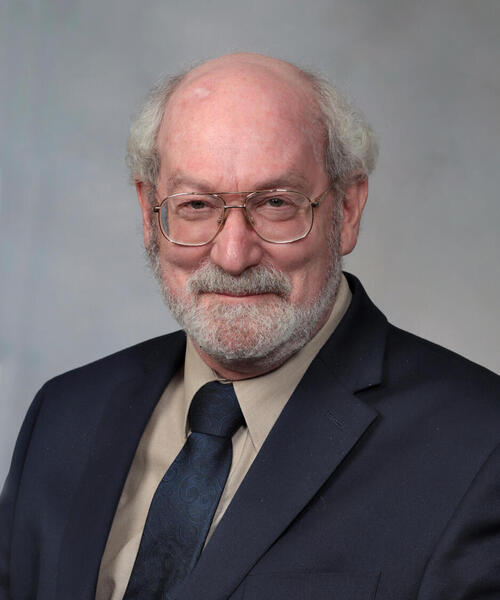 Scott H. Kaufmann合作论文数Division of Oncology Research, Department of Oncology, Mayo Clinic;Division of Hematology, Department of Internal Medicine, Mayo Clinic;Mayo Clinic Comprehensive Cancer Center8
 Matthew J. Maurer合作论文数Mayo Clinic7Thomas Wehler合作论文数7
 Markus P Radsak合作论文数6Michel Anastasija合作论文数6
 Ann L. Oberg合作论文数Mayo Clinic Comprehensive Cancer Center;Center for Clinical and Translational Science, Mayo Clinic;Division of Computational Biology, Department of Quantitative Health Sciences, Mayo Clinic6
 Valeska Heib合作论文数6Fatma Doener合作论文数5theobalt matthias合作论文数5Hurley Rachel合作论文数Mayo Medical School Rochester5Enderica-Gonzalez Sergio合作论文数5
 Claudine Graf合作论文数5
 Markus Hoffmann合作论文数Infection Biology Unit, German Primate Center5Alhilli Mariam M合作论文数Department of Obstetrics and Gynecology Medical Oncology Obstetrics and Gynecology, Mayo Clinic4Friedrich Pamela合作论文数4
 Elizabeth Swisher合作论文数Department of Obstetrics & Gynecology, University of Washington;Department of Medical Genetics, University of Washington;University of Washington Medical Center4
 Butler Kristina A合作论文数4
 Roland Buhl合作论文数Johannes Gutenberg University of Mainz;Pulmonary Department, Mainz University Hospital4
 Hans Czap合作论文数University of Trier4
 Manfred Relle合作论文数4Nina Dehzad合作论文数4Nadine Grebe合作论文数4Ksenia Martchenko合作论文数3Karin Goodman合作论文数3Brian B. Haines合作论文数3
 Stefan Ebert合作论文数Department of Paediatric Haematology, Oncology and Stem Cell Transplantation, University Hospital of Würzburg3Helen Martin合作论文数3
 Cheryl A. Conover合作论文数Mayo Clinic3Staudt Valérie合作论文数3Rodriguez Mariangellys合作论文数3
 Jann N. Sarkaria合作论文数Department of Radiation Oncology, Mayo Clinic;Mayo Clinic Comprehensive Cancer Center3
 Edgar Serfling合作论文数3
 Peter Galle合作论文数Medical Center, Johannes Gutenberg University Mainz3Bastian Gerlitzki合作论文数3A. Kim Clark合作论文数3




