Mining is essential to economic growth and the energy transition but presents complex Environmental, Social, and Governance (ESG) risks that vary across the mining life cycle. This study presents a PRISMA-based systematic review of 88 publications to examine how ESG factors are integrated into technical, operational, and economic decision-making across mining stages, from exploration and development to closure and post-closure. ESG integration is defined as the incorporation of measurable ESG variables into decision processes, rather than as general sustainability or disclosure practices. Unlike prior reviews, this study develops a decision-oriented synthesis linking ESG metrics to life cycle stages and project-level decisions through a three-dimensional (3 × 3 × 3) ESG integration matrix that maps three ESG dimensions across three life cycle stages and three integration levels - measurement, technical model embedding, and economic valuation - yielding 27 cells.The review evaluates ESG metrics, indicators, indices, and analytical tools according to their decision relevance, auditability, and forward-looking capacity. The results reveal a structural imbalance: environmental indicators are mature, standardized, and embedded in engineering models, particularly for emissions, energy, water, and waste. Social and governance dimensions remain less operationalized despite their importance for permitting, conflict risk, and long-term viability. Three structurally distinct barriers emerge: an economic valuation gap for environmental indicators, a measurement gap for social indicators, and a scale mismatch for governance indicators. The effectiveness of these tools is further conditioned by regional governance capacity.
This work presents a probabilistic methodology for the analysis and design of detonation sequences in non-electric blasting, considering both the statistical dispersion of pyrotechnic delays and the dependencies between detonation time intervals. These intervals are modeled as correlated multivariate normal random variables, allowing the estimation of blast success probability based on the simultaneous fulfillment of the desired firing order and the minimum time interval between consecutive detonations. The main contribution of this work is a general matrix formulation based on block matrices that provides a unified framework for representing and analyzing different non-electric initiation network configurations. The proposed formulation enables the direct computation of the mean vector and covariance matrix of detonation intervals from the statistical properties of connectors and detonators, while remaining readily scalable to complex layouts involving multiple rows and branching connection chains. Numerical examples demonstrate the strong influence of delay dispersion and network topology on blast reliability and illustrate the applicability of the proposed methodology to the probabilistic analysis and optimization of complex firing sequences.
The determination of the friction factors in an underground excavation are crucial to reach an adequate model of the ventilation system and, consequently, to select the ventilation system and improve the comfort and safety of the mine. The diversity of calculation methods and experimental data sources makes it necessary to carry out a state of the art on this matter. An assessment of the friction factors is provided for different types of underground mining, soft and hard rock mining. Some data using TBM (tunnel boring machine) is also gathered and analyzed. Considering the excavation system, support applied, and mining method. A particular focus on the different techniques to obtain the friction factor values has also been described, including the new approaches available.
With respect to the problem of the anchorage failure of a broken roof in the roadway of extra-thick coal seams by using a traditional unconstrained pushing anchoring agent, a new anchoring agent installation technology with a push–pull device was proposed. Many research methods were adopted to study the mechanism of the efficient control of anchoring agent installation technology with a push–pull device on surrounding rock and the application of the technology. The results indicated that an unconstrained pushing anchoring agent exhibited two main morphological types: bending equilibrium and bending instability. The pushing force for the anchoring agent installed using the integrated push–pull method was calculated to be 13.52 N, which was less than that of the unconstrained pushing anchoring agent. An anchoring agent pushing with the push–pull device was able to smoothly pass through borehole delamination and collapse zones. When the pull-out force reached 160 kN and 180 kN, there was no significant slip or failure in the anchored section of the cable. The support system with the push–pull device for installing the anchoring agent reduced rock deformation by nearly 50%. This demonstrated that this technology significantly enhances the control of surrounding rock deformation.
The global use of freshwater has increased six-fold over the past 100 years and has been growing by about 1
Integrating environmental, social and governance (ESG) variables into the assessment of a mining project is essential to ensure the short and long term acceptance by the various stakeholders involved and the lack of doing so can put the sustainability of a project at risk. Thus, a holistic approach has been proposed which combines profitability and sustainability analysis with social and environmental considerations for any decisions made on processing operation selection or mine expansion. The potential economic implications of these factors would be used for determining the operational strategy. This study is based on an actual quarry case study and statistical data taken from Spain. Quantitative variables related to ESG aspects have been integrated into a block model, and optimisations were performed based on different plant types and waste disposal strategies. Results demonstrate a strong interdependence between profitability and sustainability. It is observed that strategies related to operating costs impact the environmental and social impacts. A green index is also incorporated to evaluate and compare the different scenarios, determining that the most relevant strategies in adding value to mining projects include investment in new technologies, environmental solutions, and economic and social benefits.
The rock mass failure induced by deep mining exhibits pronounced spatial heterogeneity and diverse mechanisms, with its microseismic responses serving as effective indicators of regional failure evolution and instability mechanisms. Focusing on the Level VI stope sublayers in the Jinchuan #2 mining area, this study constructs a 24-parameter index system encompassing time-domain features, frequency-domain features, and multifractal characteristics. Through manifold learning, clustering analysis, and hybrid feature selection, 15 key indicators were extracted to construct a classification framework for failure responses. Integrated with focal mechanism inversion and numerical simulation, the failure patterns and corresponding instability mechanisms across different structural zones were further identified. The results reveal that multiscale microseismic characteristics exhibit clear regional similarities. Based on the morphological features of radar plots derived from the 15 indicators, acoustic responses were classified into four typical types, each reflecting distinct local failure mechanisms, stress conditions, and plastic zone evolution. Moreover, considering dominant instability factors and rupture modes, four representative rock mass instability models were proposed for typical failure zones within the stope. These findings provide theoretical guidance and methodological support for hazard prediction, structural optimization, and disturbance control in deep metal mining areas.
The safety of underground coal mining has always been a global concern, involving the stable supply of energy and stakes in miners’ lives. Lessons learned from historical accidents and transforming into practical experience help reduce the quantity and severity of accidents. In this study, six ensemble learning techniques, including AdaBoost, Extra Trees, GBDT, LightGBM, Random Forest, and XGBoost, were used to investigate the correlation between accident-causing factors and severity. Firstly, 39487 underground coal mine accidents data was obtained from Spain, variables were categorized and coded. To address the extreme class imbalance, a new dataset (2468 cases) was obtained by data sampling from the original database. Subsequently, the new dataset was randomly divided into training sets (75% of the data) and test sets (25% of the data), then the hyperparameters of each model were optimized and configured. Thirdly, the models’ performance was evaluated on the test data by five metrics (accuracy, Cohen’s Kappa, precision, recall, and F1). Finally, accident patterns were derived from the identified variables along with preventive strategies. Results show that tree-based ensemble learning model performs better compared to the boosting model, and the relative importance of seven variables were determined, where previous cause (PC) and material agent (MA) are the most important factors, followed by the miner’s physical activity (PA), age (A), and experience (E), scale (S) and preventive organization (PO) are in the third tier. Furthermore, the type of accident and injury caused by PC were confirmed. Working with hand tools, younger age, lack of experience, small-scale coal mines, and unfit preventive organization increased the risk of accidents. This study not only facilitates the prediction of accident severity but also provides strategies for preventing and mitigating accidents.
Highly contaminated waste from an old mercury mine facility was covered with fly ash from a coal-burning power plant that was analyzing the rainwater infiltration in a full-scale test in which the influencing variables were monitored for a year. A sufficiently low hydraulic conductivity and sufficiently high porosity of the ash, and the relationship between evapotranspiration and precipitation were the most important factors controlling rainwater infiltration through the fly ash layer to produce contaminated leachate. A fly ash layer with a thickness between 10 and 50 cm, depending on climatic conditions, works as a barrier to partially or totally prevent, depending on the scenario considered, rainwater contamination. Overall, the solution proposed in this study results in economic savings in all the cases considered, because treatments for eliminating PTEs from waste are usually expensive. On the other hand, the effect is permanent over time, as it is based on a physical barrier effect, while the contamination reduction is independent of the initial concentration and the contamination reduction is for any PTE (Hg, Pb, Zn, etc.).
Based on the difficult problem of controlling the surrounding rock of roadways in extra thick coal seams, the no coal pillar mining technology by pipe ventilation in coal roadway adjacent to the goaf for the top coal caving working face of extra thick coal seams was proposed. The interaction mechanism between ventilation pipes and differential surrounding rock, and the bearing performance of various irregular pipes under different load forms were studied using methods such as on-site investigation, numerical simulation, physical similarity simulation experiments, and on-site practice. The research conclusion was as follows: 1 The contact form between trapezoidal pipe and surrounding rock was mainly the near contact, and the contact form of curved pipes was mainly the sticking contact, with more uniform contact stress. 2. The equivalent stress, plastic strain and deformation of the top and coal wall side curved pipe were minimized under equal strength loading condition, which was the most ideal pipe shape. 3. Strengthening the pressure on the coal wall side of the pipe under non-uniform strength form was beneficial for maintaining pipe stability. 4. Physical similarity simulation experiment have shown the top and coal wall side curved pipe exhibited bending deformation towards the inside of the pipe to adapt to rock deformation, which could provide strong control over the surrounding rock. On site tests have shown that the pipeline can meet the ventilation requirements of the working face without significant deformation.
In the context of irrigation canal flow, numerical models developed to accurately estimate canal behavior based on gate trajectories are often highly complex. Consequently, hardware limitations make it significantly more challenging to implement these models locally at gate devices. In this regard, one of the most significant contributions of this paper is the concept of the hydraulic influence matrix (HIM) and its application as a linear model to estimate the water surface flow in irrigation canals, integrated within an irrigation canal controller to facilitate real-time operations. The HIM model provides a significant advantage by quickly and accurately computing water level and velocity perturbations in open-flow canals. This capability empowers watermasters to apply this linear free-surface model in both unsteady and steady flow conditions, enabling real-time applications in control algorithms. The HIM model was validated by comparing water-level estimates under various perturbations with results from software using the full Saint-Venant equations. The test involved introducing a 10% perturbation in gate movement over a specified time period in two different test cases, resulting in a flow discharge increase of more than 10% in each test case. The results showed maximum absolute errors below 7 cm and 0.2 cm, relative errors of 0.7% and 0.023%, root mean square errors ranging from 2.4 to 0.07 cm, and Nash–Sutcliffe efficiency values of approximately 0.95 in the first and second test cases, respectively, when compared to the full Saint-Venant equations. This highlights the high precision of the HIM model, even when subjected to significant disturbances. However, larger gate movement disturbances (exceeding 10%) should be planned in advance rather than managed in real time.
This article presents a framework of 36 economic, environmental, social and integrated indicators for Corporate Social Responsibility (CSR) evaluation of mine sites and projects, and their contribution to Sustainable Development Goals (SDGs). The indicators are based on points defined by various initiatives, to be consistent with the main reporting systems and to facilitate the collection of the information to be used. The novelty of this proposal is that it addresses simultaneously the measurement of CSR and SDG indexes from a quantitative point of view and tailored to any case study. The methodology is applied to a case study.
A simple approach is proposed to study the main factors related to the mining activity’s impact on society, through a corporate social responsibility (CSR) qualitative analysis based on the type of raw materials extracted, either by mine site or firm. A CSR index is defined by 30 environmental and socioeconomic elements and, subsequently, it is weighted by three primary factors; the recycling rate, the transition to green energy, and geographical conditions. The proposed method is adaptable to any change in raw material needs over time and, depending on the analyzed country or region, is applicable to any type of mineral resource. The system can be used to drive engagement with the different stakeholders, add value to a project, and establish a CSR continuous improvement system.
The aim of this research is to investigate the effect of corporate social responsibility (CSR) on total factor productivity (TFP) in the European mining industry, considering micro- and macroeconomic indicators of the relationship between CSR and TFP. Employing data from 40 European mining companies from content analysis, CSR Hub, and the World Bank between 2018 and 2021, this paper utilizes a combination of Data Envelopment Analysis (DEA) and panel regression techniques to test the research hypotheses. The findings suggest that the TFP of European mining firms is positively affected by CSR initiatives implemented by the companies. Also, the empirical results depict that the CSR-TFP relationship is mainly established on institutional criteria. The results also indicate that CSR-related factors, namely, transparency and reporting, training, health and safety, and resource management, are the impacting indicators. The study broadens the horizons of this line of research and can be beneficial to CEOs, managers, experts, policymakers, decision-makers, and economists in the field of mining who are willing to promote responsible and sustainable mining.
Mining equipment is subjected to degradation throughout its operation lifetime, being the definition of the replacement time for mining equipment a vital question. Requiring accurate information about the performance of the equipment to identify the optimal replacement time. This study determines the replacement time using an improved method, Overall Mining Equipment Effectiveness (OMEE), that analyses the technical factors from mining equipment performance in real-time, such as the technical availability rate, the mechanical availability rate, the production rate and the productivity index. The suitability of the method has been tested using a real open pit mine and information gathered from six drilling rigs, which have been performing around 27,000 engine hours each, over the last twelve years. The results obtained show that the OMME methodology is reliable to analyse the mining equipment performance and determine the technical replacement time.
Underground mining is currently one of the Spanish economic sectors with the worst accident rates. Besides, the most frequent type of accident, and with the most serious consequences, is the one in which the injured worker is hit by a moving object. For this reason, this study focuses on the analysis of this type of accident, divided into 3 subgroups to better understand the behavioural patterns. Data mining techniques were applied using the Apriori algorithm to extract as much information as possible about the genesis of these accidents. Similarly, each subset of accidents was processed in two different ways to improve the data analysis, depending on the causal variables used in each case, so that a study of six different scenarios was carried out. The five best association rules or behaviour patterns for each of the six scenarios are shown as a function of their frequency for each rule with 1–4 causal variables.
 Lluis Sanmiquel合作论文数71
 Hernan Anticoi合作论文数17
 Josep Oliva合作论文数CSIC, Inst Quim Fis Rocasolano, Serrano 119, E-28006 Madrid, Spain15
 Nor Sidki-Rius合作论文数Dept Engn Minera Ind & TIC, Univ Politecn Catalunya Barcelona Tech14
 Pura Alfonso合作论文数Departament d’Enginyeria Minera i Recursos Minerals, Universitat Politècnica de Catalunya14
 Josep M. Rossell Garriga合作论文数Department of Applied Mathematics III, Universitat Politècnica de Catalunya (UPC),13
 Mohammad Yousefian合作论文数9Vintró Carla合作论文数9Rodríguez Díez, Rafael合作论文数School of Mining, Energy and Materials Engineering, University of Oviedo9
 Eduard Guasch合作论文数8Maria Teresa Yubero合作论文数8
 Jose Juan de Felipe合作论文数8
 Ana María Castañón合作论文数Dept Min Topog & Struct, Univ Leon ESTIM8
 David Parcerisa合作论文数Mines ParisTech Centre de Géosciences7
 Hesam Dehghani合作论文数Dept Mine Engn, Hamedan Univ Technol6modesto freijo alvarez合作论文数6
 Jordi Vives i Costa合作论文数EPSEM(UPC),5Carla Vintro-Sanchez合作论文数5Sarbast Hamid合作论文数4Fernando Gómez-Fernández合作论文数4Florencio Fernández-Alaiz合作论文数3
 Hector Garcia-Gonzalez合作论文数3
 Ali Asghar Khajevandi合作论文数Occupat Hlth & Safety Dept, Kashan Univ Med Sci3M. Garcia-Valles合作论文数3
 Teresa Escobet合作论文数Automatic Control Department, Universitat Politècnica de Catalunya3
 Alejandra Vera Burau合作论文数2Gabriel R. González-Jiménez合作论文数2
 Arnau Arumi合作论文数2
 Adrian Solorzano Valderrama合作论文数2hernan anticoi sudzuki合作论文数2Daniel Alvarez-Ramirez合作论文数2
 Jamshid Shakeri合作论文数Dept Min Engn, Hamedan Univ Technol2
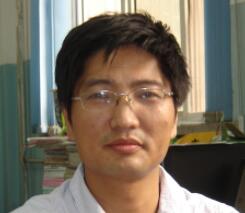 Yaojiang Zhao (赵耀江)合作论文数College of Safety and Emergency Management Engineering, Taiyuan University of Technology2
 Esteban Pena-Pitarch合作论文数Departament Enginyeria Mecanica, Universitat Politecnica De Catalvnya (UPC),2A. Bernardo Sánchez合作论文数2Rosa Argelaguet合作论文数2Antoni Escobet合作论文数2
 Jordi Bonet-Dalmau合作论文数2Roger Gaona Boixader合作论文数1Mohammadreza Alimoradijazi合作论文数1Zenaida Hernandez合作论文数1Joan López合作论文数1Cristobal Lombardía合作论文数1Yajun Wang合作论文数1
 Reza Shamsi合作论文数1Kiana Afshar Farnia合作论文数1Eduardo Cámara-Zapata合作论文数1Rafael Rodrígueza合作论文数1palacios ubach合作论文数1




