High magnetic fields have proven instrumental in exploring the physical properties of condensed matter, leading to groundbreaking discoveries such as the quantum Hall effect in 2D heterostructures and quantum oscillations in cuprate superconductors. The ability to conduct precise measurements at progressively higher magnetic fields continues to push the frontiers of knowledge and enable new discoveries. In this work, we present the development of a microwave technique for performing two-point transport measurements in semi-destructive pulsed magnetic fields (up to 125 T) and at low temperatures (down to 1.5 K) with unprecedented sensitivity. This new setup was tested on a variety of samples. We present results on the metal-insulator transition in InAs and we report notably the first observation of Shubnikov-de-Haas oscillations in WTe_2 at magnetic fields beyond 100 T.
HAL is a multi-disciplinary open access archive for the deposit and dissemination of scientific research documents, whether they are published or not. The documents may come from teaching and research institutions in France or abroad, or from public or private research centers. L’archive ouverte pluridisciplinaire HAL, est destinée au dépôt et à la diffusion de documents scientifiques de niveau recherche, publiés ou non, émanant des établissements d’enseignement et de recherche français ou étrangers, des laboratoires publics ou privés. Critical Doping for the Onset of a Two-Band Superconducting Ground State in SrTiO 3 – δ Xiao Lin, German Bridoux, Adrien Gourgout, Gabriel Seyfarth, Steffen Krämer, Marc Nardone, Benoît Fauqué, Kamran Behnia
Magnetoresistivity ρ(xx) and Hall resistivity ρ(xy) in ultrahigh magnetic fields up to 88 T are measured down to 0.15 K to clarify the multiband electronic structure in high-quality single crystals of superconducting FeSe. At low temperatures and high fields we observe quantum oscillations in both resistivity and the Hall effect, confirming the multiband Fermi surface with small volumes. We propose a novel approach to identify from magnetotransport measurements the sign of the charge carriers corresponding to a particular cyclotron orbit in a compensated metal. The observed significant differences in the relative amplitudes of the quantum oscillations between the ρ(xx) and ρ(xy) components, together with the positive sign of the high-field ρ(xy), reveal that the largest pocket should correspond to the hole band. The low-field magnetotransport data in the normal state suggest that, in addition to one hole and one almost compensated electron band, the orthorhombic phase of FeSe exhibits an additional tiny electron pocket with a high mobility.
Received 5 November 2015DOI:https://doi.org/10.1103/PhysRevLett.115.219902© 2015 American Physical Society
The use of brain scanning now dominates the cognitive sciences, but important questions remain to be answered about what, exactly, scanning can tell us. One corner of cognitive science that has been transformed by the use of neuroimaging, and that a scanning enthusiast might point to as proof of scanning's importance, is the study of face perception. Against this view, we argue that the use of scanning has, in fact, told us rather little about the information processing underlying face perception and that it is not likely to tell us much more.
The temperature dependence of the magnetic susceptibility and Mössbauer spectra of the compounds FeL2[Ni(CN)4] (L=2, 3 or 4-methylpyridine) have been investigated. In each case the iron(II) ions are high spin at room temperature, but in the 3-methylpyridine compound about half of the iron ions becomes diamagnetic around 90K. The application of external pressure allowed to uncover the underlying two-step nature of this spin transition. For further increase of the pressure the plateau between the two steps disappeared. Both observations were successfully interpreted in the framework of an Ising-like model with two iron sites displaying different volume changes.
 T. Yamashita合作论文数2S. F. Blake合作论文数2
 Matthew D. Watson合作论文数Diamond Light Source, Harwell Campus, Didcot OX11 0DE, Oxon, England2Beard, J.合作论文数2
 Arjun Narayanan合作论文数Department of Physics, New York University2
 Yuji Matsuda (松田祐司)合作论文数Department of Physics, Kyoto University2
 Frederic Hardy合作论文数LITEWERKS Engineering2William Knafo合作论文数2
 Shigeru Kasahara (笠原成)合作论文数The Research Institute for Interdisciplinary Science, Okayama University2
 Amalia Coldea合作论文数Department of Physics, University of Oxford;Somerville College, University of Oxford2
 Andy Schofield合作论文数2Lionel Rechignat合作论文数1McCollam A.合作论文数1
 German Bridoux合作论文数Laboratorio de Física del Sólido, Universidad Nacional de Tucumán1Nicolas Bruyant合作论文数Lab Natl Champs Magnet Intenses, UPS1
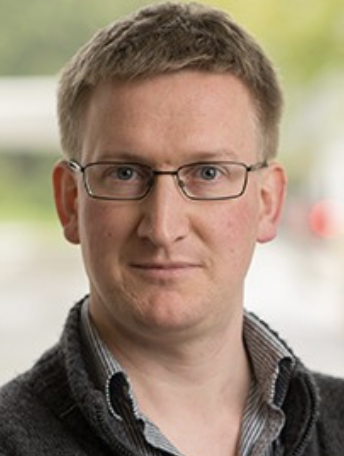 Christopher Mole合作论文数Department of Philosophy, Faculty of Arts, The University of British Columbia1
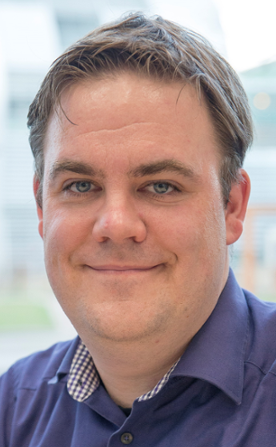 Steffen Wiedmann合作论文数Faculty of Science, Radboud University1
 Thomas Wolf合作论文数Linac Coherent Light Source, SLAC National Accelerator Laboratory, Stanford University;Stanford PULSE Institute1
 Kamran Behnia合作论文数Laboratoire de Physique et d’Étude des Matériaux, Ecole Supérieur de Physique et de Chimie Industrielles1Badoux S合作论文数Laboratoire National des Champs Magnétiques Intenses (CNRS, UPS),1
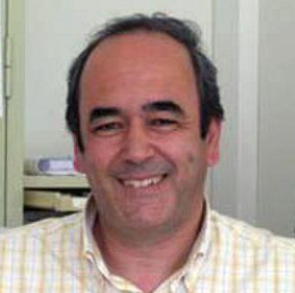 Azzedine Bousseksou合作论文数Laboratory of Coordination Chemistry, CNRS1Christoph Meingast合作论文数Forschungszentrum Karlsruhe;Institut für Festkörperphysik;Institut für Festkörperphysik, Forschungszentrum Karlsruhe1
 Xiao Lin (林效)合作论文数Quantum Transport Lab for Extreme Conditions, Westlake University;School of Science, Westlake University1
 Takafumi Kitazawa合作论文数1
 Gábor Molnár合作论文数Dept. of Geophysics and Space Science, Eötvös University1
 Amir-Abbas Haghighirad合作论文数Institute for Quantum Materials and Technologies, Karlsruhe Institute of Technology1Gabriel Seyfarth合作论文数1
 Thomas Guillon合作论文数1
 Benoît Fauqué合作论文数Institut de Physique, Collège de France1Bertrand M Reulet合作论文数Laboratoire de Physique des Solides;Universite Paris-Sud;Laboratoire de Physique des Solides, Universite Paris-Sud1Cyril Proust合作论文数1Nawel Ould Moussa合作论文数UPS, Université de Toulouse1Th Wolf合作论文数1David Vignolles合作论文数1Hilbert Von Loehneysen合作论文数1
 Jan Plate合作论文数1




