ABSTRACT A widely accepted picture of an accretion flow in the luminous soft spectral state of X-ray binary systems is a geometrically thin disc structure much like the classic analytic solution of Shakura & Sunyaev. Although the analytic models are troubled by instabilities and miss important aspects of physics, such as magnetic fields, they are successfully used as a framework for interpreting observational data. Here, we compare the results of GRRMHD (general relativistic radiative magnetohydrodynamic) simulations of optically thick, mildly sub-Eddington accretion on a stellar-mass black hole (the puffy disc) with established analytic and semi-analytic accretion models in the same regime. From the simulations, we find that the accretion flow is stabilized by the magnetic field, with a puffed-up, optically thick region resembling a warm corona surrounding a denser and cooler disc core. However, the stratified vertical structure of the disc significantly influences the observational picture of such a system. We analyse the inner disc structure, flow properties, effective viscosity, and inner edge position, and compare them to the predictions of standard models. We find that the simulated discs share some similarities with the models; however, they differ in several important aspects, most notably: the photosphere is geometrically thick, the inner edge is located closer to the central black hole than the analytic models assume, the surface density is significantly lower than analytically predicted, and the effective viscosity parameter is not constant but rises steeply in the innermost region.
Radiation from the "plunging region" (the space between the innermost stable circular orbit (ISCO) and the black-hole (BH) surface) of an accretion flow onto a BH is supposed to add a small but significant contribution to the X-ray spectra of X-ray binary systems. The plunging region and its electromagnetic emission has been recently described by numerical and analytic calculations which lead to the conclusion that in the plunging region radiation is generated by the energy release through the action of a "leftover" stress in the vicinity of the ISCO and that the amount of this leftover can be chosen as a free parameter of the accretion-flow description. The present article aims to demonstrate that this is not true because the stress in the whole accretion flow onto a black hole is determined by its global transonic character enforced by the space-time structure of the accreting black hole. We use the slim-disc approximation (SDA) to illustrate this point. In our article we compare models obtained with the SDA with results of numerical simulations and of analytical models based on the assumption that accreting matter flows along geodesics. We show that the latter cannot describe adequately the physics of astrophysical accretion onto a BH because 1. particles on geodesics cannot emit electromagnetic radiation, 2. they ignore the global transonic character of the accretion flow imposed by the presence of a stationary horizon in the BH spacetime; a presence that fixes a unique value of the angular momentum at the BH surface for a solution to exist. Therefore the fact that geodesics-based models reproduce the trans-ISCO behaviour of GRRMHD simulations proves the physical reality of neither. We show also that the claimed detection of plunging-region emission in the spectrum of an X-ray binary is unsubstantiated.
Numerical general relativistic radiative magnetohydrodynamic simulations of accretion disks around a stellar mass black hole with a luminosity above 0.5 of the Eddington value reveal their stratified, elevated vertical structure. We refer to these thermally stable numerical solutions as puffy disks. Above a dense and geometrically thin core of dimensionless thickness h/r ∼ 0.1, crudely resembling a classic thin accretion disk, a puffed-up, geometrically thick layer of lower density and h/r ∼ 1.0 is formed. We discuss the observational properties of puffy disks, in particular the geometrical obscuration of the inner disk by the elevated puffy region at higher observing inclinations, and collimation of the radiation along the accretion disk spin axis, which may explain the apparent super-Eddington luminosity of some X-ray objects. We also present synthetic spectra of puffy disks, and show that they are qualitatively similar to those of a Comptonized thin disk. We demonstrate that the existing xspec spectral fitting models provide good fits to synthetic observations of puffy disks, but cannot correctly recover the input black hole spin. The puffy region remains optically thick to scattering; in its spectral properties the puffy disk roughly resembles that of a warm corona sandwiching the disk core. We suggest that puffy disks may correspond to X-ray binary systems of luminosities above 0.3 of the Eddington luminosity in the intermediate spectral states.
If very low mass primordial black holes (PBH) within the asteroid/moon-mass range indeed reside in galactic dark matter halos, they must necessarily collide with galactic neutron stars (NSs). These collisions must, again necessarily, form light black holes (LBHs) with masses of typical NSs, M LBH ≈ 1–2 M ⊙ . LBHs may be behind events already detected by ground-based gravitational-wave detectors (GW170817, GW190425, and others such as a mixed stellar black hole–NS-mass event GW191219_163120), and most recently by microlensing (OGLE-BLG-2011-0462). Although the status of these observations as containing LBHs is not confirmed, there is no question that gravitational-wave detectors and microlensing are in principle and in practice capable of detecting LBHs. We have calculated the creation rate of LBHs resulting from these light primordial black hole (PBH) collisions with NSs. On this basis, we claim that if improved gravitational-wave detectors and microlensing statistics of the LBH events would indicate that the number of LBHs is significantly lower that what follows from the calculated creation rate, then this would be an unambiguous proof that there is no significant light PBH contribution to the galactic dark matter halos. Otherwise, if observed and calculated numbers of LBHs roughly agree, then the hypothesis of primordial black hole existence gets strong observational support, and in addition their collisions with NSs may be considered a natural creation channel for the LBHs, solving the problem of their origin, as it is known that they cannot be a product of standard stellar evolution.
We dedicate this work to Dr Omer Blaes, professor of physics at UCSB, on the occasion of his sixtieth birthday. We have been collaborating now and then with Dr. Blaes on problems involving oscillations, waves and stability. Happy birthday, Omer. Enjoy the analytic treatment of damping of the gravitational waves trapped inside ultra compact stars and its possible connection to Quantum Gravity in the context of the LIGO-Virgo efforts in accurately measuring ringdowns and echoes.
Elliptical accretion disk models for tidal disruption events (TDEs) have been recently proposed and independently developed by two groups. Although these two models are characterized by a similar geometry, their physical properties differ considerably. In this paper, we further investigate the properties of the elliptical accretion disk of the nearly uniform distribution of eccentricity within the disk plane. Our results show that the elliptical accretion disks have distinctive hydrodynamic structures and spectral energy distributions, associated with TDEs. The soft X-ray photons generated at pericenter and nearby are trapped in the disk and advected around the ellipse because of large electron scattering opacity. They are absorbed and reprocessed into emission lines and low-frequency continuum via recombination and bremsstrahlung emission. Because of the rapid increase of bound–free and free–free opacities with radius, the low-frequency continuum photons become trapped in the disk at large radius and are advected through apocenter and back to the photon-trapping radius. Elliptical accretion disks predict sub-Eddington luminosities and emit mainly at the photon-trapping radius of thousands of Schwarzschild radii with a blackbody spectrum of nearly single temperature of typically about 3 × 10 4 K. Because of the self-regulation, the photon-trapping radius expands and contracts following the rise and fall of accretion rate. The radiation temperature is nearly independent of BH mass and accretion rate and varies weakly with the stellar mass and the viscosity parameter. Our results are well consistent with the observations of optical/UV TDEs.
Context. The Event Horizon Telescope (EHT) collaboration recently obtained the first images of the surroundings of the supermassive compact object M87* at the center of the galaxy M87. This provides a fascinating probe of the properties of matter and radiation in strong gravitational fields. It is important to determine from the analysis of these results what can and cannot be inferred about the nature of spacetime around M87*Aims. We want to develop a simple analytic disk model for the accretion flow of M87*. Compared to general-relativistic magnetohydrodynamic models, this new approach has the advantage that it is independent of the turbulent character of the flow and is controlled by only a few easy-to-interpret, physically meaningful parameters. We want to use this model to predict the image of M87*, assuming that it is either a Kerr black hole or an alternative compact object.Methods. We computed the synchrotron emission from the disk model and propagate the resulting light rays to the far-away observer by means of relativistic ray tracing. Such computations were performed assuming different spacetimes, such as Kerr, Minkowski, nonrotating ultracompact star, rotating boson star, or Lamy spinning wormhole. We performed numerical fits of these models to the EHT data.Results. We discuss the highly lensed features of Kerr images and show that they are intrinsically linked to the accretion-flow properties and not only to gravitation. This fact is illustrated by the notion of the secondary ring, which we introduce. Our model of a spinning Kerr black hole predicts mass and orientation consistent with the EHT interpretation. The non-Kerr images result in a similar quality of numerical fits and may appear very similar to Kerr images, once blurred to the EHT resolution. This implies that a strong test of the Kerr spacetime may be out of reach with the current data. We note that future developments of the EHT could alter this situation.Conclusions. Our results show the importance of studying alternatives to the Kerr spacetime to be able to test the Kerr paradigm unambiguously. More sophisticated treatments of non-Kerr spacetimes and more advanced observations are needed to proceed further in this direction.
We explore the influence of nongeodesic pressure forces present in an accretion disc on the frequencies of its axisymmetric and nonaxisymmetric epicyclic oscillation modes. We discuss its implications for models of high-frequency quasi-periodic oscillations (QPOs), which have been observed in the X-ray flux of accreting black holes (BHs) in the three Galactic microquasars, GRS 1915+105, GRO J1655−40, and XTE J1550−564. We focus on previously considered QPO models that deal with low-azimuthal-number epicyclic modes, | m | ≤ 2, and outline the consequences for the estimations of BH spin, a ∈ [0, 1]. For four out of six examined models, we find only small, rather insignificant changes compared to the geodesic case. For the other two models, on the other hand, there is a significant increase of the estimated upper limit on the spin. Regarding the falsifiability of the QPO models, we find that one particular model from the examined set is incompatible with the data. If the spectral spin estimates for the microquasars that point to a > 0.65 were fully confirmed, two more QPO models would be ruled out. Moreover, if two very different values of the spin, such as a ≈ 0.65 in GRO J1655−40 and a ≈ 1 in GRS 1915+105, were confirmed, all the models except one would remain unsupported by our results. Finally, we discuss the implications for a model that was recently proposed in the context of neutron star (NS) QPOs as a disc-oscillation-based modification of the relativistic precession model. This model provides overall better fits of the NS data and predicts more realistic values of the NS mass compared to the relativistic precession model. We conclude that it also implies a significantly higher upper limit on the microquasar’s BH spin ( a ∼ 0.75 vs. a ∼ 0.55).
We discuss construction and observational properties of wormholes obtained by connecting two Reissner-Nordstrom spacetimes with distinct mass and charge parameters. These objects are spherically symmetric, but not reflection symmetric, as the connected spacetimes differ. The reflection-asymmetric wormholes may reflect a significant fraction of the infalling radiation back to the spacetime of its origin. We interpret this effect in a simple framework of the effective photon potential. Depending on the model parameters, image of such a wormhole seen by a distant observer (its "shadow") may contain a photon ring formed on the observer's side, photon ring formed on the other side of the wormhole, or both photon rings. These unique topological features would allow us to firmly distinguish this class of objects from Kerr black holes using radioastronomical observations.
Our existence in the Universe resulted from a rare combination of circumstances. The same must hold for any highly developed extraterrestrial civilisation, and if they have ever existed in the Milky Way, they would likely be scattered over large distances in space and time. However, all technologically advanced species must be aware of the unique property of the galactic centre: it hosts Sagittarius A* (Sgr A*), the closest supermassive black hole to anyone in the Galaxy. A civilisation with sufficient technical know-how may have placed material in orbit around Sgr A* for research, energy extraction, and communication purposes. In either case, its orbital motion will necessarily be a source of gravitational waves. We show that a Jupiter-mass probe on the retrograde innermost stable circular orbit around Sgr A* emits, depending on the black hole spin, at a frequency of fGW = 0.63–1.07 mHz and with a power of PGW = 2.7 × 1036–2.0 × 1037 erg/s. We discuss that the energy output of a single star is sufficient to stabilise the location of an orbiting probe for a billion years against gravitational wave induced orbital decay. Placing and sustaining a device near Sgr A* is therefore astrophysically possible. Such a probe will emit an unambiguously artificial continuous gravitational wave signal that is observable with LISA-type detectors.
Abstract A strong quasi-periodic modulation has recently been revealed in the X-ray flux of the X-ray source XMMUJ134736.6+173403. The two observed twin-peak quasiperiodic oscillations (QPOs) exhibit a 3:1 frequency ratio and strongly support the evidence for the presence of an active galactic nucleus black hole (AGN BH). It has been suggested that detections of twin-peak QPOs with commensurable frequency ratios and scaling of their periods with BH mass could provide the basis for a method intended to determine the mass of BH sources, such as AGNs. Assuming the orbital origin of QPOs, we calculate the upper and lower limit on the AGN BH mass M, reaching M ≍ 107–109 M⊙. Compared to mass estimates of other sources, XMMUJ134736.6+173403 appears to be the most massive source with commensurable QPO frequencies, and its mass represents the current observational upper limit on the AGN BH mass obtained from the QPO observations.
A recent study of the X-ray source XMMUJ134736.6+173403 has revealed a strong quasi-periodic modulation in the X-ray flux. The observation of two quasiperiodic oscillations (QPOs) that occur on a daily timescale and exhibit a 3:1 frequency ratio strongly supports the evidence for the presence of an active galactic nucleus black hole (AGN BH). Assuming an orbital origin of QPOs, we calculated the upper and lower limit on AGN BH mass M and found M approximate to 10(7)-10(9) M-circle dot. When we compare this to mass estimates of other sources, XMMUJ134736.6+173403 appears to be the most massive source with commensurable QPO frequencies, and its mass represents the current observational upper limit on AGN BH mass based on QPO observations. We note that it will be crucial for the falsification of particular resonance models of QPOs whether only a single QPO with a frequency that completes the harmonic sequence 3:2:1 is found in this source, or if a new different pair of QPOs with frequencies in the 3: 2 ratio is found. The former case would agree with the prediction of the 3:2 epicyclic resonance model and BH mass M approximate to (5a(2) + 8a + 8) x 10(7) M-circle dot, where a is a dimensionless BH spin.
Context . The properties of the accretion/ejection flow surrounding the supermassive central black hole of the Galaxy Sgr A* will be scrutinized by the new-generation instrument GRAVITY and the Event Horizon Telescope (EHT). Developing fast, robust, and simple models of such flows is therefore important and very timely. Aims . We want to model the quiescent emission of Sgr A* from radio to mid-infrared wavelengths, using thermal and nonthermal synchrotron. The radiation is emitted by the overlay of a magnetized compact torus close to the black hole, and a large-scale magnetized jet. We compare model spectra and images to the multi-wavelength observable constraints available to date. We simulate EHT observations at 1.3 mm of the best-fit model for different inclinations. methods . We use a simple analytic description for the geometry of the torus and jet. We model their emission by thermal synchrotron and κ -distribution synchrotron, respectively. We use relativistic ray tracing to compute simulated spectra and images, restricting our analysis to the Schwarzschild (zero spin) case. A best-fit is found by adjusting the simulated spectra to the latest observed data, and we check the consistency of our spectral best fits with the radio-image sizes and infrared spectral index constraints. We use the open-source eht-imaging library to generate EHT-reconstructed images. Results . We find perfect spectral fit ( χ red 2 ≈ 1) both for nearly face-on and nearly edge-on views. These best fits give parameter values very close to those found by the most recent numerical simulations, which are much more complex than our model. The intrinsic radio size of Sgr A* is found to be in reasonable agreement with the centimetric observed constraints. Our best-fit infrared spectral index is in perfect agreement with the latest constraints. Our emission region at 1.3 mm, although larger than the early-EHT Gaussian best fit, does contain bright features at the ≲40 μ as scale. EHT-reconstructed images show that torus/jet-specific features persist after the reconstruction procedure, and that these features are sensitive to inclination. Conclusions . The main interest of our model is to provide a simple and fast model of the quiescent state of Sgr A*, which gives extremely similar results to those of state-of-the-art numerical simulations. Our model is easy to use and we publish all the material necessary to reproduce our spectra and images, meaning that anyone interested can use our results relatively straightforwardly. We hope that such a public tool will be useful in the context of the recent and near-future GRAVITY and EHT results.
We report on a new class of solutions of black hole accretion disks that we have found through three-dimensional, global, radiative magnetohydrodynamic simulations in general relativity. It combines features of the canonical thin, slim, and thick disk models but differs in crucial respects from each of them. We expect these new solutions to provide a more realistic description of black hole disks than the slim disk model. We are presenting a disk solution for a nonspinning black hole at a sub-Eddington mass accretion rate, . By the density scale-height measure the disk appears to be thin, having a high density core near the equatorial plane of height , but most of the inflow occurs through a highly advective, turbulent, optically thick, Keplerian region that sandwiches the core and has a substantial geometrical thickness comparable to the radius, H ∼ r. The accreting fluid is supported above the midplane in large part by the magnetic field, with the gas and radiation to magnetic pressure ratio β ∼ 1, this makes the disk thermally stable, even though the radiation pressure strongly dominates over gas pressure. A significant part of the radiation emerging from the disk is captured by the black hole, so the disk is less luminous than a thin disk would be at the same accretion rate.
. The Hartle-Thorne metric is an exact solution of vacuum Einstein field equations that describes the exterior of any slowly and rigidly rotating, stationary and axially symmetric body. The metric is given with accuracy up to the second order terms in the body’s angular momentum, and first order in its quadrupole moment. We give, with the same accuracy, analytic formulae for circular geodesics in the Hartle-Thorne metrics. They describe angular velocity, angular momentum, energy, epicyclic frequencies, shear, vorticity and Fermi-Walker precession. These quantities are relevant to several astrophysical phenomena, in particular to the observed high frequency, kilohertz Quasi Periodic Oscillations (kHz QPOs) in the X-ray luminosity from black hole and neutron star sources. It is believed that kHz QPO data may be used to test the strong field regime of Einstein’s general relativity, and the physics of super-dense matter of which neutron stars are made of.
If primordial black holes (PBH) with masses of 10(25) g greater than or similar to m greater than or similar to 10(17) g constitute a non-negligible fraction of galactic dark-matter halos, their existence should have observable consequences: they necessarily collide with galactic neutron stars (NS), nest in their centers, and accrete the dense matter, eventually converting them to NS-mass black holes while releasing the NS magnetic field energy. Such processes may explain the fast radio bursts (FRB) phenomenology, in particular their millisecond durations, large luminosities similar to 10(43) erg s(-1), high rate of occurrence greater than or similar to 1000 day(-1), as well as high brightness temperatures, polarized emission, and Faraday rotation. Longer than the dynamical timescale of the Bondi-like accretion for light PBH allows for the repeating of FRB. This explanation follows naturally from the (assumed) existence of the dark-matter PBH and requires no additional unusual phenomena, in particular no unacceptably large magnetic fields of NS. In our model, the observed rate of FRB throughout the universe follows from the presently known number of NS in the Galaxy.
The sum of squared epicyclic frequencies of nearly circular motion (omega(2)(r) + omega(2)(theta).) in axially symmetric configurations of Newtonian gravity is known to depend both on the matter density and on the angular velocity profile of circular orbits. It was recently found that this sum goes to zero at the photon orbits of Schwarzschild and Kerr spacetimes. However, these are the only relativistic configurations for which such a result exists in the literature. Here, we extend the above formalism in order to describe the analogous relation for geodesic motion in arbitrary static, axially symmetric, asymptotically flat solutions of general relativity. The sum of squared epicyclic frequencies is found to vanish at photon radii of vacuum solutions. In the presence of matter, we obtain that omega(2)(r) +omega(2)(theta) > 0 for perturbed timelike circular geodesics on the equatorial plane if the strong energy condition holds for the matter-energy fluid of spacetime; in vacuum, the allowed region for timelike circular geodesic motion is characterized by the inequality above. The results presented here may be of use to shed light on general issues concerning the stability of circular orbits once they approach photon radii, mainly the ones corresponding to stable photon motion.
Polish doughnuts (PDs) are geometrically thick disks that rotate with super-Keplerian velocities in their innermost parts, and whose long and narrow funnels along rotation axes collimate the emerging radiation into beams. In this paper we construct an extremal family of PDs that maximize both geometrical thickness and radiative efficiency. We then derive upper limits for these quantities and subsequently for the related ability to collimate radiation. PDs with such extreme properties may explain the observed properties of the ultraluminous X-ray sources without the need for the black hole masses to exceed ~ 10 solar masses. However, we show that strong advective cooling, which is expected to be one of the dominant cooling mechanisms in accretion flows with super-Eddington accretion rates, tends to reduce the geometrical thickness and luminosity of PDs substantially. We also show that the beamed radiation emerging from the PD funnels corresponds to "isotropic" luminosities that linearly scale with the mass accretion rate, and do not obey the familiar and well-known logarithmic relation.
Context. At super-Eddington rates accretion flows onto black holes have been described as slim (aspect ratio H/R less than or similar to 1) or thick (H/R > 1) discs, also known as tori or (Polish) doughnuts. The relation between the two descriptions has never been established, but it was commonly believed that at sufficiently high accretion rates slim discs inflate, becoming thick.Aims. We wish to establish under what conditions slim accretion flows become thick.Methods. We use analytical equations, numerical 1 + 1 schemes, and numerical radiative MHD codes to describe and compare various accretion flow models at very high accretion rates.Results. We find that the dominant effect of advection at high accretion rates precludes slim discs becoming thick.Conclusions. At super-Eddington rates accretion flows around black holes can always be considered slim rather than thick.
We argue that if particularly powerful electromagnetic afterglows of the gravitational waves bursts will be observed in the future, this could be used as a strong observational support for some suggested quantum alternatives for black holes (e.g., firewalls and gravastars). A universal absence of powerful afterglows should be taken as a suggestive argument against such hypothetical quantum-gravity objects.
 Włodzimierz Kluźniak合作论文数Nicolaus Copernicus Astronomical Center of the Polish Academy of Sciences59
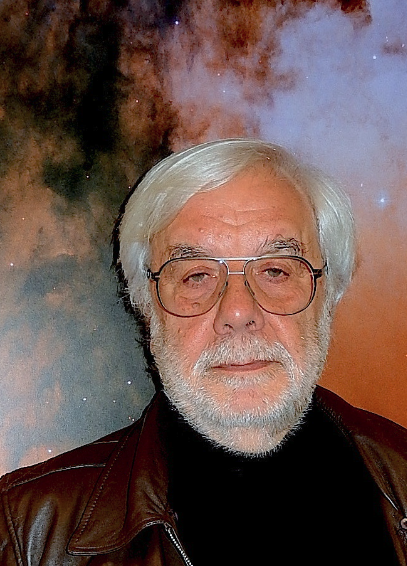 Jean Pierre Lasota-Hirszowicz合作论文数Nicolaus Copernicus Astronomical Center37
 Gabriel Torok合作论文数30
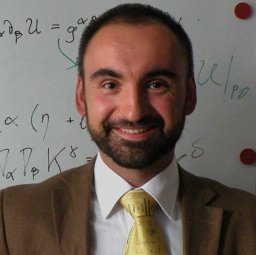 Maciek Wielgus合作论文数Max-Planck-Institut für Radioastronomie, Auf dem Hügel 69, D-53121 Bonn, Germany20
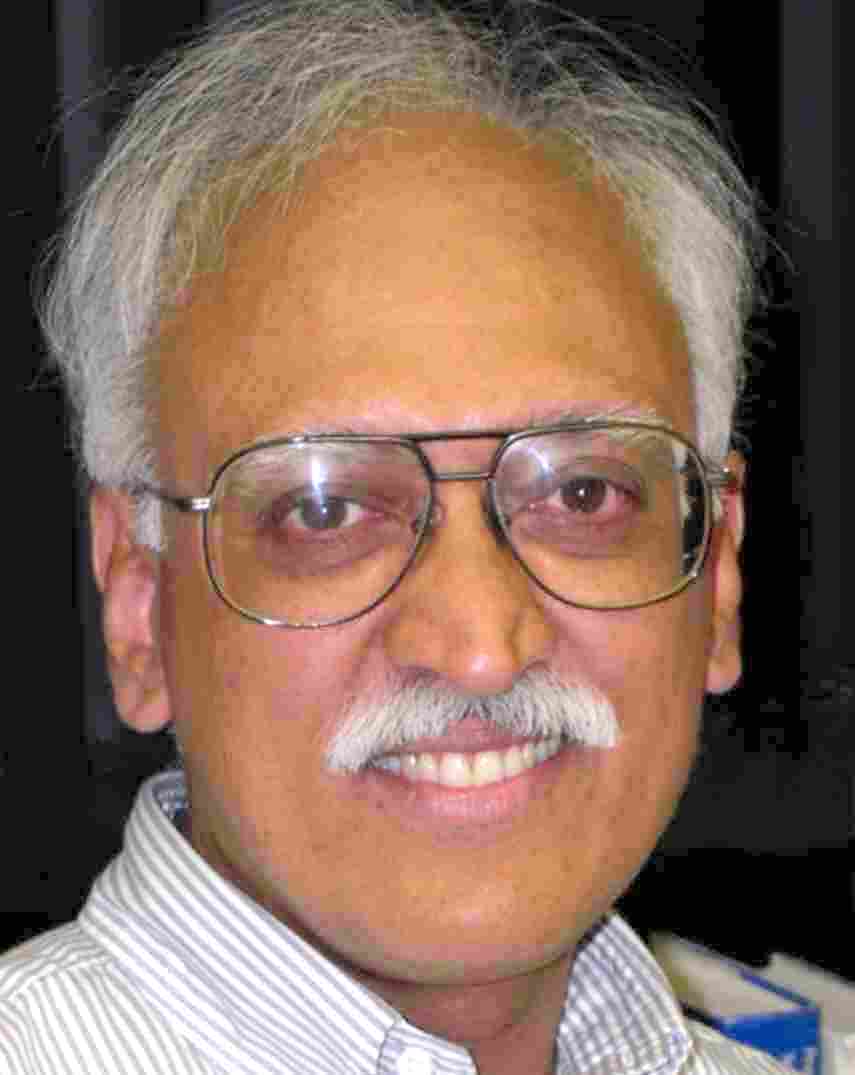 Ramesh Narayan合作论文数Department of Astronomy, Faculty of Arts and Sciences, Harvard University;Smithsonian Astrophysical Observatory, Harvard University17
 Igor V. Igumenshchev合作论文数Laboratory for Laser Energetics;University of Rochester;Laboratory for Laser Energetics, University of Rochester17Michal Bursa合作论文数17Aleksander Sadowski合作论文数Warsaw University;Dept . of Physics;Dept . of Physics, Warsaw University16
 Odele Straub合作论文数University of Goteborg, Univ. Goteborg15
 Zdeněk Stuchlík合作论文数Research Centre for Theoretical Physics and Astrophysics, Institute of Physics, Silesian University in Opava;Faculty of Philosophy and Natural Sciences, Silesian University in Opava15Eva Sramkova合作论文数14Jiri Horak合作论文数14P. Rebusco合作论文数14Frédéric Vincent合作论文数CNRS12V. Karas合作论文数11Xingming Chen合作论文数10
 Katerina Goluchova合作论文数Res Ctr Theoret Phys & Astrophys, Silesian Univ Opava9P. Bakala合作论文数8A. Lanza合作论文数7Jiří Horák合作论文数7Stanislaw Bajtlik合作论文数7
 George F. R. Ellis合作论文数Queen Mary University of London;Mathematics Department, University of Cape Town6
 Grzegorz P. Mazur合作论文数Kavli Inst NanoSci, Delft Univ Technol5Sebastiano Sonego合作论文数5Shoji Kato合作论文数5G. J. E. Almergren合作论文数5
 Agata Różańska合作论文数Astrophysics II Division, Nicolaus Copernicus Astronomical Center, Polish Academy of Sciences5
 Bożena Czerny合作论文数Nicolaus Copernicus Astronomical Center5
 Antonino Francesco Lanza合作论文数Osservatorio Astrofisico di Catania, Istituto Nazionale di Astro Fisica5
 Éric Gourgoulhon合作论文数CNRS5Massimo Calvani合作论文数Astronomical Observatory5T. Paumard合作论文数4
 Debora Lancova合作论文数Nicolaus Copernicus Astron Ctr, Polish Acad Sci4Z. Stuchlik合作论文数4M. Bejger合作论文数OzGrav, Univ Adelaide4
 Ronaldo S. S. Vieira合作论文数4Omer Blaes合作论文数4Ewa Szuszkiewicz合作论文数4
 Paul J. Wiita合作论文数Department of Physics, The College of New Jersey4
 Jufu Lu (卢炬甫)合作论文数Department of Astronomy, Xiamen University4
 Pavel Bakala合作论文数4
 Pranab Ghosh合作论文数4Michal Jaroszynski合作论文数4
 Arun V. Thampan合作论文数Inter-University Centre for Astronomy and Astrophysics4Audrey Moudens合作论文数4
 Guy Perrin合作论文数CNRS3Wlodek Kluzniak合作论文数3Gang Bao合作论文数3David Abarca合作论文数3




