Among languages that recognise different categories for ‘blue’ and ‘green’ in their colour lexicons, some further partition ‘blue’ according to lightness. We asked whether this subdivision would affect the ‘blue’/‘green’ boundary. We identified this boundary in seven European languages, using a dataset in which speakers of each language gave colour names to sixty-five standardised colour samples. The frequencies of ‘blue’- and ‘green’-naming for each sample were expressed as functions of hue-angle, with the angle where the two functions cross being the category boundary. No differences were found between languages with or without separate basic terms for ‘light blue’, implying that the emergence of these ‘light blue’ terms is not caused by reduced salience or coverage of ‘blueness’.
Tehisaru ja neuromasintõlke kiire areng on toonud digikirjaoskuse raames fookusesse ka masintõlkealase kirjaoskuse. Muu hulgas on üha rohkem tähelepanu hakatud pöörama sellele, kuidas kasutavad masintõlget (MT) üliõpilased. Artikkel käsitleb masintõlkealast kirjaoskust keelte ja kultuuride erialadel õppivate üliõpilaste seas Tallinna Ülikoolis ja Tartu Ülikoolis. 86 üliõpilast vastas küsitlusele, mille eesmärgiks oli uurida üliõpilaste MT kasutuspraktikaid ja hoiakuid MT suhtes, k.a teadlikkust MT kasutamist reguleerivatest reeglitest ja eetilistest piirangutest ning seda, milline on tajutud usaldus MT väljundi suhtes. Tulemused näitavad, et mingil määral on teadlikkus MT kasutamisest olemas, kuid sellest hoolimata on usaldus MT vastu pigem tagasihoidlik. Üliõpilased ootavad selgemaid reegleid, kus, kuidas ja millal masintõlget kasutada võib ning juhiseid MT alase kirjaoskuse parandamiseks. Eesti ei erine teistest riikidest, kus otsitakse vastuseid samadele küsimustele. *** "Awareness and perceptions of machine translation literacy among students of languages and cultures" *** The rapid development of artificial intelligence and neural machine translation has brought machine translation literacy into focus as part of digital literacy. Increasing attention is being paid to how students use machine translation in their studies. This article examines machine translation literacy among students of languages and cultures at Tallinn University and the University of Tartu. A total of 79 students participated in a survey designed to explore their attitudes towards machine translation, including whether they feel the need for clearer rules and guidance to support its effective use. The results show that while students are aware of machine translation to some extent, their trust in it remains limited. They express a need for clearer rules on where, how and when machine translation may be used, as well as for guidance to develop their literacy in this area. Estonia does not differ from other countries seeking answers to similar questions.
Maastik on geograafia keskne mõiste, millel on kinnistunud definitsioon. Samas ei teata, kuidas mõtlevad maastikust eesti keele kasutajad, kes ei ole erialaspetsialistid. Artiklis keskendume küsimusele, kuidas kõneletakse maastikust eesti keeles. Loetelukatse analüüs näitas, et maastik seostub enamasti loodusega, st mitte linnaga. Küsimuse âMis on maastik?â kvalitatiivne sisu analüüs paljastas aga maastikukäsitluse teistsuguse olemuse: maastik on eesti keele kõnelejate jaoks nii looduslik kui ka inimtekkeline nähtus. Maastikku kirjeldati võrdselt kui maa-ala ja keskkonda, kuid mõne keelekasutaja jaoks on maastik siiski seotud tajukogemuse ja tunnetusega. Vanemad inimesed oskavad nimetada rohkem maastikusõnu ning neil tundub olevat noorematest põlvkondadest rikkalikum sõnavara. Lisaks näeme, et maastikusõnad ei moodusta sellist homogeenset semantilist välja nagu värvinimed, kehaosad või muusikainstrumendid.
This article presents a free association database containing responses to 62 stimulus words (including colour terms, emotion words, and common nouns) across seven languages: English, Estonian, French, German, Italian, Lithuanian, and Spanish. Data were collected online from 1,439 participants (mean age 31.47 years) across 14 countries, yielding 223,786 responses. All data were cleaned, normalised, and organised for analysis, with both raw and processed datasets available on OSF. This cross-linguistic resource enables research on semantic networks, psycholinguistics, translation studies, and cross-cultural comparisons, providing insights into how meaning is constructed within and across different languages and cultures.
Semantic domains can be considered in the light of prototype theory, making a distinction between ‘cultural’ and ‘natural kinds’. To sample this distinction, we compared the structure of three well-studied semantic domains in Estonian, a Finno-Ugric language: musical instruments, body parts and animal names. We used the method of listing to collect data which we analyse with the method of multidimensional scaling. Points-of-view analysis provides the opportunity to extract alternative conceptual structures, which are the extremes of individual variations among the participants. For body parts for instance, which are arranged in a hierarchical or partonomic structure, the hierarchy can be explored level by level – beginning with prototypes – or branch by branch. For musical instruments, one extreme map contributed significantly more to lists from musical performers, and was structured by instrumental classification and roles rather than by prototypes. These results suggest some empirical implications of the distinction between natural and cultural kinds.
Studies on the color category PURPLE yielded inconsistent category boundaries, focal colors, and color-emotion associations. In French, there are at least three color terms referring to the shades of purple, potentially weighing on these inconsistencies. Thus, we tested the semantic breadth and richness in semantic meaning of violet (basic term), lilas (non-basic), and pourpre (non-basic). We collected free associations in 274 French speakers from Algeria, France, and Switzerland, yielding 2079 responses, of which 436 were discrete and 275 were unique. Frequency analyses and semantic coding supported the basicness status of violet in French, within a hierarchically structured semantic system. Moreover, the meaning of the three terms was not synonymous. Violet had the most abstract meaning. Lilas had the narrowest meaning, mainly referring to Natural Entities. Pourpre seemed close to RED. We found no differences between the countries. Future studies should extend this approach to other languages and other color terms.
Abstract Previous research on color idioms has shown that they are often culture-specific, and translating them requires shifting between cognitive frames of reference. However, little research has been carried out on the translation process of such idioms. We investigated how Swedish color idioms were translated into Estonian by professional translators and novices, tracking the components of the translation process, such as time spent on the tasks, resources used, and the importance of context provided. Finally, we detected eight translation strategies used for idiom translation. The strategies used depended on the idiom’s transparency between the source and target language. The conventionality of the idiom seemed to have little impact on the difficulty experienced. Professionals and novices used different approaches to translation which once again confirms the importance of acquired skills and experience. Color idioms can turn out to be false friends. Focusing first and foremost on the idiomaticity of the target language helps. Professionals searched for the target language idiom and used various monolingual resources in the target language while novices searched mainly for source-language idioms and used no monolingual target language web dictionaries.
As people age, they tend to spend more time indoors, and the colours in their surroundings may significantly impact their mood and overall well-being. However, there is a lack of empirical evidence to provide informed guidance on colour choices, irrespective of age group. To work towards informed choices, we investigated whether the associations between colours and emotions observed in younger individuals also apply to older adults. We recruited 7393 participants, aged between 16 and 88 years and coming from 31 countries. Each participant associated 12 colour terms with 20 emotion concepts and rated the intensity of each associated emotion. Different age groups exhibited highly similar patterns of colour-emotion associations (average similarity coefficient of .97), with subtle yet meaningful age-related differences. Adolescents associated the greatest number but the least positively biased emotions with colours. Older participants associated a smaller number but more intense and more positive emotions with all colour terms, displaying a positivity effect. Age also predicted arousal and power biases, varying by colour. Findings suggest parallels in colour-emotion associations between younger and older adults, with subtle but significant age-related variations. Future studies should next assess whether colour-emotion associations reflect what people actually feel when exposed to colour.
Previous research on color idioms has shown that they are often culture-specific, and translating them requires shifting between cognitive frames of reference. However, little research has been carried out on the translation process of such idioms. We investigated how Swedish color idioms were translated into Estonian by professional translators and novices, tracking the components of the translation process, such as time spent on the tasks, resources used, and the importance of context provided. Finally, we detected eight translation strategies used for idiom translation. The strategies used depended on the idiom’s transparency between the source and target language. The conventionality of the idiom seemed to have little impact on the difficulty experienced. Professionals and novices used different approaches to translation which once again confirms the importance of acquired skills and experience. Color idioms can turn out to be false friends. Focusing first and foremost on the idiomaticity of the target language helps. Professionals searched for the target language idiom and used various monolingual resources in the target language while novices searched mainly for source-language idioms and used no monolingual target language web dictionaries.
Colour-emotion association data show a universal consistency in colour-emotion associations, apart from emotion associations with PURPLE. Possibly, its heterogeneity was due to different cognates used as basic colour terms between languages. We analysed emotion associations with PURPLE across 30 populations, 28 countries, and 16 languages (4,008 participants in total). Crucially, these languages used the cognates of purple, lilac, or violet to denote the basic PURPLE category. We found small but systematic affective differences between these cognates. They were ordered as purple > lilac > violet on valence, arousal, and power biases. Statistically, the cognate purple was the most strongly biased towards associations with positive emotions, and lilac was biased more strongly than violet. Purple was more biased towards high power emotions than violet, but cognates did not differ on arousal biases. Additionally, affective biases differed by population, suggesting high variability within each cognate. Thus, cognates partly account for inconsistencies in the meaning of PURPLE, without explaining their origins.
When informants from a given culture are asked to list items from a specified semantic domain, their lists provide two indicators of each term's prominence or salience: its frequency of appearance across lists and its mean position within the lists that include it.Smith et al. (1995),Sutrop (2001), and most recentlyRobbins et al. (2017)have defined salience measures that combine these two sources of information. We argue that although frequency and mean position are correlated, the association between them is not perfect and not linear. Plotting them as separate axes of a scatterplot can be informative and complementary to combining them in a single salience measure. We illustrate this with scatterplots for three semantic domains: color terms, animal names, and body parts.
The colour category PURPLE is strangely heterogeneous, potentially due to the use of different cognates. We asked French speakers from Algeria, France, and Switzerland (n = 274) to produce up to three free associations with violet (basic term), pourpre, and lilas (non-basic terms). We counted 2,075 associations. We developed a coding scheme that i) covers nine major themes, and ii) shows high inter-rater reliability. Overall, the themes colour terms and natural elements and objects were most prominent showing that participants provided closely related associations. Finally, violet triggered more diverse semantic associations than pourpre or lilas. This was true for all countries. It seems that the basic term PURPLE carries more diverse associations and connotations than the non-basic terms.
Artiklis käsitletakse ilmastikunähtustega seotud keeleassotsiatsioone. Artikli kirjanduse ülevaatesse on koondatud ülevaade varasematest uuringutest, mille keskmeks on olnud ilmastikunähtused ja nende seosed emotsioonide, lingvistiliste ja psühholoogiliste aspektidega. See järel tutvustatakse uuringut, mille käigus täitis 59 osalejat ilmastikuga seotud stiimulsõnade küsimustiku. Artikli lõpuosas esitatakse tulemused, mille kohaselt on valdav enamik ilmastikunähtustega seotud keeleassotsiatsioonidest süntagmaatilised, kõlapõhiseid assotsiatsioone ei esinenud. Samuti domineerisid omadussõnalised assotsiatsioonid nimisõnaliste ees. Võtmesõnad: ilm, sõnaassotsiatsioonid, semantika, kognitiivne lingvistika, inglise keel, eesti keel
Many of us "see red," "feel blue," or "turn green with envy." Are such color-emotion associations fundamental to our shared cognitive architecture, or are they cultural creations learned through our languages and traditions? To answer these questions, we tested emotional associations of colors in 4,598 participants from 30 nations speaking 22 native languages. Participants associated 20 emotion concepts with 12 color terms. Pattern-similarity analyses revealed universal color-emotion associations (average similarity coefficient r = .88). However, local differences were also apparent. A machine-learning algorithm revealed that nation predicted color-emotion associations above and beyond those observed universally. Similarity was greater when nations were linguistically or geographically close. This study highlights robust universal color-emotion associations, further modulated by linguistic and geographic factors. These results pose further theoretical and empirical questions about the affective properties of color and may inform practice in applied domains, such as well-being and design.
Certain modified color terms encountered in a multi-language corpus of unconstrained color-naming data, elicited with 65 Color-aid Corporation tiles, can be glossed into English as “bright (or vivid) X” (e.g., Estonian “ere-X”), while other modifiers are glossed “light” or “dark.” However, translation between languages or into the terms of colorimetry is never assured. We address the problem empirically by examining the denotata of each modified term and treating its uses as a distribution across a metric color space in which tiles are located as points. We compared each distribution with that of theunmodifiedterm X, identifying the latter with the focus of X (the within-language consensus about the most prototypical exemplar of X). In some cases the modifiers operate as “bright” in the sense of “intense” or “saturated,” so “bright-X” and “X” share a centroid, but this is not universal.
Selle interdistsiplinaarse teemanumbri keskmes on ruumi mõiste ja ruumi keeleline väljendamine. Kui ühelt poolt on keel ruumist kõnelemise vahend, siis teisalt on see ise maailm, mis sisaldab arusaamu erinevatest ruumilistest aspektidest, mida muutes saab painutada ka mõtlemisviise. Ruumist kõneldakse oskus- ja argikeeles, erinevaid ruume kujutatakse kirjanduses ja ajakirjanduses, aga samal ajal kannab keel ise ruumilisi […]
Sellega, kuidas mõistame õppimise tähendust, mõtestame inimeseks olemist ning kujundame ühiskonnas inimestevahelisi ja institutsionaalseid suhteid, mõjutades nii kõiki ühiskonna liikmeid. Õpikäsitus ongi arusaam sellest, mis eesmärkidel ja kuidas õpitakse ja millistes suhetes on selles protsessis osalejad, ning selle arusaama rakendamine praktikas (HTM 2017). Õpikäsitused on ajas muutuvad ühiskondlikud kokkulepped, mis on seotud inimeste uskumuste, tavade […]
Kui käsitleme ruumi keeles, on võimalus uurida maastikke ja maastiku sõnavara. Ümbritsevad ju maastikud meid kõikjal, sest nii nagu igal inimesel on keha, on igasugune inimtegevus seotud keskkonnaga, milles see tegevus toimub (Burenhult, Levinson 2008). Stephen C. Levinson ja David P. Wilkins tõdevad, et keeled erinevad olenevalt sellest, millises keskkonnas või ümbruses neid räägitakse, seega on maastik ja keel ning kultuur omavahel tugevalt seotud (Levinson, Wilkins 2006: 19–22). Keele abil mõtestatakse maastikku, aga samuti on maastik käsitletav tekstina (Spirn 1998; Duncan, Duncan 1988). Kasutatav sõnavara erineb keeleti ja grupiti. Näiteks võib eristada teadlaste „maastikku” ja kohalike „maastikku”: üks koosneb valdavalt eriala(de) terminitest, teine inimeste igapäevategevustest (Palang 2001). Keeleteadlased on leidnud, et geotsentriline orientatsioon1 on omane just küttide-korilaste keeltele (Levinson 2003), samal ajal orienteerutakse paljudes Euroopa keeltes maastikumärke silmas pidades. Tänapäeva üha linnastunumates ühiskondades muutub tõenäoliselt ka see, kuidas me maastikest räägime. Austraalias Põhja-Queenslandis Hopevales kõneldavas guugu-yimithirri keeles ei räägita ruumi tajumisel mitte üleval-all ega vasakul-paremal olevatest objektidest, vaid n-ö absoluutseid koordinaate ehk geograafilisi suundi silmas pidades. Selles keeles ei asetse kahvel taldrikust mitte vasakul, vaid näiteks lõuna suunas; päike mitte ei looju, vaid läheb läände. Kuigi Euroopa keeltes kõneldakse mõnikord absoluutseid koordinaate arvestades, eriti üldises maailmateadmises (nt Aafrika manner asub Euroopast lõunas), ei tehta seda väikeste ja vahetute üksuste puhul (Levinson 1997). Eesti keelde ilmus sõna maastik XX sajandi alguses (Paatsi 1995). Esmalt kasutas Gustav Suits seda sõna Noor-Eesti kunstinäituse kataloogis maastikumaali tähenduses. Pisut hiljem leidis sõna tee kooliõpikutesse (Peil jt 2004), kus maastikena vaadeldi mingeid maa-alasid. Eesti teaduskeelde tõi maastiku mõiste eestikeelse Tartu ülikooli esimene geograafiaprofessor Johannes Gabriel Granö eelkõige saksa Landschaft’i vastena, millest arendati edasi oma spetsiifiline arusaam (vt Paatsi 1995; Palang, Kaur 2000; Peil jt 2004; Kaur, Palang 2005). Granö jaoks oli oluline maastiku tajumine meelte, eelkõige nägemismeele abil – maastik on värvide ja vormide laad vaateväljas. Selle lähenemise üks kõrvalnähte oli see, et maastik liikus vaatajaga kaasa. Lahenduseks oli eristus lähija kaugnähestiku ehk lähestiku ja maastiku vahel: esimest tajutakse kõigi meeltega, teist üksnes vaadeldakse. Maastik on maaalaline üksus, millel on määratud, nähtavad, püsivad ja kaugümbrusena esinevad
Translation of colour terms hovers somewhere between cognitive linguistics and translation studies and has therefore remained relatively understudied as a topic, despite the popularity of cross-linguistic colour term studies in the languages of the world. Although colour terms form a relatively small and restricted semantic domain, translating a colour term into another language can cause a massive headache to anyone who has ever tried to seek an appropriate equivalent for it in another language. The article describes how a group of translators and non-translators translated single, mainly simplex secondary colour terms from English into Estonian. Four main translation strategies can be discerned: literal translation, abstraction change or hyponymy, information change or omission and descriptive translation techniques. In addition, the study shows that translation experience and translation education is an advantage even if one translates small units of texts. Kokkuvõte. Mari Uusküla: Empiiriline lähenemine värvinimede tõlkimisele inglise-eesti suunal. Värvinimede tõlkimist võiks pidada keele teaduse ja tõlketeaduse siirdealaks, kuna tõlketeadus tegeleb põhiliselt suuremate üksuste uurimisega kui selleks on sõnad, kognitiivne semantika aga huvitub ka üksiksõnadest. Teemat võib pidada aktuaalseks ja uudseks, sest värvi nimede tõlkimist on süstemaatiliselt uuritud vähe sellele vaatamata, et huvi värvinimede vastu eri maailma keeltes on jätkuvalt suur. Artikkel kirjeldab, kuidas kakskümmend vabatahtlikku, kelle hulgas leidus nii tõlkijaid kui ka mittetõlkijaid (s.t. inimesi, kes oma igapäevaelus ega -töös tõlkimisega ei tegele), tõlkisid inglise keelest eesti keelde kakskümmend objektist tuletatud värvinime (nt lemon, chocolate ja rose). Värvinimede tõlkimisel kerkis esile neli põhilist tõlkestrateegiat: otsetõlge, abstraheerimine või hüponüümia kasutamine, informatsiooni muutmine või väljajätt ning kirjeldav tõlge. Lisaks näitab läbiviidud uurimus, et tõlke kogemusega ja tõlkeharidust omavatel inimestel on tõlkimisel selge eelis, isegi kui tõlgitavateks üksusteks on üksiksõnad.
 David Bimler合作论文数11
 Domicele Jonauskaite合作论文数Inst Psychol, Univ Lausanne10
 Christine Mohr合作论文数Department of Experimental Psychology, University of Bristol10
 Eric Laurent合作论文数7
 Violeta Corona合作论文数Universidad Panamericana de México5
 Nele Dael合作论文数Swiss Center for Affective Sciences5
 Jelena Havelka合作论文数Department of Experimental Psychology, University of Bristol5
 Daniel Oberfeld合作论文数Psychologisches Institut;Universität Mainz;Psychologisches Institut, Universität Mainz5
 Abdulrahman S. Al-rasheed合作论文数4
 Deborah Epicoco合作论文数4Aygun Sultanova合作论文数4
 Lynn Marquardt合作论文数4
 Philip Mefoh合作论文数Dept Psychol, Univ Nigeria4
 Grazyna Wasowicz合作论文数4
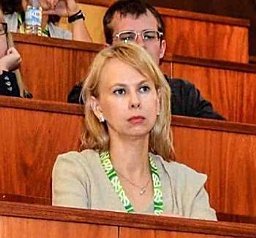 Victoria Bogushevskaya合作论文数Dept Linguist Sci & Foreign Literatures, Univ Cattolica Sacro Cuore4
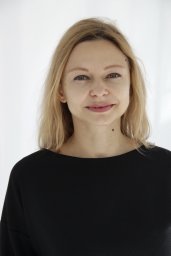 Yulia Griber合作论文数Dept Sociol & Philosophy, Smolensk State Univ4Marco Hirnstein合作论文数4
 Eduardo Fonseca-Pedrero合作论文数Centro de Investigación Biomédica en Red de Salud Mental (CIBERSAM), Spain4
 Marietta Papadatou-Pastou合作论文数University of Oxford4
 Bodil Karlsson合作论文数4
 Amer Chamseddine合作论文数3
 Jean-Philippe Antonietti合作论文数3Niloufar Pouyan合作论文数3Ahmed Hasan Aya合作论文数3
 Alena Gizdic合作论文数Corresponding author.3
 Lyudmyla Romanyuk合作论文数Dept Psychol, Kyiv Natl Univ Culture & Arts3
 Corinna M. Perchtold-Stefan合作论文数Dept Psychol, Karl Franzens Univ Graz3
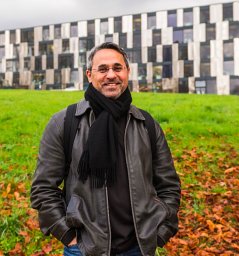 Ahmad Abu-Akel合作论文数School of Psychology, University of Birmingham3
 Salgado-Montejo Alejandro合作论文数Crossmodal Research Laboratory, University of Oxford Oxford;Escuela Internacional de Ciencias Económicas y Administrativas, Universidad de La Sabana;University of Oxford Oxford, Universidad de La Sabana3
 Ahmed M. Abdel Elkhalek合作论文数Department of Psychology, College of Arts, Kuwait University3
) Meng Zhang (张萌)合作论文数Department of Psychology and Behavioral Sciences, Zhejiang University3
Meng Zhang (张萌)合作论文数Department of Psychology and Behavioral Sciences, Zhejiang University3 Urmas Sutrop合作论文数Institute of the Estonian Language;University of Tartu;Institute of the Estonian Language, University of Tartu3
 Sergejs Fomins合作论文数3
 Gina M. Grimshaw合作论文数School of Psychology, Victoria University of Wellington3
 Nikos Konstantinou合作论文数Department of Psychology, University of Cyprus3
 Eka Chkonia合作论文数Department of Psychiatry, State Medical University3
 Suncica Zdravkovic合作论文数3
 Alicia Perez-Albeniz合作论文数3Maya Roinishvili合作论文数Laboratory of Vision Physiology, I. Beritashvili Institute of Physiology3
 Marjaana Lindeman合作论文数3Giulia F. M. Spagnulo合作论文数2Jejoong Kim合作论文数2Hassan Daouk合作论文数2Michael Quiblier合作论文数2Marodégueba Barma合作论文数2
 Phillip Mutandwa合作论文数Department of Psychology, Midlands State University2Veronica Vargas-Soto合作论文数2
 Teofil Ciobanu合作论文数Institute of Psychology, University of Lausanne2
 ramiro tau合作论文数Institut de psychologie et éducation, Université de Neuchâtel (UNINE),2




