A multidisciplinary design optimization methodology to directly minimize the ground-level noise generated by the sonic boom of a high-altitude supersonic body is presented. A Cartesian-Euler flow solver is coupled with an atmospheric propagation tool to create a ground-noise analysis capability. Adjoint formulations for both the flow solver and propagation tool are also coupled to compute noise sensitivities to shape variations in a highly efficient manner. A gradient-based optimizer is then used to minimize objectives that are functions of ground-level noise. Output-based mesh adaptation that is driven directly by ground-level noise is employed to automatically generate meshes during the optimization. The design method was first demonstrated on a simple axisymmetric body with few lengthwise shape variables to evaluate the efficacy and validity of the optimization scheme. This design space was found to contain two local minima. Convergence of the optimization is demonstrated from multiple starting points. In addition, the method is applied to a second example with design variable placement that is guided by the coupled adjoint solution of the first problem. The design method was then applied to a low-boom aircraft at supersonic cruise to optimize control surface deflections. Two noise minimization examples and a noise maximization are presented. All optimized designs resulted in measurable improvements in the ground-level noise objective. Surveys of the design space confirm that the optimization method is effective in finding a local optimum.
We investigate the utility of adjoint-based error estimates for sonic boom farfield simulations governed by solutions of the augmented Burgers' equation. Solution of this nonlinear system uses operator splitting with a second-order finite volume discretization in space and second-order Runge-Kutta time marching, while the absorption and molecular relaxation are solved using second-order central differencing. The discretization error in selected ground sonic boom cost functionals is estimated using the method of adjoint-weighted residuals. Key elements of the implementation process are emphasized with details provided on the practical aspects as applied to the sonic boom farfield propagation. We establish the accuracy of the adjoint solutions using complex step and finite difference approaches, and examine the accuracy of the error estimates using analytical N-wave solutions. We then apply it to a pressure waveform corresponding to the X-59 research aircraft. The investigations demonstrate that the method of adjoint-weighted residuals accurately predicts the level of discretization error present in sonic boom farfield simulations while offering insight into which features of the nearfield signal are the primary drivers of ground noise metrics. The numerical results indicate that at sampling frequencies as low as 50 kHz, discretization error in the propagation is under 0.01 dB[A] for realistically complex examples.
The goal of this work is to quantify uncertainty in the level of noise reaching the ground from supersonic aircraft at cruise conditions. To cope with uncertainty in the state of the atmosphere, the temperature and relative humidity profiles are parameterized using a Karhunen-Loeve expansion based on a novel formulation involving dew point temperature. The noise statistics are evaluated with sparse quadratures. The flow simulations use nearfield-farfield domain decomposition. In the nearfield, the three-dimensional Euler equations are solved to obtain a pressure signature generated by the aircraft. In the farfield, this waveform is propagated to the ground by solving the augmented Burgers' equation. The use of sparse quadratures together with the domain decomposition approach enables efficient uncertainty assessment that minimizes the number of expensive nearfield simulations. The results show that truncating the Karhunen-Lo`eve expansion after six terms is sufficient to model the atmospheric uncertainty accurately. This expansion is used in conjunction with uncertainty in flight conditions to estimate the ground noise statistics for the planned acoustic validation flights of the X-59 aircraft. We identify the atmosphere as the primary source of uncertainty, which causes dispersions in noise metrics of 4 to 8%. Furthermore, assuming a fixed aircraft weight and trim, no winds and ignoring the effects of atmospheric turbulence, the results show that the probability of satisfying a perceived level of loudness limit of 75 dB is 92%.
Mesh adaptation is essential for controlling the cost of large-scale, high-resolution simulations. We propose an efficient parallel unsteady adaptation approach that uses multiple sweeps over the time domain. The simulation is divided into a set of temporal “windows” each having a spatial mesh and time step adapted for a fraction of the total solution time. Since each adaptation pass sweeps over the full temporal domain, meshes for all windows can be constructed simultaneously in an embarrassingly parallel fashion, avoiding the typical bottleneck of sequential adaptation that inhibits scalability. This parallel mesh adaptation method is illustrated on a Mach 3 forward-facing step and is then applied to blast propagation simulations in a heavy atmosphere. The accuracy and efficiency of a full-scale 3D asteroid entry with a 50 MT airburst is examined in detail. The simulation runs on 4000 cores and meshes of over 200 million cells, and it requires a large domain of over 150km downrange and crossrange and physical time extending nearly 8 minutes. The flow converges on fine meshes with small Richardson-based error estimates, establishing confidence in the final adaptive solution. A detailed breakdown of wall-time and computational cost for the 3D results shows that all meshing and adaptation accounts for less than 2% of the total simulation time.
View Video Presentation: https://doi.org/10.2514/6.2022-4085.vid The method of adjoint weighted residuals is used to determine the level of discretization error in loudness predictions of sonic booms on the ground. We analyze the standard nearfied-farfield domain decomposition approach. In the nearfield domain, the three-dimensional Euler equations are solved to obtain a pressure signature generated by the aircraft. In the farfield, this waveform is propagated through the atmosphere to the ground by solving the augmented Burgers' equation. Loudness is characterized using weighted sound-exposure-level metrics. We formulate discretization error estimates for the ground signature and loudness metrics for this one-way coupled system. Although the nearfield solution is independent of the farfield, the adjoint formulation for the coupled system provides feedback from the farfield to identify high-error regions in the nearfield. The results demonstrate that the discrete adjoint implementation is asymptotically consistent and provides reliable error estimates. Furthermore, we show how the error can be controlled through adaptive refinement of the nearfield mesh. The approach is evaluated on two- and three-dimensional problems, including the X-59 flight demonstration aircraft.
Simulation results are presented for all cases from the Third AIAA Sonic Boom Prediction Workshop. An inviscid, embedded-boundary Cartesian-mesh flow solver is used in conjunction with adjoint-based mesh adaptation to compute near-field pressure signatures. Specialized techniques are applied to maximize accuracy and minimize cost on Cartesian meshes. Regions of the flow most sensitive to discretization error are identified using Richardson extrapolation. Timing results and mesh sizes for near-field cases demonstrate that decomposition into multiple off-track simulations is efficient in both computational time and wall-clock time, with results among the least computationally expensive of those presented at the workshop. Pressure signals are propagated to the ground using an augmented Burgers equation solver to predict boom carpets. Ground signatures and loudness metrics are presented for a standard atmosphere as well as an atmosphere with wind profiles that affect overall noise levels and can significantly widen the boom carpet. Mesh convergence studies show that high sampling frequencies, around 500 kHz, are required for on-track propagation; the sampling frequency increases at large off-track angles due to longer acoustic ray paths. Overall, the approach presented here yields accurate results for predicting low-sonic-boom signatures.
View Video Presentation: https://doi.org/10.2514/6.2021-0473.vid Simulation results are presented for all cases from the Third AIAA Sonic Boom Prediction Workshop. An inviscid, embedded-boundary Cartesian-mesh flow solver is used in conjunction with adjoint-based mesh adaptation to compute nearfield pressure signatures. Specialized techniques are applied to maximize accuracy and minimize cost on Cartesian meshes. The Richardson-based error estimate highlights regions of the signatures most sensitive to mesh refinement. Timing results and coarse, medium, and fine mesh sizes for nearfield cases demonstrate that the parallel decomposition approach is efficient in both computational time and wall-clock. Pressure signals are propagated to the ground using an augmented Burgers' equation solver to predict boom carpets. Ground signatures and loudness metrics are presented for a standard atmosphere as well as more realistic atmospheric profiles, which affect overall noise levels and can significantly widen the boom carpet. Mesh convergence studies show that high sampling frequencies, around 500 kHz, are required for propagation, and the sampling frequency increases at large off-track angles with longer acoustic ray paths and propagation times. The numerical methods yield accurate results for predicting low sonic boom signatures while being among the least computationally expensive of the workshop.
A non-intrusive uncertainty quantification method is applied to computational analysis of supersonic, low-boom aircraft. The mean and standard deviation statistics of the pressure waveforms and loudness metrics are evaluated through use of numerical quadrature. The probability density function (p.d.f.)\ of these outputs is evaluated via kernel density estimation. The simulations use an inviscid, embedded-boundary Cartesian-mesh flow solver in the nearfield combined with an augmented Burgers' equation solver for propagation in the farfield. The results show that the p.d.f.\ of the waveform is bimodal at shocks, which makes the mean and standard deviation statistics inappropriate. Despite this limitation, we show that the moment statistics can provide effective assessment of discrepancies when comparing with experimental data. This is demonstrated by presenting uncertainty analysis of a wind-tunnel test and showing that we significantly improve the predictions when we include the test uncertainties in the simulation. Normal distributions are obtained for the ground signature and loudness metrics, which is primarily due to the careful shaping of the low-boom waveform. Separation of variables and error control are used to reduce computational cost. We demonstrate that this is an efficient approach in the sense of balancing numerical errors in the statistics quadrature with discretization errors in the solvers.
A multidisciplinary design optimization methodology to directly minimize the ground-level noise generated by a supersonic aircraft's sonic boom is presented. A gradient-based optimizer is coupled with a Cartesian Euler flow solver and an atmospheric propagation tool to forge a unique design capability. Adjoint formulations for both the flow solver and propagation tool are also coupled to provide sensitivities in an efficient manner. The design method is demonstrated on the X-59 Low-Boom Flight Demonstrator by optimizing control surface deflections to improve ground-level noise while maintaining trimmed cruise flight. Two noise minimization examples and a noise maximization are presented. All optimized designs result in measurable improvement in the ground-level noise objective. Extensive surveys of the design space confirm that the optimization method is effective in finding a local optimum. Moreover, repeated application of the method with varying initial design points also demonstrates the robustness of the method.
Simulation results are presented for all test cases prescribed in the Second AIAA Sonic Boom Prediction Workshop. An inviscid, embedded-boundary Cartesian-mesh flow solver is used to compute "boom carpets"-pressure signatures at a range of specified distances and off-track angles. To accelerate the process, each boom carpet is automatically decomposed into several independent meshes, computed in parallel. Each mesh uses output-based mesh adaptation to affordably obtain credible results. This paper discusses improved Cartesian meshing strategies for boom prediction, including Mach alignment, azimuthal alignment, high-aspect-ratio cells, and adaptation functional weighting. The resulting nearfield signatures generally exhibit good convergence with mesh refinement. For an independent evaluation of our results, this study introduces a local error estimation procedure that highlights regions of the signatures most sensitive to mesh refinement. Results are also presented for the two atmospheric propagation test cases, which investigate the effects of atmospheric profiles on ground noise. Propagation is handled with an augmented Burgers' equation method (NASA's sBOOM), and ground noise metrics are compared.
One of NASA’s six Strategic Thrusts for aeronautics is “Innovation in Commercial Supersonic Aircraft,” with a vision of fast air travel widely available to the traveling public. Future supersonic aircraft will be efficient, affordable, and environmentally responsible, generating an acceptable level of en-route noise (sonic booms). The first major step is the ongoing construction of the new X-59 Quiet SuperSonic Technology X-plane to demonstrate technologies that reduce sonic booms to gentle thumps. By using highresolution Cart3D computational fluid dynamics simulations, the shape of the aircraft can be designed to control the non-linear interactions of shock waves to reduce the sonic boom noise on the ground to within outdoor ambient levels, thereby enabling supersonic overland flight.
A summary is provided for the Second AIAA Sonic Boom Workshop held on January 8-9, 2017, in conjunction with AIAA SciTech 2017. The workshop used four models of increasing complexity: an axisymmetric body, a wing-body, and a wing-body with tail configuration with either flow-through nacelles or propulsion boundary conditions. The last configuration was optional. The models were designed with similar nearfield signatures to isolate geometry and shock/expansion interaction effects. These cases are more relevant to vehicles with lower ground loudness and have the potential for lower annoyance than those in previous workshops. Eleven international participant groups submitted nearfield signatures. In addition, noise levels were computed by propagating the nearfield signatures to the ground. This allowed the evaluation of grid convergence and statistical distribution with respect to the noise metric. Prediction dramatically improved for the wing-body with tail and flow-through nacelle case between the first and second workshops. The models for the second workshop with quieter ground noise levels than those in the first workshop exposed weaknesses in analysis, particularly in convective discretization. While progress is documented since the first workshop, improvement to the analysis methods for a possible subsequent workshop is also provided.
Objectives: Reliable evaluation of mass flow rates through permeable boundaries - Estimate and control discretization error- Consider both computational domain outflow and inflow- Applicable to simulating propulsion-system effects, as well as secondary flow paths - Explore feasibility of handling more general outputs at domain boundaries. Design optimization subject to mass-flow-rate constraints - Improve aerodynamic performance and reduce noise due to sonic boom - Control discretization error in design space to improve confidence in final designs.
Boundary conditions appropriate for simulating flow entering or exiting the computational domain to mimic propulsion effects have been implemented in an adaptive Cartesian simulation package. A robust iterative algorithm to control mass flow rate through an outflow boundary surface is presented, along with a formulation to explicitly specify mass flow rate through an inflow boundary surface. The boundary conditions have been applied within a mesh adaptation framework based on the method of adjoint-weighted residuals. This allows for proper adaptive mesh refinement when modeling propulsion systems. The new boundary conditions are demonstrated on several notional propulsion systems operating in flow regimes ranging from low subsonic to hypersonic. The examples show that the prescribed boundary state is more properly imposed as the mesh is refined. The mass-flowrate steering algorithm is shown to be an efficient approach in each example. To demonstrate the boundary conditions on a realistic complex aircraft geometry, two of the new boundary conditions are also applied to a modern low-boom supersonic demonstrator design with multiple flow inlets and outlets.
The results of a layout trade study of a full-span, trailing-edge flap system for the NASACommon Research Model (CRM) are presented. Previously developed analysis and design tools areused to determine the potential performance benefits of several flap layouts on a highlyflexible version of the aircraft wing. The wing is first re-twisted for optimal aerodynamicperformance at the design cruise condition while addressing aeroelastic effects. Several flaplayouts are then installed on the new baseline wing. The deflection of each segment on allflap layouts is then optimized for aerodynamic performance at an overspeed flight conditionto ascertain the effectiveness of each flap system. The results indicate that employing two-segmentflaps greatly improves overspeed performance as compared to using no or justsingle-segment flaps. The study also showed that additional segments offer only incrementalimprovements in performance. The results also show that using only four spanwise flaps canproduce meaningful performance gains. Overall, the trade study results suggest a simpledistributed flap system (four spanwise flaps with two segments each) can reduce the drag ofthe Common Research Model by 13 counts at a Mach number that is 3.5 percent higher than thedesign cruise point.
We present a thorough validation of a computational approach to predict infrasonic signatures of centimeter-sized meteoroids. We assume that the energy deposition along the meteor trail is dominated by atmospheric drag and simulate the steady, inviscid flow of air in thermochemical equilibrium to compute the meteoroid's near-body pressure signature. This signature is then propagated through a stratified and windy atmosphere to the ground using a methodology adapted from aircraft sonic-boom analysis. An assessment of the numerical accuracy of the near field and the far field solver is presented. The results show that when the source of the signature is the cylindrical Mach-cone, the simulations closely match the observations. The prediction of the shock rise-time, the zero-peak amplitude of the waveform, and the duration of the positive pressure phase are consistently within 10% of the measurements. Uncertainty in the shape of the meteoroid results in a poorer prediction of the trailing part of the waveform. Overall, our results independently verify energy deposition estimates deduced from optical observations.
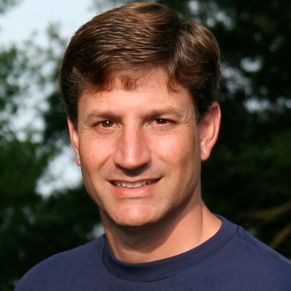 Michael J. Aftosmis合作论文数NASA Ames Research Center57
 David W. Zingg合作论文数Centre for Research in Sustainable Aviation, Institute for Aerospace Studies, Faculty of Applied Science and Engineering, University of Toronto;Centre for Computational Science and Engineering, Institute for Aerospace Studies, Faculty of Applied Science and Engineering, University of Toronto18
 Thomas H. Pulliam合作论文数NASA Advanced Supercomputing Division18
 David L. Rodriguez合作论文数9George R. Anderson合作论文数8
 Sriram K Rallabhandi合作论文数4Wade M. Spurlock合作论文数4james kless合作论文数4Terry L. Holst合作论文数3
 Mathias Wintzer合作论文数3
 Peter Brown合作论文数2
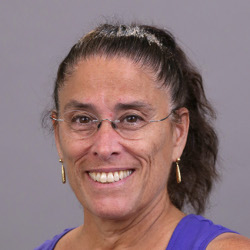 Marsha Berger合作论文数Computer Science Department, Courant Institute of Mathematical Sciences, New York University2
 Ilan Kroo合作论文数Department of Aeronautics and Astronautics, School of Engineering, Stanford University2Scott M. Murman合作论文数2
 Andrew Ning合作论文数Department of Mechanical Engineering, College of Engineering, Brigham Young University;National Renewable Energy Laboratory2S. De Rango合作论文数2Susan E. Cliff合作论文数2Greg Limes合作论文数1Linda S. Bangert合作论文数1
 Timothy Man-Ming Leung合作论文数1Garo Bedonian合作论文数1Jonathan J. Chiew合作论文数1Alaa Elmiligui合作论文数1Andrea Nelson合作论文数Stanford University1M. Berry合作论文数1
 Karen Gundy-Burlet合作论文数NASA-Ames Research Center1
 Michael A. Park (Mike)合作论文数NASA Langley Research Center1Laslo T. Diosady合作论文数Aerospace Computational Design Laboratory, Massachusetts Institute of Technology1Samy Elias合作论文数Institute for Aerospace Studies;University of Toronto1Edward B. Parlette合作论文数1
 Kalmanje Krishnakumar合作论文数1B. Eggleston合作论文数1
 Donovan L. Mathias合作论文数1Floyd J. Wilcox合作论文数1T. T. Chisholm合作论文数1Mike J. Aftosmis合作论文数1Anh H. Truong合作论文数1




