The CFD solver OVERFLOW was used to simulate the CobraMRV undergoing supersonic retropropulsion (SRP) in the Langley Unitary PlanWind Tunnel as part of a CFD and wind-tunnel integration effort. Selection of numerical methods and resulting comparisons to selected tunnel conditions of interest are detailed. Comparisons of mean pressures with static taps and pressure-sensitive paint are provided for multiple SST-based turbulence models. URANS predictions of heatshield pressures at high thrust conditions are poor compared to TMRC and DES predictions. Comparisons to experimental measurements of pressure fluctuations indicate complex relationships between heatshield unsteadiness, flight Mach number, and engine thrust coefficient. Bow shock topology and shock cell structure between experimental and OVERFLOW data show good agreement in Schlieren imaging. Recommendations for future investigation into flow field unsteadiness and turbulence models are suggested.
Simulations of unsteady supersonic retropropulsion (SRP) flow over a Hypersonic Inflatable Aerodynamic Decelerator (HIAD) blunt-body vehicle were performed using the OVERFLOW Computational Fluid Dynamics (CFD) solver. High-fidelity flow solver techniques, including Detached Eddy Simulation (DES) turbulence modeling and Adaptive Mesh Refinement (AMR), were employed to obtain improved realism in CFD predictions. Simulation conditions and geometry configurations were designed to match specific runs in the Descent System Study (DSS) wind tunnel testing (WTT) campaign. The accuracy of each simulation is assessed by direct comparison to experimental data. Comparisons of computational predictions of the SRP flowfield and bow shock shape to experimental schlieren imaging show reasonable prediction of mean shock shape, with approximately 10% similarity in shock standoff distance for selected conditions, as well as similarity in local, time-varying fluctuations of the shock-plume interaction. Comparisons of discrete measurements of surface pressure coefficient (C-P) indicate CFD accuracy within approximately 10% of the experiment across the majority of the model heatshield, with larger variations at some of the heatshield edge locations with stronger flow unsteadiness. Simulated unsteadiness of these chaotic flows, which were highly dynamic and multi-modal, was shown to be within 20-40% of experimentally-measured pressure standard deviation (SD) for the majority of the sampled locations.
The NASA Juncture Flow experiment is designed to acquire high-quality flowfield data deep in the corner of a wing-fuselage junction specifically for the purpose of computational fluid dynamics (CFD) validation and turbulence model improvement. This paper presents and discusses the results of a recent experiment with the juncture-flow model in the NASA Langley 14- by 22-Foot Subsonic Tunnel. The main objective of the test was to expand the existing juncture-flow dataset with a symmetric wing case that displays fully attached, incipient separation, and separated flow in the corner of the wing-fuselage junction, depending on the model angle of incidence. Laser Doppler velocimetry (LDV) measurements were made at three model angles of incidence (0 deg: fully attached, 1 deg: incipient separation, and 5 deg: separated flow) and for each one, mean-flow and Reynolds-stress data were obtained on the fuselage and at several streamwise locations along the corner of the wing-fuselage junction. Supporting measurements were made during the test campaign and included model and tunnel wall static pressures, tunnel wall and ceiling boundary-layer rake data, oil-flow visualizations, and laser-based measurements of the as-built model geometry and model position in the test section. Comparisons between the experimental data on the test article and Reynolds-averaged Navier-Stokes CFD results are presented and discussed.
The CFD solver OVERFLOW was used to simulate the CobraMRV undergoing supersonic retropropulsion (SRP) in the Langley Unitary Plan Wind Tunnel as part of a pre-test study. Aerodynamics of the CobraMRV are summarized and the sensitivity of vehicle loads to CFD parameters at a subset of operating conditions are investigated. Specific numerical methods, boundary conditions, and turbulence modeling options have been selected after considering the complex phenomena in SRP flows. Proper shock-capturing methods and dynamic grid adaption are necessary to correctly capture vehicle loads and dynamics. Present data indicates that at particular conditions, upstream asymmetries originating from the tunnel inflow plane contribute to measurable asymmetries on the CobraMRV heatshield.
The purpose of the NASA Juncture Flow experiment was to acquire high-quality flowfield details deep in the corner of a wing-body junction specifically for the purpose of computational fluid dynamics (CFD) validation. A truncated DLR F6 wing was used along with a flat-sided fuselage with windows that allowed both laser Doppler velocimetry and particle image velocimetry measurements to be made very close to the corner. This paper describes the experiment and its results. It also makes comparisons between the wind-tunnel data and Reynolds-averaged Navier-Stokes CFD results using a new version of a quadratic constitutive relation that was recently developed to improve separated corner-flow predictions. This validation experiment provides useful flowfield data that can be used to test the ability of CFD methods and models to accurately represent separated juncture flow physics.
The purpose of the NASA Juncture Flow experiment is to acquire high-quality flowfield details deep in the corner of a wing-body junction specifically for the purpose of CFD validation. A second phase of testing was recently completed, which includes both laser doppler velocimetry and particle image velocimetry measurements. This paper describes the recent experiment and its results. It also makes detailed comparisons between the experimental data and a new version of a widely-used CFD turbulence model for Reynolds-averaged Navier-Stokes, which was recently developed to improve separated corner flow predictions. The CFD results generally produce very good qualitative agreement with the experiment, although they are less accurate inside the separation region, as expected.
The eigensystem of the Pulliam-Chaussee diagonalized form of the approximate-factorization algorithm for the three-dimensional Euler and Navier-Stokes equations is revisited to remove an apparent dimensional inconsistency. The original set of eigenvectors in curvilinear coordinates were derived systematically and has been widely used and referenced. Although mathematically correct, the original eigenvectors for the advected modes appear dimensionally inconsistent and yield a set of matrices with large condition numbers for some flows. A new set of eigenvectors is presented that remove the inconsistency and improves the robustness of the diagonalized scheme.
Two Reynolds-averaged Navier-Stokes codes, FUN3D and OVERFLOW, are used to assess the capability of Spalart-Allmaras-based turbulence models to predict the flow over the NASA Juncture Flow model. Both free-air and in-tunnel simulations are performed. While the tunnel walls have some influence, it is found to be relatively minor in the juncture region of interest. Results from the two codes are found to be consistent with each other in attached flow regions, but results in the area of separation still show grid and code sensitivity, even on grids as large as 400 million unknowns. Nonetheless, it is possible to draw conclusions regarding the model capabilities. Without a quadratic constitutive relation, the linear model predicts a separation size that is too large. The inclusion of a nonlinear quadratic constitutive relation improves results significantly, but separation still occurs too far upstream. Predictions of turbulent normal stress differences play a key role in this flow. Although the nonlinear model makes better predictions in this regard, they could still be improved, particularly in the streamwise normal component near the wall.
Modifications to the quadratic constitutive relations (QCRs) of Spalart ("Strategies for Turbulence Modelling and Simulation," International Journal of Heat and Fluid Flow, Vol. 21,2000, pp. 252-263) and Mani et al. ("Predictions of a Supersonic Turbulent Flow in a Square Duct," AIAA Paper 2013-0860, Jan. 2013) are proposed. These modifications result from computational fluid dynamics (CFD) studies in the FUN3D and OVERFLOW solvers of the flowfield in the body boundary layer and near-corner region of the NASA Juncture Flow model. When used in conjunction with the Spalart-Allmaras turbulence model with rotation/curvature correction, the new relations improve the CFD Reynolds normal stress predictions, as compared with the experiment. This improvement leads to better predictions of separated corner flow behavior across a wide range of angles of attack that were measured, somewhat beyond the original QCR effect. The model's performance in a square duct, driven by turbulence-induced vortices, is slightly improved. The QCR remains fairly simple to program and compatible with other eddy-viscosity models.
The Japan Aerospace Exploration Agency standard model high-lift configuration was analyzed computationally using both the OVERFLOW and LAVA codes for the third AIAA High-Lift Prediction Workshop. Simulations were performed both with and without the nacelle/pylon feature as prescribed by the workshop test cases. Without the nacelle/pylon, evidence of multiple solutions was observed when a quadratic constitutive relation was used in the turbulence modeling; however, time-accurate simulations seemed to favor one solution over the other. With the nacelle/pylon, no evidence of multiple solutions was observed. Laminar-turbulent transition modeling was also applied to the configuration, and it had an overall favorable impact on the lift predictions.
NASA’s Transformational Tools and Technologies Project (T(cu.) is supporting a substantial effort to investigate the formation and origin of separation bubbles found on wing-body juncture zones: the Juncture Flow experiment. The first phase of the Juncture Flow experiment, performed in NASA Langley’s 14- by 22-Foot Subsonic Tunnel, has been completed. This paper documents the CFD analysis done in conjunction with the experiment. Comparisons between CFD simulations and wind tunnel experimental results will be shown. Oil flow results, surface pressure cuts, velocity profiles, and Reynolds stress profiles will be compared. Preliminary results analyzing the effect of grid resolution, wind tunnel walls, and turbulence models on the above data will be presented. The results are not meant to be a validation study, but more as an evaluation of the current status of Reynolds averaged Navier Stokes (RANS) CFD simulations.
Structured-grid solutions obtained for the NASA Common Research Model for the Sixth AIAA Computational Fluid Dynamics Drag Prediction Workshop are detailed. Three different flow solvers were used among the contributors, and the numerical methodologies and turbulence modeling strategies employed by each code are described. Key results for all authors include grid convergence studies for the drag increment of a nacelle and pylon added to a wing-body configuration and a buffet study accounting for static aeroelastic deformation. Additional studies performed include feature-based adaptive mesh refinement and higher-order convective flux discretization, among others.
The High-Lift Common Research Model (HL-CRM) and the JAXA Standard Model (JSM) were analyzed computationally using both the OVERFLOW and LAVA codes for the third AIAA High-Lift Prediction Workshop. Geometry descriptions and the test cases simulated are described. With the HL-CRM, the effects of surface smoothness during grid projection and the effect of partially sealing a flap gap were studied. Grid refinement studies were performed at two angles of attack using both codes. For the JSM, simulations were performed with and without the nacelle/pylon. Without the nacelle/pylon, evidence of multiple solutions was observed when a quadratic constitutive relation is used in the turbulence modeling; however, using time-accurate simulation seemed to alleviate this issue. With the nacelle/pylon, no evidence of multiple solutions was observed. Laminar-turbulent transition modeling was applied to both JSM configuration, and had an overall favorable impact on the lift predictions.
NASA through its Transformational Tools and Technologies Project (TTT) under the Advanced Air Vehicle Program, is supporting a substantial effort to further investigate the formation and origin of separation bubbles found on wing-body juncture zones. The flow behavior in these regions is highly complex, difficult to measure experimentally, and challenging to model numerically. Multiple wing configurations were designed and evaluated using Computational Fluid Dynamics (CFD), and a series of wind tunnel risk reduction tests were performed to further down-select the candidates for the final experiment. This paper documents the CFD analysis done in conjunction with the 6 percent scale risk reduction experiment performed in NASA Langley’s 14- by 22-Foot Subsonic Tunnel. The combined CFD and wind tunnel results ultimately help the Juncture Flow committee select the wing configurations for the final experiment.
Overset and Cartesian solvers typically employ conventional time-marching schemes to simulate unsteady flows. Temporal pseudospectral schemes have demonstrated the ability to dramatically reduce the computational effort required to resolve the important subclass of time-periodic phenomena. Incorporating the time-spectral method within these approaches is desirable, but direct application is infeasible. Relative motion introduces dynamic blanking of spatial nodes which move interior to solid bodies; the solution at such nodes is therefore undefined over specific intervals of time. This proves problematic for the conventional time-spectral method because it expands the temporal variation at every node as an infinitely supported Fourier series. An extension of the time-spectral method is presented where dynamically blanked nodes are handled in an alternative manner; the solution through intervals of consecutively unblanked time samples are represented with barycentric rational interpolants. The Fourier- and rational interpolant-based differentiation operators are applied in tandem, providing a hybrid time-spectral scheme capable of consistently resolving relative motion on overlapping meshes. The hybrid scheme is applied to relevant cases in two and three spatial dimensions and the results demonstrate that the hybrid scheme mirrors the performance of the conventional time-spectral method and monotonically converges to analogous high-resolution, time-accurate simulations with increasing temporal modes.
NASA's new Space Launch System (SLS) will be the first rocket since the Saturn V (1967-1973) to carry astronauts beyond low earth orbit-and will carry 10% more payload than Saturn V and three times the payload of the space shuttle. The SLS configuration consists of a center core and two solid rocket boosters that separate from the core as their fuel is exhausted two minutes after lift-off. During these first two minutes of flight, the vehicle powers its way through strong shock waves as it accelerates past the speed of sound, then pushes beyond strong aerodynamic loads at the maximum dynamic pressure, and is ultimately enveloped by gaseous plumes from the booster-separation motors. The SLS program relies on computational fluid dynamic (CFD) simulations to provide much of the data needed to build aerodynamic databases describing the structural load distribution, surface pressures, and aerodynamic forces on the vehicle.
Interactional aerodynamics has been studied for counter-rotating coaxial rotors in hover. The effects of torque balancing on the performance of coaxial-rotor systems have been investigated. The three-dimensional unsteady Navier-Stokes equations are solved on overset grids using high-order accurate schemes, dual-time stepping, and a hybrid turbulence model. Computational results for an experimental model are compared to available data. The results for a coaxial quadcopter vehicle with and without torque balancing are discussed. Understanding interactions in coaxial-rotor flows would help improve the design of next-generation autonomous drones.
 David W. Zingg合作论文数Centre for Research in Sustainable Aviation, Institute for Aerospace Studies, Faculty of Applied Science and Engineering, University of Toronto;Centre for Computational Science and Engineering, Institute for Aerospace Studies, Faculty of Applied Science and Engineering, University of Toronto27
 Marian Nemec合作论文数18Terry L. Holst合作论文数13Harvard Lomax合作论文数12
 Henry Lee合作论文数9
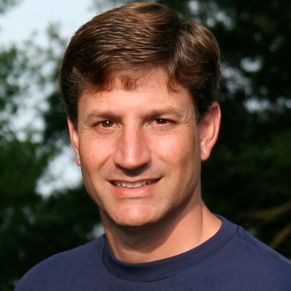 Michael J. Aftosmis合作论文数NASA Ames Research Center9Christopher L Rumsey合作论文数NASA Langley Research Center8j l steger合作论文数8
 Anthony Sclafani合作论文数Department of Psychology, Brooklyn College of the City University of New York7
 Stuart Rogers合作论文数NASA Ames Research Center6joshua isaac leffell合作论文数5Scott M. Murman合作论文数5
 John Vassberg合作论文数JetZero5Judith Hannon合作论文数4Robert Childs合作论文数4
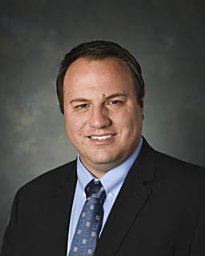 James G. Coder合作论文数Tickle College of Engineering, The University of Tennessee4Michael A. Kegerise合作论文数4Paul Kutler合作论文数4D. S. Chaussee合作论文数4Pieter G. Buning合作论文数4
 Venkateswaran Sankaran合作论文数US Army Aeroflightdynamics Directorate (AMRDEC), Moffett Field, USA 940354c m maksymiuk合作论文数3dan feng合作论文数3Paul Stremel合作论文数3Scott M. Bartram合作论文数3Jeffrey P. Slotnick合作论文数3Jan-Renee Carlson合作论文数3Andrea Nelson合作论文数Stanford University3Luther N. Jenkins合作论文数3Dennis Jespersen合作论文数3Timothy J. Barth合作论文数3Dennis C Jespersen合作论文数3Nashat N. Ahmad合作论文数2D. JESPERSEN合作论文数2P. G. Buning合作论文数2Dan Neuhart合作论文数2Samantha Gildersleeve合作论文数2
 Mark Dehaan合作论文数2D. CHAUSSEE合作论文数2jeffrey onufer合作论文数2a y cheer合作论文数2
 James Jensen合作论文数2Patrick Moran合作论文数2Henry C. Lee合作论文数2Jamie Gabriel Meeroff合作论文数2
 Joseph A. Garcia合作论文数2
 Kristen Matsuno合作论文数Stanford University2derek dalle合作论文数2
 Gaetan Kenway合作论文数NASA Ames Research Center2




