As organizations advance their digital transformation efforts, the strategic importance of data quality becomes critical. Legal and security aspects, along with the economic value of data, further emphasize the need for high-quality, reliable, and trustworthy datasets. In particular, the effectiveness of artificial intelligence techniques heavily depends on the integrity of the underlying data. However, organizations often lack structured methods to assess and improve data quality in alignment with business goals. This paper addresses this gap by introducing OKR4DQ, a methodology that leverages Objectives and Key Results (OKRs) to systematically improve data quality. The approach combines quality assessments based on the ISO/IEC 25012 standard with the definition and implementation of OKRs targeting specific quality characteristics requiring enhancement. We present the full methodology and its application in a real-world case study, demonstrating measurable improvements in data quality and offering practical insights into the challenges and benefits of aligning data quality initiatives with business performance objectives.
This paper advocates process maps as boundary objects to facilitate communication, coordination and collaboration between enterprise architects and process analysts. Since process maps model business process architecture, they cannot be expressed using BPMN. Although ArchiMate is a potential language, it lacks the expressiveness needed to represent structures such as process chains, groups and families. To address this, the Business Process Architecture Language (BPAL) is presented. A controlled experiment evaluates its usability, and an illustrative scenario demonstrates its boundary-spanning capabilities to support strategically aligned business process architecture.
The analyzability of hybrid software, which integrates both classical and quantum components, is a key factor in ensuring its maintainability and industrial adoption. This article presents the empirical validation, through a family of experiments, of the quantum component of a previously proposed hybrid software analyzability model based on the ISO/IEC 25010 standard. The experimental series consists of four studies involving participants with diverse profiles in both academic and professional settings. In these experiments, the model’s ability to effectively measure the analyzability of quantum algorithms is assessed, and the relationship between the analyzability levels computed by the model and the participant’s perceptions of the complexity of these algorithms is examined. The results indicate that the proposed model effectively distinguishes between quantum software components with varying levels of analyzability and aligns with human perception, reinforcing its validity in quantum computing.
This study investigates the application of the ISO/IEC 25059 standard in the quality evaluation of artificial intelligence (AI) systems, focusing on functional suitability. Through a case study evaluating an AI system developed for analyzing images of oil platform decks, we discuss the practical nuances of evaluating functional correctness. We share information on specific properties defined to operationalize the evaluation. We emphasize the need to thoroughly discuss acceptable specification limits, especially in safety-critical contexts. Furthermore, the representativeness and sample size of the test cases should be systematically considered to reflect the profile of real-world operational conditions.
Cybersecurity auditing sits at the junction of assurance and defence, it must convert dynamic, adversary-shaped telemetry into traceable arguments that can withstand third-party scrutiny. As organisations scale and migrate to cloud-native architectures, the auditor’s workload increasingly shifts from “reading documents” to assembling, correlating, and justifying heterogeneous evidence—identity and entitlement data, configuration baselines, change records, ticketing workflows, and SIEM/EDR logs—under tight time constraints. This creates a practical tension: audit outputs must remain evidence-anchored and reproducible, yet the effort required to draft and structure assurance-ready narratives continues to rise.The improvement is primarily driven by faster synthesis and a more consistent, requirement-aligned narrative structure, while final compliance judgements remain explicitly human. We discuss safeguards and failure modes relevant to deploying LLMs in assurance-critical settings, provide redacted clause templates and a reviewer rubric, and outline how the approach can be adapted to other controls and frameworks where evidence traceability and accountable oversight are non-negotiable.
In an era dominated by technological integration, Artificial Intelligence (AI) is pivotal across various sectors, driving significant advancements and demanding robust quality measures for its implementations. This paper introduces a novel AI maturity assessment framework designed in alignment with International Standards provided by ISO (International Organization for Standardization) and IEC (International Electrotechnical Commission), specifically with the ISO/IEC 33000 family of standards for process assessment. Our framework aims to provide AI system developers with a structured tool for continuous improvement of their development processes, thereby enhancing the reliability and efficacy of AI applications. To demonstrate the applicability of our proposed framework, we have validated it through a case study in the automotive sector. Specifically, the framework was employed to assess and enhance an AI project to develop a mechanism to determine vehicle behavior from sensor data within the constraints of onboard devices. Our findings identify key improvement points contributing to the iterative enhancement of AI system quality in engineering applications.
Quantum computing has come to stay in our lives. Companies are investing billions of dollars in it because of the potential benefits that it can achieve, providing promising applications in almost every business sector. Although quantum computing is evolving at an exponential rate, the development of tools, techniques, or frameworks for the evolution of current information systems towards quantum software systems is still proving to be a challenge. This research contributes to the evolution of current information systems towards hybrid information systems (combining the classical and quantum computing paradigm). We propose a software modernization process, by following model-driven engineering principles, adapted to the quantum paradigm, based on modified versions of standards for reverse engineering of classical, quantum software assets, and for the design of the target system. In particular, this paper focuses on the restructuring transformation from KDM to UML models, where KDM models have been generated from Q# code. This proposal has been validated through a case study involving 17 programmes. The results obtained show optimistic values regarding the complexity of the UML models generated, their expressiveness and scalability. The main implication of this research is that UML models can indeed help the software evolution of/toward hybrid information systems.
AQCLab is a laboratory for software and data quality evaluation in conformance to the ISO/IEC 25000 series of standards. As such, requirements are a fundamental element in the evaluations that are carried out, as they are the input for software Functional Suitability and Data Quality, two of the types of evaluation carried out by the laboratory. Software Maintainability evaluations are also carried out by the laboratory, where the requirements on applicable metrics and thresholds to be met have been established by the laboratory.Furthermore, the laboratory's personnel possess considerable expertise in the domain of auditing software lifecycle processes, which has enabled them to observe how requirements are managed in multiple companies.In this article, we present the experience of AQCLab over the years, in the capacity of software product and data quality evaluators and software development process auditors, with regard to the manner in which our clients manage and define requirements. This has led us to the realization that these practices are often neglected.
Quantum computing is gaining an increasing interest since it can solve certain problems exponentially faster than classical computing. Thus, many organizations are researching and launching investments for integrating quantum software into their existing systems. Software modernization (as based on Model-Driven Engineering) has been proposed to migrate from/to the so-called hybrid software systems, which integrate classical and quantum software. In that process, both, reverse engineering and restructuring phases, have already been investigated. However, forward engineering phase for generating hybrid source code from high-level design models has not yet been addressed. Thus, this research proposes a quantum code generation technique from extended UML design models. It consists of a set of Model-to-Text transformations (defined through Epsilon Generation Language) to generate both Python and Qiskit code, which, respectively, integrate classical and quantum code. The transformation has been validated through a multi-case study with 7 hybrid software systems modeled in UML, which demonstrated that the transformation is effective and efficient. The implication of this work is that the software modernization process for hybrid software systems can be completed by tackling forward engineering phase, and that Model-Driven Engineering can therefore globally facilitate industry adoption of quantum software.
Quantum computing is rapidly emerging as a transformative force in technology. In the near future we will increasingly encounter hybrid systems that combine quantum technology with classical software. Software engineering techniques will be needed to manage the complexity of designing such systems and their reuse. This paper introduces preliminary ideas for developing quantum-classical software using a Software Product Line approach in line with the Model-Driven Engineering principles. This approach addresses the mentioned challenges and drafts a framework for developing hybrid quantum-classical software. The preliminary insights show the feasibility and suitability of applying the proposed approach for developing complex quantum-classical software systems with high levels of variability.
Quantum computing holds great promise for solving complex problems that classical computing cannot address, with applications in various industries and sectors. However, developing efficient quantum software remains a challenge. Quantum software engineering (QSE) has emerged to address this, adapting classical software engineering practices for quantum systems. Design patterns, widely used in classical software, can provide reusable solutions for common quantum development issues, but their use in quantum software remains underexplored. This paper presents an empirical study investigating the use of design patterns in 2610 Qiskit programs from GitHub. Using the QCPD Tool to detect four design patterns (initialization, superposition, entanglement, and oracle) and QMetrics to compute software metrics, the study creates a dataset linking patterns with code characteristics. Three research questions guide the study: RQ1 examines the prevalence of design patterns in quantum software, RQ2 explores the relationship between design patterns and code metrics, and RQ3 analyzes the combinations of patterns that occur together. The findings provide insights into quantum software development, offering developers practical guidance on applying specific patterns. The results contribute to QSE by revealing key relationships between patterns and metrics, which can inform future research and tool development. These findings support improved performance, maintainability, and scalability, fostering the broader adoption of quantum computing.
The rapid growth of the quantum computing market has become a response to the need to address problems that traditional computers cannot solve efficiently. Quantum computing will not replace traditional computing; rather, the two will coexist in hybrid systems. As with conventional software, evaluating and ensuring the quality of these new hybrid systems, especially their maintainability, is essential. In this work, we present a methodological and technological environment consisting of a set of properties and metrics and automated tools that allow evaluations on the analyzability of hybrid software, one of the maintainability sub-characteristics. Furthermore, our proposal has been applied to an actual case of a hybrid product, demonstrating its usefulness.
As quantum computers advance, the complexity of the software they can execute increases as well. To ensure this software is efficient, maintainable, reusable, and cost-effective —key qualities of any industry-grade software— mature software engineering practices must be applied throughout its design, development, and operation. However, the significant differences between classical and quantum software make it challenging to directly apply classical software engineering methods to quantum systems. This challenge has led to the emergence of Quantum Software Engineering as a distinct field within the broader software engineering landscape. In this work, a group of active researchers analyse in depth the current state of quantum software engineering research. From this analysis, the key areas of quantum software engineering are identified and explored in order to determine the most relevant open challenges that should be addressed in the next years. These challenges help identify necessary breakthroughs and future research directions for advancing Quantum Software Engineering.
La computación cuántica (CQ) y la ingeniería de software cuántico (ISC), enfrentan desafíos debido a la diversidad de algoritmos, lenguajes y estrategias de integración. Este trabajo propone un modelo para el desarrollo de software híbrido cuántico-clásico, siguiendo un enfoque de Líneas de Producto de Software. A partir de un modelo previo y una búsqueda de la literatura, se identificaron componentes esenciales y se estructuraron en una jerarquía para representar la variabilidad en estos sistemas. El modelo resultante facilita la gestión de variabilidad y configuración de arquitecturas híbridas, estableciendo las bases para futuras evaluaciones y refinamientos, contribuyendo a una metodología más efectiva para la integración de CQ e ISC.
The stochastic nature of quantum software introduces unique challenges for its verification, as traditional testing techniques may be insufficient for handling the probabilistic characteristics of quantum systems. This paper proposes an alternative method for autogenerating unit tests in quantum computing, particularly for quantum oracles in fundamental algorithms like quantum teleportation. Property-based testing is used, addressing assertions related to classical values, quantum superposition, and entanglement. The testing method involves specifying properties abstractly and autogenerating tests through Exemplar-Based Development. The approach is language-agnostic and adaptable to different assertion techniques, demonstrating its ability to test quantum algorithms in multiple programming languages. This work marks progress in quantum software verification, aiding the broader adoption of quantum computing across various sectors.
With the growing diffusion of quantum computing technology and the increasingly promising applications derived from it, the relevance of developing specific software for these systems is gaining significant momentum. This surge is due to the need to design and produce quantum software that meets performance and functional requirements but also follows the well-known good practices and rigorous methodologies inherent in quantum software engineering. In this context, one of the main challenges facing the development of hybrid (quantum-classical) systems is the effective management of the lifecycle of this new type of software, whose nature differs from traditional systems. The proposed research attempts to comprehensively address the lifecycle management of hybrid software, through the design and development of a specific support tool. To achieve this goal, the ICSM (Integrated Software Cycle Management) model, which is a consolidated framework for the lifecycle management of traditional software, will be taken as a starting point. This model will be carefully adapted to meet the unique needs and challenges inherent in hybrid software, thus ensuring that the development, maintenance, and updating practices of this type of software are as robust and efficient as those applied in the realm of conventional software. Through this adaptation, the aim is not only to improve the quality of the developed hybrid software but also make developers easier to adopt the innovative and complex quantum software paradigm.
Artificial Intelligence (AI) plays a crucial role in the digital transformation of organizations, with the influence of AI applications expanding daily. Given this context, the development of these AI systems to guarantee their effective operation and usage is becoming more essential. To this end, numerous international standards have been introduced in recent years. This paper offers a broad review of these standards (mainly those defined by ISO/IEC), with a particular focus on the software aspects: at the level of process and product quality; and at the level of data quality of applications integrating AI systems.
Blockchain is a cross‐cutting technology allowing interactions among untrusted entities in a distributed manner without the need for involving a trusted third party. Smart contracts (i.e., programs running on the blockchain) enabled organizations to envision and implement solutions to real‐world problems in less cost and time. Given the immutability of blockchain and the lack of best practices for properly designing and developing smart contracts, it is crucial to assure smart contract quality before deployment. With the help of an exploratory survey involving developers and researchers, this paper identifies the practices and tools used to develop, implement, and evaluate smart contracts. The survey received 55 valid responses. Such responses indicate that (i) inefficiencies may occur during the development cycle of a smart contract, especially regarding requirements specification, design, and testing phases, and (ii) the lack of a shared standard to evaluate the functional quality of implemented smart contracts. To start coping with these issues, the adoption of functional suitability assessment measures recommended by the ISO/IEC 25000 standard, widely used in software engineering, is proposed by adapting them to the context of smart contracts. Through some examples, the manuscript also illustrates how to measure the functional completeness and correctness of smart contracts. The proposed procedure to measure smart contract functional suitability brings advantages to both developers and users of decentralized finance or non‐fungible tokens platforms, data marketplaces, or shipping and real estate services, just to mention a few. In particular, it helps (i) better outline the responsibilities of smart contracts, (ii) uncover errors and deficiencies of smart contracts in the early stages, and (iii) ensure that the established requirements are met.
 Félix García Carballeira合作论文数Universidad Carlos III de Madrid.;epartamento de Inform??tica155
 Eduardo Fernández Medina合作论文数Departamento de Tecnologías y Sistemas de Información, Universidad de Castilla-La Mancha125
 Francisco Ruiz合作论文数Technologies and IS Depto., Faculty of Computer Science, University of Castilla-La Mancha124
 Aurora Vizcaíno合作论文数Institute of Information Technologies & Systems, University of Castilla-La Mancha120
 Marcela Genero合作论文数Departamento de Tecnologias y Sistemas de Informacion
Escuela Superior de Informatica.
Universidad de Castilla-La Mancha117
Marcela Genero合作论文数Departamento de Tecnologias y Sistemas de Informacion
Escuela Superior de Informatica.
Universidad de Castilla-La Mancha117 Ricardo Perez-Castillo合作论文数University of Castilla-La Mancha105
 Ignacio García Rodríguez de Guzmán合作论文数83Macario Polo Usaola合作论文数Departamento de Tecnologias y Sistemas de Informacion
Escuela Superior de Informatica76
Ignacio García Rodríguez de Guzmán合作论文数83Macario Polo Usaola合作论文数Departamento de Tecnologias y Sistemas de Informacion
Escuela Superior de Informatica76 Coral Calero Muñoz合作论文数Escuela Superior de Informatica, Universidad de Castilla-La Mancha68
 Ismael Caballero合作论文数Institute of Information Systems and Technologies, University of Castilla-La Mancha65
 Francisco J. Pino合作论文数University of Cauca64
 Moisés Rodríguez合作论文数Universidad del Zulia;Facultad de Medicina;Centro de Investigaciones Endocrino-Metabólicas;Centro de Investigaciones Endocrino-Metabólicas, Universidad del Zulia56
 Juan Carlos Trujillo合作论文数Departamento de Lenguajes y Sistemas Informáticos, Universidad de Alicante54
 C. Calero合作论文数Titular de Universidad54
 Manuel A. Serrano合作论文数41
 Juan Pablo Soto合作论文数37
 Alejandra Cechich合作论文数Universidad Nacional del Comahue36
 José A. Cruz-Lemus合作论文数University of Castilla-La Mancha35
 Maria Teresa Baldassarre合作论文数Department of Informatics, University of Bari31
 Javier Garzás合作论文数Mario Piattini Alarcos Research Group30
 Cesar Pardo合作论文数27
 Javier Portillo-Rodríguez合作论文数27Gabriela N. Aranda合作论文数Departamento de Informática;Universidad Nacional del Comahue25Alfonso Rodríguez合作论文数24
 Eduardo Fernández-Medina合作论文数Departamento de Tecnologías y Sistemas de Información, Universidad de Castilla-La Mancha24
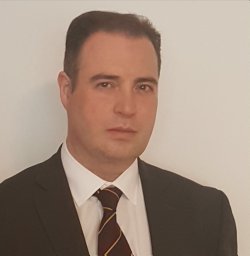 Luís Enrique Sanchez合作论文数24
 Miguel J. Monasor合作论文数University of Castilla-La Mancha22
 Angelica Caro合作论文数University of Bio Bio20
 David G. Rosado合作论文数Alarcos Research Group-Information Systems and Technologies Institute, University of Castilla-La Mancha20
 Daniel Mellado合作论文数Complutense University of Madrid19
 Carlos Gutierrez合作论文数Semiconductor, Nano and Quantum Sciences Group, Sandia National Laboratories19
 Corrado Aaron Visaggio合作论文数University of Sannio18
 Elvira Rolon合作论文数Autonomous University of Tamaulipas18Luis Reynoso合作论文数18
 Oscar Mario Rodríguez-Elias合作论文数División de Estudios de Posgrado e Investigación, Tecnológico Nacional de México - Instituto18
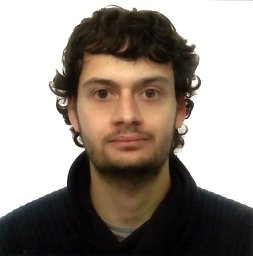 Carlos Blanco合作论文数Escuela Superior de Informática ALARCOS Research Group - Institute of Information Technologies and Systems, University of Castilla-La Mancha17
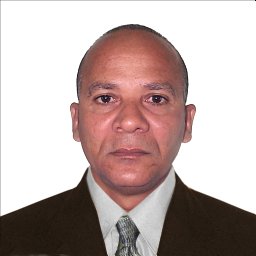 Emilio Soler合作论文数Department of Computer Science, University of Matanzas17
 Esperanza Marcos合作论文数Programme Degree in Service Science, Management and Engineering Universidad Rey Juan Carlos16
 Gerardo Canfora合作论文数Dipartimento di Ingegneria, Universita degli Studi del Sannio di Benevento16
 Jesus Favela合作论文数Computer Science Department;CICESE Research Center in Ensenada16
 Rodolfo Villarroel合作论文数16
 J. David Paton-Romero合作论文数15
 Angélica Urrutia合作论文数Departamento de Computación e Informática, Universidad Católica del Maule15
 Ana I. Martínez-Garcia合作论文数Dept Comp Sci, CICESE Res Ctr15
 Danilo Caivano合作论文数Dipartimento di Informatica, Università degli Studi di Bari Aldo Moro15
 Hanna Oktaba合作论文数National Autonomous University of Mexico15Mª Ángeles Moraga合作论文数14
 Luis Jiménez-Navajas合作论文数14
 Geert Poels合作论文数Dept. of Business Informatics and Operations Management, Faculty of Economics and Business Administration, Ghent University14




