We present gpt-oss-120b and gpt-oss-20b, two open-weight reasoning models that push the frontier of accuracy and inference cost. The models use an efficient mixture-of-expert transformer architecture and are trained using large-scale distillation and reinforcement learning. We optimize the models to have strong agentic capabilities (deep research browsing, python tool use, and support for developer-provided functions), all while using a rendered chat format that enables clear instruction following and role delineation. Both models achieve strong results on benchmarks ranging from mathematics, coding, and safety. We release the model weights, inference implementations, tool environments, and tokenizers under an Apache 2.0 license to enable broad use and further research.
AI systems that "think" in human language offer a unique opportunity for AI safety: we can monitor their chains of thought (CoT) for the intent to misbehave. Like all other known AI oversight methods, CoT monitoring is imperfect and allows some misbehavior to go unnoticed. Nevertheless, it shows promise and we recommend further research into CoT monitorability and investment in CoT monitoring alongside existing safety methods. Because CoT monitorability may be fragile, we recommend that frontier model developers consider the impact of development decisions on CoT monitorability.
We show that reinforcement learning applied to large language models (LLMs) significantly boosts performance on complex coding and reasoning tasks. Additionally, we compare two general-purpose reasoning models - OpenAI o1 and an early checkpoint of o3 - with a domain-specific system, o1-ioi, which uses hand-engineered inference strategies designed for competing in the 2024 International Olympiad in Informatics (IOI). We competed live at IOI 2024 with o1-ioi and, using hand-crafted test-time strategies, placed in the 49th percentile. Under relaxed competition constraints, o1-ioi achieved a gold medal. However, when evaluating later models such as o3, we find that o3 achieves gold without hand-crafted domain-specific strategies or relaxed constraints. Our findings show that although specialized pipelines such as o1-ioi yield solid improvements, the scaled-up, general-purpose o3 model surpasses those results without relying on hand-crafted inference heuristics. Notably, o3 achieves a gold medal at the 2024 IOI and obtains a Codeforces rating on par with elite human competitors. Overall, these results indicate that scaling general-purpose reinforcement learning, rather than relying on domain-specific techniques, offers a robust path toward state-of-the-art AI in reasoning domains, such as competitive programming.
This is the system card published alongside the OpenAI GPT-5 launch, August 2025. GPT-5 is a unified system with a smart and fast model that answers most questions, a deeper reasoning model for harder problems, and a real-time router that quickly decides which model to use based on conversation type, complexity, tool needs, and explicit intent (for example, if you say 'think hard about this' in the prompt). The router is continuously trained on real signals, including when users switch models, preference rates for responses, and measured correctness, improving over time. Once usage limits are reached, a mini version of each model handles remaining queries. This system card focuses primarily on gpt-5-thinking and gpt-5-main, while evaluations for other models are available in the appendix. The GPT-5 system not only outperforms previous models on benchmarks and answers questions more quickly, but – more importantly – is more useful for real-world queries. We've made significant advances in reducing hallucinations, improving instruction following, and minimizing sycophancy, and have leveled up GPT-5's performance in three of ChatGPT's most common uses: writing, coding, and health. All of the GPT-5 models additionally feature safe-completions, our latest approach to safety training to prevent disallowed content. Similarly to ChatGPT agent, we have decided to treat gpt-5-thinking as High capability in the Biological and Chemical domain under our Preparedness Framework, activating the associated safeguards. While we do not have definitive evidence that this model could meaningfully help a novice to create severe biological harm – our defined threshold for High capability – we have chosen to take a precautionary approach.
The o1 model series is trained with large-scale reinforcement learning to reason using chain of thought. These advanced reasoning capabilities provide new avenues for improving the safety and robustness of our models. In particular, our models can reason about our safety policies in context when responding to potentially unsafe prompts, through deliberative alignment. This leads to state-of-the-art performance on certain benchmarks for risks such as generating illicit advice, choosing stereotyped responses, and succumbing to known jailbreaks. Training models to incorporate a chain of thought before answering has the potential to unlock substantial benefits, while also increasing potential risks that stem from heightened intelligence. Our results underscore the need for building robust alignment methods, extensively stress-testing their efficacy, and maintaining meticulous risk management protocols. This report outlines the safety work carried out for the OpenAI o1 and OpenAI o1-mini models, including safety evaluations, external red teaming, and Preparedness Framework evaluations.
GPT-4o is an autoregressive omni model that accepts as input any combination of text, audio, image, and video, and generates any combination of text, audio, and image outputs. It's trained end-to-end across text, vision, and audio, meaning all inputs and outputs are processed by the same neural network. GPT-4o can respond to audio inputs in as little as 232 milliseconds, with an average of 320 milliseconds, which is similar to human response time in conversation. It matches GPT-4 Turbo performance on text in English and code, with significant improvement on text in non-English languages, while also being much faster and 50% cheaper in the API. GPT-4o is especially better at vision and audio understanding compared to existing models. In line with our commitment to building AI safely and consistent with our voluntary commitments to the White House, we are sharing the GPT-4o System Card, which includes our Preparedness Framework evaluations. In this System Card, we provide a detailed look at GPT-4o's capabilities, limitations, and safety evaluations across multiple categories, focusing on speech-to-speech while also evaluating text and image capabilities, and measures we've implemented to ensure the model is safe and aligned. We also include third-party assessments on dangerous capabilities, as well as discussion of potential societal impacts of GPT-4o's text and vision capabilities.
Diffusion models have significantly advanced the fields of image, audio, and video generation, but they depend on an iterative sampling process that causes slow generation. To overcome this limitation, we propose consistency models, a new family of models that generate high quality samples by directly mapping noise to data. They support fast one-step generation by design, while still allowing multistep sampling to trade compute for sample quality. They also support zero-shot data editing, such as image inpainting, colorization, and super-resolution, without requiring explicit training on these tasks. Consistency models can be trained either by distilling pre-trained diffusion models, or as standalone generative models altogether. Through extensive experiments, we demonstrate that they outperform existing distillation techniques for diffusion models in one- and few-step sampling, achieving the new state-of-the-art FID of 3.55 on CIFAR-10 and 6.20 on ImageNet 64x64 for one-step generation. When trained in isolation, consistency models become a new family of generative models that can outperform existing one-step, non-adversarial generative models on standard benchmarks such as CIFAR-10, ImageNet 64x64 and LSUN 256x256.
We report the development of GPT-4, a large-scale, multimodal model which can accept image and text inputs and produce text outputs. While less capable than humans in many real-world scenarios, GPT-4 exhibits human-level performance on various professional and academic benchmarks, including passing a simulated bar exam with a score around the top 10% of test takers. GPT-4 is a Transformer-based model pre-trained to predict the next token in a document. The post-training alignment process results in improved performance on measures of factuality and adherence to desired behavior. A core component of this project was developing infrastructure and optimization methods that behave predictably across a wide range of scales. This allowed us to accurately predict some aspects of GPT-4's performance based on models trained with no more than 1/1,000th the compute of GPT-4.
Accessible Abstract: When the Covid pandemic it, trivia games moved online. With it came cheating: people tried to quickly Google answers. This is bad for sportsmanship
Contrastive models like CLIP have been shown to learn robust representations of images that capture both semantics and style. To leverage these representations for image generation, we propose a two-stage model: a prior that generates a CLIP image embedding given a text caption, and a decoder that generates an image conditioned on the image embedding. We show that explicitly generating image representations improves image diversity with minimal loss in photorealism and caption similarity. Our decoders conditioned on image representations can also produce variations of an image that preserve both its semantics and style, while varying the non-essential details absent from the image representation. Moreover, the joint embedding space of CLIP enables language-guided image manipulations in a zero-shot fashion. We use diffusion models for the decoder and experiment with both autoregressive and diffusion models for the prior, finding that the latter are computationally more efficient and produce higher-quality samples.
We show that autoregressive language models can learn to infill text after we apply a straightforward transformation to the dataset, which simply moves a span of text from the middle of a document to its end. While this data augmentation has garnered much interest in recent years, we provide extensive evidence that training models with a large fraction of data transformed in this way does not harm the original left-to-right generative capability, as measured by perplexity and sampling evaluations across a wide range of scales. Given the usefulness, simplicity, and efficiency of training models to fill-in-the-middle (FIM), we suggest that future autoregressive language models be trained with FIM by default. To this end, we run a series of ablations on key hyperparameters, such as the data transformation frequency, the structure of the transformation, and the method of selecting the infill span. We use these ablations to prescribe strong default settings and best practices to train FIM models. We have released our best infilling model trained with best practices in our API, and release our infilling benchmarks to aid future research.
While they are some of the few computa-001 tional models that directly capture pragmatic 002 processes underlying language reasoning, cur-003 rent Rational Speech Act (RSA) models of 004 metaphor are (1) not easily scalable, and (2) 005 do not align well with contemporary accounts 006 of metaphor comprehension. The following 007 research project leverages GloVe word vec-008 tors to capture pragmatic language reason-009 ing in metaphoric utterances using an updated 010 RSA framework. This updated framework bet-011 ter aligns model predictions with Relevance 012 Theoretic and Construction Grammatical the-013 ories of metaphor semantics. The model 014 yields high posterior probabilities for attributes 015 of metaphors that humans deem relevant in 016 metaphoric utterances over erroneous ones in 017 89% of all cases, validating the methodol-018 ogy to generate prior probabilities for a RSA 019 framework. When presented with biased priors 020 like listeners are in many naturalistic conver-021 sations, the model accurately matches human 022 judgements of the most topical attribute of a 023 topic/target indicated by a metaphoric utterance 024 90% of the time. 025
Current relation extraction methods suffer from 001 the inadequacy of large-scale annotated data. 002 While distant supervision alleviates the prob-003 lem of data quantities, there still exists domain 004 disparity in data qualities due to its reliance 005 on domain-restrained knowledge bases. In this 006 work, we propose S 2 ynRE, a framework of two-007 stage Self-training with Synthetic data for Rela-008 tion Extraction. We first leverage the capability 009 of large language models to adapt to the tar-010 get domain and automatically synthesize large 011 quantities of coherent, realistic training data. 012 We then propose an accompanied two-stage 013 self-training algorithm that iteratively and al-014 ternately learns from synthetic and golden data 015 together. We conduct comprehensive experi-016 ments and detailed ablations on popular rela-017 tion extraction datasets to demonstrate the ef-018 fectiveness of the proposed framework. Specif-019 ically under low resource settings, S 2 ynRE 020 brings up to 17.18% absolute improvements 021 and 12.63% on average across all datasets. 022
Diffusion models have recently been shown to generate high-quality synthetic images, especially when paired with a guidance technique to trade off diversity for fidelity. We explore diffusion models for the problem of text-conditional image synthesis and compare two different guidance strategies: CLIP guidance and classifier-free guidance. We find that the latter is preferred by human evaluators for both photorealism and caption similarity, and often produces photorealistic samples. Samples from a 3.5 billion parameter text-conditional diffusion model using classifier-free guidance are favored by human evaluators to those from DALL-E, even when the latter uses expensive CLIP reranking. Additionally, we find that our models can be fine-tuned to perform image inpainting, enabling powerful text-driven image editing. We train a smaller model on a filtered dataset and release the code and weights at https://github.com/openai/glide-text2im.
While recent work on text-conditional 3D object generation has shown promising results, the state-of-the-art methods typically require multiple GPU-hours to produce a single sample. This is in stark contrast to state-of-the-art generative image models, which produce samples in a number of seconds or minutes. In this paper, we explore an alternative method for 3D object generation which produces 3D models in only 1-2 minutes on a single GPU. Our method first generates a single synthetic view using a text-to-image diffusion model, and then produces a 3D point cloud using a second diffusion model which conditions on the generated image. While our method still falls short of the state-of-the-art in terms of sample quality, it is one to two orders of magnitude faster to sample from, offering a practical trade-off for some use cases. We release our pre-trained point cloud diffusion models, as well as evaluation code and models, at https://github.com/openai/point-e.
Describing terminologies with definition texts 001 is an important step towards understanding 002 the scientific literature, especially for domains 003 with limited labeled terminologies. Previous 004 works have sought to design supervised neural 005 text generation models to solve the biomedi-006 cal terminology generation task, but most of 007 them failed to define never-before-seen termi-008 nologies in newly emerging research fields. 009 Here, we tackle this challenge by introducing 010 a zero-shot definition generation model based 011 on prompting , a recent approach for eliciting 012 knowledge from pre-trained language models, 013 with automatically generated prompts. Fur-014 thermore, we enhanced the biomedical termi-015 nology dataset by adding descriptive texts to 016 each biomedical subdiscipline, thus enabling 017 zero-shot learning scenarios. Our model out-018 performed existing supervised baseline and the 019 baseline pre-trained language model that em-020 ploys manually crafted prompts by up to 52 and 021 6 BLEU score, respectively. 022
Text-to-image generation has traditionally focused on finding better modeling assumptions for training on a fixed dataset. These assumptions might involve complex architectures, auxiliary losses, or side information such as object part labels or segmentation masks supplied during training. We describe a simple approach for this task based on a transformer that autoregressively models the text and image tokens as a single stream of data. With sufficient data and scale, our approach is competitive with previous domain-specific models when evaluated in a zero-shot fashion.
We observe that the development cross-001 entropy loss of supervised neural machine 002 translation models scales like a power law with 003 the amount of training data and the number of 004 non-embedding parameters in the model. We 005 discuss some practical implications of these re-006 sults, such as predicting BLEU achieved by 007 large scale models and predicting the ROI of 008 labeling data in low-resource language pairs. 009
State-of-the-art language models can match human performance on many tasks, but they still struggle to robustly perform multi-step mathematical reasoning. To diagnose the failures of current models and support research, we introduce GSM8K, a dataset of 8.5K high quality linguistically diverse grade school math word problems. We find that even the largest transformer models fail to achieve high test performance, despite the conceptual simplicity of this problem distribution. To increase performance, we propose training verifiers to judge the correctness of model completions. At test time, we generate many candidate solutions and select the one ranked highest by the verifier. We demonstrate that verification significantly improves performance on GSM8K, and we provide strong empirical evidence that verification scales more effectively with increased data than a finetuning baseline.
We introduce Codex, a GPT language model fine-tuned on publicly available code from GitHub, and study its Python code-writing capabilities. A distinct production version of Codex powers GitHub Copilot. On HumanEval, a new evaluation set we release to measure functional correctness for synthesizing programs from docstrings, our model solves 28.8% of the problems, while GPT-3 solves 0% and GPT-J solves 11.4%. Furthermore, we find that repeated sampling from the model is a surprisingly effective strategy for producing working solutions to difficult prompts. Using this method, we solve 70.2% of our problems with 100 samples per problem. Careful investigation of our model reveals its limitations, including difficulty with docstrings describing long chains of operations and with binding operations to variables. Finally, we discuss the potential broader impacts of deploying powerful code generation technologies, covering safety, security, and economics.
 Ilya Sutskever合作论文数Safe Superintelligence Inc14
 Aditya Ramesh (阿迪蒂亚·拉梅什)合作论文数OpenAI13
 Alec Radford合作论文数Indico Data Solutions12
 Christopher Hesse合作论文数OpenAI11
 Heewoo Jun合作论文数OpenAI10
 Nick Ryder合作论文数OpenAI10
 Prafulla Dhariwal合作论文数OpenAI10
 Sandhini Agarwal合作论文数OpenAI8
 Clemens Winter合作论文数OpenAI8
 Scott Gray合作论文数OpenAI8
 Rewon Child (石井興元)合作论文数Project Prometheus8
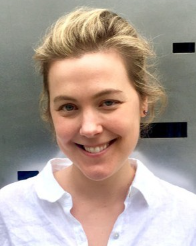 Gretchen Krueger合作论文数Berkman Klein Center for Internet & Society, Harvard University7
 Jeff Wu合作论文数Anthropic7
 Łukasz Kaiser合作论文数OpenAI;CNRS7
 Jakub Pachocki合作论文数OpenAI7
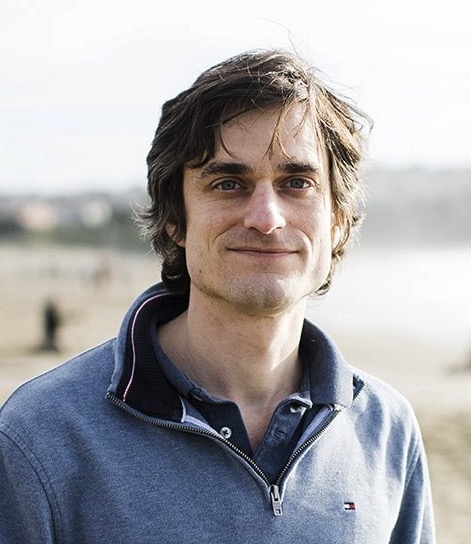 John Schulman合作论文数Thinking Machines Lab7
 Eric Sigler合作论文数OpenAI6
 Daniel Ziegler合作论文数Alignment Research Center6
 Mikhail Pavlov合作论文数Google6
 Benjamin Mann合作论文数Anthropic6
 Jerry Tworek合作论文数OpenAI6
 Girish Sastry合作论文数OpenAI6
 Alex Nichol合作论文数OpenAI6
 Tom B Brown合作论文数Anthropic6
 Wojciech Zaremba合作论文数OpenAI6Oleg Murk合作论文数5Elizabeth Proehl合作论文数5Lama Ahmad合作论文数5
 Sam Altman合作论文数OpenAI5
 Johannes Heidecke合作论文数OpenAI5
 Chelsea Sierra Voss合作论文数OpenAI5
 Jie Tang合作论文数OpenAI;Department of Electrical Engineering and Computer Sciences, University of California, Berkeley;Robot Learning Lab, University of California, Berkeley5
 Pamela Fine Mishkin合作论文数OpenAI5
 Bob McGrew合作论文数OpenAI5
 Felipe Petroski Such合作论文数OpenAI5
 Pranav Shyam合作论文数Google DeepMind5
 Shengjia Zhao (赵盛佳)合作论文数Meta Superintelligence Labs5
 Sam McCandlish合作论文数Anthropic5
 Jared Kaplan合作论文数William H. Miller III Department of Physics & Astronom, Zanvyl Krieger School of Arts & Sciences, Johns Hopkins University;Anthropic5
 Greg Brockman合作论文数OpenAI5David Robinson合作论文数4Max Schwarzer合作论文数4Wenda Zhou合作论文数4Lindsay McCallum合作论文数4T. Henighan合作论文数4Chris Koch合作论文数4Sam Toizer合作论文数4Miles Wang合作论文数4Filippo Raso合作论文数4