The design of a new hybrid-type undulator with a fixed gap of 6.4mm, a period of 30mm and a length of 3.4m is presented. The fractional variations in deflection parameter K between segments of 130.4-m-long undulator line for the Linac Coherent Light Source (LCLS) must be ⩽1.5×10⁻⁴. Major design features and their choices are discussed. Lessons learned while working with this prototype are critical for successful project execution. Although the prototype undulator met all of the LCLS specifications, development continued in order to simplify the system. A canted-pole geometry was adopted, which allows the K value to be changed by lateral translation of the entire undulator segment. The prototype undulator was subsequently modified to test the canted-pole concept. Magnetic measurements demonstrated that the undulator with canted poles meets all LCLS specifications and is more cost effective to implement.
The design modifications of a new hybrid-type undulator with a fixed gap of 6.8 mm, a period of 30 mm and a length of 3.4 m are presented. The prior pole design included side “wings, s” which were used for precise positioning, and clamps to fasten the poles to the magnet base. This design has been replaced by a more straightforward assembly, where the pole is attached to the magnet structure base using only two screws. Tests were performed on the vanadium permendur pole material to prove that the threaded holes are easy to fabricate and are able to successfully withstand the torque required to hold the pole in place. A fixture was also developed to ensure the precise location of the poles on the base during assembly. In addition to the pole modifications, the magnet-structure base is now manufactured as one piece as opposed to three, which greatly eases assembly. Finally, a small section of the original prototype had these changes successfully implemented, and the test results are presented.
The self-amplified spontaneous emission free-electron laser experiments at the Advanced Photon Source are now operating in the VUV at 157nm for a user experiment. In conjunction with these runs, we have obtained the first coherent optical transition radiation data due to the microbunching of the electron beam in the VUV. We have used both near- and far-field focusing by selecting the spherical mirror with the appropriate focal length for the distance to the CCD chip. The optics are such that much higher resolution than our visible system is attained with calibration factors of 11 μm/pixel and 10 μrad/pixel, respectively. Localized effects in the distributions in both focal conditions are being addressed. Published by Elsevier B.V. PACS: 41.60 Cr; 41.60 Ap
Introduction The vacuum ultraviolet (VUV) represents the ultimate frontier in terms of photoionization, and techniques that rely on photoionization for the efficient detection of atoms, clusters, and molecules may work best in the 175to 50-nm spectral region (photon energies corresponding to 7 to 25 eV). In this wavelength range, half of the elements and the majority of molecules may be ionized in a single-photon process. For molecules, this process has typically led to soft (i.e., low-fragmentation) ionization of the molecule, which is often desirable for quantification and identification purposes. For elements, a single-photon process is useful, since the cross section is usually very high and since saturation of the ionization may be readily achieved, simplifying measurement and standardization for quantitative work [1, 2]. To analyze the composition of materials containing elements with high first-ionization energies (C, N, O, P, Au, Be, B, Si, and many others), a focused ion beam can be used to sputter material from the sample, and this can be followed by single-photon ionization (SPI) with a VUV laser. Because there are few efficient VUV lasers and most of them are not tunable, the freeelectron laser (FEL) that is operating at the APS and is tunable in this wavelength range is of great interest for these studies.
At the Advanced Photon Source, three new beamlines will use an undulator configuration enabling the simultaneous use of two photon beams from a single straight section. To accommodate this configuration, a new front end was designed that is capable of handling the power of two undulators, with a beam separation of 1 mrad and a stored beam current of 200 mA at 7 GeV. Commissioning of the first front end took place early this summer. The design and major benefits of the new front‐end components will be discussed in this paper.
Overlap of the particle and the photon beams in a self-amplified spontaneous emission (SASE) free-electron laser (FEL) is one of the keys to optimizing gain. We have now directly demonstrated an on-line method for gain improvement at 540 nm on the Advanced Photon Source FEL. This was achieved by steering the e-beam with correctors before an undulator based on the fringe symmetry in coherent optical transition radiation interference (COTRI) images observed after that undulator. For these conditions we determined that both the SASE and COTR image intensities were improved by about a factor of three in one 2.4-m-long undulator section. The initial tuning had been based on RF beam position monitor readings and the maximization of SASE image intensity in the cameras.
The self-amplified spontaneous emission free-electron laser experiments at the Advanced Photon Source are now operating in the VUV at 157 nm for a user experiment. In conjunction with these runs, we have obtained the first coherent optical transition radiation data due to the microbunching of the electron beam in the VUV. We have used both near- and far-field focusing by selecting the spherical mirror with the appropriate focal length for the distance to the CCD chip. The optics are such that much higher resolution than our visible system is attained with calibration factors of 11 μm/pixel and 10 μrad/pixel, respectively. Localized effects in the distributions in both focal conditions are being addressed.
The nonlinear generation of harmonics in a self-amplified spontaneous emission free-electron laser continues to be of interest. Complementary to such studies is the search for information on the electron beam microbunching harmonic components, which are revealed by coherent optical transition radiation experiments. An initial z-dependent set of data has been obtained with the fundamental at 530 nm and the second harmonic at 265 nm. The latter data were collected after every other undulator in a nine-undulator string. These results are compared to estimates based on GINGER and an analytical model for nonlinear harmonic generation.
The intermediate-energy scanning x-ray microscope at beamline 2-ID-B at the Advanced Photon Source is a dedicated instrument for materials and biological research. The microscope uses a zone plate lens to focus coherent I-4 keV x-rays to a 60 nm focal spot of 10 9 photons/ s onto the sample. It records simultaneous transmission and energy-resolved fluorescence images. We have used the microscope for nanotomography of chips and microspectroscopy of cells.
Using coherent optical transition radiation (COTR) techniques, we have observed transverse dependencies, which in some aspects relate to the electron-beam microbunching in a visible wavelength (540nm) self-amplified spontaneous emission (SASE) free-electron laser (FEL). The experimental COTR observations include the z-dependent e-beam sizes, the z-dependent angular distributions, and the z-dependent spectra (which show an x-dependence). A 30-40% narrowing of the observed beam size using COTR is explainable by the mechanism's dependence on the square of the number of microbunched particles. However, additional effects are needed to explain beam size reductions by factors of 2-3 at different z locations. Localized e-beam structure in the gun or induced in the bunch compression process may result in microbunching transverse dependence, and hence the observed COTR effects. (C) 2003 Elsevier Science B.V. All rights reserved.
The design of a new hybrid-type undulator with a fixed gap of 6 mm, a period of 30 mm, and a length of 3.4 m is presented. The undulator line, consisting of 33 such units, is a critical part of the LCLS project, which is one step toward the design of a fourth-generation synchrotron radiation source. Magnetic tolerance of all 33 undulators, as well as the corresponding mechanical uniformity, is a major challenge. A ridged C-shape design with a titanium housing of 12 inch diameter was chosen to provide easy access to the gap area for magnetic measuring and tuning. Lessons learned while working with this prototype are critical for successful project execution. Assembly and tests results, as well as possible design changes, are presented.
We report the first measurements of z-dependent coherent optical transition radiation (COTR) due to electron-beam microbunching at high gains ( >10(4)) including saturation of a self-amplified spontaneous emission free-electron laser (FEL). In these experiments the fundamental wavelength was near 530 nm, and the COTR spectra exhibit the transition from simple spectra to complex spectra ( 5% spectral width) after saturation. The COTR intensity growth and angular distribution data are reported as well as the evidence for transverse spectral dependencies and an "effective" core of the beam being involved in microbunching.
Today, many bright photon beams in the ultraviolet and x-ray wavelength range are produced by insertion devices installed in specially designed third-generation storage rings. There is the possibility of producing photon beams that are orders of magnitude brighter than presently achieved at synchrotron sources, by using self-amplified spontaneous emission (SASE). At the Advanced Photon Source (APS), the low-energy undulator test line (LEUTL) free-electron laser (FEL) project was built to explore the SASE process in the visible through vacuum ultraviolet wavelength range. While the understanding gained in these experiments will guide future work to extend SASE FELs to shorter wavelengths, the APS FEL itself will become a continuously tunable, bright light source. Measurements of the SASE process to saturation have been made at 530 and 385 nm. A number of quantities were measured to confirm our understanding of the SASE process and to verify that saturation was reached. The intensity of the FEL light was measured versus distance along the FEL, and was found to flatten out at saturation. The statistical variation of the light intensity was found to be wide in the exponential gain region where the intensity is expected to be noisy, and narrower once saturation was reached. Absolute power measurements compare well with GINGER simulations. The FEL light spectrum at different distances along the undulator line was measured with a high-resolution spectrometer, and the many sharp spectral spikes at the beginning of the SASE process coalesce into a single peak at saturation. The energy spread in the electron beam widens markedly after saturation due to the number of electrons that transfer a significant amount of energy to the photon beam. Coherent transition radiation measurements of the electron beam as it strikes a foil provide additional confirmation of the microbunching of the electron beam. The quantities measured confirm that saturation was indeed reached. Details are given in Milton et al., Science 292, 2037 (2001) (also online at www.sciencexpress.org as 10.1126/science. 1059955, 17 May 2001), and Lewellen et al., “Present Status and Recent Results from the APS SASE FEL,” to be published in the Proceedings of the 23rd International Free-Electron Laser Conference, Darmstadt, Germany, 20–24 August 2001.
A significant advance in intraundulator electron-beam diagnostics has recently been demonstrated based on coherent optical transition radiation (COTR) imaging. We find signal strengths from a microbunched beam in a UV-visible free-electron laser to be several orders of magnitude higher than that of incoherent optical transition radiation. In addition we report that the far-field images of COTR interferograms carry information about beam size and asymmetry, divergence, and pointing.
SASE saturation was recently achieved at the Advanced Photon Source's SASE FEL in the low-energy undulator test line at 530nm and 385nm. The electron beam microbunching becomes more and more prominent until saturation is achieved. This bunching causes nonlinear harmonic emission that extends the usefulness of a SASE system in achieving shorter FEL wavelengths for the same electron beam energy. We have investigated the intensity of the fundamental and second harmonic undulator radiation as a function of distance along the undulator line and present the experimental results and compare them to numerical simulations. In addition, we have measured the single-shot second harmonic spectra as well as the simultaneous fundamental and second harmonic spectra and present the experimental results.
The Advanced Photon Source self-amplified spontaneous emission (SASE) free-electron laser (FEL) uses diagnostics between undulator sections to characterize the light and the electron beam. These diagnostics enable z-dependent measurements of the exponential growth of the radiation and of the microbunching. The original diagnostics were designed for visible light. To enable measurements down to 265nm, UV-enhanced cameras and fused-silica lenses have been installed. We have now designed a diagnostics suite that will enable us to continue measurements down to 50nm using reflective optics and back-illuminated CCD cameras operating in vacuum. We describe the enhancements to the diagnostics for operation in the UV and VUV.
We have recently extended our microbunching experiments in a self-amplified spontaneous emission free-electron laser using coherent optical transition radiation (COTR) to the deep ultraviolet wavelengths (265nm) for the first time. These experiments were performed as a complement to the Advanced Photon Source SASE FEL project's thrust to shorter wavelengths. In order to do this, the optical diagnostics have been modified to include UV-sensitive cameras, and an optical transport has been installed that involves sets of mirrors and UV–visible lens pairs after each undulator. These optics provide transport to the in-tunnel Oriel UV–visible spectrometer. Since this is an imaging spectrometer, both spectral and x/y-plane spatial information are simultaneously available by performing the projections of the images on the x- and y-axis. The initial angular distribution data and beam size data have been obtained in a z-dependent manner by sampling after every other undulator, or every 4.8m at four z locations. Experiments with sampling of the COTR angular distribution and spectra after each of eight undulators are planned.
We report the initial, comprehensive set of z-dependent measurements of electron-beam microbunching using coherent optical transition radiation (COTR) in a saturated self-amplified spontaneous emission (SASE) free-electron laser (FEL) experiment. In this case the FEL was operated near 530 nm using an enhanced facility including a bunch-compressed photocathode gun electron beam, linac, and 21.6 m of undulator length. The longitudinal microbunching was tracked by inserting a metal foil and mirror after each of the nine 2.4-m-long undulators and measuring the visible COTR spectra, intensity, angular, distribution, and spot size. We observed for the first time the z-dependent transition of the COTR spectra from simple lines to complex structure/sidebands near saturation. We also observed the change in the microbunching fraction after saturation, multiple fringes in the COTR interferogram that are consistent with involvement of a smaller core of the e-beam transverse distribution, and the second harmonic content of the microbunching. The results will be compared to relevant calculations using GENESIS and/or GINGER.
The Low-Energy Undulator Test Line (LEUTL) at the Advanced Photon Source, Argonne National Laboratory, is intended to demonstrate the basic operation of a SASE-based free-electron laser. Goals include comparison of experimental results With theoretical predictions and scaling laws, identification of problems relevant to fourth-generation light source construction and operation and the means of addressing them, the development of operational and diagnostic techniques to optimize SASE FEL performance and increase repeatability from run to run. and performance of initial pioneering experiments capable of exploiting the unique properties of the laser. The basic layout and operational philosophy of the LEUTL experiment is presented. A summary of past results, including saturation, is reviewed, and a description of recent results is presented. We conclude with future plans, which include pressing to shorter wavelengths and incorporating user experiments into the LEUTL experimental program. (C) 2002 Elsevier Science B.V. All rights reserved.
Self-amplified spontaneous emission in a free-electron laser has been proposed for the generation of very high brightness coherent x-rays. This process involves passing a high-energy, high-charge, short-pulse, low-energy-spread, and low-emittance electron beam through the periodic magnetic field of a long series of high-quality undulator magnets. The radiation produced grows exponentially in intensity until it reaches a saturation point. We report on the demonstration of self-amplified spontaneous emission gain, exponential growth, and saturation at visible (530 nanometers) and ultraviolet (385 nanometers) wavelengths. Good agreement between theory and simulation indicates that scaling to much shorter wavelengths may be possible. These results confirm the physics behind the self-amplified spontaneous emission process and forward the development of an operational x-ray free-electron laser.
 John W Lewellen合作论文数Advanced Photon Source;Argonne National Laboratory;Argonne National Laboratory16
 Stephen Milton合作论文数TAU Systems Inc.15
 Alex H. Lumpkin合作论文数14Y.-C. Chae合作论文数Argonne National Laboratory13
 P. Den Hartog合作论文数Argonne National Laboratory12RJ Dejus合作论文数11
 Zhirong Huang合作论文数Department of Applied Physics, Stanford University;Stanford PULSE Institute10B.X. Yang合作论文数10Vadim Sajaev合作论文数Budker Institute of Nuclear Physics10
 Sandra Gail Biedron合作论文数Department of Electrical and Computer Engineering, College of Engineering, University of New Mexico;Element Aero10
 Kwang-Je Kim合作论文数9
 Michael David Borland合作论文数Accelerator Systems Division, Advanced Photon Source, Argonne National Laboratory9W. Berg合作论文数8
 Greg Wiemerslage合作论文数8E. R. Moog合作论文数8D.W. Rule合作论文数7
 Oleg Makarov合作论文数Research Institute of Atomic Reactors, State Scientific Centre of Russian Federation7ER Moog合作论文数6
 B. Deriy合作论文数6
 I. Vasserman合作论文数6C. Benson合作论文数5
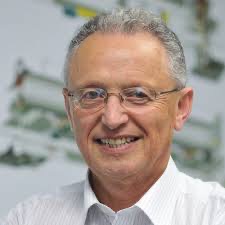 Efim Gluskin合作论文数Argonne Accelerator Systems Division, Argonne National Laboratory5E.M. Trakhtenberg合作论文数5R. Dejus合作论文数5
 E. Trakhtenberg合作论文数5W J Van Den Berg合作论文数4
 Alireza Nassiri合作论文数4
 Nikolay Vinokurov合作论文数Budker Institute of Nuclear Physics4V. G. Tcheskidov合作论文数3N. D. Arnold合作论文数3
 Robert Soliday合作论文数3B.J Tieman合作论文数3N.A. Vinokurov合作论文数2M. W. Hahne合作论文数2Y. I. Eidelman合作论文数2
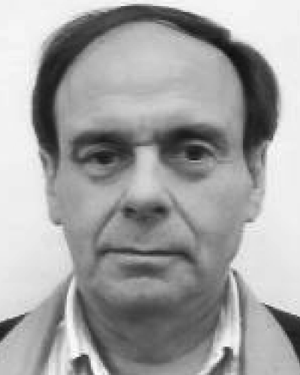 H.P. Freund合作论文数Science Applications International Corporation2
 Gil Travish合作论文数ViBo Health2XJ Wang合作论文数1B. Tieman合作论文数1m bose合作论文数1H. Friedsam合作论文数1
 Yifei Jaski合作论文数1PM IVANOV合作论文数1Wf Calaway合作论文数1
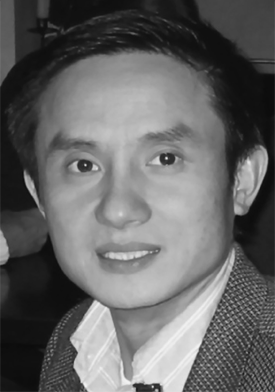 Yuelin Li合作论文数1S. Xu合作论文数1m petra合作论文数1
 Stefan Vogt合作论文数X-Ray Science Division, Advanced Photon Source, Argonne National Laboratory1
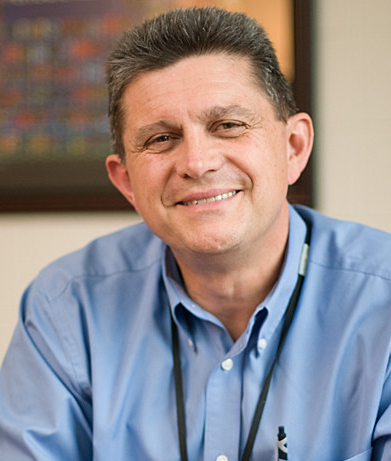 Michael J. Pellin合作论文数Robot Nose Corporation;Department of Chemistry, Northwestern University1




