Understanding variation in resource specialization is important for progress on issues that include coevolution, community assembly, ecosystem processes, and the latitudinal gradient of species richness. Herbivorous insects are useful models for studying resource specialization, and the interaction between plants and herbivorous insects is one of the most common and consequential ecological associations on the planet. However, uncertainty persists regarding fundamental features of herbivore diet breadth, including its relationship to latitude and plant species richness. Here, we use a global dataset to investigate host range for over 7,500 insect herbivore species covering a wide taxonomic breadth and interacting with more than 2,000 species of plants in 165 families. We ask whether relatively specialized and generalized herbivores represent a dichotomy rather than a continuum from few to many host families and species attacked and whether diet breadth changes with increasing plant species richness toward the tropics. Across geographic regions and taxonomic subsets of the data, we find that the distribution of diet breadth is fit well by a discrete, truncated Pareto power law characterized by the predominance of specialized herbivores and a long, thin tail of more generalized species. Both the taxonomic and phylogenetic distributions of diet breadth shift globally with latitude, consistent with a higher frequency of specialized insects in tropical regions. We also find that more diverse lineages of plants support assemblages of relatively more specialized herbivores and that the global distribution of plant diversity contributes to but does not fully explain the latitudinal gradient in insect herbivore specialization.
Sixteen years ago, a schoolteacher from New Jersey collected a caterpillar in a Costa Rican rainforest. When a parasitoid emerged several days later, it became the first data point of a long-term volunteer–mediated study on tritrophic interactions across the Americas. The teacher was an Earthwatch Institute scientist and the project an ongoing ecological investigation of caterpillars, host plants, and the wasps and flies (parasitoids) that kill them (Fig. 1). Over the course of 16 years, 1,200 volunteers have contributed to the project, including adult and youth citizen scientists from Earthwatch, teachers, and a number of other volunteers who have offered their time for months or years. With the help of these citizen scientists, we have created a robust data set on plant-herbivore-enemy interactions in order to test specific hypotheses about how the diversity of trophic interactions varies across major environmental gradients. Well over half the described organisms in the world are involved in plant-insect-enemy interactions, and research on these diverse interactions has provided the basis of our understanding of fundamental issues in ecology and evolutionary biology. Nevertheless, most biodiversity studies still rely heavily on static species lists, and prominent theories of diversity do not yet include quantification or discussion of the interaction diversity that shapes ecosystems. This interaction diversity approach to ecological research contributes to all major theoretical and applied issues in biodiversity research, including the latitudinal diversity gradient, neutral theory, diversity-stability relationships, biodiversity and ecosystem function, specialization, latitudinal and elevational range size, and effects of climate change on biodiversity. In addition to the focus on basic ecology and natural history, the project contributes to systematics of our study organisms and prioritizes work with teachers, students, local communities, and the general public to increase awareness of the importance of biodiversity.
through the accumulated work of others, and scanned the Internet for photographic evidence of the tallow leaf roller. We also invited a widespread community of entomology enthusiasts to actively assist us by contributing specimens or photographic vouchers. A single photographic record, if reliable, can expand the known range of our target species by thousands of square kilometers, and take the place of an expensive and lengthy series of collecting trips. Also, if we know the date of the photo, it can serve as a definitive temporal reference point when trying to trace the history of an expanding population (much like a dated fossil). The acquisition of such data is a necessary first step in determining the population dynamics and potential for future growth of this specialist herbivore, an effort which is of particular importance in the context of the undesirable, wildly proliferating tree upon which it feeds.
Citizen science is becoming in an integral part of entomological research and education. Large-scale, long-term research projects, vital to the study of ecological interactions, are often prohibitively expensive and difficult to manage without input from citizen scientists (Silvertown 2009). For educators and students, involvement in entomology research can provide a valuable educational opportunity by incorporating professional development for teachers and a hands-on, social learning environment (Krasny 2005). Considering the importance placed on the educational benefits of outreach efforts in scientific research, it is surprising that little is known about its actual impact on education. Although participation in citizen science research has been correlated with communication that reflects scientific thought processes, it is unclear whether this change was a result of the participation itself, or the result of having a forum for engaging these thought processes (Trumball et al. 2000). For example, in a study of citizen participants in an avian study, it was clear that volunteers had increased their basic knowledge about bird biology, but showed no significant change in their actual understanding of scientific processes or in their attitudes toward the environment and science in general (Brossard et al. 2005). However, efforts to explicate scientific issues and address misunderstandings about scientific processes by the professionals leading citizen science-based research projects could significantly enhance the educational impact of volunteer–scientist interactions (Trumball et al. 2000; Brossard et al. 2005). The highly competitive funding environment in the sciences often means that trained professionals, such as research assistants, graduate students, and postdoctoral fellows, are not available to assist with the field and laboratory work that is necessary to address hypotheses at appropriate temporal and spatial scales (Cohn 2008). Volunteer researchers can fill this gap, if protocols are straightforward and the necessary training is not overly complex (Cohn 2008; Silvertown 2009). A multitude of ecological studies have utilized citizen scientists to achieve large amounts of publishable data (see articles by Dyer et al., Losey et al., and Oberhauser in this issue). Furthermore, public funding agencies accountable to citizen taxpayers are increasingly interested in supporting research with a broader educational impact (Cohn 2008; Silvertown 2009). Therefore, the benefits of incorporating volunteer efforts, especially those of teachers and students, into entomological studies may reach beyond the databases compiled by these efforts by making research projects more appealing to the funding agencies that support them. The benefits of citizen scientist projects are multifaceted and far-reaching. Ideally, the interaction should benefit both the citizens (e.g., education) and the professional scientists (e.g., quality data) participating in the project (Silvertown 2009). In this article, we will discuss how citizen scientist participation in our study has impacted the educational goals of teacher participants and had sustained effects on the students they teach. We will also illustrate an example of how student volunteers can demonstrate progressive mastery of scientific processes while taking part in a research project. Additionally, we will highlight some of the benefits our research team has derived from this interaction. Considering the relatively small effort invested in training them, we argue that incorporating teacher and student volunteers into scientific research can yield cascading effects on science education.
The New World species of the brachypterous wasp genus Olixon Cameron are revised and five species are recognized: Olixon atlanticum Fernandez & Sarmiento-M., O. banksii (Brues), O. bicolor Roig Alsina & Martinez, O. melinsula sp. n. and O. testaceum Cameron. The new species and the previously unknown female of O. bicolor are described. An identification key and a distribution map for the New World Olixon are provided. The genus Olixon is more widely distributed throughout the New World than previously thought and here newly recorded from Belize, Bolivia, Canada, Ecuador, Guatemala, Paraguay, Peru, Suriname, Trinidad and Tobago and Venezuela. (© 2012 WILEY-VCH Verlag GmbH & Co. KGaA, Weinheim)
 Rebecca Hazen合作论文数4
 Lee Dyer合作论文数Department of Biology, College of Science, University of Nevada3
 Nicholas Alexander Pardikes合作论文数Department of Biology, Program in Ecology, Evolution and Conservation Biology and2
 Glassmire Andrea E合作论文数Department of Biology, Program in Ecology, Evolution and Conservation Biology and.2
 Angela M. Smilanich合作论文数Department of Biology, University of Nevada2
 David L. Wagner合作论文数Ecology and Evolutionary Biology;University of Connecticut;Ecology and Evolutionary Biology, University of Connecticut2
 John O. Stireman合作论文数Department of Biological Sciences;Wright State University;Department of Biological Sciences, Wright State University2Clark V. Pearson合作论文数1Thomas R Walla合作论文数1
 Manuel Solis-Vargas合作论文数1
 Francesca F. Dem合作论文数New Guinea Binatang Res Ctr1Leontine Baje合作论文数1
 Greg Wheeler合作论文数Invasive Plant Research Laboratory, United States Department of Agriculture Agricultural Research Service1
 Moria Robinson合作论文数Univ Calif Davis, Ctr Populat Biol, Davis, CA 95616 USA1Ondřej Kaman合作论文数Czech Acad Sci, Inst Phys1
 Jeffrey Q. Chambers合作论文数Department of Geography, University of California, Berkeley1
 Robert J. Marquis合作论文数Department of Biology, University of Missouri - St. Louis1
 Jahner Joshua P合作论文数Department of Biology, University of Nevada1
 Jan Hrcek合作论文数Faculty of Science, University of South Bohemia;Biology Centre, Czech Academy of Science;Department of Zoology, University of Oxford;University of South Bohemia, University of Oxford1
 Philip T Butterill合作论文数Faculty of Science, University of South Bohemia;Biology Centre, Czech Academy of Science1
 Martin Volf合作论文数Faculty of Science, University of South Bohemia;Biology Centre, Czech Academy of Science;Czech Academy of Science, University of South Bohemia1
 Santiago Villamarin-Cortez合作论文数Sección Invertebrados, Museo Ecuatoriano de Ciencias Naturales;Sección Invertebrados, Museo Ecuatoriano de Ciencias Naturales1
 Scott Miller合作论文数Department of Chemistry, Faculty of Arts and Sciences, Yale University1
 Massad Tara Joy合作论文数Max Planck Institute for Biogeochemistry, Hans-Knöll-Strasse 10, 07745, Jena, Germany, tmassad77@gmail.com.1
 Vojtech Novotny合作论文数Laboratory of Tropical Ecology, Department of Ecology, Institute of Entomology, Biology Centre of the Czech Academy of Sciences1
 Volker Lohrmann合作论文数Museum für Naturkunde, Leibniz-Institut für Evolutions- und Biodiversitätsforschung1
 George D Weiblen合作论文数Department of Plant and Microbial Biology, College of Biological Sciences, University of Minnesota1
 Thomas Kursar合作论文数1
 Robert E. Ricklefs合作论文数Department of Biology, University of Missouri-St. Louis1
 Yves Basset合作论文数Smithsonian Tropical Research Institute1
 Donald R. Davis合作论文数Columbia University1Grant L. Gentry合作论文数1Stepan Vodka合作论文数1
 Masashi Murakami合作论文数Panasonic1
 John T. Lill合作论文数Department of Biology;University of Missouri-St;Department of Biology, University of Missouri-St1
 Ivone R Diniz合作论文数Universidade de Brasília Departamento de Zoologia, Instituto de Biologia1
 Phyllis D Coley合作论文数School Of Biological Sciences, The University of Utah;The Smithsonian Tropical Research Institute1
 Matthew L. Forister合作论文数Department of Biology/MS314, University of Nevada1Lukas Cizek合作论文数Institute of Entomology;Biological Faculty, Czech Academy of Sciences;University of South Bohemia;Institute of Entomology, University of South Bohemia1
 Owen Lewis合作论文数Department of Biology, University of Oxford;Brasenose College, University of Oxford1Helena C. Morais合作论文数1
 Pavel Drozd合作论文数Department of Biology, University of Ostrava1
 Alexander Kolker合作论文数Louisiana University Marine Consortium (LUMCON), 8124, Highway 56, Chauvin, LA 70344, USA1
 Tomasz J. Kozubowski合作论文数Department of Mathematics and Statistics, University of Nevada1
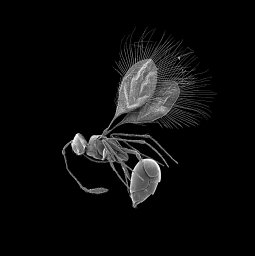 Lars Krogmann合作论文数1
 Harold F. Greeney合作论文数Center for Creative Studies, Yanayacu Biological Station1
 Herbert Nickel合作论文数1
 Anna K. Panorska合作论文数Mathematics and Statistics, University of Nevada1
 Michael C Singer合作论文数School of Biomedical Sciences, Faculty of Health, University of Plymouth;Department of Integrative Biology, College of Natural Sciences, The University of Texas at Austin1




