Equity, diversity, and inclusion strategies have become a top priority for organizations and their leaders. This chapter specifically examines the role that workplace culture can have on the effectiveness of these EDI strategies. As we conduct this thorough examination of the impact culture has on diversity, we include a specific focus on people with disabilities. Although this population offers a unique human resource for employers, they are often overlooked when it comes to including disabled people in diversity and inclusion strategies. This chapter will assist leaders with examining their workplace culture and formulating EDI attributes into their cultural platform.
The purpose of this chapter is to examine the impact of organizational leadership and how it affects diversity orientation and the managing of diversity relative to individuals with disabilities. To critically examine this topic, the authors conceptualize the theoretical model of disability diversity orientation. Specifically, they posit that top management support, environment perspectives and organizational culture provide the underpinning for the orientation theory. A prominent theorem of the conceptualization is that diversity orientation is linked to the managing of disability diversity in work organizations. Finally, this chapter concludes with recommendations based on best practices for integrating individuals with disabilities into the workforce.
Purpose Persons with childhood-onset disabilities are among the most marginalized populations, often unemployed or underemployment in jobs providing neither adequate hours for financial self-sufficiency nor fulfillment through skill-utilization. The purpose of this paper is to examine the extent to which social capital in the form of strong ties with family and friends is associated with enhanced employment outcomes for persons with childhood-onset disabilities. Design/methodology/approach Questioning the current theoretical consensus that strong social ties are unimportant to employment quality, the authors draw on disability research and opportunity, motivation and ability social capital theory to propose a model of the impact of strong ties with family and friends on paid-work-hours and skill-utilization as well as the potential moderating role of gender and disability severity. The authors then test this model using data from 1,380 people with childhood-onset disabilities and OLS regression analysis. Findings As theorized, family-of-origin-size is positively associated with hours worked. Family-of-origin-size is also associated with having more close friends and children. These strong ties, in turn, are positively associated with hours worked. The impact of having more children on hours worked and skill-utilization, however, is positive for men but non-significant for women. Originality/value This study breaks new ground by focusing on the association between strong ties with family and friends and employment quality for people with childhood-onset disabilities – a marginalized and understudied group. Findings further indicate the particular vulnerability of women with disabilities.
Disability status continues to have a significant negative impact on employment outcomes, even in countries with nondiscrimination policies, and outcomes differ by gender and age. These subpar outcomes can be linked to both environmental and psychological factors. The design of jobs and workplaces often limits the ability of workers with disabilities to contribute to their fullest capacity, while stigmatization reduces employer willingness to hire workers with disabilities and make reasonable accommodations to allow them to perform effectively. Exclusion and stigmatization create barriers to the development of a positive self-identity as a person with a disability. Considerably more research is needed to understand how the actions of organizations, leaders, and teams affect the employment outcomes of workers with disabilities and how impacts differ by gender and age. But based upon extant knowledge, there are many actions employers can take to improve outcomes for this group of workers.
The low representation of female leaders is problematic in work organizations. In fact, women historically have had trouble entering the managerial hierarchy of a multitude of industries including the sport industry. Accordingly, the evolution of sport has proffered a diverse array of jobs with growth potential. Despite this, sport remains a male dominated sector where women’s perspectives on work issues have not been fully investigated. The purpose of this study is to examine perceived organizational factors impacting the representation of female leaders in college athletics. To promptly investigate issues and concerns of working women in sport, the research focused on human resource management (HRM). This study utilized survey design, specifically snowball sampling, to generated 60 completed questionnaires from female administrators working in U.S. collegiate athletics. A Qualtrics online survey site was created to gather responses. Data were analyzed using descriptive statistics. Demographics showed the level of work experience, position titles, and educational background varied across the sample. Results showed that structures were important factors in recruiting and advancing female leaders, while the ’ole’ boys’ networks and limited social capital negatively impacted leadership development. In conclusion, leadership opportunities for women in intercollegiate athletics were perceived to be shaped by organizational practices. Keywords: female leaders, U.S. college athletics, social capital, organizational practices, HRM structures. JEL Classification: M14
"David Aaker. Aaker on Branding: 20 Principles that Drive Success. New York, NY: Morgan James Publishing (2014) pp. 208." Journal of Marketing Channels, 23(3), pp. 162–163
This chapter examines workplace discrimination faced by persons with (dis)abilities. It begins by discussing usage, meaning, and effects of the word “disability” and the related term “persons with disabilities.” It then considers the diversity of conditions and experiences among persons with (dis)abilities by reviewing extant research on people with five common disabling conditions (i.e., mobility, seeing, hearing, chronic illness, and psychiatric conditions). It also examines the importance of national context by taking a closer look at research on the experiences of people with (dis)abilities in five nations (i.e., United States, Canada, Germany, India, and China). By separately highlighting extant research on a few common conditions and nations, the chapter’s intent is to show the need for more research on specific conditions in specific work and national contexts, as well as the need for research integrating and summarizing these focused studies.
Medical personnel typically have demanding and intensified work environments. Due to these work duties work stress can frequently occur followed by burnout that leads to attrition from the respective profession. Athletic training is an occupation that has been shown to perform important and critical functions in the treatment of athletes. Due to this, it is an occupation that can incur significant amount of work stress leading to burnout. Despite the important nature and previous study of the problem, athletic trainers need to better gauge the influence of work stress on the career procession and migration. The purpose of this research was to better understand athletic trainer burnout at the intercollegiate level. In carrying forth this study, secondary and primary research were conducted. The mixed-method designed enabled valued insight to be gained. Key outcomes identified specific life-stressors and burnout factors pertinent to the athletic trainer profession in the collegiate setting.
a greater proportion of those living outside Dili were working for a wage, salary or other income or were contributing family workers than those living in Dili. Compared to respondents overall, more people with disabilities reported they were retired, and rated their economic situation less positively compared to the overall. This factsheet presents the results from the 2022 Tatoli! Survey for people with disabilities. Using the Washington Group definition, respondents were classified as having a disability if they indicated ‘a lot of difficulty’ or ‘cannot do at all’ for any aspects out of a range of questions about daily activities. In total, n=165 respondents (n= 64 women, n=94 men and n=1 transwoman) were classified as having a disability (5% of all respondents). The range of disabilities included n=74 seeing, n=49 hearing, n=71 walking, n=44 cognition, n=57 self-care and n=29 communicating. n=70 respondents had more than one disability.
The purpose of this panel symposium is to engage expert panelists, and audience members, in an interactive discussion about the impact of the context on the usage, meaning and effect of the word disability and the related term people with disabilities. Social models of disability underscore that the status of “disabled” is contextually dependent. In this symposium two contextual variables are considered in depth: national context and disability type. What constitutes a disability and who is considered to have a disability, however, is often assumed to be understood rather than explicitly defined in the management literature. Given the large number and wide variety of conditions commonly considered to be disabling, coupled with ongoing judicial, legislative, and social events that continue to shape the meaning and usage of the term disability in each nation, management scholars and practitioners run the risk of overgeneralizing findings. In this light, extant management research on people with disabilities is a patchwork of findings on the experiences of people with very diverse conditions working in very different national contexts. We also explore how use of the word disability impacts organizations, the treatment and experiences of people interacting in these organizations, and related scholarly research and managerial practices. Implications for research and practice are explored.
This study examines whether employment status and workplace accommodations are associated with perceived well-being among workers with disabilities. Data from the 2006 Participation and Activity Limitation Survey conducted by Statistics Canada were used to test the relationship between employment status, receipt of workplace accommodations and well-being. Findings indicated that fully utilized permanent employees showed greater life satisfaction and less perceived disability-related discrimination than either temporary workers or permanent workers who were underemployed. These findings support the theory that inadequate employment is associated with deleterious effects on employee well-being due to inferior need fulfilment and reduced social status. Workplace accommodations were associated with higher levels of well-being for all workers with disabilities and helped to mitigate the negative effects of temporary status and underemployment. These findings supported the theoretical extension of main effect and buffering models of workplace stress to the prediction of perceived workplace discrimination.
This study examined the lack of ethnic diversity in the management hierarchy and offered perspectives on this problem through considering underpins of strategic management and change theories. A questionnaire was developed to collect data on perception of top management vision, top management support and supportive practices in sport organizations and sent to 500 collegiate and professional sport organizations in the United States. One hundred and ninety-six respondents (39%) returned their completed survey forms, of which one hundred and ninety-four forms were useable. The results indicated a significant path between supportive practices and the ethnic minority managers ( = 67, p < .05). Additionally, support-vision significantly interacted to influence supportive practices ( = 27, p < .05). In conclusion, top management vision moderated the effect of top management support on supportive practices while mediating the effect of supporting practices.
 Alison M. Konrad合作论文数Ivey Business School, Western University14
 Lana L. Huberty合作论文数9
 Eddy S. Ng合作论文数5
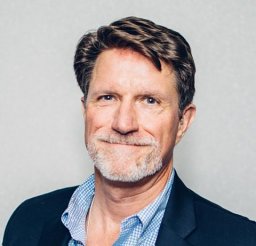 David C. Baldridge合作论文数College of Business;Oregon State University;College of Business, Oregon State University5Katherine Breward合作论文数3Alison J Doherty合作论文数3
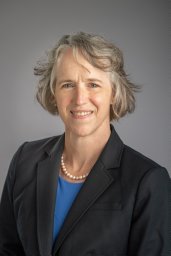 Joy E. Beatty合作论文数Management Studies;University of Michigan-Dearborn;Management Studies, University of Michigan-Dearborn2Bonnie L. Parkhouse合作论文数2
 Stephan Bohm合作论文数RheinMain University of Applied Sciences2
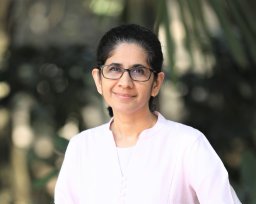 Mukta Kulkarni合作论文数Indian Institute of Management2
 Yang Yang合作论文数1




