The relative sizes of body segments are a major determinant of the shape and functionality of an animal. Developmental biases affecting this trait can therefore have major evolutionary implications. In vertebrates, a molecular activator/inhibitor mechanism, known as the inhibitory cascade (IC), produces a simple and predictable pattern of linear relative size along successive segments. The IC model is considered the default mode of vertebrate segment development and has produced long-term biases in the evolution of serially homologous structures such as teeth, vertebrae, limbs, and digits. Here we investigate whether the IC model or an IC-like model also has controls on segment size development in an ancient and hyperdiverse group of extinct arthropods, the trilobites. We examined segment size patterning in 128 trilobite species, and during ontogenetic growth in three trilobite species. Linear relative segment size patterning is prominent throughout the trunk of trilobites in the adult form, and there is strict regulation of this patterning in newly developing segments in the pygidium. Extending the analysis to select stem and modern arthropods suggests that the IC is a common default mode of segment development capable of producing long-term biases in morphological evolution across arthropods as it does in vertebrates.
In Australia, the deep-water (bathyal and abyssal) benthic invertebrate fauna is poorly known in comparison with that of shallow (subtidal and shelf) habitats. Benthic fauna from the deep eastern Australian margin was sampled systematically for the first time during 2017 RV ‘Investigator’ voyage ‘Sampling the Abyss’. Box core, Brenke sledge, and beam trawl samples were collected at one-degree intervals from Tasmania, 42°S, to southern Queensland, 24°S, from 900 to 4800 m depth. Annelids collected were identified by taxonomic experts on individual families around the world. A complete list of all identified species is presented, accompanied with brief morphological diagnoses, taxonomic remarks, and colour images. A total of more than 6000 annelid specimens consisting of 50 families (47 Polychaeta, one Echiura, two Sipuncula) and 214 species were recovered. Twenty-seven species were given valid names, 45 were assigned the qualifier cf., 87 the qualifier sp., and 55 species were considered new to science. Geographical ranges of 16 morphospecies extended along the eastern Australian margin to the Great Australian Bight, South Australia; however, these ranges need to be confirmed with genetic data. This work providing critical baseline biodiversity data on an important group of benthic invertebrates from a virtually unknown region of the world’s ocean will act as a springboard for future taxonomic and biogeographic studies in the area.
 Olga Biriukova合作论文数4Lynda Avery合作论文数4Dino Angelo Ramos合作论文数4
 Tom Alvestad合作论文数4
 Ingo Burghardt合作论文数4Charlotte Watson合作论文数4
 Polina Borisova合作论文数4Robert Sobczyk合作论文数Corresponding author.4
 Naoto Jimi合作论文数Sugashima Marine Biol Lab, Nagoya Univ4
 Laetitia Gunton合作论文数4
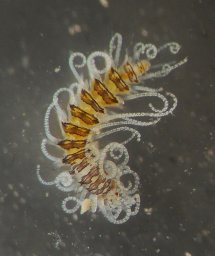 Joachim Langeneck合作论文数Consorzio Nazionale Interuniversitario per le Scienze Del Mare (CoNISMA),, DISTeBA4
 christopher j glasby合作论文数Museum & Art Gallery Northern Terr, Darwin, NT 0801, Australia4
 JingHuai Zhang (张敬怀)合作论文数国家海洋局南海环境监测中心4Meißner Karin合作论文数4
 Magdalena N. Georgieva合作论文数School of Earth and Environment, University of Leeds;Life Sciences Department, The Natural History Museum;School of Earth and Environment, University of Leeds4
 Pat Hutchings合作论文数Research Institute, Australian Museum4
 Anna Murray合作论文数4
 Nataliya Budaeva合作论文数P.P. Shirshov Institute for Oceanology RAS, 36 Nakhimovsky Prospect, Moscow 117997, Russia4
 Maria Capa合作论文数Australian Museum4Hannelore Paxton合作论文数4
 Anna Zhadan合作论文数4
 Elena K Kupriyanova合作论文数School of Biological Sciences, Flinders University of South Australia4
 Robin S. Wilson合作论文数Museum Victoria4
 Markus Boggemann合作论文数4Pan-Wen Hsueh合作论文数4
 James A. Blake合作论文数4
 Anja Schulze合作论文数Smithsonian Marine Station4Jon Anders Kongsrud合作论文数4
 Helena Wiklund合作论文数Department of Zoology;University of Gothenburg;Department of Zoology, University of Gothenburg4
 Rachel Warnock合作论文数1
 Melanie J Hopkins合作论文数Div Paleontol, Amer Museum Nat Hist1
 Alistair Evans合作论文数School of Biological Sciences, Faculty of Science, Monash University1




