Much of the literature on the mental health of immigrants tends to generalize, treating all immigrants as one category, and not accounting for how life experiences in the country of origin can shape mental health. Therefore, the purpose of this study is to contrast the differences in self-rated mental health between Indian immigrants and non-Indian immigrants based on immigration-related factors, sociodemographic factors and health and healthcare utilization-related factors. Cross-sectional data from two cycles of the Canadian Community Health Survey were analyzed. Logistic regression models were analyzed to assess self-reported mental health and those reporting a mood or anxiety disorder. Results provide support for the healthy immigrant effect and find that immigrating in later life is advantageous for mental health for Indian immigrants. Having a lower income, a smaller household, and living in a rural area are associated with good mental health among Indian immigrants, but not among all immigrants. Being male does not have the same protective effect against mental health concerns in Indian immigrants as it does in all immigrants. Results demonstrate the need to study immigrant groups by their country of origin and how life experiences in a particular country shape immigrant mental health differently from country to country.
Evidence points to the increasing prevalence of mental illness in Ghana. Yet, research to understand the strategies used to cope with mental illness is lacking in the Ghanaian context, where psychiatric care is limited. The aim of this review is to identify and synthesize existing qualitative evidence on the strategies adopted by persons with mental illness to manage stress. We conducted the scoping review using the Arksey and O'Malley framework. A search of published qualitative studies on mental illness in Ghana between 2000 and 2019 using Scopus, Embase, Medline, and PsycINFO was conducted. Nine articles met our inclusion criteria. Based on Skinner and colleagues' typology of coping strategies, we categorized the coping strategies into five domains: problem solving , support seeking, avoidance , distraction, and positive cognitive restructuring. Faith-based healing and prayers were the most common coping strategies identified in the review. Other strategies included seeking biomedical care, maintaining positive relationships, substance use, listening to music, and isolation. The review calls for a coordinated mental healthcare provision and the need for increased research on mental illness in Ghana.
Transitioning towards community‐based alternatives for service provision, health geographers have turned their gaze towards the changing meanings of place across dynamic landscapes for older people. Yet, little is known about how such a transition has manifested as a new phenomenon in a non‐western country, within a variegated geo‐historical context. Using a relational approach, this paper examines what it means to embed care services in a community for supporting aging‐in‐place through a new model, community‐based care centre (CBCC) in Beijing, China. Interview data were obtained from 47 participants (including administrative staff, service providers, and older people) to understand how stakeholders envision the transition towards the CBCC model. Our findings show that embedding CBCCs into communities is a three‐dimensional process: 1) the dynamics of locating services and socio‐relational distance in shaping a sense of place; 2) the blurring of formal and informal care relations in creating care spaces; and 3) the interweaving of collectivism and individualism in a transition from “work‐unit” to community. These interactions indicate that community‐embedded care is geographically, socially, politically, and culturally constructed and needs to be understood as dynamic and relational. Our findings suggest that the theoretical underpinnings of aging‐in‐place need to broaden to include non‐western perspectives.
Abstract Cities around the world are responding to aging populations and equity concerns for older people by developing age-friendly communities plans, following the World Health Organization’s guidelines. Such plans, however, often fail to account for the wide diversity of older people in cities, with the result that some older people, including Indigenous older people, do not see their needs reflected in age-friendly planning and policies. This article reports on a study involving 10 older First Nations and Métis women in the city of Prince George, Canada, comparing the expressed needs of these women with two age-friendly action plans: that of the city of Prince George, and that of the Northern Health Authority. Four main categories were raised in a group discussion and interview with these women at the Prince George Native Friendship Centre: availability of health care services, accessibility and affordability of programs and services, special roles of Indigenous Elders, and experiences of racism and discrimination. There are many areas of synergy between the needs expressed by the women and the two action plans; however, certain key areas are missing from the action plans; in particular, specific strategies for attending to the needs of Indigenous and other older populations who often feel marginalized in health care and in age-friendly planning.
The 2030 Agenda for Sustainable Development commits to ending hunger and achieving food security for all. However, little is known about the food access experiences of older adults in Ghana. This paper explores if there are barriers to accessing food and if there are, what strategies have been adopted to negotiate these barriers. Through purposive sampling, a total of 123 older adults were recruited in Ghana to participate in sharing circles (n = 10) and semi‐structured interviews (n = 42). Data analyses were done in NVivo using a thematic analytical approach. Functional impairment and poor health, poverty, inadequate social support, lack of control over household resources, policy neglect, low crop yields, and sociocultural values were found to hinder older people's access to food. They navigate these barriers by rationing meals, engaging in income‐earning activities, seeking support from social networks, and begging. Our findings contribute to discourses on food security and highlight the need for a multilevel, comprehensive approach that targets both the individual and the broader human environment in addressing the food needs of older people.
A positive doctor-patient relationship is believed to play a key role in the healing process in clinics. While challenges to the doctor-patient relationship are a global concern, complex social contexts which introduce familial collectivism and totalitarian bureaucracy to maintain a doctor's authority have complicated doctor-patient relationships in China. This study delineates a multi-dimensional therapeutic landscape of hospitals in China, focusing on the doctor-patient relationship performances used to improve patients' healing experiences. Based on fieldwork in two primary hospitals in Eastern China, we find that primary hospitals in China are not only professional spaces, but hybrids of professional and non-professional spaces. In these spaces, both professional and other discourses in various forms of social-environmental engagement affect therapeutic experiences. Varying time and space in hospitals allow doctors to construct multi-dimensional therapeutic landscapes vis-a-vis patients to secure patients' compliance with their recommendations, and thus improve health outcomes. We argue that these dimensions may also cause negative therapeutic experience such as unnecessary health care. This study contributes to the literature on therapeutic landscapes of health care by providing a critical view on the construction of multi-dimensional therapeutic hospital landscapes. Furthermore, it links the critical health geographies literature with China's broader social context to explicate the cultural and social transformation of health care spaces in contemporary China. Findings from this study inform both theoretical and empirical debates regarding therapeutic landscapes of health care by embedding the professional spaces of health care into broader geographical discourses. This calls for health professionals to reflect on ethical concerns in multi-dimensional health care landscapes.
This chapter deals with the profile of the rural and remote older population, which is predicated on the assumptions of the diversity of the older population living in rural and remote Canada. It talks about the construction of the profile around several major themes, such as being older and living in rural and remote parts of Canada and the challenges and barriers to living in rural and remote areas. It also covers social inclusion, engagement, and ageism, and food and income security. The chapter examines the shared characteristics of the older population living in rural and remote communities that distinguish them from the urban population of Canada. It cites the higher proportions of low-income people and older people, and higher proportions of people and older people with less education, including the higher rates of smoking, obesity, and mortality.
This article uses findings from qualitative interviews to examine the experiences of members of Saskatoon's Chinese-Canadian older-adult community in terms of their realities of aging and access to important geriatric resources. Promoting an understanding of both group experience and a broader conceptualization of age-friendly development, we argue that the notion and implications of a spatial ethnic enclave are replaced in the Saskatoon context by a social enclave. This network of social support is evident in Chinese-Canadian older adults' access to housing, recreation, transportation, and health services. The article concludes with lessons learned that would help enhance culturally pluralistic age-friendly development. This work underlines the significance of social capital development within more marginalized older-adult communities, both as a reaction to outside discrimination, and as a means of ensuring healthy and inclusive community aging.
On a wintry day in 2016, Howard Hiatt makes his way through Harvard Yard, past John Harvard, the university founder seated comfortably in bronze, nicely weathering the years, much as his legacy weathers the centuries. The yard bustles, as always, with disheveled students, wide-eyed applicants on campus tours, and an array of preoccupied faculty. It is early February, seventy-four years almost to the day since Howard first walked this very pathway as a seventeen-year-old Harvard College freshman. On that day, he was a boundlessly energetic teenager with an outsized intellect and a determination to do something special with his life. Since then, much has changed and nothing has changed. Yes, he moves with greater care now that he has reached his tenth decade, not quite as certain in his stride. His memory falters now and again and the seven-plus decades have bent him slightly, weathered his lean …
Dr. Hermann Blumgart's decision to retire as chief of medicine at Beth Israel may not have been a surprise—he had reached the mandatory retirement age for Harvard Medical School professors of sixty-five—but it was a bit of a shock to people throughout the organization. Blumgart had distinguished himself as quite a remarkable clinician, so much so that in the years to come several prestigious awards from medical societies would be granted in his name. A search committee seeking to identify a worthy successor to Dr. Blumgart, quickly settled upon a physician then serving as chairman of the Department of Medicine at Southwestern Medical School. When the offer from Beth Israel was tendered, however, the folks at Southwestern countered with a generous package and the man chose to remain at Southwestern.
A good mentor, Howard said, will have an opportunity to learn a tremendous amount from his or her mentees. And Howard was a good mentor. He put together several of the most important ideas he had learned at different stages of his career to develop a notion that he came to call Global Health at Home, a notion that came to be the focus of work in his ninth and tenth decades, when he remained very actively involved in mentoring. Even today, at ninety-two, he pursues continuous learning and thinks nothing of getting on a plane and crossing the country to visit two women physicians he is mentoring. In a single trip, he visited one of these physicians who was bringing preventive care and well-being to the Navajo nation in Gallup, New Mexico; then he went on to visit the other who was working in Los Angeles to incorporate the services of community health workers into preventive health programming. He went to …
Howard was the leader who changed and improved two of Harvard's most important institutions—Beth Israel Hospital and the Harvard School of Public Health. He fostered the birth of the global health equity department at the Brigham. But the most important contributions Howard Hiatt made involved his role as a mentor, guiding and shaping the lives of some of the most influential men and women in healthcare. Through the decades he served as a counsellor, mentor, teacher, adviser, and friend to scores of young physicians, but perhaps his greatest influence as a mentor was his relationship with four Harvard Medical School graduates who became so close to one another—and to Howard—that they refer to themselves as “the brothers.” Three of these four physicians—Don Berwick, Jim Yong Kim, and Paul Farmer—are among the most influential and accomplished healthcare leaders of their generation. I was …
I had the good fortune to be able to look at these pictures with Howard when he was ninety-two. It was a chance to ask him what they brought to mind and what he remembered, and to think about what were the things he felt meant the most. Daniel Kahneman, a social psychologist who won the Nobel Prize in economics for his work on behavioral economics, spoke with Krista Tippett about the difference between life as we experience it and life as we remember it.
When a smart, charismatic young doctor has as much success as Howard enjoyed building a department at Beth Israel, it does not take long before the suitors from other medical centers arrive at his door. In Howard's case they not only arrived, it seemed at times as though they were lined up outside his door. After he had been chief at Beth Israel for just four years he received a call to determine whether he would be willing to be considered for the position of medical school dean at the University of Rochester. He declined. But an older colleague told him afterward that it was always useful at the very least to go for an initial interview, for if nothing else it could well prove to be a learning experience for both Howard and the institution he was visiting. He took that advice to heart.
The contrast between Howard's prior experiences and the situation he faced at the School of Public Health was stark. Throughout his career—ever since entering Harvard College as a seventeen-year-old—things had gone well for Howard. Extremely well, in fact. He had been capable of starting medical school after only a year and a half of undergraduate study and after his training he had conducted research at NIH and the Pasteur Institute alongside scientists who were giants in their field. He had been welcomed and valued at every step along his career path, never more so than when he was made chief of medicine at the BI. His professional trajectory was quite remarkable. On the verge of becoming dean of Yale Medical School, he had been wooed by no less a personage than the president of Harvard University. Don't leave, Howard, you are too valuable here at Harvard. I need you for one of the most challenging and important assignments within the university.
Half of the tenured faculty had lobbied for his resignation, but after Bok had rendered his decision, Howard was still there. Most astonishing to him was the fact that, of the faculty members who had signed a letter that said, among other things, that they could not continue to work with him as dean, not one left the school. In his memoir, Howard wrote, “I had waited anxiously through the summer for Derek's decision, apprehensive lest he ask me to leave. But when the decision came, I realized it was only slightly better than the outcome I had dreaded. For, of course, I had to return to the School.”
As unpleasant as his experience as dean of the School of Public Health had been, the truth was that Howard had accomplished a great deal. He had, in fact, modernized the school in the way he had set out to do. He had brought in new faculty and new energy, and he infused the school with greater rigor in a number of departments. The fact that he was reviled by a number of senior faculty members bothered Howard. He had, throughout his life, managed to get along with people fairly easily. This was the first time in his life that he had faced anything remotely like the level of enmity expressed by the faculty.
 Michelle A Williams合作论文数Department of Global Health and Population, Harvard T.H. Chan School of Public Health, Harvard University;Department of Public Policy, John F. Kennedy School of Government, Harvard University9
 Kathleen Wilson合作论文数3
 Rajen Subedi合作论文数3Joseph Asumah Braimah合作论文数Dept Geog & Planning, Queens Univ2Hélène Ouellette-Kuntz合作论文数2W G Hardwick合作论文数1Vicente Polo合作论文数1Ebenezer Dassah合作论文数1Jm Smith合作论文数1R Miller合作论文数1Qun Miao合作论文数1Yuan Li合作论文数1Jie Yu合作论文数1
 Sarah Nelson合作论文数Dept Geog & Geol, Univ Nebraska1
 Valerie Preston合作论文数1
 Kevin Hanna合作论文数Department of Earth, Environmental and Geographic Sciences, Irving K. Barber Faculty of Science, The University of British Columbia1McWilliam Carol L合作论文数1
 Robyn Tamblyn合作论文数Department of Epidemiology, Biostatistics and Occupational Health, School of Population and Global Health, McGill University1
 James R. Dunn合作论文数Department of Health, Aging & Society, Faculty of Social Sciences, McMaster University/McMaster Institute for Healthier Environments1Nicole M. Yantzi合作论文数1
 Miriam Stewart合作论文数Faculty of Nursing, University of Alberta1Burke S O合作论文数1
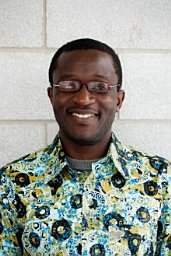 Elijah Bisung合作论文数Department of Geography and Environmental Management, University of Waterloo;United Nations University Institute for Water Environment and Health;University of Waterloo, United Nations University Institute for Water Environment and Health1Pacey Michael A合作论文数1
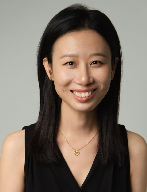 Peiling Zhou (周佩玲)合作论文数School of Architecture, Harbin Institute of Technology, Shenzhen1
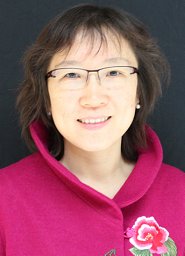 Dongmei Chen合作论文数Department of Geography, Queen’s University1
 Joseph Mensah合作论文数1
 Margaret Penning合作论文数Centre on Aging, University of Victoria;Department of Sociology, University of Victoria;University of Victoria, University of Victoria1
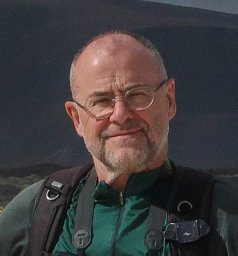 Luis M. Carrascal合作论文数Museo Nacional de Ciencias Naturales1Greg Halseth合作论文数1Jose Pablo Veiga合作论文数1Lucilla Spini合作论文数1K. Brealey合作论文数1
 Margaret B Harrison合作论文数1Torbjorn Jarvi合作论文数1Xiaolu Gao (高晓路)合作论文数1
 Herb Northcott合作论文数1
 Anu Tuominen合作论文数1
 Mark Skinner合作论文数Department of Geography, School of the Environment, Trent University1
 Alfredo Salvador合作论文数Museo Nacional de Ciencias Naturales ( CSIC )1
 Rebecca Elmhirst合作论文数School of Environment and Technology, University of Brighton1Kristan J. Aronson合作论文数Division of Cancer Care and Epidemiology;Department of Community Health and Epidemiology;Cancer Research Institute;Queen ' s University1Matti Lehtonen合作论文数1
 Michèle Bouchard合作论文数Faculty of Medicine, Université de Montréal1Jill Jäger合作论文数1
 Jeremy Travis合作论文数Abt Associates Inc.1
 John Cater Everitt合作论文数1Ryan Walker合作论文数1
 Stephen A. Matthews合作论文数The Pennsylvania State University1




